

AC Solenoid Coils operate with alternating current, while DC Solenoid Coils use direct current. Selecting the correct type is vital for optimal performance. Incorrect solenoid coil selection poses significant safety risks, including gas leaks, high-pressure buildup, and coil burnout due to overheating or electrical failures.
Key Takeaways
- AC solenoids work with changing electricity. They are fast but can be noisy and use more power. DC solenoids use steady electricity. They are quiet and use less power.
- Choosing the right solenoid coil is important. Consider if you need fast action or quiet operation. Also, think about the power you have and how long the solenoid needs to run.
- Using the wrong power for a solenoid can cause problems. An AC solenoid needs AC power. A DC solenoid needs DC power. Using the wrong type can damage the coil.
Understanding AC and DC Solenoid Coils: Fundamental Principles
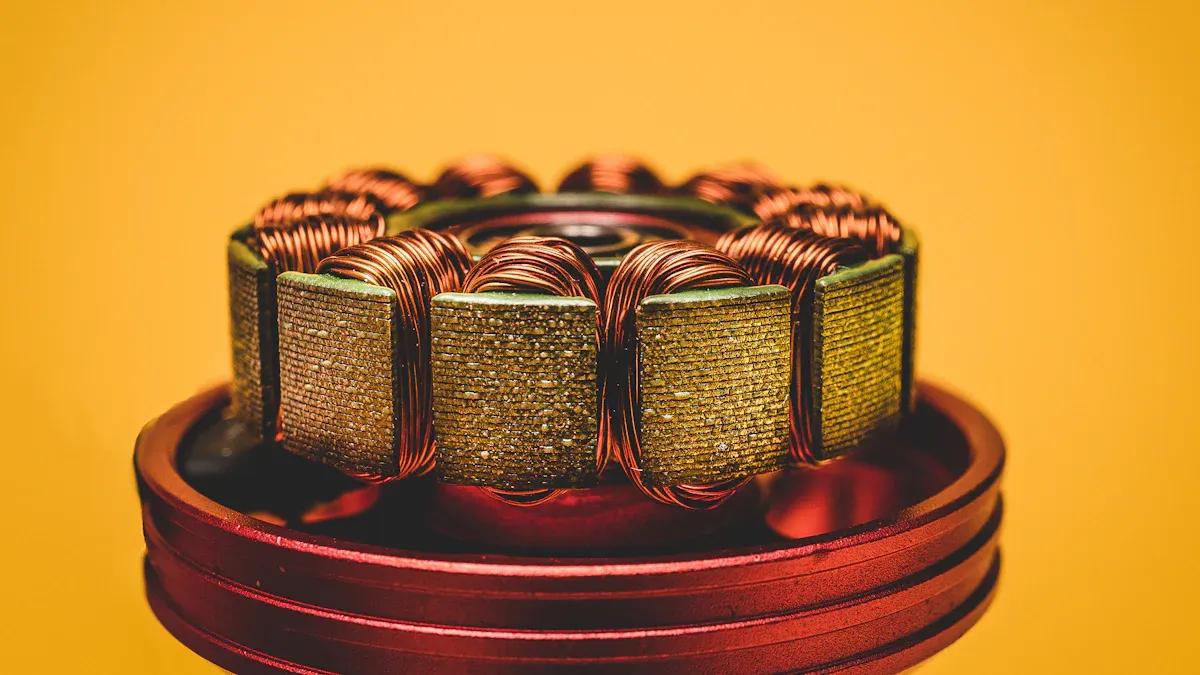
How Solenoid Coils Generate Magnetic Fields
Solenoid coils create magnetic fields through a fundamental principle of electromagnetism known as Ampère’s law. André-Marie Ampère identified this law. It states that an electrical current flowing through a conductor generates a magnetic field around it. The strength of this magnetic field is directly proportional to the current’s magnitude. When engineers wind a conductor, typically a wire, into a helical coil, the individual magnetic fields from each turn add together. This alignment of magnetic fields forms a single, concentrated magnetic field within the solenoid. It effectively creates a tube of magnetic flux lines.
The Role of Ampere-Turns in Solenoid Coils
Ampere-turns quantify the total magnetic effort within a coil. This value is the product of the electric current and the number of turns in a coil. Multiple turns in a coil amplify the magnetic field strength compared to a single loop carrying the same current. Each turn adds to the overall magnetic effect. For an ideal long solenoid, the magnetic field strength (B) inside the coil is proportional to the ampere-turns per unit length. The formula B ≈ μ₀(NI/L) illustrates this relationship, where N is the number of turns, I is the current, and L is the length. This shows how the density of turns combined with current determines the field’s intensity. Maintaining the same current and increasing the number of loops or turns of the coil increases the magnetic field’s strength. Each loop sets up its own magnetic field, and these individual fields unite to produce a stronger total magnetic field around the entire coil. However, the relationship between magnetic field strength and ampere-turns is not always linear, especially with magnetic materials. The material can saturate, leading to diminishing returns in magnetic field strength despite additional ampere-turns.
AC Solenoid Coils: Operation and Characteristics
AC Solenoid Coil Working Mechanism
AC solenoids operate using alternating current. This current changes polarity many times each second, creating a sinusoidal wave. This continuous alternation causes the coil to energize and de-energize repeatedly. The magnetic field momentarily drops to zero during the “off” phase. This allows the spring to push the plunger out, causing significant vibrations. These vibrations can stress and overheat the coil, potentially leading to burnout.
Mitigating Vibration in AC Solenoid Coils
Engineers use specific designs to reduce vibration in AC solenoid coils. Shading rings, often made of copper, are placed around the plunger. These rings store magnetic energy. They release this energy 90 degrees out of phase with the coil’s magnetic field. This ensures the magnetic field never fully reaches zero. It maintains enough force to overcome the spring and eliminate vibrations. This prevents damage and ensures smoother operation. Additionally, the plunger and stationary core often use laminated sheets of electrical steel. This design reduces eddy currents, which are induced by the reversing AC magnetic field and cause heat and energy loss.
Advantages of AC Solenoid Coils
AC solenoid coils offer several benefits. They provide rapid actuation, making them ideal for applications needing quick response times, such as in manufacturing. They can generate significant magnetic forces, which is advantageous for high-power applications requiring substantial mechanical movement. The AC power grid is widely available in industrial and commercial settings. This allows for easy integration of AC Solenoid Coils without complex power conversion systems.
Disadvantages of AC Solenoid Coils
AC solenoid coils also have drawbacks. Their fluctuating magnetic field causes vibrations, resulting in a distinct hum. This can be problematic in noise-sensitive environments. The vibrations also lead to increased mechanical wear, potentially reducing the valve’s lifespan. AC valves consume more energy when holding a position because the continuous current cycling generates heat. Prolonged use in energized states can cause overheating, requiring additional design considerations like heat sinks.
DC Solenoid Coils: Operation and Characteristics
DC Solenoid Coil Working Mechanism
A DC solenoid operates by generating electromagnetism. Direct current (DC) flows through its copper coil. This coil is wound around an iron core. When DC current passes through the coil, it creates a magnetic field around the iron core. This magnetic field then magnetizes the iron core itself. This action amplifies the overall magnetic strength of the electromagnet. One end of the iron core becomes a North pole, and the other a South pole. When a ferromagnetic material comes near, this magnetic force attracts it. This enables actions like adsorption or traction. The direct current is crucial because its stable magnitude and direction ensure a consistent magnetic field strength. This allows for precise control over the solenoid’s suction force, which is directly proportional to the current supplied.
Advantages of DC Solenoid Coils
DC Solenoid Coils offer several distinct advantages. They provide high magnetic field stability. DC current’s stable magnitude and direction result in a consistent magnetic field strength. This remains unaffected by AC frequency changes, which is vital for precise control. They also offer strong controllability of suction. The suction force is directly proportional to the current in the coil. This allows for precise adjustment by varying the current. DC solenoids exhibit a fast response speed. The magnetic field establishes quickly upon power-on, leading to rapid armature response. It dissipates quickly upon power-off, ensuring immediate release. Furthermore, they have relatively low energy consumption. DC electromagnets maintain an attracted state with stable current. They avoid eddy current and hysteresis losses common in AC electromagnets. Thus, they consume less energy over long periods.
Disadvantages of DC Solenoid Coils
Despite their benefits, DC Solenoid Coils also have some drawbacks. They typically produce a lower initial pull force compared to AC solenoids of similar size. This means they might require more current to initiate movement in certain applications. Switching high inductive loads with DC solenoids can lead to arcing at the contacts. This reduces contact lifespan. While efficient in holding, their initial power requirements can be higher for rapid, high-force actuation. They also require a DC power source. This might necessitate a rectifier if only AC power is available, adding complexity and cost to the system.
Performance Comparison of AC vs. DC Solenoid Coils
Power Consumption and Energy Efficiency
Power consumption and energy efficiency represent critical factors when selecting between AC and DC Solenoid Coils. DC solenoid valves generally demonstrate greater energy efficiency. Their magnetic field remains steady, allowing for smaller coil sizes to achieve the same force output. This design means less power is necessary to generate the desired force, making DC valves more compact and energy-efficient. Conversely, AC solenoid valves are less energy-efficient. They require larger coils and experience potential power loss from continuous magnetization and demagnetization. This process leads to greater heat generation and less efficient energy use.
The following table highlights key differences in power consumption:
| Comparison Aspect | AC Solenoid Valves | DC Solenoid Valves |
|---|---|---|
| Voltage Operation Range | Typically high (24V, 110V, 220V) | Lower voltage operation |
| Initial Power Draw | Higher due to extra coil winding and resistance | Lower constant current draw |
| Overall Power Consumption | Higher initial actuation power that decreases thereafter | Consistent and usually lower than AC |
AC solenoid valves generally need higher voltage, while DC solenoid valves typically require lower current.
Noise and Vibration Levels
AC solenoid coils inherently produce more noise and vibration than their DC counterparts. The alternating current causes the magnetic field to fluctuate, leading to a distinct humming sound and mechanical vibration. This continuous movement can cause wear on components and may be undesirable in noise-sensitive environments. DC solenoid coils, however, operate with a stable, direct current. This stability results in a consistent magnetic field, which eliminates the vibration and humming associated with AC operation. DC solenoids therefore offer quieter and smoother performance, making them suitable for applications where noise reduction is important.
Eddy Currents and Heat Generation in Solenoid Coils
AC solenoid coils experience significant eddy current generation and subsequent heat production. Alternating current causes the magnetic field to periodically reach zero. This fluctuating magnetic field induces eddy currents within conductive materials, such as the core of the solenoid. Eddy currents are loops of induced current that form within conductive materials when they are exposed to changing magnetic fields. These currents resist the change in magnetic flux. When magnetic flux changes inside an electrical conductor, eddy currents generate. These eddy currents lead to Joule heating, which converts kinetic energy into heat. This principle is evident in applications like electromagnetic cookers. High-frequency alternating currents create fluctuating magnetic fields, inducing eddy currents and subsequent Joule heat in conductive pots. In AC systems, the changing magnetic field leads to more pronounced eddy current losses and hysteresis heating. To mitigate these effects, AC solenoids often utilize laminated cores. Laminated cores help reduce these losses and the associated heat generation. DC solenoid coils do not experience these issues because their magnetic fields remain constant, preventing the induction of eddy currents.
Actuation Speed and Response Time
Actuation speed and response time differ significantly between AC and DC solenoid coils. AC solenoids generally offer faster response times, making them suitable for high-cycle applications where rapid actuation is critical. Their response times typically fall between 8–15 milliseconds. They respond quicker and can cycle at faster rates. DC solenoids, conversely, exhibit slower response times. Their opening action is more gradual due to the steady current. They are not as fast for rapid valve opening responses.
The table below summarizes the actuation speed characteristics:
| Characteristic | AC Solenoids | DC Solenoids |
|---|---|---|
| Actuation Speed | Fast response times, suitable for high-cycle applications; rapid actuation is critical | Slower opening; more gradual due to steady current; not as fast for rapid valve opening response |
| Operating Times | Can vary with frequency and may affect heat buildup | Provide consistent operating times regardless of frequency changes |
Excitation and Holding Current Differences
Excitation and holding current requirements vary considerably between AC and DC solenoid coils. AC solenoid coils exhibit a significant spike in excitation current during startup, sometimes up to 15 times the steady-state current. This high initial power allows for quick activation. After activation, the power required to remain energized decreases. DC solenoid coils, however, maintain a constant excitation current. This current depends on the coil’s internal resistance and the applied voltage. Their power consumption remains consistent.
The following table details these differences:
| Characteristic | DC Solenoid Coils | AC Solenoid Coils |
|---|---|---|
| Excitation Current | Constant, depends on coil’s internal resistance and voltage. | Varies with stroke; significant spike (up to 15 times the excitation current) during startup. |
| Power Consumption | Consistent power draw. | High initial power for quick activation, then less power to remain activated. |
Design Considerations and Compatibility for Solenoid Coils

Solenoid Coil Design Improvements
Engineers constantly improve solenoid coil designs to enhance efficiency and performance. Custom windings, for example, allow for non-standard voltage requirements, optimizing performance for specific applications. High-efficiency coils reduce power consumption while generating the necessary magnetic force. This leads to lower energy usage. Material selection also plays a crucial role. Using low-friction, high-wear-resistant materials like polymers or stainless steel reduces the energy needed for actuation. Advanced materials, such as copper-clad aluminum windings and high-temperature insulation coatings, improve reliability. Miniaturization is also a key focus, achieved through better thermal management and high-performance magnetic materials.
Using AC Solenoid Coils with DC Power
Using DC power with an AC solenoid coil presents specific challenges. An AC solenoid coil has higher impedance due to inductive reactance. Supplying DC to an AC coil can cause burnout because the current will be much higher than intended at the same voltage. There is no standard formula for determining the recommended DC voltage for an AC coil. To prevent damage, engineers must limit the voltage and current. They can use a current-limiting resistor or reduce the supply voltage significantly.
Using DC Solenoid Coils with AC Power
Operating a DC solenoid coil with an AC power source is generally not advisable without proper conversion. AC power constantly changes direction and magnitude. This would cause a DC solenoid’s magnetic field to fluctuate rapidly, leading to vibration and inefficient operation. It could also cause overheating and damage to the coil. To use a DC solenoid with an AC supply, a rectifier circuit is necessary. This circuit converts the AC power into DC, ensuring the coil receives a stable current.
Risks of Incorrect Power Supply for Solenoid Coils
Supplying incorrect power to solenoid coils carries significant risks. If a solenoid receives voltage below its rating, it may not generate enough force to complete its stroke. Conversely, if the voltage is too high, the coil can burn out. Exceeding the solenoid’s duty cycle, the time it can be powered without overheating, also causes burnout. A burnt coil can result from incorrect voltage, an unsuitable duty cycle, or a frequency that prevents adequate cooling. Electrical spikes from the power source can also cause catastrophic damage, often making coils irreparable. Surge protection, such as circuit breakers, helps prevent this.
Selecting the Right Solenoid Coils for Your Application
Choosing the correct solenoid coil type significantly impacts an application’s overall performance, safety, and longevity. Engineers must carefully evaluate several factors to ensure optimal selection.
Application Needs: Rapid Actuation vs. Quiet Operation
The specific demands of an application often dictate the solenoid coil choice. Some systems require quick, decisive movements, while others prioritize a silent operational environment.
| Feature | AC Solenoid Valves | DC Solenoid Valves |
|---|---|---|
| Actuation Speed | Fast response times, suitable for high-cycle applications | Slower opening; more gradual due to steady current |
| Initial Force | Strong initial force for quick opening | Slower power consumption rise, leading to slower opening |
| Application | Ideal for rapid actuation and high cycling frequency | Generally slower, but can be improved with external circuits for faster opening |
AC solenoids are often the preferred choice when rapid actuation is critical. They offer fast response times, making them suitable for high-cycle applications. These coils consume high power initially. This creates strong peak currents. These currents generate sufficient magnetic force to overcome resistance and open the valve quickly. AC solenoid valves are typically the best choice for applications needing rapid opening and closing, such as in manufacturing and automated production lines.
Conversely, DC solenoid valves excel in environments requiring quiet operation.
| Feature | AC Solenoid | DC Solenoid |
|---|---|---|
| Noise and Vibration | Can produce vibrations and buzzing; requires shading rings | Quiet, with steady pull force |
| Application Suitability | Ideal for high-speed, rapid-cycle systems | Ideal for noise-sensitive, low-speed applications |
DC solenoid valves are generally better for quiet operation. They do not run the risk of buzzing and overheating. In noise-sensitive applications such as hospitals, laboratories, and offices, where quiet valve actuation is crucial, DC solenoid valves are preferable. DC valves operate without the buzzing associated with AC valves. This makes them better suited to maintain a quiet atmosphere.
Power Source Availability and Controller Compatibility
The type of power available at the installation site and the compatibility with existing control systems are fundamental considerations.
| Feature/Power Type | Alternating Current (AC) | Direct Current (DC) |
|---|---|---|
| Nature of Flow | Changes direction periodically, voltage alternates | Flows in a single direction, constant voltage |
| Primary Use | Large-scale power distribution, heavy machinery, long-distance transmission | Localized systems, sensitive electronics, automation, renewable energy integration |
| Typical Applications | Industrial motors, HVAC systems, large equipment, grid-based applications | Smaller electronic equipment, battery-operated devices, sensitive instrumentation, automated control systems, communication devices, solar panels |
| Industrial Examples | Manufacturing (large motor-driven machinery) | Automation systems, communication devices, certain instrumentation, on-site renewable energy systems |
Industrial environments typically have both AC and DC power sources. AC power is common for large-scale distribution and heavy machinery. DC power is prevalent in localized systems, sensitive electronics, and automation.
Controller compatibility significantly influences the selection between AC and DC solenoid coils. Using a DC current in an AC solenoid or vice versa can lead to operational issues or damage. For instance, powering an AC solenoid with DC requires current limiting resistors or voltage reduction. This prevents burnout due to the AC coil’s higher impedance. Conversely, using AC with a DC-rated coil can cause vibrations, buzzing, and eventual damage. This necessitates AC to DC conversion via a rectifier and filter. These adjustments highlight the critical need for compatibility between the solenoid coil and the controller’s power output. This ensures proper function and longevity.
Duty Cycle and Continuous Operation Requirements
The duty cycle defines the proportion of time a solenoid coil remains energized. This factor directly influences heat generation and, consequently, the coil’s lifespan. Solenoids intended for continuous operation (100% duty cycle) require designs that effectively dissipate heat. DC solenoids, with their stable current, generally manage heat more efficiently during continuous operation. AC solenoids, especially those without proper shading rings or lamination, can overheat quickly under continuous power due to eddy currents and fluctuating magnetic fields. Engineers must select a coil rated for the application’s required duty cycle. This prevents premature failure and ensures reliable performance.
Environmental Factors and Safety Standards
The operating environment imposes specific demands on solenoid coil selection. Factors like temperature, humidity, dust, and the presence of hazardous materials require careful consideration.
| Certification | Description |
|---|---|
| UL Certification | Compliance with safety standards for North America (US and Canada). |
| CE Marking/ATEX Certification | CE for the European Union; ATEX for safe use in explosive environments with flammable gases. |
| CSA Certification | Compliance with Canadian Standards Association specifications, accepted in Canada and some US hazardous applications. |
| IECEx Certification | International certification for various hazardous applications worldwide. |
| NEMA Rating | Defines suitable environments for electrical enclosures, including valve casings, based on protection against elements like moisture and dust. |
| IP Ratings | Specifies protection against solids and liquids. |
For waterproof conditions, such as outdoor use or fountains, waterproof solenoid coils (e.g., IP67 or higher grade) are necessary. In explosive environments, explosion-proof products must be selected. The maximum nominal pressure of the solenoid valve coil calibration must exceed the pipeline’s maximum pressure. This prevents shortened service life or unexpected situations. Adhering to relevant safety standards and certifications is paramount. This ensures the solenoid coil operates safely and reliably within its intended environment.
Cost-Effectiveness and Longevity of Solenoid Coils
Evaluating the cost-effectiveness of a solenoid coil involves more than just the initial purchase price. It includes energy consumption, maintenance, and expected lifespan.
| Feature | AC Solenoid Coils | DC Solenoid Coils |
|---|---|---|
| Lifespan | Can wear faster if shading rings fail; prone to vibrations | Longer lifespan in consistent, steady use |
| Primary wear cause | Buzzing due to issues with shading rings | Wear and tear between plunger and valve pipe/guide |
| General wear | Faster wear possible | Consistent, steady use leads to longer life |
DC solenoid coils generally offer a longer lifespan in consistent, steady use. Their stable operation reduces mechanical stress and wear. AC solenoids can wear faster if shading rings fail. They are also prone to vibrations. These vibrations contribute to faster general wear. While AC solenoids might have a lower initial cost, their higher energy consumption and potential for faster wear can lead to higher total cost of ownership over time. Engineers must consider the long-term operational expenses and the coil’s expected durability against the application’s demands. This ensures a truly cost-effective solution.
Engineers must evaluate actuation speed, noise levels, power consumption, and heat generation. These factors guide the choice between AC and DC solenoid coils. Informed selection ensures optimal system performance. It also enhances safety by preventing operational failures and component damage.
FAQ
What is the primary difference between AC and DC solenoid coils?
AC solenoids operate with alternating current, causing magnetic field fluctuations. DC solenoids use direct current, providing a stable magnetic field.
Which solenoid type is better for quiet operation?
DC solenoid coils offer quieter operation. Their stable magnetic field eliminates the buzzing and vibrations common with AC solenoids.
Can you power an AC solenoid with DC?
Powering an AC solenoid with DC can cause burnout. The current will be much higher than intended due to lower impedance.
Post time: Dec-09-2025