
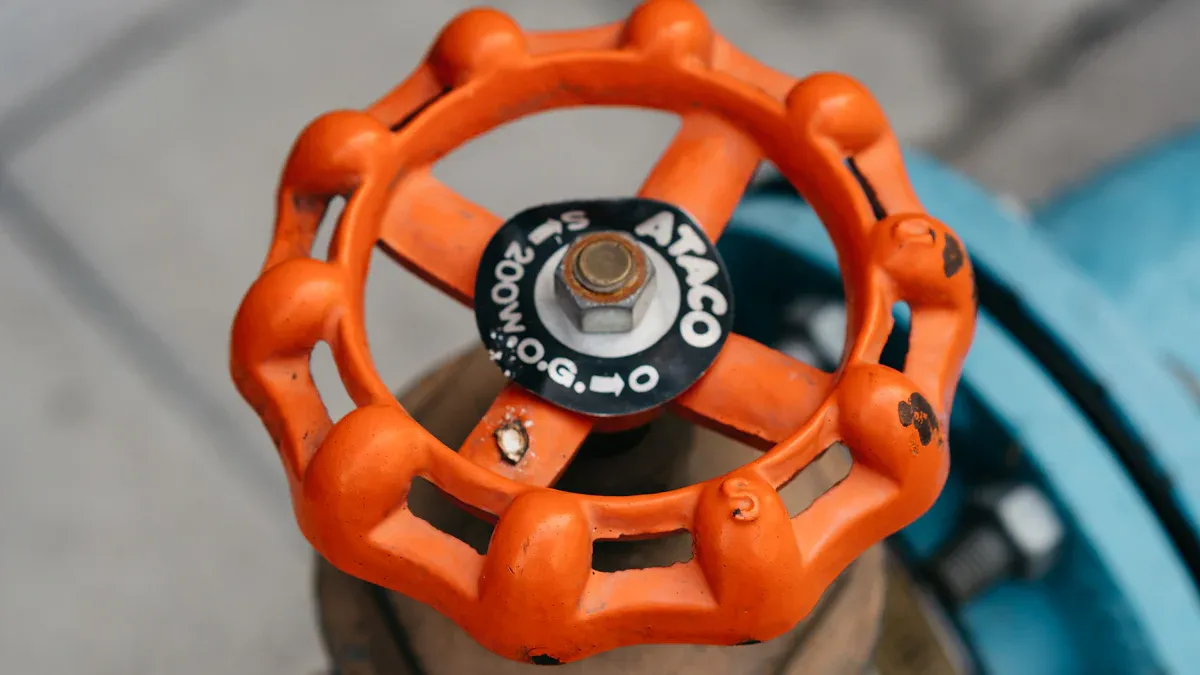
Self-regulating balance valves automatically maintain optimal flow rates. They eliminate manual adjustments and extensive commissioning processes. This technology streamlines installation and operation within complex systems, making the Balance Valve a crucial component.
Key Takeaways
- Self-regulating balance valves automatically control water flow. They do not need manual changes.
- These valves make system design easier. They also make installation faster.
- They help save energy. They also make heating and cooling systems work better.
The Evolution of Balance Valve Technology: From Manual to Self-Regulating
The Challenges of Traditional Balance Valve Systems
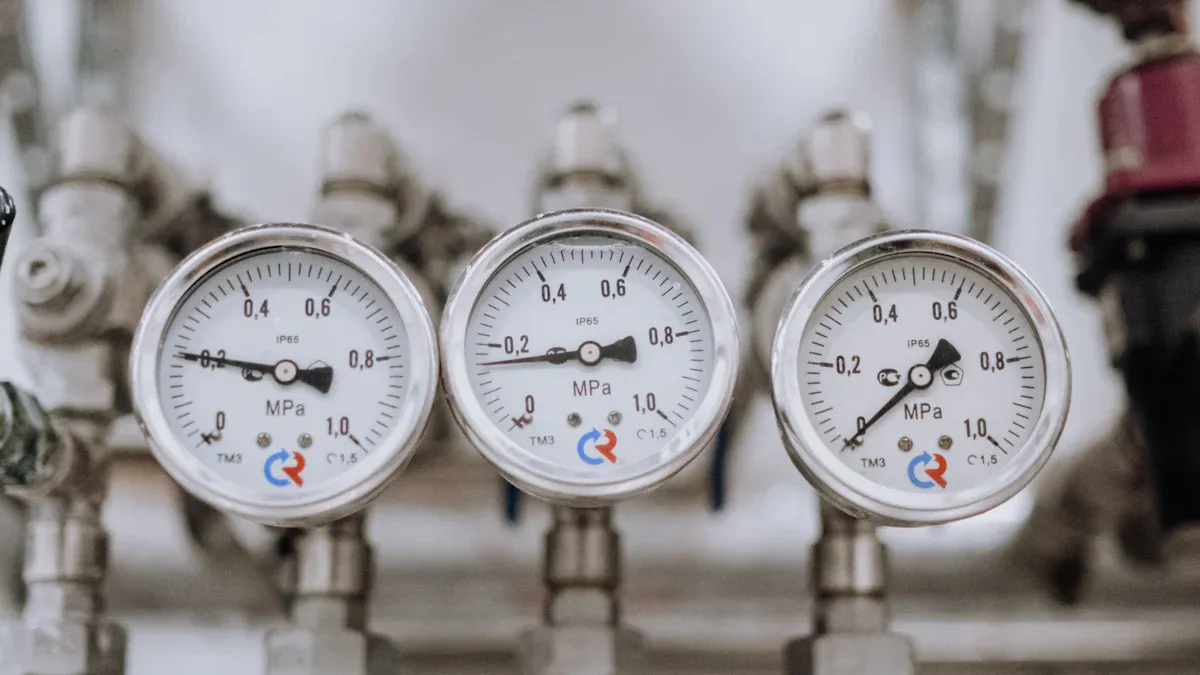
Traditional HVAC systems faced significant hurdles in maintaining optimal flow rates. Dirty or clogged air filters restricted airflow, forcing the HVAC system to work harder. Issues with ductwork, such as narrow ducts, sharp bends, or long runs, created bottlenecks and turbulence, impeding efficient air distribution. Improperly sized units, either too large or too small, led to inconsistent temperatures and increased energy consumption. These factors made achieving stable and efficient system performance difficult, often requiring constant manual adjustments.
Understanding Self-Regulating Balance Valve Mechanisms
Self-regulating Balance Valve technology emerged to address these issues. These valves employ sophisticated internal mechanisms for automatic flow control. One common method uses a stainless steel flow limiting cartridge with a spring-loaded cup. This component dynamically absorbs pressure fluctuations, ensuring consistent flow within a tight tolerance, often +/- 5%. Other designs feature an all-metal internal spring mechanism. This mechanism automatically adjusts to maintain preset flow rates despite varying system pressures, operating without external power. Thermostatic actuators also play a role. They sense fluid temperature and modulate the valve open or closed to maintain a specified temperature, conserving resources.
Key Self-Regulating Balance Valve Innovations and Types
Key innovations include Pressure Independent (PI) Balancing Valves. These automatic valves use an internal cartridge to maintain a constant flow rate despite differential pressure changes. They come pre-calibrated, simplifying commissioning. Thermal Balancing Valves (TBV) represent another type. TBVs primarily serve domestic hot water recirculation circuits. They modulate flow to maintain a fixed temperature using an internal thermostatic cartridge. Some models even include a bypass for thermal disinfection. Automatic balancing valves feature self-regulating mechanisms that adjust flow based on system conditions, commonly used in complex and dynamic systems.
Simplifying Design and Enhancing Performance with Self-Regulating Balance Valves

Streamlined System Design and Reduced Complexity
Self-regulating balance valves fundamentally change how engineers approach system design. They significantly reduce complexity. Designers no longer need to account for extensive manual balancing procedures. This eliminates the need for specialized equipment during the design phase. Furthermore, these valves minimize flow through the system. This removes the requirement for oversized recirculation pumps. Oversized pumps often cause system wear and waste energy. The inherent automation of these valves simplifies hydraulic calculations. It also streamlines component selection. This leads to a more straightforward and efficient design process from the outset.
Installation Efficiency and Optimized Commissioning
The benefits of self-regulating balance valves extend directly to installation and commissioning. Installers find the process much simpler. These valves arrive pre-calibrated from the factory. This eliminates the need for on-site adjustments. They also operate without external power or gas sources. This simplifies wiring and piping requirements. Commissioning becomes significantly faster and less labor-intensive. Technicians do not perform time-consuming manual balancing. They simply install the valves. The valves then automatically adjust to system conditions. This reduces overall project timelines and labor costs.
Improved System Stability and Energy Efficiency
Self-regulating balance valves dramatically improve system stability and energy efficiency. They feature built-in intelligence through an adaptive flow optimizer. This optimizer continuously measures flow rate, temperature, position, and power. It dynamically balances pressure fluctuations. This contributes greatly to overall system stability. The valves also adjust volumetric flow presetting to achieve the desired delta-T. This is crucial for precise temperature control. It also significantly reduces energy consumption.
Real-world applications demonstrate substantial energy savings. A study on an intelligent control strategy in a district heating system showed an energy saving rate of 3.73%. This resulted from improved hydraulic and thermal balance. Another method combined pre-set thermostatic radiator valves with automatic balancing valves. This combination led to up to 17% heat loss reduction. It also achieved 74% pump electricity savings. An Informer-based Model Predictive Control (MPC) method further highlighted these benefits. This method incorporated hydraulic balance. It demonstrated energy savings of 4.24% and 11.34% compared to other control methods. These methods included LSTM-based MPC and empirical heating curve control. These examples clearly show the significant energy benefits of using a self-regulating Balance Valve.
Practical Applications and Future of Self-Regulating Balance Valves
Real-World Impact Across Industries
Self-regulating balance valves have transformed various industries by ensuring precise flow control and system efficiency. Commercial HVAC systems, for instance, greatly benefit from this technology. Consider a new five-floor residential building with a chilled water (CHW) system. This building utilized automatic flow limiting (FLV) balancing valves on 350 fan-coil units and six air-handling units. Engineers configured the CHW pump differential pressure (ΔP) setpoint to maintain a minimum of 2.0 ΔP at the FLV on the worst-case unit. This setup aimed for efficient system operation and better room temperature control. During troubleshooting, technicians discovered some FLVs were installed backward due to incorrect manufacturer labeling. Others had missing or backward rubber diaphragms. These installation errors caused incorrect pressure drops and water flow. Correcting these installation issues, rather than problems with the valves’ self-regulating nature, resolved the system imbalances. This case demonstrates the critical role of proper installation for these advanced components. Beyond residential buildings, industries like healthcare, data centers, and manufacturing also rely on these valves to maintain stable temperatures and optimize energy use in their complex fluid distribution networks.
Beyond Simplification: Additional Benefits
The advantages of self-regulating balance valves extend far beyond merely simplifying system design and installation. They offer significant long-term benefits for system operation and maintenance.
- Prolonged Equipment Life: These valves ensure components operate within their designed parameters. This reduces strain and wear, which extends the lifespan of the entire HVAC system.
- Easy Maintenance and Troubleshooting: Modern pressure-independent balancing valves (PIBVs) often include features like measurement ports and easy-to-read indicators. These features simplify diagnosis and issue resolution for technicians. This reduces downtime and maintenance costs.
- Reduced Maintenance Costs: Self-regulating balance valves minimize the need for manual adjustments. This leads to less labor, fewer commissioning callbacks, and fewer readjustments over time.
- Longer Component Life: By maintaining balanced flow, these valves reduce wear and tear on system components such as pumps, valves, and actuators. This prevents issues like mechanical stress, water hammer, and thermal stress. It lowers repair costs and extends equipment lifespan.
- Simplified Maintenance Logistics: Valves with built-in differential pressure regulation or automatic balancing decrease the necessity for numerous measuring devices and balancing test ports across various branches. This streamlines maintenance.
- Prevention of Systemic Issues: Balancing helps prevent problems like scale buildup, corrosion, noise, and vibration by avoiding excessive flows. All these issues contribute to maintenance challenges.
Furthermore, self-regulating balance valves significantly improve occupant comfort in buildings. They optimize flow rates, which leads to improved temperature control within the HVAC system. This precise temperature management is crucial for maintaining a comfortable indoor environment. These valves prevent hot or cold spots by ensuring even temperature distribution throughout the building. They allow automatic systems to fine-tune flow rates, leading to a more balanced and effective operation. They also maintain consistent indoor temperatures, which is essential for occupant well-being.
The Future Landscape of Balance Valve Technology
The future of self-regulating balance valve technology involves deeper integration with advanced digital solutions and a growing market presence. Emerging technologies are already enhancing these valves.
- Digital Twin Technology: Engineers integrate digital twin technology with self-power control valves to optimize energy capturing characteristics and improve performance. A ‘lightweight digital twin’ uses an agent model to dynamically consider operating conditions and optimize flow-matching wheel design. This optimization has led to a 3.21% improvement in average energy capturing efficiency and a 20.57% improvement in average output power compared to pre-optimization.
- Machine Learning: Machine learning optimizes noise reduction in regulator spray valves, a type of control valve. This involves coupling Large Eddy Simulation (LES) with Lighthill’s acoustic analogy to model noise generation. The machine learning approach resulted in a 12.4 dB(A) noise reduction while decreasing the flow coefficient by only 7.5%. This enhances structural safety without impairing valve operability.
- Digital Twin-Based Intelligent Control: A digital twin-based intelligent control system is being developed for gas extraction from boreholes, which involves control valves. This system uses a ‘Four-Dimensional’ framework for bidirectional mapping between physical and virtual entities. Pilot studies showed this system significantly increased gas extraction concentration, with optimal ranges achieved for specific valve openings.
Future trends predict increasing demand for dynamic balancing valves. Energy efficiency regulations, smart building development, and urbanization, especially in emerging economies, drive this demand. Retrofitting aging infrastructure, particularly in the U.S., Europe, and Japan, with green building upgrades creates recurring demand. Automation and smart sensors, including AI-enabled HVAC balancing and IoT-enabled valves, are becoming standard for real-time optimization and predictive maintenance. Integration with Building Management Systems (BMS) is crucial. Valves generate data and designers select them in tandem with BMS design. Modular and compact designs are being developed specifically for retrofitting older buildings with limited space. Compliance with energy efficiency mandates like LEED, WELL, and ASHRAE 90.1 is a key design trigger for adoption in new construction and retrofits. The market is shifting towards software-integrated solutions and the use of digital twins and flow simulations for pre-selection and continuous optimization.
Self-regulating Balance Valves represent a fundamental shift in system design. They lead to simpler, more efficient, and highly reliable operations. This innovative technology makes complex systems manageable. It also ensures high performance across various applications. Engineers now achieve optimal system functionality with greater ease.
FAQ
What is a self-regulating balance valve?
A self-regulating balance valve automatically maintains a consistent flow rate. It adjusts to pressure changes within a system. This eliminates manual adjustments.
How do these valves improve energy efficiency?
Self-regulating valves optimize flow rates. This reduces the need for oversized pumps. They also ensure precise temperature control. This minimizes energy waste in HVAC systems.
Can self-regulating valves be used in existing buildings?
Yes, engineers often use these valves for retrofitting older buildings. Their modular and compact designs make installation easier. They help meet modern energy efficiency standards.
Post time: Dec-24-2025