
Selecting the right Solenoid Coil for harsh environments, where dust, chemicals, extreme temperatures, and constant vibration threaten performance, requires a systematic approach. This approach prioritizes material science, environmental sealing, and electrical robustness over standard specifications. This guide details critical factors and the selection process for a reliable coil.
Key Takeaways
- Choose solenoid coils carefully for tough places. Look at materials, seals, and electrical parts. This helps them work well in heat, chemicals, and vibrations.
- Understand the environment where the coil will work. Check for extreme temperatures, moisture, chemicals, and dust. This helps pick the right coil.
- Test the coil before using it. Make sure it works in tough conditions. This prevents problems and saves money later.
Defining Harsh Environments for Solenoid Coils
Temperature Extremes and Solenoid Coil Performance
Extreme temperatures challenge solenoid coils. High heat degrades insulation, causing brittleness or melting, which leads to short circuits. Conversely, very low temperatures make materials stiff and prone to cracking, affecting mechanical integrity.
Moisture, Humidity, and Solenoid Coil Corrosion
Moisture and humidity are silent destroyers. High humidity causes moisture to settle on windings, increasing surface leakage current and lowering insulation resistance. Condensation forms when surface temperature drops below the dew point, directly impacting resistance. High humidity increases short circuit risk for insulated coils. Hydrophobic insulators offer a solution.
Chemical Exposure and Solenoid Coil Material Compatibility
Chemical exposure quickly ruins a solenoid coil. Acids, bases, and solvents attack and degrade the coil’s housing, wiring insulation, and potting compounds. Selecting compatible materials prevents premature failure.
Vibration, Shock, and Solenoid Coil Mechanical Integrity
Constant vibration or sudden shocks wreak havoc on a coil’s internal structure. These forces loosen wire connections, cause windings to rub, and even crack encapsulation. Robust mechanical design and secure mounting maintain integrity.
Dust, Particulates, and Solenoid Coil Heat Dissipation
Dust and fine particulates are thermal insulators. Even a thin layer significantly impedes heat transfer from the coil surface to the ambient environment. This impedance increases the coil’s operating temperature. Smaller particulate matter, forming a compact layer, more profoundly reduces heat dissipation, negatively affecting efficiency.
Electromagnetic Interference (EMI) and Solenoid Coil Shielding
Electromagnetic interference (EMI) disrupts a solenoid coil’s precise operation. External magnetic fields or radio frequencies induce unwanted currents, leading to erratic behavior or failure. Shielding techniques, such as using conductive strips, effectively mitigate these effects. For instance, eight broad conductive strips can reduce power dissipation by 88%, helping maintain performance.
Core Technical Considerations for Solenoid Coil Selection
Solenoid Coil Winding Materials and Insulation
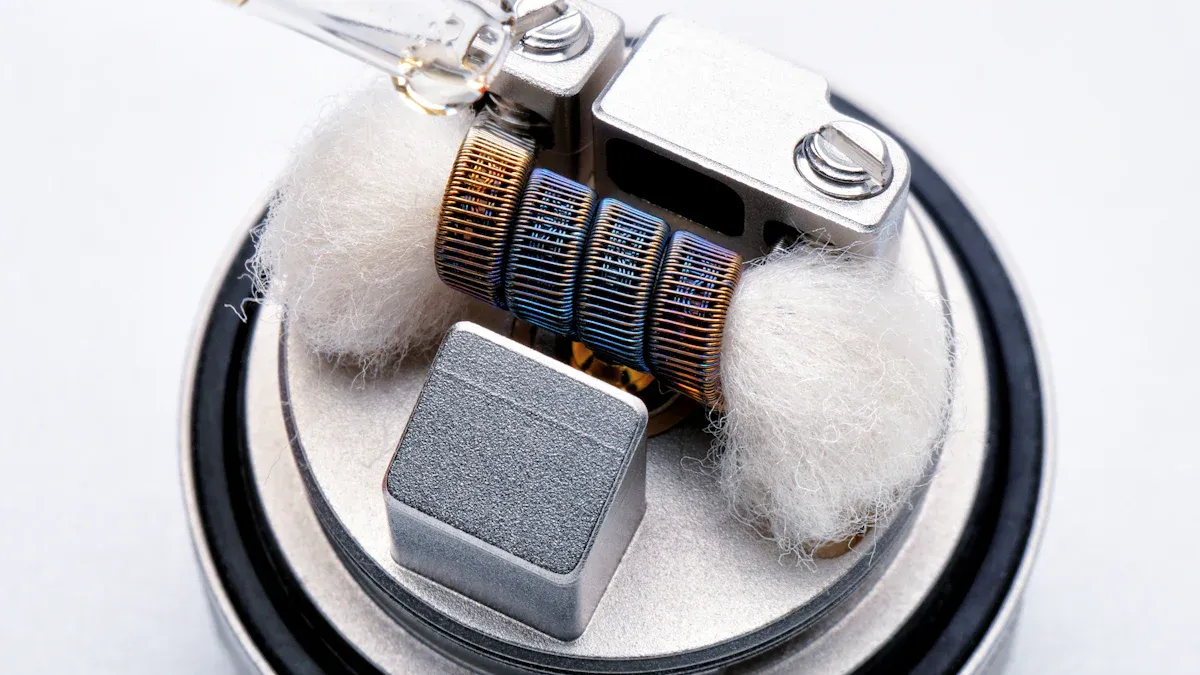
The heart of any solenoid coil lies in its winding materials and insulation. Copper wire remains the preferred choice for windings due to its excellent conductivity and thermal stability. However, the insulation surrounding this copper wire truly dictates the coil’s resilience in harsh environments. Insulation materials receive classifications based on their ability to withstand heat. For instance, Class F insulation tolerates temperatures up to 155℃, offering an expected lifetime of 20,000 hours. For applications involving high heat, such as steam, Class H insulation becomes the recommended choice, boasting an impressive expected lifetime of 30,000 hours. Exceeding a coil’s temperature rating, which directly relates to the copper winding’s insulation class, can lead to the failure of either the copper or the insulating material. This often results in a short circuit, bringing operations to a halt.
Encapsulation and Potting for Solenoid Coil Protection
Encapsulation and potting provide a crucial shield for solenoid coils, protecting them from environmental aggressors. These processes involve encasing the coil in a protective compound. Master Bond epoxy potting/impregnation resins, for example, offer robust protection. They resist corrosive chemicals like gasoline, oils, and brake fluids, and they also stand up to severe thermal cycling. Specific formulations cater to different needs. EP42HT-2ND-2Med Black, a two-component epoxy paste adhesive, provides outstanding thermal stability and electrical insulation, serviceable from -60°F to +450°F. For flexibility and resistance to thermal shock, EP37-3FLF works well, with a service temperature range from 4K to +250°F. When thermal conductivity and high-temperature resistance are paramount, EP46HT-2AO Black presents a good option. Furthermore, materials like UV25, EP125, EP41S-5, and EP62-1 prove excellent for long-term exposure to corrosive chemicals like xylene, lasting several months to a year or longer. Master Bond rigorously tests its materials for chemical resistance by immersing samples in specific chemicals, such as xylene, and measuring weight change over time. A swelling of less than 4-5% indicates excellent resistance, ensuring these epoxies suit applications involving corrosive chemical exposure.
Sealing and IP Ratings for Solenoid Coils
Effective sealing prevents ingress of dust and water, a critical factor for solenoid coils in harsh settings. Ingress Protection (IP) ratings provide a standardized measure of this protection.
| Feature | IP67 | IP68 |
|---|---|---|
| Dust Protection Level | 6 = Dust-tight (no ingress) | 6 = Dust-tight (no ingress) |
| Water Protection Type | Temporary immersion | Continuous submersion |
| Test Method | Submersion in water up to 1 meter for 30 minutes | Depth and duration specified by manufacturer (e.g., Integra enclosures rated at 2m for 24 hours) |
| Exposure Duration | Short-term only | Long-term or continuous |
| Best For | Marine docks, HVAC systems, equipment exposed to temporary flooding | Marine enclosures, submersible sensors, wet infrastructure |
| Limitations | Not designed for prolonged underwater exposure | Performance varies by product; verify specific depth/time with manufacturer |
IP67 offers complete protection from dust and withstands temporary immersion in water up to 1 meter. This rating suits areas with a plausible risk of flooding, high humidity, spraying, or splashing, such as car washes or construction zones with unpredictable drainage. It provides confidence when water might rise, even temporarily. IP68, in contrast, is purpose-built for prolonged exposure to water. It features high-quality gaskets and strong sidewalls to maintain a sealed enclosure even under high water pressures. IP68 designs allow for continuous submersion under specific conditions, making them ideal for devices used in wetter, more demanding environments.
Connector and Wiring Selection for Solenoid Coils
Choosing the right connectors and wiring ensures reliable electrical connectivity, especially in high-vibration environments. DIN connectors are crucial for secure, quick-disconnect electrical connections. They simplify installation, maintenance, and coil replacement, and manufacturers can integrate them into bobbin housings for advanced coil designs. Copper wire, as mentioned, is preferred for its conductivity and thermal stability. The quality and heat resistance of its insulation are categorized into classes. Class F tolerates temperatures above 155°C, suitable for standard industrial automation. Class H offers protection at operating temperatures over 180°C, ideal for heavy-duty industrial environments. Class N, engineered for thermal stability exceeding 200°C, finds use in advanced, energy-intensive industrial machines. Encapsulated solenoid coils, protected by durable materials like epoxy, rubber, or specialized resins, significantly increase resistance to severe vibration, moisture, chemicals, and electrical transients. This makes them indispensable in demanding applications like oil and gas, process automation, and outdoor machinery. To minimize vibration stress, engineers use mounting brackets to secure valves and reduce vibration transfer. If installed near motors or pumps, flexible piping or isolators prevent vibration from reaching the valve body.
Thermal Management of Solenoid Coils
High-power solenoid coils generate significant heat, making effective thermal management essential for proper operation and extended lifespan. Engineers employ various techniques to dissipate this heat. Heat sinks, passive cooling devices made from high thermal conductivity materials like aluminum or copper, use fins to dissipate heat through convection. Forced air cooling uses fans or blowers to move air over components and heat sinks, significantly improving heat dissipation compared to natural convection. This allows for more compact designs and higher power densities. Liquid cooling systems employ a coolant fluid, such as water or a water-glycol mixture, to absorb and transfer heat. This advanced technique offers superior thermal performance for high-power and high-density applications, though it can be more complex and expensive. Active cooling systems, often found in high-performance solenoid valves, maintain optimal operating temperatures. These can include thermoelectric coolers, miniature refrigeration cycles, or circulating coolant fluids, often incorporating temperature sensors and feedback control for dynamic adjustment. Thermal Interface Materials (TIMs) also play a role by improving thermal contact between components and cooling systems, filling microscopic air gaps and surface imperfections to reduce thermal resistance.
Electrical Specifications for Solenoid Coils in Extremes
Extreme temperatures significantly affect a solenoid coil’s electrical resistance. The resistance of solenoid coils increases with temperature due to the temperature coefficient of resistance of copper. This relationship follows the formula: R(T) = R@25C [1 + Alpha (T - 25)], where Alpha (α) is the temperature coefficient of resistance for copper (0.0039), R(T) is the wire resistance at temperature T, and R@25C is the wire resistance at 25°C. For example, a 10 Ohm coil at 25°C will see its resistance increase to 13.9 Ohms at 125°C, representing a 39% increase for a 100°C temperature rise. High ambient temperatures, combined with continuous duty, can cause the coil temperature to exceed the magnet wire’s rating or increase resistance to a point where insufficient current is supplied for proper operation. This directly impacts the actuator force, which depends on the Ampere-Turns (NI) of the coil. If the resistance becomes too high, the current will be too low, leading to inadequate force to operate the solenoid actuator or valve. While inductance affects solenoid valve performance, how extreme temperatures affect the inductance of solenoid coils is not typically a specified characteristic.
Magnetic Performance of Solenoid Coils Under Stress
Ensuring consistent magnetic performance under stress is vital for reliable operation. Engineers use specific methods to measure the magnetic force output of a solenoid coil under varying environmental conditions. One can calculate the amp-turns and then refer to amp-turn force graphs provided in technical guides to determine the force output after a temperature rise. Experimental setups, such as those used at the ITER-India cryogenic laboratory, test solenoid valves under varying external magnetic fields. Researchers used an air core inductor magnetic coil to generate the external magnetic field and a tesla meter to measure it. They varied the magnetic field by adjusting the supply voltage to the magnetic coil. Another common method involves a force-stroke (F/s) characteristic curve test. This test ensures the nominal solenoid force is achieved at a specified stroke and fixed rated excitation current. It involves inserting the component, energizing the coil with rated current, moving the armature to its end position, and then pushing it out and back while recording force, stroke, and time measurements. A force-current (F/I) characteristic curve test also measures force output in relation to varying current, providing further insight into performance under stress.
Step-by-Step Solenoid Coil Selection Process
Choosing the perfect solenoid coil for a tough job is like being a detective. You gather clues, analyze the scene, and then pick the best tool for the mission. This step-by-step guide helps you navigate the selection process with confidence.
Defining Environmental Parameters for Solenoid Coils
First, paint a clear picture of the battlefield. What kind of environment will the solenoid coil face? Think about the temperature highs and lows. Will it get soaked in water or blasted by chemicals? Does it shake, rattle, and roll all day long? Is dust a constant companion? And what about sneaky electromagnetic interference? Knowing these details upfront prevents big headaches later. Every detail helps narrow down the choices.
Determining Solenoid Coil Electrical and Mechanical Requirements
Next, figure out what the coil needs to do. How much force does it need to generate? How quickly must it respond? What are its physical dimensions? Then, dive into the electrical nitty-gritty. These details are like the coil’s DNA.
- Voltage Rating: This number is super important. A 110V solenoid needs 110V. Too much or too little voltage causes trouble, like overheating or poor performance.
- Power Rating: This tells you how much electricity the coil uses when it is on. More power usually means a stronger magnetic field and faster action. But it also means more heat and energy use.
- Resistance: Measured in ohms, resistance controls how much current flows. High resistance means less current, which saves power but makes the magnetic field build up slower. Low resistance means more current, a stronger field, and faster action, but also more heat.
- Duty Cycle: This is a percentage. It tells you how long the coil can stay on without getting too hot. A high duty cycle means it can run longer, but it also uses more energy and creates more heat.
Evaluating Material Compatibility for Solenoid Coils
Now, let’s play matchmaker with materials. The coil’s parts must get along with any chemicals they meet. Imagine a superhero whose suit melts in water – not very heroic! Experts suggest keeping a material compatibility chart handy. This chart should always get updates as fluid compositions change.
Many resources exist to help with this crucial step. For example, Electricsolenoidvalves.com offers a free “Compatibility Database.” This tool lets you check over 600 chemicals against more than 40 materials. It uses a simple rating system to show how well materials resist chemical exposure:
- A – Excellent: The material barely reacts with the chemical. Its strength stays the same.
- B – Good: Some minor reactions might happen, like a little discoloration or tiny corrosion. The material’s strength changes only a little.
- C – Fair: Not great for constant use. The chemical might make the material soft, weak, or swollen. This shortens its life a lot. Find something better if you can!
- D – Severe Effect: Absolutely do not use! The chemical will destroy the material.
- E – Insufficient Data: Not enough tests exist. You need to do more checking yourself.
This database even includes notes about temperature. Always check compatibility to avoid damage, chemical changes, or dangerous situations.
Assessing Sealing and Protection Needs for Solenoid Coils
Think of sealing as the coil’s armor. It keeps out the bad stuff like dust and water. Ingress Protection (IP) ratings tell you how tough this armor is. These ratings help you pick a solenoid valve that can handle corrosive liquids and dangerous places.
IP testing checks how well a product keeps out liquids and particles. The International Electrotechnical Commission (IEC) 60529 standard sets the rules for these tests. For example, IPX9 and IPX9K both mean resistance to high-pressure, hot water jets. However, their tests differ. IEC 60529 describes IPX9 tests, which measure the force of water jets. ISO 20653 covers IPX9K tests, often for equipment outside a car’s passenger area. Other standards like GB4208 and DIN40050-9 also apply to IPX9K.
The IP code has two numbers. The first number shows protection against solid objects, like dust. The second number shows protection against water. Encapsulated coils often reach IP64 or IP65. Waterproof coils can even hit IP67, meaning they can handle temporary submersion.
Considering Thermal Management Strategies for Solenoid Coils
Solenoid coils can get hot, especially when working hard. Managing this heat is like keeping a cool head under pressure. It ensures the coil works right and lasts a long time. Engineers use some clever tricks to figure out how much heat a coil can handle.
- Rule of Thumb (Thermal Rise): Allow 2.0 to 2.5 square inches of surface area for every watt of power lost in the coil. This usually keeps the temperature from rising more than 75°F.
- Esson’s Rule: This formula helps estimate temperature rise: Degrees F = 100 * (Watts lost) / superficial area. The “superficial area” is roughly the coil’s outside surface. The “100″ is a general number, so this rule gives a good first guess.
- Carhart’s Formula: This one tries to find the hottest spot inside the coil: Highest Temp = Ambient + 0.0000445 * (current density^2) * coil depth.
These calculations help engineers design cooling solutions, like heat sinks or fans, to keep the coil from getting too toasty.
Prototyping and Testing Solenoid Coils
After all the planning, it is time for a test drive. Building a prototype and putting it through its paces is crucial. You can simulate the harsh environment in a lab. This helps confirm the coil performs as expected. Does it still work when it is freezing cold or super hot? Does it survive the vibrations? Testing catches problems early, saving time and money down the road. It is like a dress rehearsal before the big show.
Collaborating with Solenoid Coil Suppliers
Finally, do not go it alone! Work closely with solenoid coil suppliers. They are the experts. Give them all the details you have gathered. The more information they have, the better they can help you.
- Coil geometry: Tell them the shape, size, number of wire turns, and how tightly packed the wire is. These details affect the magnetic field.
- Material selection: Specify the core material and the type of insulation. Copper is the usual choice for the wire.
- Operating conditions: Share all those environmental factors: temperature, humidity, and vibration.
- Electrical properties: Give them the resistance, inductance, and capacitance you need.
- Manufacturing constraints: Mention any limits on space, cost, or how quickly you need them.
- Joining technique: How you connect the wires impacts the total cost.
Provide a detailed design draft, a full list of specifications, and a proper drawing. A STEP-file or CAD drawing of the winding or the whole part is also very helpful. This teamwork ensures you get a coil that is tough enough for anything.
Common Pitfalls in Solenoid Coil Selection
Underestimating Environmental Severity for Solenoid Coils
Designers often misjudge the harshness of an environment. They might think an IP-rated Solenoid Coil is maintenance-free. This idea fails in systems with vibration or rapid temperature changes. Even sealed units can experience coil fatigue. Pushing voltage beyond optimal design also causes heat buildup. This shortens insulation life. It also creates electromagnetic interference (EMI) that affects nearby electronics. This thermal rise becomes a big problem in enclosed spaces.
| Misinterpretation/Issue | Consequence leading to coil failure |
|---|---|
| Ignoring Ambient Temperature Limits | Operating a solenoid in an environment hotter than its maximum rated ambient temperature causes the coil wire’s resistance to increase. This leads to higher current draw and excessive heat. The insulation degrades, resulting in shorts or an open circuit. |
| Overlooking Fluid Temperature Effects | Hot fluid passing through the solenoid transfers heat directly to the coil. This external heat adds to the internal heat. It pushes the coil temperature beyond its limits. The elevated temperature weakens the magnetic field and degrades the coil’s enamel. |
| Neglecting Duty Cycle and Power Dissipation | Assuming a solenoid can operate continuously without considering its power dissipation is a common error. Continuous energization without enough cooling causes the coil temperature to rise steadily. This leads to thermal runaway and eventually burns out the coil. |
| Improper Voltage/Current Application | Applying a voltage higher than the coil’s rating or allowing too much current directly increases the power dissipated. This surge generates rapid heat. The sudden thermal stress can melt the wire insulation or cause the wire to fuse. |
Overlooking Material Incompatibilities for Solenoid Coils
Choosing the wrong materials for a solenoid coil can lead to big trouble. If a valve material is incompatible with corrosive substances, it will deteriorate quickly. Using an incompatible valve for aggressive chemicals results in material breakdown and leakage. This means the coil fails prematurely.
Ignoring Thermal Runaway in Solenoid Coils
Thermal runaway is a silent killer for solenoid coils. It happens when a coil gets too hot, its resistance increases, and it draws even more current. This creates more heat, leading to a vicious cycle that eventually burns out the coil. Designers must consider duty cycles and power dissipation to prevent this.
Inadequate Testing of Solenoid Coils
Skipping thorough testing is like sending a soldier to battle without training. Without proper testing, engineers cannot confirm the coil’s performance in real-world conditions. This oversight can lead to unexpected failures and costly repairs later.
Balancing Cost vs. Reliability for Solenoid Coils
Choosing a cheaper solenoid coil often seems like a good idea at first. However, this can lead to higher costs in the long run. A lower-cost coil might have poor electrical compatibility. This causes noise, heat, or short cycling, limiting its long-term performance. Such coils fail prematurely. This increases downtime and maintenance expenses. Enhanced reliability, achieved through designs built for harsh conditions, significantly minimizes these costs. Coil malfunctions, often from overheating or electrical surges, reduce the force needed for reliable operation. A lower-cost coil prone to these issues will lead to increased downtime and reactive maintenance.
Choosing the right coil for tough places requires a smart plan. Engineers must combine clever material science, strong seals, and thorough testing. Focusing on these key areas guarantees long-lasting reliability and top performance, even when conditions get really challenging. This careful selection prevents unexpected failures.
FAQ
How do engineers make solenoid coils tough for harsh environments?
Engineers use special materials, strong seals, and robust electrical components. These coils withstand extreme temperatures, chemicals, and vibrations. They ensure reliable operation.
Why are IP ratings important for solenoid coils?
IP ratings show how well a coil resists dust and water. Higher numbers mean better protection. This ensures reliability in wet or dusty places.
How does heat affect a solenoid coil’s performance?
Heat increases resistance, reducing current and magnetic force. It also degrades insulation. This leads to short circuits and early failure.
Post time: Dec-12-2025