
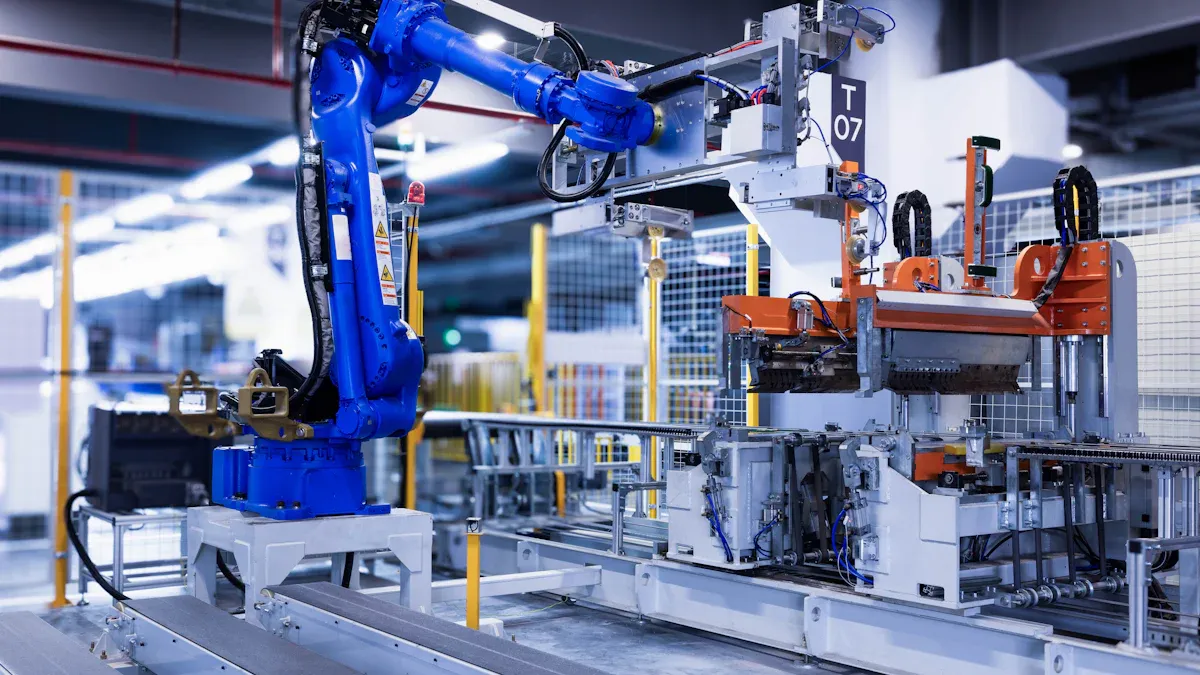
Smart solenoid coils play a crucial role in valve actuation, enhancing efficiency and control in various industrial processes. These advanced components enable precise operation, which is vital for maintaining optimal performance. The rise of IIoT connectivity has further transformed industrial applications, allowing for real-time monitoring and data-driven decision-making. Over the past five years, industries have increasingly adopted IIoT solutions, reflecting a strong trend toward automation and sustainability.
Key Takeaways
- Smart solenoid coils enhance valve actuation by improving energy efficiency and reducing operational costs. They can save up to 20% in energy consumption.
- IIoT connectivity allows for real-time monitoring and predictive maintenance, which helps prevent downtime and improves overall system efficiency.
- Adopting smart solenoid coils can be challenging due to high implementation costs and the need for advanced technology, but the long-term benefits outweigh these initial hurdles.
Technological Innovations in Solenoid Coils
Recent advancements in solenoid coils have significantly enhanced their performance and efficiency in valve actuation. These innovations address the growing demands of modern industrial applications. Key technological advancements include:
- Double Coil Technology: This design utilizes separate windings for high power to open the valve and low power to maintain its position. This approach leads to substantial energy savings.
- Energy-Saving Coil Designs: These designs lower the excitation current after actuation, resulting in reduced power consumption and significant cost savings.
- Next-Gen Low Power Solenoid Valves: Operating at just 0.5 to 0.75 watts, these valves mark a shift towards lower energy consumption, promising further operational cost reductions.
- Improved Thermal Management: Advanced insulation techniques prevent overheating, which enhances the reliability of solenoid coils.
- Integration of Smart Technologies: Features such as IoT connectivity and self-diagnostic systems enable predictive maintenance, thereby improving operational efficiency.
- Use of Advanced Materials and Manufacturing Techniques: Innovations like additive manufacturing enhance durability and optimize the performance of solenoid coils.
The integration of IIoT connectivity plays a crucial role in enhancing the performance of solenoid coils in industrial environments. This connectivity enables:
- Real-time data monitoring
- Predictive maintenance capabilities
- Improved operational efficiency
- Transformation of solenoid valves into intelligent components within a connected ecosystem
- Enhanced control and automation in industrial processes
Moreover, the incorporation of sensors into smart solenoid coils allows for real-time monitoring and control of valve operations. These sensors provide valuable data on flow rates, pressure, temperature, and valve position. This information facilitates predictive maintenance and improves overall system efficiency.
For instance, companies like Eaton and Robert Bosch GmbH have developed smart solenoid valves that improve energy efficiency and enable predictive maintenance. Festo’s Motion Terminal VTEM exemplifies how multiple functions can be combined into a single unit, enhancing flexibility in digital factories.
Benefits of Smart Solenoid Coils
Smart solenoid coils offer numerous advantages that significantly enhance valve actuation in industrial applications. These benefits include improved energy efficiency, cost savings, enhanced safety, and increased automation capabilities.
-
Energy Efficiency: Smart solenoid coils contribute to substantial energy savings. Modern low-power solenoid-operated valves consume as little as 0.55 watts. This reduction in power consumption leads to lower heat generation, which prevents overheating and extends the lifespan of the coils. Additionally, magnetic latching solenoids retain their position during power failures, enhancing system reliability. Overall, these advancements result in decreased operational costs and improvements in environmental sustainability by significantly lowering energy consumption and carbon footprint.
-
Cost Savings: Industries that implement smart solenoid coils with IIoT connectivity report notable cost reductions. Customers have achieved operational cost reductions of approximately 15% due to the energy-efficient designs of these coils. This financial benefit stems from both reduced energy consumption and lower maintenance needs.
-
Safety Enhancements: In hazardous industrial environments, smart solenoid coils improve safety through several features:
- Explosion-proof designs ensure that valves can withstand high pressures and temperatures.
- Intrinsically safe electrical circuits limit energy levels to prevent ignition risks.
- Well-insulated and grounded electrical connections enhance safety.
- Position indicators display the valve’s state, preventing operational errors.
- Pressure relief mechanisms protect against overpressure and potential explosions.
- Manual override systems allow for emergency control during power failures.
-
Process Automation and Control Accuracy: Smart solenoid coils facilitate improved process automation and control accuracy. The following table summarizes key benefits:
| Evidence Type | Details |
|---|---|
| Energy Savings | Optimizing solenoid coil efficiency can lead to energy savings of up to 20%. |
| Response Time Improvement | Improved coil design can result in faster response times, with differences of up to 30% in high-performance applications. |
| Service Life | Well-designed coils minimize heat generation, decreasing failure rates and downtime. |
- Remote Diagnostics and Troubleshooting: Smart solenoid coils enable remote diagnostics, allowing specialists to quickly identify issues such as coil burnout or leakage without needing to be physically present. This capability is essential for maintaining operational efficiency and reducing downtime in industrial valve systems. A logical diagnostic flow isolates issues, ensuring troubleshooting is efficient and cost-effective rather than relying on random part replacements.
Implementation Strategies for IIoT Integration

Integrating smart solenoid coils into existing industrial automation systems requires a strategic approach to maximize benefits and ensure seamless operation. Industries often adopt multiple technologies and protocols to achieve robust IIoT connectivity and interoperability.
Key strategies include:
- Employing network protocols such as Ethernet/IP, Modbus TCP, and wireless technologies like Wi-Fi or LPWAN (LoRaWAN, Sigfox) to establish reliable communication channels.
- Utilizing edge computing near data sources to reduce latency and data volume, which enables faster system responses and lowers bandwidth costs.
- Connecting data streams to cloud platforms like Azure IoT, AWS IoT Core, or ThingWorx. These platforms support ETL processes, dashboards, and AI analytics that optimize valve performance and operational efficiency.
- Leveraging historical data trends to improve valve duty cycles, reduce energy consumption, and schedule predictive maintenance, thus minimizing downtime.
- Addressing cybersecurity risks by implementing network segmentation, firewalls, encrypted VPN access, edge filtering, and enforcing least privileged access policies.
- Overcoming challenges posed by legacy systems through protocol converters, gateways, or Ethernet-based retrofit modules.
- Managing data overload by applying edge analytics and filtering to transmit only essential alerts, reducing cloud storage and bandwidth expenses.
The following table highlights interoperability aspects that enhance integration between smart solenoid coils and other IIoT devices:
| Aspect | Description |
|---|---|
| Integration Strategies | Connect and optimize manufacturing components, including solenoid valves, to boost efficiency and reliability. |
| Communication Protocols | Use standardized protocols such as MQTT, OPC UA, and AMQP for seamless data exchange across devices. |
| Data Analytics | Apply machine learning algorithms on sensor data to enable predictive maintenance and extend valve lifespan. |
Implementing these strategies ensures smart solenoid coils function effectively within Industry 4.0 environments. This approach enhances automation, reduces operational costs, and supports sustainable industrial growth.
Challenges in Adopting Smart Solenoid Coils
Adopting smart solenoid coils in industrial valve actuation presents several challenges that manufacturers must navigate. These barriers can hinder the widespread implementation of these advanced technologies.
-
Lack of Standardization: The diversity in valve designs and communication protocols complicates the creation of a unified smart manufacturing environment. This lack of universal standards limits interoperability, making integration across different systems difficult.
-
Real-time Data Processing: Smart solenoid coils require advanced sensors and high-speed communication networks. These technologies are often technically demanding and costly, posing a challenge for many manufacturers.
-
Cybersecurity Concerns: Increased connectivity makes solenoid valves potential targets for cyber attacks. Manufacturers must implement robust security measures to protect their systems without compromising performance.
-
Durability in Harsh Environments: Smart valves must withstand extreme conditions while maintaining accuracy and reliability over time. This requirement can complicate design and manufacturing processes.
-
High Implementation Costs: Initial investments in hardware, software, and training can be substantial. Many manufacturers, especially smaller enterprises, may find these costs prohibitive.
-
Maintenance and Diagnostics Complexities: The complexity of smart systems can complicate troubleshooting and repairs. User-friendly diagnostic tools are essential for maintenance personnel to ensure efficient operations.
Manufacturers typically experience a return on investment (ROI) within 2-3 years due to energy savings and reduced maintenance costs. However, the initial investment remains a significant consideration.
| Barrier Type | Description |
|---|---|
| Lack of Standardization | Diversity in valve designs complicates the creation of a unified smart manufacturing environment. |
| Real-time Data Processing | Requires advanced sensors and high-speed communication networks to respond rapidly to changing conditions. |
| Cybersecurity Concerns | Increased connectivity makes solenoid valves potential targets for cyber attacks. |
| Durability in Harsh Environments | Smart valves must withstand extreme conditions while maintaining accuracy and reliability. |
| High Implementation Costs | Initial investments in hardware, software, and training can be substantial. |
Addressing these challenges is crucial for the successful adoption of smart solenoid coils in the evolving landscape of Industry 4.0.
Future Outlook for Valve Actuation Technologies
The future of valve actuation technologies looks promising, driven by advancements in smart solenoid coils and IIoT connectivity. Several key trends are expected to shape this landscape over the next five years:
- The rise of smart solenoids with IoT integration will enable real-time monitoring and control, enhancing operational efficiency.
- Miniaturization of solenoids will lead to more compact and efficient designs, allowing for easier integration into existing systems.
- Advancements in electromagnetic design will improve performance and efficiency, making solenoid coils more reliable.
Edge computing will play a crucial role in the evolution of IIoT-enabled solenoid coils. This technology allows for:
- Real-time data processing, essential for monitoring the performance of solenoid coils.
- Predictive maintenance, transitioning from scheduled maintenance to a proactive approach based on real-time data.
- Enhanced operational efficiency by integrating legacy systems with modern control platforms.
Moreover, regulatory standards will significantly influence the adoption of smart solenoid coils across industrial sectors. These standards will drive:
- Compliance with environmental regulations, encouraging industries to adopt smart solenoid coils for better pollution control.
- Enhanced operational efficiency through precise control, helping meet stringent emission limits.
- Innovation in pollution control technologies, spurred by the need for advanced systems that can handle tighter emission standards.
As industries embrace these trends, smart solenoid coils will become integral to achieving automation, efficiency, and sustainability in the evolving landscape of Industry 4.0.
Smart solenoid coils with IIoT connectivity revolutionize valve actuation in industrial settings. They enable continuous monitoring of performance metrics such as pressure and flow rates. Additionally, advancements in materials and design enhance efficiency and reliability. Embracing these technologies is essential for maintaining competitiveness in the evolving industrial landscape.
- Key Benefits:
- Enhanced performance through smart sensors.
- Improved energy efficiency with laminated solenoids.
- Greater operational capabilities with advanced materials.
Industries must adopt these innovations to thrive in the future.
FAQ
What advantages do smart solenoid coils offer over traditional coils?
Smart solenoid coils improve energy efficiency, enable real-time monitoring, reduce maintenance costs, and enhance automation through IIoT connectivity.
How does IIoT connectivity improve valve actuation performance?
IIoT connectivity provides real-time data, predictive maintenance, and remote diagnostics, which optimize valve operation and reduce downtime.
Are smart solenoid coils compatible with existing industrial systems?
Yes, smart solenoid coils support standard protocols and can integrate with legacy systems using gateways or protocol converters.
Post time: Apr-01-2026