
System imbalance often silently drains efficiency and resources. This leads to unnecessary energy consumption and operational expenses. A Balance Valve acts as an unseen solution, maintaining optimal system performance. Without proper flow regulation, systems incur significant hidden costs.
Key Takeaways
- Balance valves control water flow in heating and cooling systems. They make sure each part gets the right amount of water.
- There are two main types: static valves need manual setup, and dynamic valves adjust flow automatically. Dynamic valves keep flow steady even when system pressure changes.
- Using balance valves saves energy and prevents problems like uneven heating. They help systems work better and last longer.
Understanding the Core Function of a Balance Valve
What is a Balance Valve?
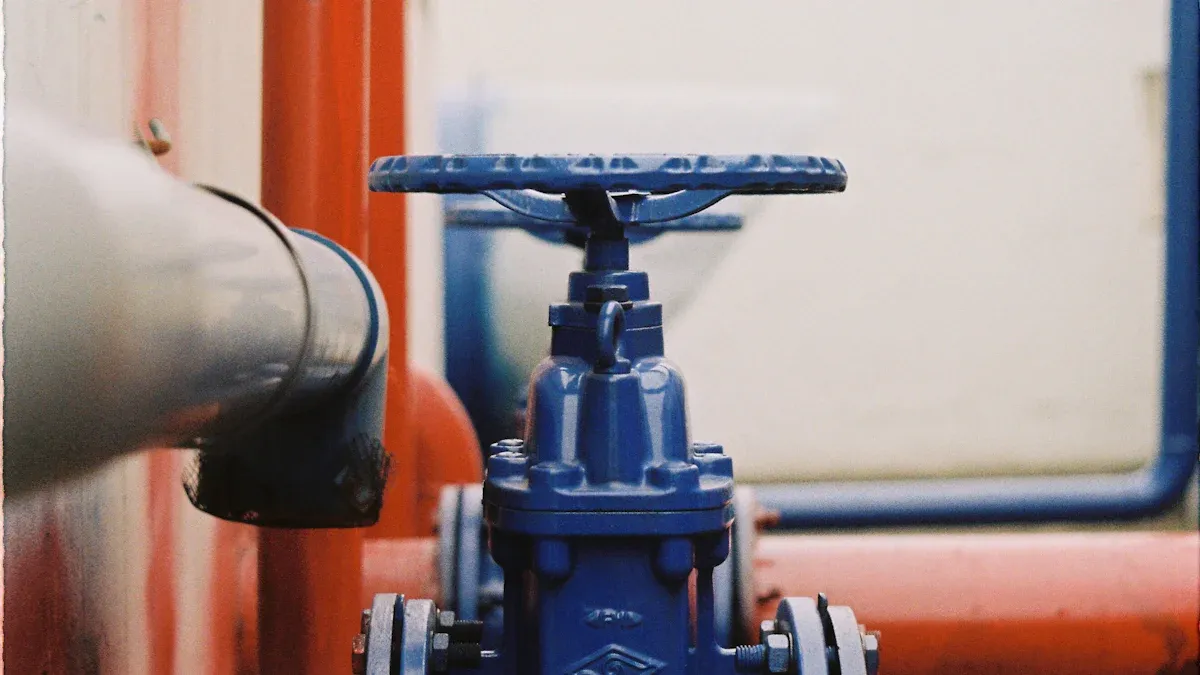
A balance valve is a crucial component in hydronic systems, ensuring the correct distribution of fluid to various parts of a system. It precisely controls flow rates, which prevents imbalances that can lead to inefficient operation and discomfort. The valve’s design allows it to manage fluid dynamics effectively.
A typical balance valve comprises several key components working in concert:
- Valve Body: This main housing contains all internal components. Manufacturers construct it from durable materials like brass or stainless steel to withstand water flow and pressure.
- Flow Adjustment Mechanism: This part allows control or adjustment of the flow rate. It often appears as a screw, knob, or dial. It can be manual or electronically/pneumatically controlled in automatic valves.
- Flow Indicator: A visual reference, such as a graduated scale or dial, shows the current flow setting.
- Pressure-Temperature Ports (P/T Ports): Small fittings attach sensors to monitor system pressure and temperature. These are crucial for calculating proper flow settings.
- Seat and Plug (or Disc): These form the sealing mechanism. The plug controls the opening to regulate flow. Manufacturers make them from durable, corrosion-resistant materials.
- Spring (in some designs): Used in pressure-independent balancing valves, it applies pressure on the valve plug or seat. This maintains a constant pressure differential and consistent flow despite system pressure fluctuations.
- Locking Mechanism: This prevents accidental changes to the desired flow rate once set, ensuring system balance.
| Component | Purpose / Role |
|---|---|
| Valve body / housing | The outer casing holds all internal parts; sized for pressure class and fluid compatibility. Robust material resists corrosion and temperature. |
| Restricting orifice / obturator / disc / plug | Creates the flow restriction; adjustable in manual/static valves, or paired with a movable mechanism in automatic types. The geometry of this part determines how much flow is allowed for a given ΔP. |
| Adjustment mechanism | For manual valves: handwheel, screw, plug, etc. For automatic valves: springs, diaphragms, movable elements that respond to pressure changes. |
| Differential pressure sensing (test ports / pressure taps) | Ports upstream and downstream of the flow orifice allow measuring ΔP. Used during commissioning or monitoring. Some designs integrate Venturi orifice for more accurate, stable measurement. |
| Flow measurement device | Optional but common in higher‑precision systems. Can be Venturi inserts, calibrated orifice plates, or other flow meter parts. Enables verifying that the flow set is being achieved. |
| Seals, packing, stems | These avoid leakage and ensure adjustment reliability over time. Good design here ensures low maintenance and consistent performance. |
| Locking or sealing mechanism | In manual valves especially, once the correct flow or ΔP has been achieved, a lock or seal can prevent tampering or drift. |
How a Balance Valve Regulates Flow
A balance valve operates on the fundamental hydraulic principle of wave motion. As fluid flows through a pipeline, it generates fluctuations, creating areas of high and low pressure. The valve’s function is to manage these pressure variations to maintain system stability. Balance valves regulate fluid flow by altering the flow resistance. They achieve this by adjusting the gap, or opening, between the spool and the valve seat. When inlet pressure increases, the valve automatically reduces the passage diameter to control the flow rate.
The internal mechanism of a balance valve adjusts to maintain a set flow rate despite pressure fluctuations:
- The valve monitors inlet pressures from hot and cold fluid lines.
- If pressure drops on one side (e.g., a cold water surge), the internal piston, diaphragm, or spring mechanism automatically reduces flow on the opposite side (e.g., hot water) to maintain balance.
- This adjustment ensures that outlet pressure and temperature remain constant despite upstream fluctuations.
The valve’s sophisticated internal design allows for precise flow control:
- At low differential pressures (below 2, 4, or 5 psi, depending on the model), the internal compensating mechanism remains stationary. It allows maximum free flow through both fixed and variable orifices. In this state, the valve cannot maintain a fixed flow rate, and flow increases with differential pressure.
- When differential pressure exceeds the minimum threshold, the internal piston assembly moves in the direction of flow. It partially compresses an internal spring. This action partially obstructs a tapered slot, automatically adjusting the flow passage to maintain the calibrated flow rate at higher differential pressures.
- As differential pressure and thrust continue to increase, the piston moves further. It compresses the spring more and further reduces the flow passage through the tapered orifice. This continuous adjustment ensures the valve delivers its calibrated flow rate under increasing differential pressure.
- This adjustment capability persists until the differential pressure reaches an upper threshold limit (14, 32, 34, or 35 psi). Beyond this limit, the piston and spring can no longer maintain the calibrated flow rate. The piston completely blocks the tapered orifice, forcing all flow through the fixed orifice, leading to an increase in flow rate if differential pressure rises further.
Different Types of Balance Valves
Balance valves primarily fall into two categories: static (manual) and dynamic (automatic). Each type serves distinct purposes within hydronic systems.
Unlike manual balancing valves, automatic (or pressure independent) balancing valves feature an internal cartridge that moves to sustain a constant flow rate even when the differential pressure across the valve fluctuates. People often refer to these as “dynamic” balancing valves. A pressure independent (PI) balancing valve controls the flow rate within a circuit to a fixed value using a ‘characterized’ opening in its cartridge. As differential pressure increases from zero to the minimum working range, flow initially increases proportionally. Beyond this point, the cartridge begins to compress against a spring, reducing the flow aperture and thereby keeping the flow constant. This regulation continues up to the maximum differential pressure of the working range. In multi-branch systems, PI valves ensure stable flow rates within each branch by adapting to pressure changes.
| Feature | Static Balance Valve | Dynamic Balance Valve |
|---|---|---|
| Adjustment | Manually adjusted during commissioning, set once. | Automatically adjusts flow rate. |
| Flow Maintenance | Maintains a constant flow rate in stable systems. | Maintains a constant flow rate regardless of system pressure or flow demand fluctuations. |
| System Conditions | Used in systems with relatively stable flow requirements. | Compensates for changes in system pressure or flow demand. |
| Performance Goal | Ensures constant flow rate. | Ensures consistent performance and energy efficiency by adapting to changes. |
Pressure-independent control valves (PICVs) represent a sophisticated type of dynamic balance valve. They offer significant advantages, especially in modern HVAC systems:
- They maintain a constant flow rate regardless of pressure fluctuations, ensuring optimal performance and energy efficiency.
- They eliminate the need for constant manual adjustments required by pressure-dependent valves, reducing inefficiencies and operational costs.
- They simplify system design and installation by removing the need for separate balancing valves, leading to reduced material and labor costs.
- They provide more reliable and efficient control in modern HVAC systems.
PICVs find application in various settings:
- Hydronic heating and cooling systems in buildings like offices, hotels, hospitals, and schools.
- Variable flow systems, often with variable speed pumps, supplying air handling units, chilled beams, and fan coil units for temperature control.
- Constant flow systems, where PICVs can act as flow limiters to automatically balance the system and prevent overflow in part-load operation.
- One-pipe constant flow radiator systems.
These valves combine multiple functions into one unit, saving design and installation time. They improve system efficiency and automatically adjust and compensate for pressure fluctuations to maintain stable and reliable control. PICVs maintain constant flow rates despite pressure differential fluctuations. They improve system stability, preventing overflows and underflows at terminal coils. They reduce wasted energy and suboptimal heat transfer. They simplify installation and commissioning due to automatic balancing and settable flow adjustment. They improve control valve authority, which is always one for PICVs. They diminish maintenance needs and reduce operational costs due to stable flow control.
The Indispensable Role of a Balance Valve in System Efficiency
Why a Balance Valve Ensures Consistent Performance
Hydronic balancing is the process of adjusting water flow in heating and cooling systems. This ensures each terminal unit receives the correct flow rate. Without balancing, a newly installed hydronic system is typically unbalanced. This leads to some coils receiving too much water and others not enough. This imbalance causes inefficiencies and discomfort, especially in larger multi-zone buildings. The primary goal of balancing is to equalize pressure drops across the system. This allows all components to operate within their design parameters.
In an unbalanced system, water tends to follow the path of least resistance. This leads to excessive flow in zones closer to the pump and insufficient flow in more distant zones. The purpose of a Balance Valve is to increase the pressure drop in zones receiving too much water. By introducing the correct amount of pipe restriction or pressure drop in these zones, the flow decreases there. Consequently, flow increases in other zones, thereby achieving a balanced system. Balancing valves ensure even water flow distribution according to each zone’s design requirements. This eliminates over-pumping (too much water) and under-pumping (not enough water) scenarios. Precise control reduces energy consumption for pumps and boilers. Properly balanced systems enhance comfort by evenly distributing heating or cooling.
How a Balance Valve Contributes to Energy Savings
Proper hydraulic balancing significantly impacts energy consumption. Implementing hydraulic balancing in HVAC systems can lead to energy savings of up to 25%. However, in installations that also feature individual control valves, the energy savings from hydraulic balancing are typically more limited, around 5%. Beyond overall system savings, a hydraulically balanced installation also reduces pump energy consumption significantly. Savings on pump energy can reach up to 55% due to lower pumping flow. As a general guideline, automatic balancing in HVAC systems can achieve a 10% reduction in installed Brake Horsepower (BHP) when compared to systems that are manually balanced. These savings highlight the economic benefits of a well-balanced system.
Preventing System Issues with a Properly Set Balance Valve
A properly set Balance Valve prevents numerous operational problems. It regulates water flow in heating or plumbing systems to ensure even distribution and stable performance. This prevents issues such as uneven heating, fluctuating temperatures, and wasted energy. These problems can lead to discomfort and higher energy bills. By maintaining consistent flow, the valve ensures all parts of the system receive the correct amount of heat or cooling.
Properly regulating flow with these valves helps reduce noise issues. This includes water hammer or turbulence caused by improper flow or pressure imbalances in pipes and valves. They ensure consistent temperature across all zones, contributing to user comfort. Balancing valves regulate flow rates in each circuit, leading to quieter and smoother system operation. This also lowers the risk of mechanical failure. These valves enhance temperature regulation within the system, ensuring comfort for occupants and efficient equipment function.
Mastering Balance Valve Installation, Adjustment, and Maintenance
Correct Placement for Optimal Balance Valve Operation
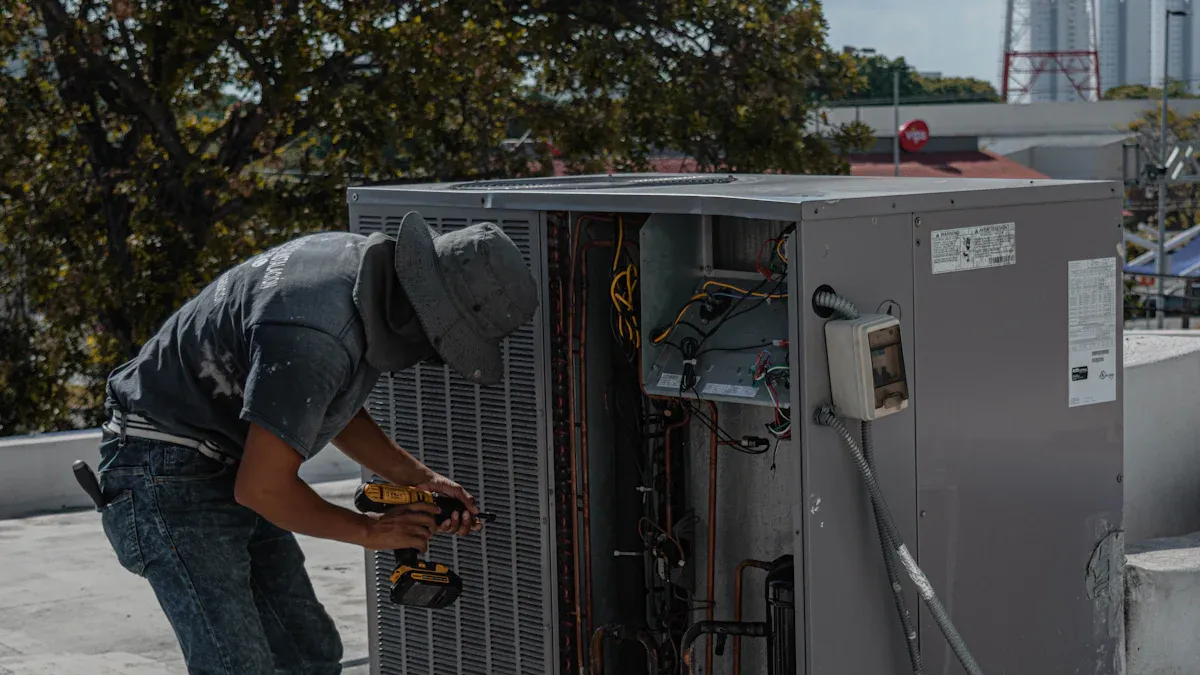
Correct placement ensures a Balance Valve operates effectively. Install these valves at the inlet or outlet of each circuit or branch. This regulates flow in multi-zone systems. Placing them near the pump or pump discharge helps control flow as water leaves the pump. This maintains desired system flow and protects the pump. In systems with multiple legs, install them between system branches. This is crucial when piping lengths or resistance vary. Some systems place them in the return line. This balances return water with the supply. For accurate flow measurement, proper installation of flow meters is critical. The required lengths of straight pipe before and after the valve are crucial. Obstructions like pumps and butterfly valves require the most straight pipe. Without proper straight pipe, measurements become less accurate. Manufacturers provide recommended locations and pipe lengths in their manuals.
Step-by-Step Guide to Adjusting a Balance Valve
Adjusting a balance valve requires precision. First, consult the system’s design specifications for target flow rates. Use appropriate measuring equipment, such as a differential pressure meter, to read the pressure drop across the valve. Slowly adjust the valve’s setting mechanism, typically a handwheel or screw, until the measured flow rate matches the design requirement. For automatic valves, ensure the system pressure is within the valve’s operating range. Always lock the setting after adjustment to prevent accidental changes. This ensures the system maintains its balanced state.
Maximizing the Lifespan of Your Balance Valve
Maximizing a balance valve’s lifespan involves proactive measures. Incorrect initial settings during commissioning often lead to uneven heating or cooling. Prevent blockages by regularly flushing the system to remove debris, scale, or sludge. These accumulations restrict or block flow. Wear and tear on seals and internal components can cause leakage. Regular inspections help identify and address these issues early. Air entrainment in the piping system interferes with pressure readings. Ensure proper air venting. Avoid user error by training staff on proper operation and maintenance. Incorrect installation, such as improper orientation, also prevents correct functioning. Adhering to manufacturer guidelines for installation and maintenance extends valve life.
Balance valves are critical, though often overlooked, components. They optimize system performance, delivering significant long-term benefits. These devices act as silent guardians, ensuring sustained system efficiency and preventing costly operational issues. Recognizing their value leads to more reliable and economical operations.
FAQ
What is the main purpose of a balance valve?
A balance valve ensures correct fluid distribution in hydronic systems. It precisely controls flow rates. This prevents imbalances, which cause inefficient operation and discomfort.
What distinguishes static from dynamic balance valves?
Static valves require manual adjustment during commissioning. Dynamic valves automatically adjust flow rates. They maintain constant flow despite system pressure fluctuations.
How do balance valves contribute to energy savings?
Properly set balance valves optimize flow distribution. This reduces pump energy consumption. They prevent over-pumping and under-pumping, leading to significant energy efficiency.
Post time: Dec-24-2025