

Currency risk is becoming a pricing variable that solenoid valve buyers can no longer treat as background noise. As CNY/USD and CNY/EUR move through wider bands, the effect on Chinese-manufactured valves is real—but often misunderstood. A 5% exchange-rate shift does not mean a 5% quote change, because copper, steel, tariffs, freight, labor, and supplier margin all move differently. For US and EU procurement teams planning 2026 contracts, the priority is to isolate true RMB exposure, test landed-cost scenarios, and negotiate adjustment clauses before volatility reaches the invoice. This guide explains how to read quotes more critically, challenge unsupported price increases, and protect margins with a data-based sourcing framework.
Why RMB Exchange Rate Volatility Affects Solenoid Valve Pricing
The macroeconomic landscape for electromechanical components is increasingly defined by currency fluctuations. Recent years have seen the CNY/USD and CNY/EUR exchange rates experience significant volatility bands, directly altering the bill of materials (BOM) cost for Chinese-manufactured solenoid valves. Looking ahead to 2026, specific drivers—such as the People’s Bank of China (PBoC) monetary policy, the diverging interest rate paths of the US Federal Reserve and the European Central Bank (ECB), and updated US and EU tariff schedules—signal that this volatility will persist. For procurement teams, understanding this dynamic is no longer optional; it requires a concrete decision framework for margin protection and strategic sourcing.
How Buyers Should Define RMB Exposure and Landed Cost
Defining RMB exposure requires a granular breakdown of the landed cost. In a typical worked example, a standard direct-acting solenoid valve might consist of roughly 60% raw materials (copper windings, stainless steel armatures, brass bodies), 25% local labor and factory overhead, and 15% domestic logistics and packaging. Because globally traded commodities like copper and steel are largely USD-linked, true RMB exposure is usually confined to labor, overhead, domestic logistics, and non-commodity materials. Therefore, a realistic model places RMB exposure closer to 40% to 50% of the ex-works cost, rather than the commonly assumed 85%.
When factoring in import duties, landed cost calculations must isolate the currency variable from freight and tax multipliers. For US buyers, Section 301 tariffs can add up to 25% (based on current USTR schedules) depending on the specific HTS classification and exclusion status. For EU buyers, standard third-country duty rates apply alongside varying Member State Value Added Tax (VAT) treatments, making EUR/CNY exposure equally critical to the final calculation.
Consider an exchange rate shift from 7.0 to 7.2 USD/CNY. This represents RMB depreciation, which benefits the buyer by reducing the theoretical base USD cost of the RMB-exposed portion of the valve. Conversely, if the RMB appreciates to 6.8, the cost spikes—this appreciation scenario is the primary risk buyers must hedge against. Furthermore, buyers must verify actual rate behavior; supplier USD or EUR list prices are often “sticky,” and the pass-through of currency benefits is rarely 100% in practice.
How to Separate Currency Pressure from Supplier Margin Changes
Procurement professionals frequently encounter suppliers attributing 8% to 12% price hikes entirely to unfavorable exchange rates. While theoretical models suggest a 5% RMB depreciation should yield a proportional cost reduction on the exposed BOM, separating actual currency pressure from supplier margin expansion requires open-book costing.
If a supplier demands a price increase during a period of RMB depreciation, the root cause is likely domestic inflation, rising copper spot prices on the Shanghai Futures Exchange, or margin padding. Indexing raw material costs separately from the exchange rate ensures suppliers cannot obscure margin increases behind currency volatility. For 2026 contracts, incorporating specific clauses detailing how pricing will adjust under scenarios of both RMB appreciation and prolonged volatility is essential.
How to Compare Solenoid Valve Quotes Under RMB Fluctuations
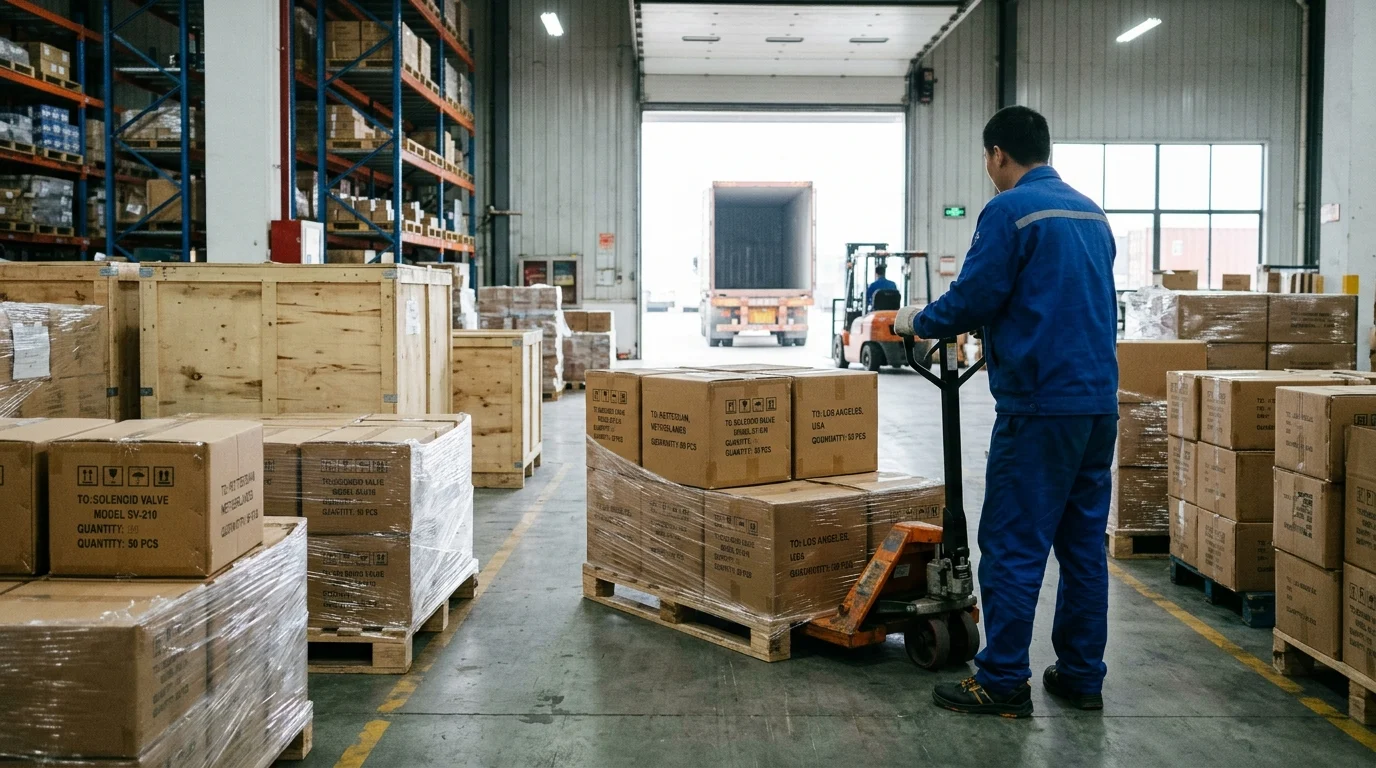
Establishing quote parity across global suppliers requires normalizing the baseline exchange rate and standardizing payment terms. Without a fixed currency baseline, comparing proposals becomes a speculative exercise rather than a data-driven procurement strategy.
Which Currency and Payment Terms to Compare
The choice of quoting currency fundamentally shifts risk distribution. As an illustrative model, Chinese manufacturers quoting in USD or EUR often apply an estimated 3% to 6% risk premium (derived from historical forward rate averages). Buyers can independently calculate this premium by analyzing 6-month forward rates and historical volatility bands for their specific currency pair, rather than accepting it as a fixed constant. This premium absorbs the supplier’s risk of potential RMB appreciation over standard 45-to-60-day lead times. However, transacting in CNY is not universally accessible; RMB capital controls limit freely converting or holding the currency for many foreign buyers, though offshore RMB (CNH) invoicing offers a viable alternative.
| Quote Currency | Supplier Risk Premium | Typical Payment Terms | Buyer Strategy |
|---|---|---|---|
| USD / EUR | 3% – 6% (est.) | 30% Advance / 70% BOL | Shifts RMB-appreciation risk to the supplier, who prices it into the premium. |
| CNY (or RMB) | 0% – 1% (est.) | 100% LC at Sight (common starting position) | Preferable when foreign currency is strong; requires buyer to manage FX hedging. |
By requesting dual quotes in both the buyer’s local currency and CNY, procurement teams can calculate the exact premium the supplier is charging for currency risk. If the premium exceeds standard forward contract rates (typically 1.5% to 2%), buyers are better served transacting in CNY and executing their own financial hedges. Note that this 1.5% comparison only holds if the buyer’s full exposure is actually hedged. Alternatively, natural hedges like CNY-denominated receivables can offset this risk. Executing these financial strategies requires banking counterparties and credit lines that small-to-medium enterprises (SMEs) may lack, making the supplier premium a necessary cost of doing business for smaller teams.
How Specifications Affect Quote Accuracy
Technical specifications dictate the material composition of a valve, which in turn determines its vulnerability to currency shifts versus commodity pricing. For instance, analyzing highly engineered automotive assemblies—such as a precision transmission solenoid kit (example via Made-in-China.com)—reveals that precision machining and specialized alloy grades represent a significant portion of the cost. Conversely, examining heavy-duty industrial components like a hydraulic cartridge valve (example via Made-in-China.com) shows substantial copper and steel content. If copper coils account for 40% of the unit weight, commodity index fluctuations will heavily skew the quote accuracy. Minimum Order Quantities (MOQs) also play a role; quotes for MOQs under 1,000 units often carry higher currency buffers because the supplier cannot achieve economies of scale on their own raw material purchases.
Practical Sourcing Rules for US and Global Buyers
Navigating the 2026 macroeconomic environment requires systemic rules for contracting and supplier management. Ad hoc negotiations are insufficient when dealing with sustained exchange rate volatility across international supply chains.
Key Takeaways
- Model RMB exposure at roughly 40% to 50% of ex-works solenoid valve cost instead of assuming the entire quoted price moves with CNY/USD or CNY/EUR.
- Separate commodity inputs such as copper and steel from labor, overhead, domestic logistics, and packaging when building a landed-cost model.
- For US imports, test the impact of Section 301 tariffs of up to 25% separately from exchange-rate movements and freight assumptions.
- Do not accept broad exchange-rate explanations for 8% to 12% price hikes without open-book costing and raw material index evidence.
- Include 2026 contract clauses that define the reference rate, adjustment triggers, pass-through formula, and treatment of both RMB appreciation and depreciation.
Frequently Asked Questions
How much of a solenoid valve’s cost is truly exposed to RMB movement?
For many Chinese-made solenoid valves, realistic RMB exposure is closer to 40% to 50% of ex-works cost. Copper, steel, and other globally traded inputs are often USD-linked, so buyers should not assume the full valve price moves with CNY/USD or CNY/EUR.
Does RMB depreciation always lower prices for US and EU buyers?
Not automatically. RMB depreciation can reduce the theoretical cost of the RMB-exposed portion, but supplier USD or EUR price lists are often sticky. Buyers should request transparent pass-through terms rather than assuming currency benefits will appear in the quote.
Why might a supplier raise prices when the RMB is weakening?
A price increase during RMB depreciation may reflect copper price increases, domestic inflation, higher overhead, freight changes, or supplier margin expansion. Procurement teams should separate raw material indexing from exchange-rate adjustments to identify the real driver.
How should US buyers factor tariffs into solenoid valve landed cost?
US buyers should calculate currency impact separately from duties, freight, and taxes. Depending on HTS classification and exclusion status, Section 301 tariffs may add up to 25%, which can outweigh modest exchange-rate movements.
What should EU procurement teams watch besides EUR/CNY rates?
EU buyers should account for standard third-country duty rates, Member State VAT treatment, freight, and customs classification. EUR/CNY volatility matters, but landed cost should isolate exchange-rate effects from taxes and logistics.
Post time: Oct-24-2026