
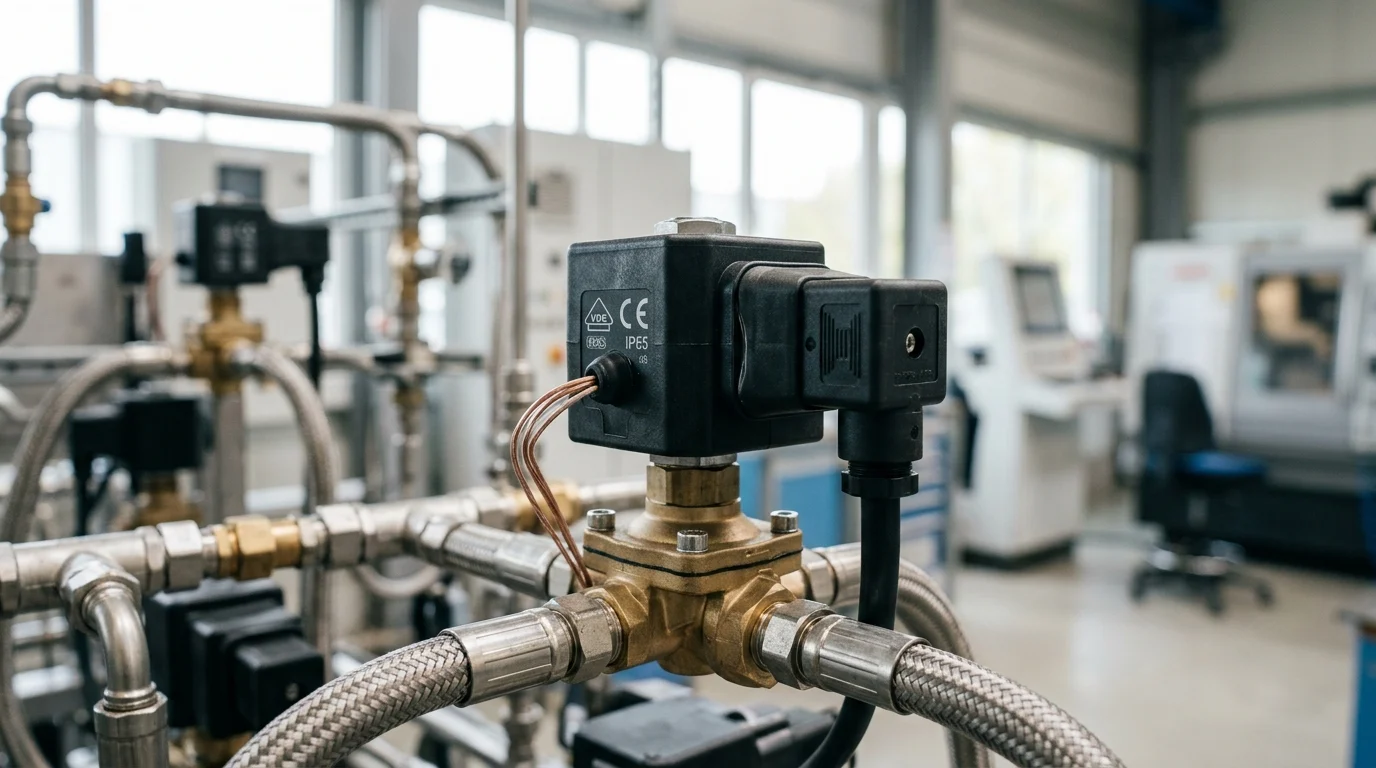
In European factories, hydraulic power units, and chemical processing lines, solenoid valve reliability is often judged by the metal body—brass, stainless steel, pressure rating, and media compatibility. Yet the component most likely to define service life is frequently the coil. Exposed to continuous energization, voltage fluctuation, vibration, heat, and harsh ambient conditions, a weak coil can fail long before the valve body shows meaningful wear. This article examines why coil construction, insulation class, thermal performance, encapsulation, and electrical protection are central to solenoid valve lifespan. It also highlights practical failure mechanisms—such as overvoltage, AC inrush current, and armature sticking—so engineers can specify valves that reduce downtime and protect wider hydraulic control systems.
Why Coil Quality Determines Solenoid Valve Lifespan
Industrial solenoid valves deployed across European manufacturing, chemical processing, and hydraulic systems are frequently evaluated by the durability of their metallic bodies. While a robust brass or stainless steel valve body can withstand aggressive media and high pressures for decades, the attached solenoid coil is subjected to relentless electrical and thermal stresses that dictate the overall reliability of the assembly. It must be noted that coil quality is necessary but not sufficient for maximum valve lifespan; proper sizing, correct driver circuitry, and strict maintenance protocols are equally vital. However, understanding the coil’s specific vulnerabilities is critical for maintenance engineers looking to optimize system uptime and prevent cascading failures in complex machinery.
Coil Quality vs. Valve Body Wear
When analyzing valve failures in continuous-duty applications, mechanical wear of the armature or valve seat accounts for a fraction of system downtimes compared to electrical burnout. An industrial-grade solenoid coil engineered with high-specification materials can reliably execute over 50 million actuation cycles. Conversely, lower-tier coils may suffer catastrophic failure before reaching 5 million cycles due to internal insulation breakdown. Furthermore, robust epoxy encapsulation protects the delicate internal copper wire from high-frequency vibrations inherent in heavy stamping or milling machinery.
In complex hydraulic circuits, where solenoid valves operate in tandem with precision sensors like hydraulic pressure transmitters, a premature coil failure disrupts the entire control loop. This disruption can lead to pressure spikes, uncontrolled actuator movements, and costly unplanned downtime across the production floor.
Common Causes of Coil Failure
The most prevalent cause of premature coil failure is thermal degradation. According to established thermodynamic principles in electrical engineering, operating a coil just 10°C above its rated insulation temperature reduces its expected lifespan by approximately 50%, a probabilistic rule of thumb modeled by the Arrhenius equation. This excessive heat often stems from overvoltage conditions—such as a nominal 24V DC coil continuously subjected to 27.6V DC in a poorly regulated circuit—or an excessively high ambient environment.
European facilities face unique regional challenges as well. For instance, coils integrated into 400V three-phase industrial networks require robust dielectric strength to handle transient voltage spikes, while outdoor installations in Nordic climates demand specialized encapsulation to survive harsh cold-start scenarios. Furthermore, AC coils are highly susceptible to inrush current burnout. If the valve armature fails to seat properly due to particulate contamination in the fluid line, the coil’s impedance remains low. This causes the component to draw up to five times its nominal holding current indefinitely, rapidly generating enough internal heat to melt the copper windings and destroy the unit.
Key Coil Specifications to Compare
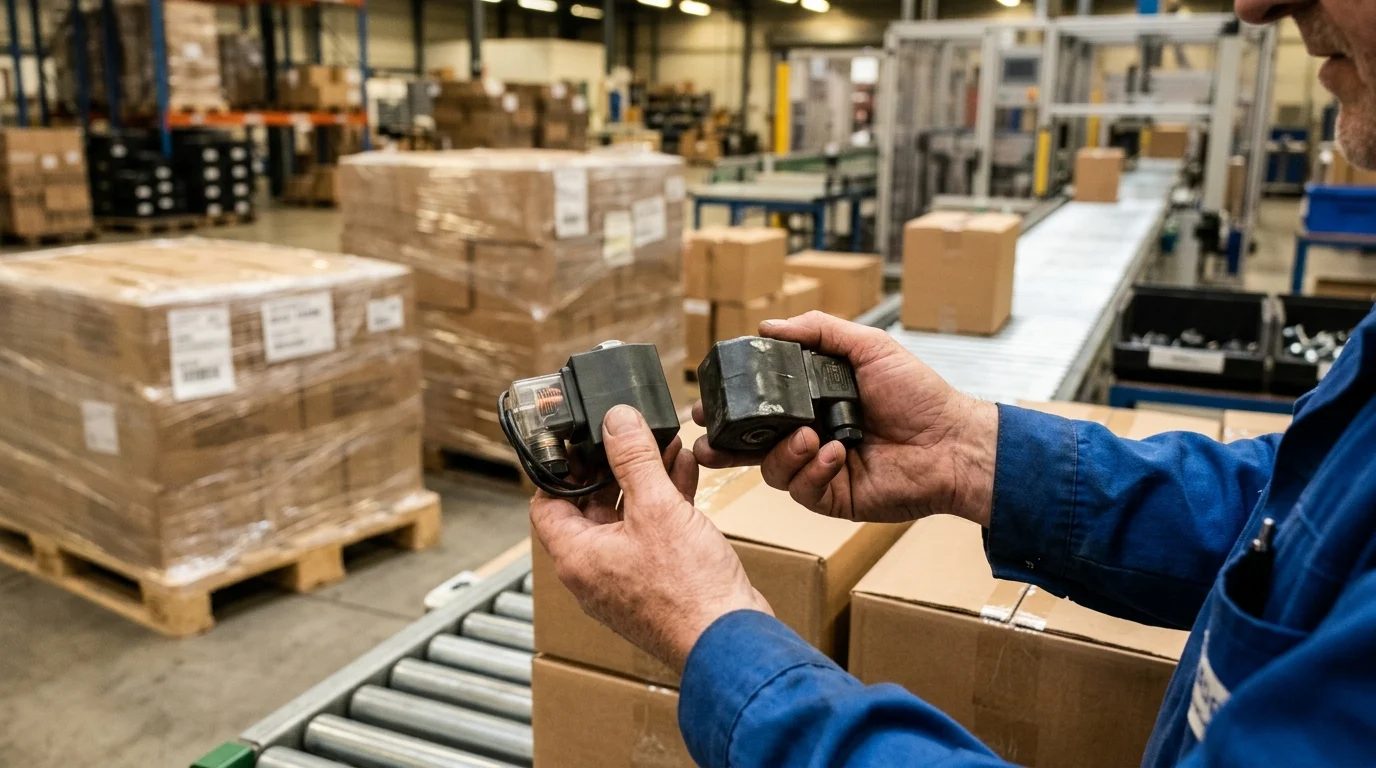
Procuring solenoid valves for stringent European industrial environments requires a granular analysis of the coil’s electromechanical specifications. Engineers must move beyond basic voltage and wattage ratings to evaluate the underlying materials, thermal management capabilities, and environmental protections that guarantee long-term performance under continuous operational stress.
Copper Windings, Insulation, and Heat Resistance
The foundation of an industrial-grade coil lies in its copper windings and the surrounding insulation class. High-purity, 99.9% oxygen-free copper ensures optimal electrical conductivity and minimizes resistive heating during prolonged operation. Furthermore, the insulation class defines the maximum allowable operating temperature before the enamel coating degrades. European industrial standards typically mandate at least Class F insulation for standard machinery, though Class H is increasingly preferred for high-ambient environments or densely packed control cabinets.
| Insulation Class | Max Temperature Rating | Typical Application Environment | Cost Premium (Est.) |
|---|---|---|---|
| Class B | 130°C (266°F) | Light-duty pneumatics, HVAC | Baseline |
| Class F | 155°C (311°F) | Standard industrial hydraulics | +10% to 15% |
| Class H | 180°C (356°F) | Heavy process, high-ambient | +25% to 30% |
Voltage, Duty Cycle, and Environmental Ratings
Beyond thermal limits, engineers must specify the correct duty cycle and ingress protection (IP) ratings. A coil rated for 100% ED (continuous duty) can remain energized indefinitely without exceeding its thermal limits, whereas intermittent duty coils will quickly overheat if not cycled according to their specific time-on/time-off ratios. Environmental encapsulation is equally critical. Standard factory floors may only require IP65 protection using standard polyamide overmolding. However, food and beverage facilities subject to high-pressure chemical washdowns necessitate IP67 or IP69K rated coils encapsulated in robust epoxy resins.
Additionally, high-specification coils are designed with a voltage tolerance of at least ±10%, ensuring stable magnetic flux and reliable valve opening even during the power grid fluctuations that are common in heavy industrial zones. If the voltage drops by 15%, a standard coil may lack the magnetic force required to overcome the internal return spring, resulting in a failure to open.
How to Choose a Reliable Coil Supplier
Identifying a manufacturer capable of consistently delivering industrial-grade solenoid coils requires rigorous vetting of their production methodologies and supply chain resilience. For European deployments, the supplier must not only provide mechanically sound components but also navigate a complex landscape of regulatory directives, material traceability, and commercial logistics.
Compliance, Testing, and Documentation
Regulatory compliance and verifiable quality control are non-negotiable in the European market. Coils destined for the European Economic Area must carry CE marking and comply strictly with RoHS, REACH regulations, and the Low Voltage Directive (LVD). Furthermore, alignment with the Machinery Directive 2006/42/EC is vital for safe integration into larger automated systems. For chemical processing or explosive atmospheres, ATEX certification is legally mandated. ISO 9001:2015 certification should be considered the baseline, and buyers should conduct remote or on-site audits of the supplier’s testing apparatus.
A reputable supplier will utilize automated CNC winding machines to prevent wire crossover faults and provide comprehensive documentation, including material certificates. Crucially, they must maintain records of 100% end-of-line testing. This testing should include a dielectric withstand test (hipot) at a minimum of 1500V AC for 60 seconds to guarantee insulation integrity, alongside precise resistance mapping to ensure every unit falls within a tight ±5% tolerance band of its nominal rating.
Key Takeaways
- Evaluate coil specifications as closely as valve body materials because electrical burnout often causes downtime before mechanical body wear becomes critical.
- Choose industrial-grade coils with proven insulation and encapsulation when applications require long service life, as premium coils can exceed 50 million cycles versus fewer than 5 million for low-tier designs.
- Control heat aggressively because operating a coil 10°C above its rated insulation temperature can reduce expected lifespan by roughly 50%.
- Verify supply voltage stability, especially on 24V DC circuits, since continuous overvoltage such as 27.6V DC can accelerate coil overheating and insulation breakdown.
- Protect AC solenoid valves from contamination because a stuck armature can keep current up to five times above normal holding levels and destroy the coil.
- Match coil protection to the European installation environment, including transient resistance for industrial networks and suitable encapsulation for vibration, moisture, and cold-start conditions.
Frequently Asked Questions
What makes coil quality more decisive than the valve body?
Valve bodies may last for decades, but coils face constant electrical and thermal stress. Insulation breakdown, vibration damage, and overheating often stop the valve long before brass or stainless steel components wear out.
How many cycles can a high-quality industrial solenoid coil achieve?
A well-engineered industrial coil can exceed 50 million actuation cycles, while lower-grade coils may fail before 5 million cycles due to insulation failure or poor thermal design.
Why does a 10°C temperature increase matter so much?
As a rule of thumb, operating a coil 10°C above its rated insulation temperature can cut expected life by about 50%, making heat control essential in continuous-duty applications.
Can slight overvoltage damage a 24V DC solenoid coil?
Yes. A 24V DC coil continuously exposed to about 27.6V DC can run hotter than intended, accelerating insulation aging and increasing the risk of premature burnout.
Why are AC coils at risk when the armature fails to seat?
If contamination prevents the armature from seating, coil impedance stays low and current can remain up to five times higher than normal holding current, rapidly overheating the windings.
Post time: Nov-27-2026