

European buyers often approach Chinese fluid-control sourcing with an outdated mental map: standard valves from Asia, precision controls from local suppliers. That split can quietly inflate landed cost and complicate supplier management. Today, the real opportunity is to assess the full component range—from fast-response pulse valves for filtration systems to proportional coils used in electro-hydraulic control. The difference is not just catalog depth; it is application fit, signal compatibility, durability, and compliance. This article explains how procurement and engineering teams can vet Chinese suppliers more accurately by defining component categories, matching system requirements, and checking the technical details that determine whether a part performs reliably in European machinery.
Component Scope and Application Fit
European procurement engineers frequently underestimate the manufacturing maturity of fluid control components available in the Chinese market. While standard directional control valves and basic on/off solenoids have been heavily commoditized, the broader spectrum of specialized components remains underexplored by Western buyers.
This oversight often leads to fragmented supply chains, where standard parts are sourced from Asia while critical control elements are procured domestically at a premium. Recognizing the full component breadth—ranging from high-frequency pulse valves for industrial filtration to high-precision proportional coils for electro-hydraulic systems—is essential for optimizing landed costs without sacrificing system integrity.
Define Required Valve and Coil Categories
Defining the exact category of valve and coil is the first step in bridging the sourcing gap. Standard solenoid coils operate on simple binary logic, whereas high-performance pulse valves—commonly deployed in reverse-jet baghouse dust collectors—must execute rapid firing sequences with response times strictly under 50 milliseconds. These valves demand robust diaphragms capable of enduring over 1 million cycles in harsh, particulate-heavy environments.
Conversely, proportional coils represent a higher tier of manufacturing complexity. Designed to govern spool positions linearly relative to the input current, these coils typically require a precise Pulse Width Modulation (PWM) signal, often operating within a 0 to 1000 mA control range. Misclassifying a proportional requirement as a standard on/off application during supplier vetting will inevitably result in catastrophic system hysteresis and poor fluid regulation.
Match Components to System Requirements
Once categories are established, components must be rigorously matched to the host system’s operational parameters. European machinery predominantly standardizes around 24VDC for mobile hydraulics and 230VAC for stationary industrial plants, necessitating coils with appropriate winding gauges and IP65 or IP67 ingress protection ratings to withstand environmental exposure.
In high-pressure hydraulic applications, these coils do not operate in isolation. They rely on real-time feedback from integrated sensors to maintain closed-loop control. For instance, hydraulic circuits operating at peak pressures often utilize components like the Pressure Transmitter Mbs1250 063G1289, which provides a 0.5 to 4.5V output across a 0 to 250 bar range. Ensuring the Chinese supplier can either provide or guarantee compatibility with such precise transducers is critical for seamless system integration.
Specifications, Quality, and Compliance
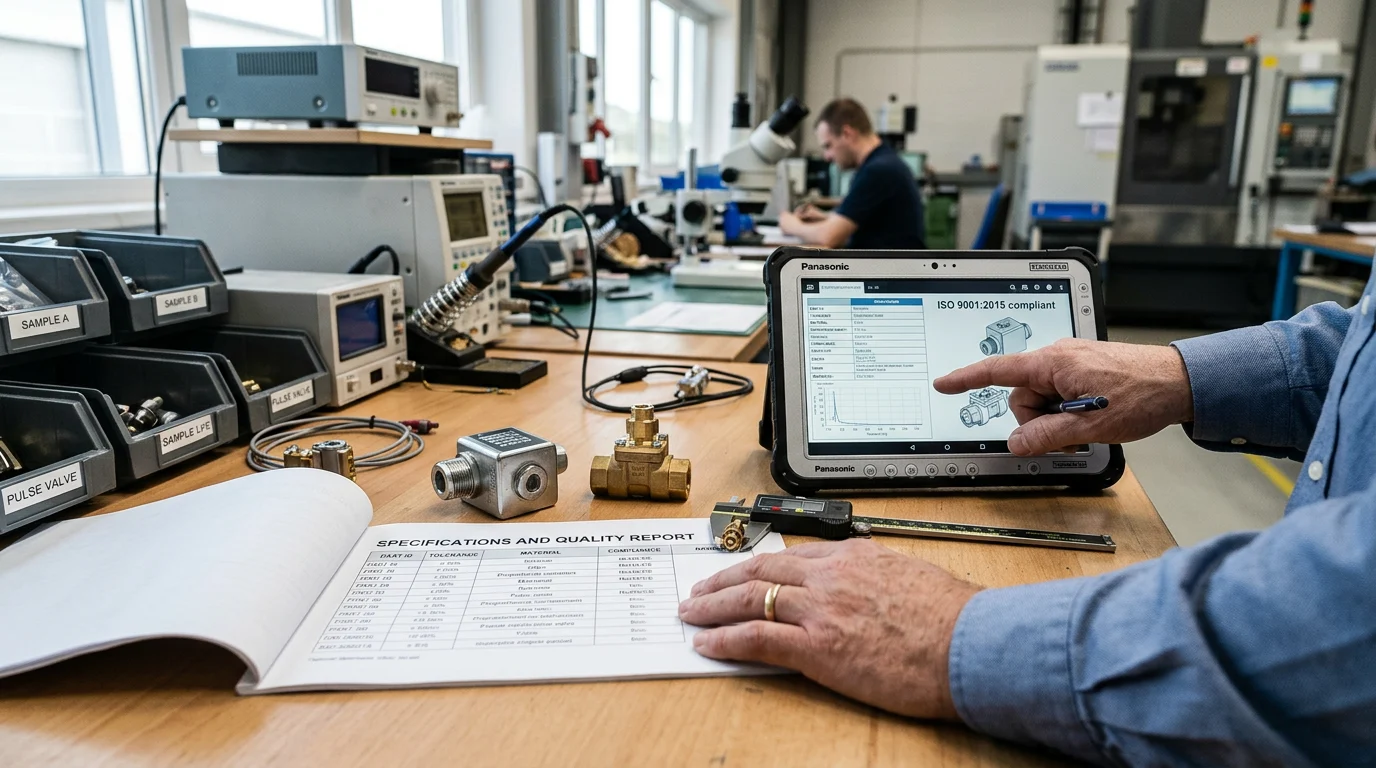
Transitioning from standard parts to advanced proportional controls requires a fundamental shift in how European buyers evaluate technical specifications and quality assurance. The margin for error narrows significantly when components dictate the precision of heavy machinery or the safety of automated fluid systems.
Consequently, procurement teams must look beyond superficial dimensions and scrutinize the underlying material science, electromagnetic characteristics, and strict adherence to European regulatory frameworks.
Compare Key Technical Specifications
A direct comparison of technical specifications reveals the stark differences in manufacturing tolerances required for different fluid control tiers. Standard coils might tolerate minor voltage fluctuations, but proportional coils demand exact resistance values to ensure linear force output. Thermal management is equally critical; an upgrade from Class F (155°C) to Class H (180°C) insulation can extend a coil’s lifecycle by 40% in continuous-duty hydraulic applications.
| Component Type | Typical Voltage | Power Consumption | Hysteresis | Target Defect Rate |
|---|---|---|---|---|
| Standard Solenoid Coil | 12VDC / 24VDC | 15W – 30W | N/A (Binary) | < 500 PPM |
| Proportional Coil | 24VDC (PWM) | 18W – 25W | < 3% | < 100 PPM |
| Pulse Valve (Diaphragm) | 24VDC / 230VAC | 20W – 40W | N/A | < 300 PPM |
This baseline comparison highlights why proportional coils require significantly tighter quality control. A hysteresis exceeding 3% in a proportional hydraulic valve will cause unacceptable lag in boom arm movements or variable displacement pumps, rendering the machinery non-compliant with European performance standards.
Verify Certifications and Traceability
Compliance is non-negotiable when importing electrical and pressurized components into the European Economic Area. Buyers must verify that coils carry legitimate CE marking, specifically adhering to the Low Voltage Directive (LVD 2014/35/EU) and Electromagnetic Compatibility (EMC 2014/30/EU). Furthermore, RoHS compliance must be validated through third-party material testing, ensuring no restricted heavy metals are present in the coil windings or potting materials.
Beyond static certifications, dynamic traceability is a hallmark of a mature supplier. An ISO 9001:2015 certified manufacturer should provide batch-level traceability linking specific copper wire lots and epoxy resins to the final serial number of the coil. For advanced fluid control systems, acceptable defect rates must be strictly capped; while 500 Parts Per Million (PPM) may be acceptable for standard pneumatic solenoids, proportional hydraulic components must target sub-100 PPM defect rates to mitigate the severe costs of field failures.
Supplier Vetting and Sourcing Decisions
Identifying a supplier capable of producing both high-volume pulse valves and low-volume, high-precision proportional coils requires an exhaustive vetting process. The Chinese market features thousands of fluid control assemblers, but true manufacturers with deep vertical integration are substantially rarer.
Strategic sourcing in this sector demands on-site or third-party audits focusing on production automation, tooling precision, and the supplier’s ability to balance aggressive cost structures with uncompromising European reliability standards.
Assess Manufacturing Capability
Evaluating manufacturing capability starts on the factory floor. For coil production, buyers should look for fully automated CNC winding machines. Manual winding introduces unacceptable tension variations, whereas automated winding maintains electrical resistance variance within a strict ±2% tolerance. Additionally, in-house encapsulation processes—whether using thermosetting epoxy for extreme environments or thermoplastic injection for standard use—indicate a supplier’s control over the component’s IP rating integrity.
Machining capabilities for the valve bodies and armatures are equally critical. Proportional valve armatures require geometric tolerances often tighter than ±0.01 mm to ensure frictionless linear movement. During the audit, buyers should confirm 100% end-of-line testing protocols, including dielectric strength (hi-pot) testing for electrical safety and automated pneumatic or hydraulic leak testing at 1.5 times the maximum rated operating pressure.
Balance Cost, Compliance, and Reliability
The ultimate goal of sourcing fluid control components in China is achieving a favorable Total Cost of Ownership (TCO).
Key Takeaways
- Map each sourcing requirement to the correct component category before vetting suppliers, especially when comparing pulse valves, standard solenoid coils, and proportional coils.
- Specify pulse valve performance in measurable terms, including sub-50 millisecond response times and diaphragm life above 1 million cycles for dust collection systems.
- Treat proportional coils as precision control components by verifying PWM compatibility, current range, resistance values, and linear force output.
- Confirm voltage and environmental requirements early, particularly 24VDC for mobile hydraulics, 230VAC for stationary plants, and IP65 or IP67 protection.
- Evaluate whether the supplier can support closed-loop hydraulic integration with compatible pressure transmitters, such as 0 to 250 bar sensors with 0.5 to 4.5V output.
Frequently Asked Questions
Why should European buyers look beyond standard solenoid valves in China?
Many Chinese suppliers now cover specialized components such as pulse valves, proportional coils, and sensor-compatible hydraulic parts. Overlooking this breadth can keep buyers dependent on higher-cost domestic sources for critical control elements.
What makes pulse valves different from standard on/off solenoid valves?
Pulse valves are built for rapid firing in applications such as reverse-jet baghouse dust collectors. They often require response times under 50 milliseconds and diaphragms capable of more than 1 million cycles in particulate-heavy environments.
Why is it risky to misclassify a proportional coil as a standard coil?
A proportional coil must regulate spool position linearly according to input current, often through PWM control. Treating it as an on/off coil can cause severe hysteresis, poor fluid regulation, and system instability.
Which voltages are most relevant for European machinery sourcing?
European systems commonly use 24VDC in mobile hydraulics and 230VAC in stationary industrial equipment. Buyers should verify winding design, voltage tolerance, and environmental ratings before approving a supplier.
What ingress protection rating should buyers request?
For exposed industrial or hydraulic environments, IP65 or IP67 protection is often required. The correct rating depends on exposure to dust, water spray, washdown, and outdoor operating conditions.
Post time: Nov-24-2026