
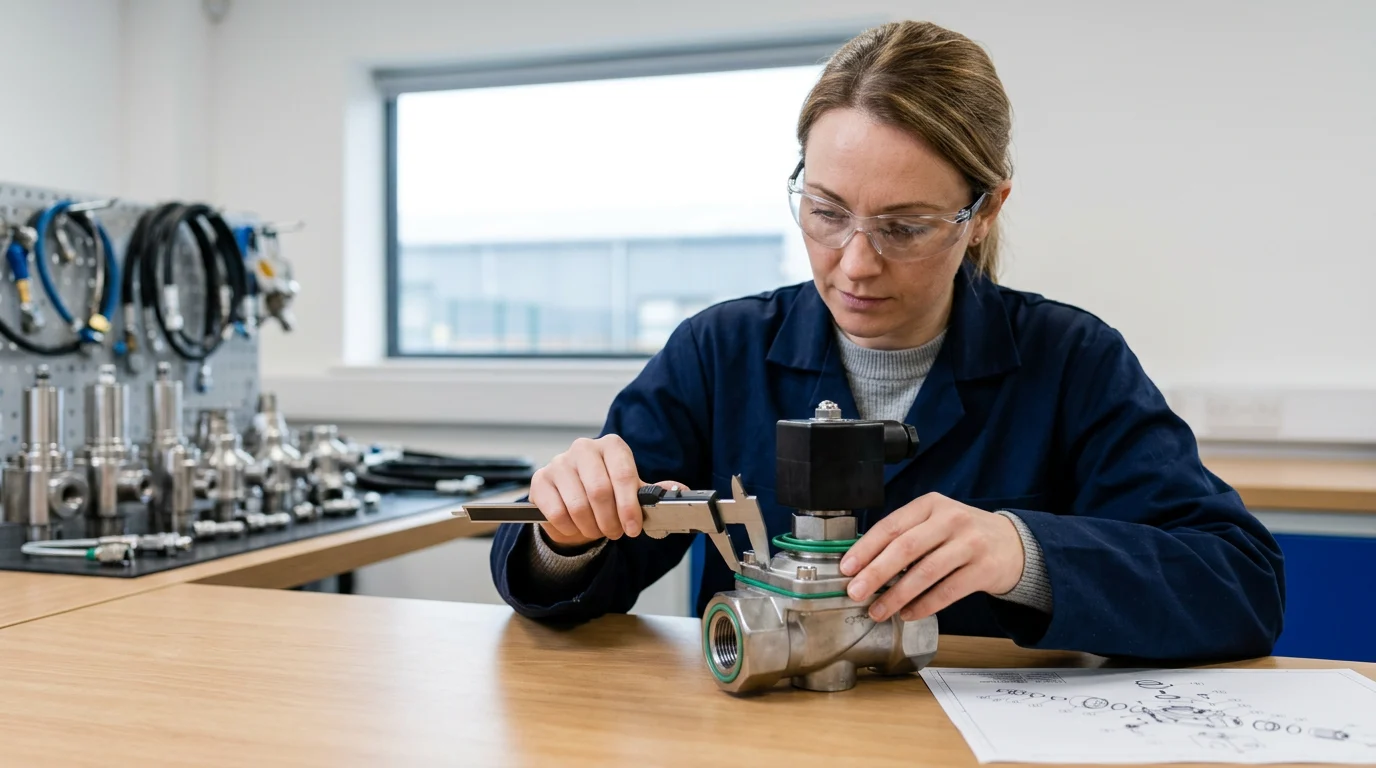
Europe’s proposed PFAS restriction is no longer an abstract chemicals policy issue for valve engineers—it could reshape how solenoid valves are specified, qualified, and sourced for years. A proposed derogation of up to 13.5 years may protect critical sealing uses of PTFE, FKM, and FFKM where no safe substitute exists, but that does not mean every valve gets a long transition. Application severity, media compatibility, temperature, and documentation will determine the path forward. For procurement teams and design engineers working on European projects, the practical challenge is clear: identify which sealing materials can be replaced soon, which need extended justification, and how to keep compliance from becoming a late-stage project risk.
Why the PFAS Sealing Derogation Could Last 13.5 Years
The European Chemicals Agency (ECHA) proposal to restrict PFAS introduces significant regulatory complexity for industrial fluid control systems. Recognizing that an immediate ban could disrupt critical infrastructure, the framework includes specific derogations for extended transition periods. It is important to note that these timelines remain proposals subject to political negotiation and potential revision by member states, rather than settled law. For solenoid valve manufacturers and procurement engineers in the European Economic Area (EEA), the most crucial proposed allowance is the 13.5-year derogation. This timeline comprises an 18-month initial transition phase, followed by a 12-year exemption reserved for industrial applications where safe, non-PFAS alternatives do not currently exist.
Covered sealing materials and applications
The proposed derogation primarily applies to high-performance fluoropolymers and fluoroelastomers, specifically PTFE, FKM, and FFKM. These materials are common in solenoid valve seals, diaphragms, and dynamic O-rings deployed in highly demanding environments. Standard commercial water-handling valves operating at ambient conditions will fall under standard phase-out rules, requiring prompt material substitution. In contrast, the extended derogation aims to protect seals utilized in chemical processing, aerospace, and heavy-duty industrial hydraulics. In these sectors, the unique properties of PFAS materials—such as a low coefficient of friction and broad chemical inertness—are often necessary to prevent seal failure and fluid leaks.
How to distinguish derogation timelines
Determining which solenoid valve components qualify for the maximum extension, as opposed to shorter transition periods like the 5-year timeline, requires rigorous application analysis. The longest exemptions are strictly reserved for use cases demanding continuous operation at extreme parameters, such as media temperatures exceeding 200°C or exposure to highly aggressive corrosive media like concentrated sulfuric acid. If a solenoid valve application operates below a 150°C threshold and handles relatively benign fluids, engineering teams are expected to transition to non-PFAS alternatives within the shorter window. This necessitates redesign, fluid compatibility testing, and accelerated validation cycles to ensure compliance.
Comparing PFAS-Based and Non-PFAS Sealing Options
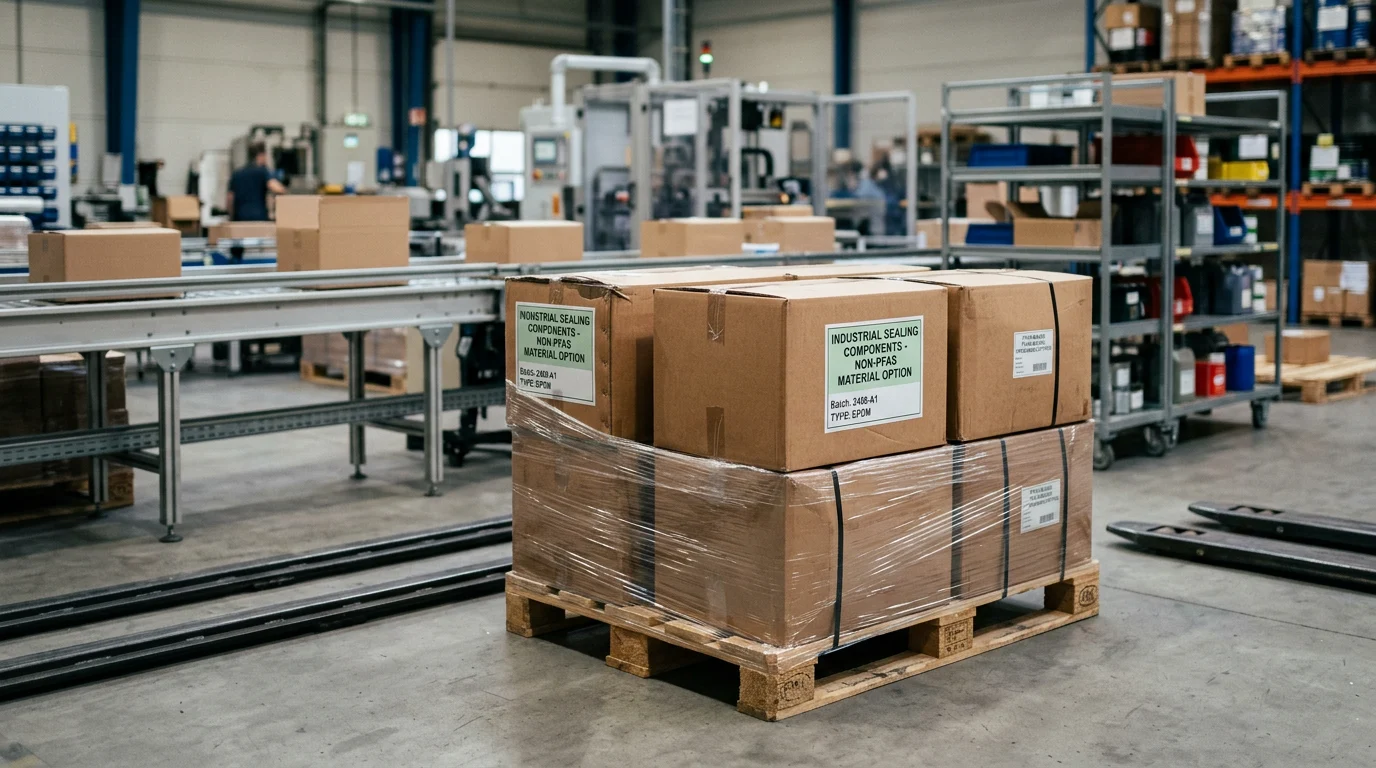
Transitioning away from PFAS-based materials in solenoid valves requires a careful evaluation of elastomer properties and mechanical tolerances. While the proposed 13.5-year derogation provides a necessary buffer for critical industrial applications, design engineers must actively compare incumbent fluoropolymers against emerging non-PFAS alternatives. This proactive evaluation is essential to prepare for material obsolescence, navigate supply chain shifts, and comply with shorter derogation timelines in less severe operating environments.
Criteria for FKM, FFKM, and alternatives
FKM and FFKM have long served as standard choices for industrial solenoid valves due to their thermal stability, low compression set, and chemical inertness. FFKM maintains sealing integrity at continuous temperatures up to 327°C and resists degradation from numerous industrial chemicals. Replacing these elastomers in demanding environments, such as a hydraulic transmission solenoid valve, introduces significant engineering hurdles. Alternatives like EPDM and NBR offer excellent mechanical wear properties and favorable pricing. However, they can suffer from volume swelling or thermal degradation when exposed to petroleum-based hydraulic fluids or temperatures exceeding 150°C, complicating direct 1:1 substitution in heavy machinery.
Media compatibility comparison table
The following table outlines the performance differences between standard PFAS-based seals and common non-PFAS alternatives, highlighting why the extended derogation remains an engineering necessity for high-specification European projects.
| Material | PFAS Status | Max Temp (°C) | Chemical Resistance Profile | Volume Swell in Oil (%) | Cost Multiplier |
|---|---|---|---|---|---|
| FFKM | PFAS-Based | 327 | Universal | < 2% | 15.0x |
| FKM | PFAS-Based | 250 | High (Acids, Hydrocarbons) | < 5% | 3.0x |
| EPDM | Non-PFAS | 150 | Moderate (Water, Steam) | > 80% (Fails) | 1.0x |
| NBR | Non-PFAS | 120 | Moderate (Aliphatics) | < 10% | 0.8x |
This comparative data illustrates a critical limitation: while NBR approaches FKM in oil swell resistance for hydraulic applications (remaining under 10%), it cannot meet the thermal requirements of high-temperature processes, necessitating continued reliance on extended derogations for certain uses.
Practical Steps for Procurement and Compliance
Navigating the proposed PFAS derogations demands rigorous administrative compliance, lifecycle auditing, and strategic supply chain management across EEA and aligned UK markets. Projects must establish robust procurement protocols to ensure that solenoid valves utilizing PFAS seals remain legally compliant and commercially available. Failure to accurately document reliance on the derogation could result in regulatory penalties and the inability to source replacement parts for existing infrastructure.
How to document derogation reliance
To legally rely on the extended derogation, procurement engineers must maintain comprehensive, audit-ready traceability documentation. This includes material declarations from tier-one suppliers, REACH compliance dossiers, and formal engineering justifications proving that non-PFAS alternatives fail to meet minimum safety specifications. As global chemical manufacturers consolidate PFAS production to mitigate future liability, procurement teams should anticipate supply chain volatility. Industry observers report that maintaining access to specialized FKM or FFKM solenoid valve seals could result in minimum order quantities (MOQs) increasing by 20% to 35% in some cases. Procurement should also plan for extended production lead times, which some suppliers warn could exceed 16 weeks.
When European projects should retain PFAS seals
European projects should retain PFAS seals when substituting materials introduces unacceptable operational risks based on thorough risk assessment methodologies. If empirical testing indicates that switching a critical fluid control loop to a non-PFAS elastomer unacceptably reduces the Mean Time Between Failures (MTBF) or compromises safety margins, the application justifies continued reliance on the derogation. Premature material substitution in high-pressure steam lines, aggressive chemical dosing skids, or heavy-duty hydraulic circuits can compromise system integrity. Procurement and engineering departments must collaborate closely to leverage the proposed 13.5-year window strategically, utilizing this transition period until the chemical industry validates genuinely equivalent non-PFAS sealing technologies.
Key Takeaways
- Treat the 13.5-year PFAS sealing derogation as a planning scenario, not settled law, because the ECHA proposal may still change during EU negotiations.
- Separate severe-duty solenoid valve applications from standard service because only critical uses without safe non-PFAS substitutes are likely to justify the longest timeline.
- Review every PTFE, FKM, and FFKM seal, diaphragm, and O-ring in European project specifications to determine whether it faces a short or extended transition period.
- Use operating temperature, media aggressiveness, and duty cycle as primary criteria, with applications above 200°C or involving concentrated corrosive chemicals requiring special justification.
- Begin testing EPDM, NBR, and other non-PFAS alternatives now for benign fluids and temperatures below about 150°C to avoid late redesign and procurement delays.
- Ask suppliers for documented material data, compatibility evidence, and validation results before locking solenoid valve specifications for EEA-bound industrial projects.
Frequently Asked Questions
Is the 13.5-year PFAS sealing derogation already law in Europe?
No. The 13.5-year period is part of the ECHA restriction proposal and remains subject to political negotiation and revision by EU member states before becoming final law.
Which solenoid valve sealing materials are most affected by the PFAS proposal?
PTFE, FKM, and FFKM are the main affected materials because they are widely used in solenoid valve seals, diaphragms, and O-rings for demanding industrial applications.
When could a solenoid valve qualify for the longest derogation?
A valve may qualify if it operates in critical industrial service where safe non-PFAS alternatives are unavailable, such as exposure to highly corrosive media or continuous temperatures above 200°C.
Will standard water-handling solenoid valves receive the 13.5-year allowance?
Usually not. Valves used with benign fluids at ambient or moderate temperatures are expected to transition to non-PFAS sealing materials under shorter phase-out timelines.
What non-PFAS sealing materials should engineers evaluate?
EPDM and NBR are common alternatives worth evaluating, especially for less aggressive media and lower-temperature applications, but they require compatibility, compression set, and lifecycle testing.
Post time: Nov-18-2026