
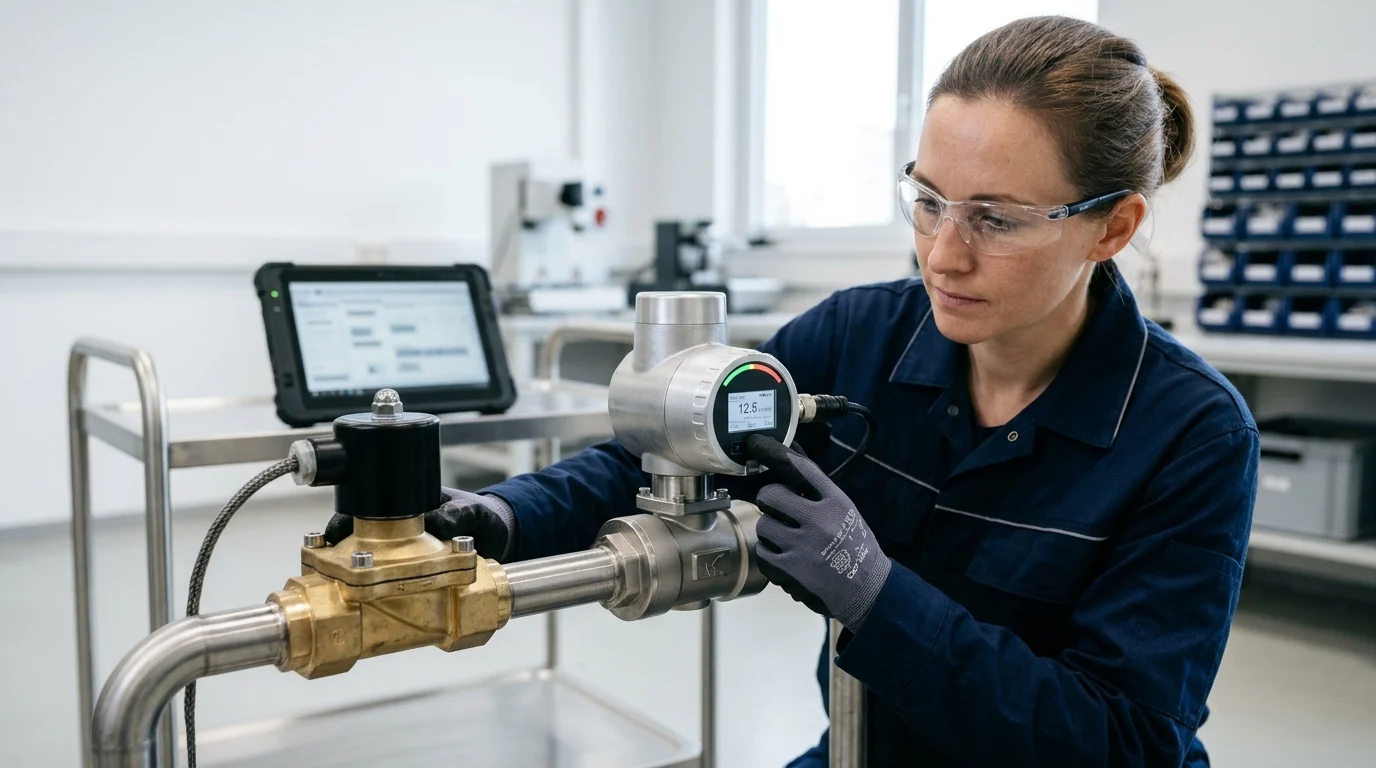
European fluid control is entering a practical—not theoretical—transition. With smart valve adoption reaching 28.3%, procurement teams can no longer treat connected components as niche automation upgrades. Yet the shift does not make traditional solenoid valves obsolete. Most factories still depend on proven on/off actuation for non-critical circuits, while reserving intelligent valves for process points where diagnostics, energy savings, and uptime gains justify the investment. This article examines how buyers should define smart valves, why adoption is accelerating, which technical and compliance factors matter, and why the strongest supplier is often the one that can support both legacy reliability and modern digital integration.
Smart Valve Adoption in Europe
The European industrial fluid control market has reached a critical inflection point, with smart valve penetration hitting 28.3% across the manufacturing and process automation sectors. The rapid integration of microprocessors and network connectivity into traditional fluid control systems creates a complex transitional period for facility operators. For the foreseeable future, industrial plants will operate hybrid architectures, utilizing traditional solenoids for non-critical flow paths while deploying smart valves for high-stakes process nodes.
This dual-architecture reality necessitates a fundamental shift in procurement strategies. Procurement teams and engineering directors now face the challenge of sourcing components that satisfy both legacy infrastructure requirements and modern digital mandates. This transition requires supply chain partnerships with manufacturers capable of delivering both time-tested electromechanical reliability and advanced digital integration, without forcing premature or capital-intensive system overhauls.
How European Buyers Define Smart Valves
For European procurement engineers, the definition of a smart valve extends far beyond basic electronic actuation. A modern smart solenoid valve integrates continuous position feedback, embedded pressure and flow sensors, and digital communication interfaces directly into the valve body. Unlike traditional binary on/off solenoids, these intelligent units utilize deterministic protocols to transmit real-time telemetry.
By leveraging standards such as IO-Link, PROFINET, or EtherCAT, smart valves allow centralized control systems to monitor coil temperature, cycle counts, and voltage anomalies. This transformation turns a historically passive component into an active diagnostic node within the industrial network, enabling sophisticated closed-loop control and autonomous system adjustments.
Key Market Drivers Behind Adoption
The acceleration toward the 28.3% adoption threshold is primarily driven by stringent European energy regulations and the widespread implementation of Industry 4.0 frameworks. Smart valves frequently feature pulse-width modulation (PWM) control circuits that can reduce holding power consumption by up to 75% compared to standard continuous-duty coils. This directly addresses the European Union’s aggressive energy efficiency mandates.
Additionally, the predictive maintenance capabilities inherent to smart valves drastically reduce unplanned downtime. By analyzing cycle degradation and friction variances, plant operators can schedule replacements well before mechanical failure occurs. In high-volume processing facilities, this predictive capability has been shown to yield a measurable increase in Overall Equipment Effectiveness (OEE) by an average of 4.5%, justifying the higher initial capital expenditure.
Technical and Compliance Requirements
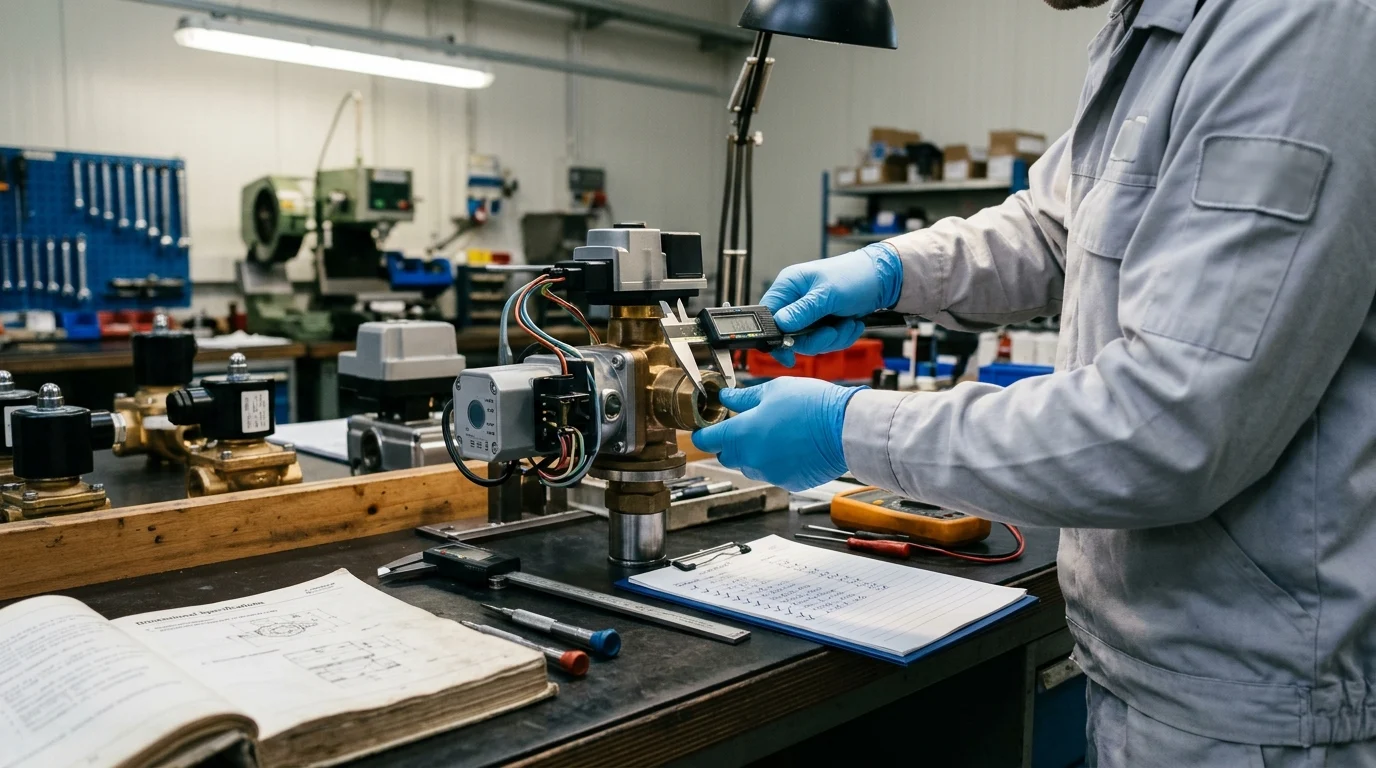
Transitioning to intelligent fluid control introduces rigorous specification parameters and regulatory hurdles. European buyers must balance the sophisticated requirements of digital networking with the fundamental mechanical robustness required in harsh industrial environments. This ensures that electronic additions do not compromise basic fluid control integrity.
Specification and Integration Criteria
Integrating smart valves into existing infrastructure requires meticulous attention to both electrical and mechanical specifications. Standard operating parameters typically demand 24V DC inputs with response times optimized below 15 milliseconds, alongside the capacity to handle operating pressures ranging from 0 to 40 bar, depending on the fluid media. However, the true complexity lies in the network topology and bandwidth requirements for continuous data streaming.
| Specification | Traditional Solenoid Valve | Smart Solenoid Valve |
|---|---|---|
| Actuation Control | Binary (On/Off) | Proportional / PWM |
| Holding Power | 100% of nominal wattage | 25% – 30% (Power-saving mode) |
| Diagnostics | None | Real-time (Temp, Cycle count, Wear) |
| Integration Protocol | Hardwired analog | IO-Link, PROFINET, EtherNet/IP |
| Average Cost Multiplier | 1.0x | 2.5x – 4.0x |
Furthermore, integrating protocols like EtherNet/IP or OPC UA requires robust cybersecurity measures at the component level to prevent unauthorized network access. Buyers must evaluate the firmware update mechanisms and data encryption standards supported by the valve’s onboard microprocessor.
Compliance, Documentation, and Maintenance Needs
Regulatory compliance for smart valves in the European Economic Area demands comprehensive certification spanning both mechanical safety and electronic integrity. Beyond standard CE marking and RoHS compliance for electronic subassemblies, valves deployed in chemical or petrochemical processing must meet strict ATEX directives for Zone 1 or Zone 2 explosive atmospheres. The addition of active electronics makes this ATEX certification significantly more complex.
Suppliers must provide exhaustive documentation to support lifecycle management. This includes digital twin models for system simulation, Mean Time Between Failures (MTBF) ratings exceeding 50 million cycles, and rigorous electromagnetic compatibility (EMC) test reports. These EMC certifications are critical to ensure that the embedded microprocessors do not suffer from industrial signal interference or emit noise that disrupts adjacent programmable logic controllers (PLCs).
Supplier Selection for Solenoid Valve Buyers
Sourcing from a supplier that understands both the mechanical precision of traditional solenoids and the electronic complexity of smart valves is paramount. Buyers must evaluate potential partners through a dual-lens approach, ensuring neither physical durability nor digital functionality is compromised during the manufacturing process.
Sourcing Steps to Validate Dual Capability
Validating a supplier’s dual capability begins with auditing their core mechanical competencies before assessing their electronic integration facilities. A manufacturer must demonstrate exceptional mastery over tight-tolerance machining, magnetic flux optimization, and seal integrity under high-pressure conditions. For instance, suppliers producing highly specialized automotive components, such as the 1068298045 transmission solenoid kit for complex mechanical gearboxes, inherently possess the advanced metallurgical and coil-winding expertise required as a baseline.
Once mechanical reliability is proven, procurement teams must audit the supplier’s electronic manufacturing capabilities. This includes evaluating printed circuit board (PCB) assembly standards, firmware development resources, and the presence of ESD-safe (Electrostatic Discharge) manufacturing environments. A true dual-capable supplier will offer dedicated application engineering support, bridging the gap between mechanical fluid dynamics and industrial networking protocols.
Decision Criteria for the Final Shortlist
The final shortlist of dual-capable suppliers should be evaluated against strict quantitative metrics and supply chain resilience indicators. Buyers should expect Minimum Order Quantities (MOQs) for custom smart valve assemblies to range between 500 and 1,000 units, reflecting the higher R&D, firmware flashing, and component sourcing costs involved in their production.
Quality assurance is non-negotiable; acceptable defect rates for hybrid electronic-mechanical valves must remain below 50 Parts Per Million (PPM).
Key Takeaways
- Plan procurement around hybrid valve architectures because European plants will continue using traditional solenoids alongside smart valves for the foreseeable future.
- Prioritize smart valves for critical process nodes where real-time diagnostics, position feedback, and predictive maintenance can reduce downtime.
- Use traditional solenoid valves for non-critical flow paths when basic on/off control, low cost, and proven reliability are the main requirements.
- Verify smart valve compatibility with industrial protocols such as IO-Link, PROFINET, or EtherCAT before committing to a networked control strategy.
- Evaluate energy savings carefully because PWM-enabled smart valves can reduce holding power consumption by up to 75% compared with continuous-duty coils.
- Select suppliers that understand both electromechanical valve reliability and digital integration to avoid costly system redesigns during modernization.
Frequently Asked Questions
What does 28.3% smart valve penetration mean for European buyers?
It signals that smart valves are no longer experimental, but traditional solenoid valves still remain essential. Buyers should plan for hybrid systems that combine proven electromechanical valves with digitally connected units where diagnostics, efficiency, or process risk justify the upgrade.
How is a smart solenoid valve different from a traditional solenoid valve?
A traditional solenoid valve typically provides basic on/off actuation. A smart solenoid valve adds sensors, position feedback, cycle monitoring, temperature tracking, and communication protocols such as IO-Link, PROFINET, or EtherCAT for real-time diagnostics.
Why are European manufacturers adopting smart valves faster?
Adoption is being driven by EU energy-efficiency pressure, Industry 4.0 projects, and the need to reduce unplanned downtime. Smart valves can use PWM control to reduce holding power and provide predictive maintenance data before failures occur.
Should factories replace all traditional solenoid valves with smart valves?
No. Most facilities will run hybrid architectures for years. Traditional solenoids remain cost-effective for non-critical flow paths, while smart valves are best used in high-value, high-risk, or data-intensive process nodes.
What specifications matter when sourcing smart valves?
Buyers should check voltage, response time, pressure rating, media compatibility, communication protocol, diagnostic functions, and environmental durability. Common requirements include 24V DC inputs, fast response times, and operating pressure ranges that may extend up to 40 bar.
Post time: Nov-17-2026