
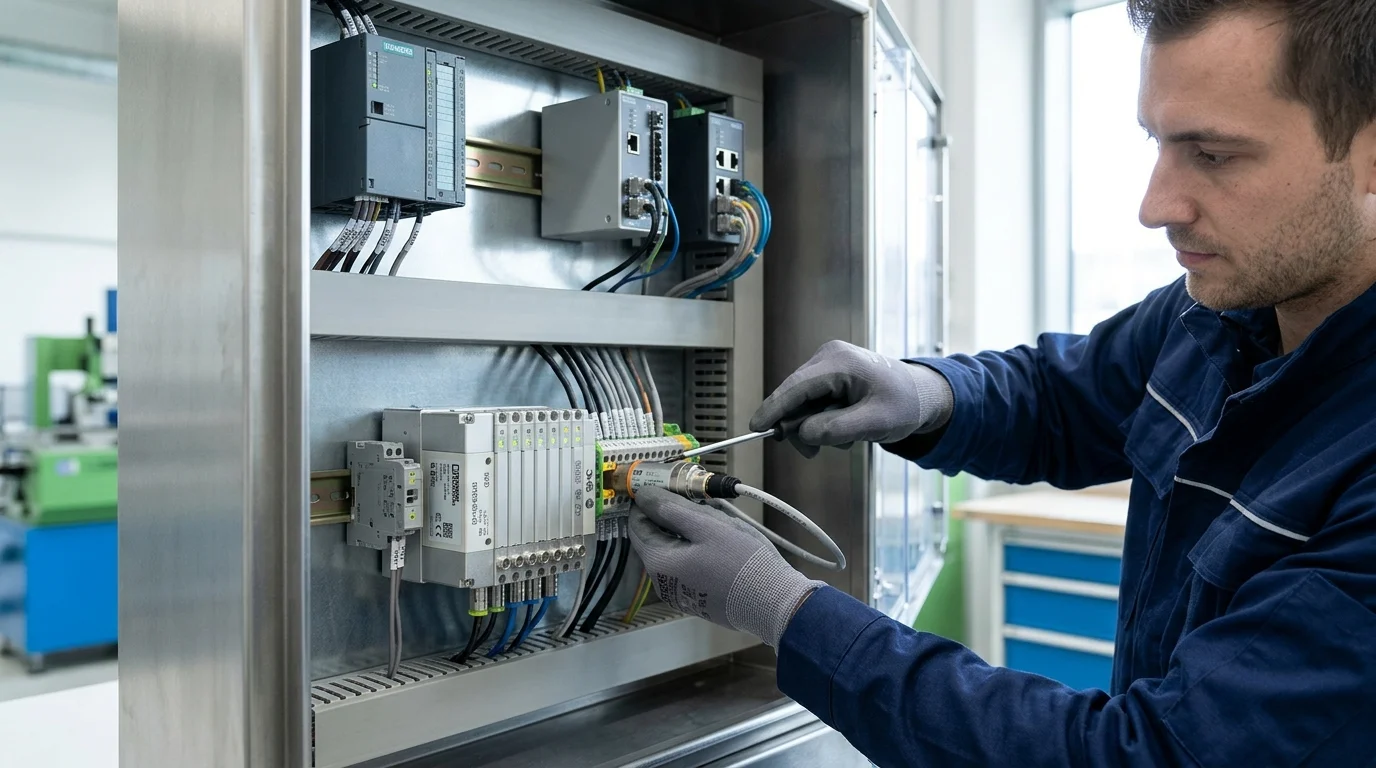
Industrial automation buyers are under pressure to build faster, smaller, and more reliable machines while keeping procurement complexity under control. In that environment, sourcing a solenoid from one vendor and a sensor from another is no longer just a purchasing choice—it can become an engineering risk. Integrated sensor-actuator assemblies are gaining traction because they reduce wiring, improve feedback accuracy, shorten validation cycles, and create a single point of accountability when failures occur. This article examines why manufacturers are shifting toward unified electro-pneumatic and electro-hydraulic solutions, what performance benchmarks matter, and how procurement teams can compare integrated suppliers against traditional single-component vendors.
Why Sensor and Solenoid Integration Matters in Industrial Automation
As industrial automation architectures evolve toward decentralized control, the physical footprint of electro-pneumatic and electro-hydraulic systems has become a critical engineering constraint. By 2026, equipment manufacturers are increasingly abandoning traditional modular designs in favor of unified sensor and solenoid assemblies. This shift is driven by the need for deterministic performance, lower latency, and reduced supply chain complexity.
Procurement strategies are adapting to this technical reality. Relying on disparate vendors for coils, valve bodies, and position sensors introduces unnecessary risk, ranging from tolerance stacking to split liability during field failures. Consolidating these components into a single engineered unit addresses both commercial and technical vulnerabilities.
How Buyers Should Define Integrated Sensor and Solenoid Solution
s
At its core, an integrated solution combines the electromagnetic actuation of a solenoid with real-time feedback mechanisms—such as Hall effect sensors, pressure transducers, or linear variable differential transformers (LVDTs)—within a single housing. For modern automation buyers, defining these solutions requires looking beyond basic voltage and pressure ratings to evaluate the complete mechatronic package.
A properly defined integrated unit often shares a single printed circuit board (PCB) and utilizes a unified M12 or M8 connector for both power and data transmission. This architecture can reduce wiring harness complexity by up to 40% and shrink the physical installation envelope. Furthermore, co-locating the sensor and actuator minimizes signal noise, enabling closed-loop response times of under 15 milliseconds, a critical threshold for high-speed sorting and packaging machinery.
Why Buyers Are Moving Beyond Single-Component Sourcing
The transition away from single-component sourcing is largely a response to hidden lifecycle costs. When engineering teams specify a solenoid from one vendor and a proximity sensor from another, they inadvertently assume the burden of system integration. This includes designing custom mounting brackets, managing multiple CAD models, and conducting extensive validation to ensure the components operate reliably in tandem.
Commercially, managing multiple single-component suppliers inflates procurement overhead. Buyers must track separate lead times, negotiate discrete minimum order quantities (MOQs), and manage independent quality audits. Sourcing a pre-integrated assembly from a single manufacturer can lower total cost of ownership (TCO) by 15% to 20% over a five-year production run. This reduction is achieved through streamlined inventory management, faster assembly line integration, and unified warranty structures that eliminate vendor finger-pointing during root cause analysis.
Key Technical and Commercial Evaluation Criteria
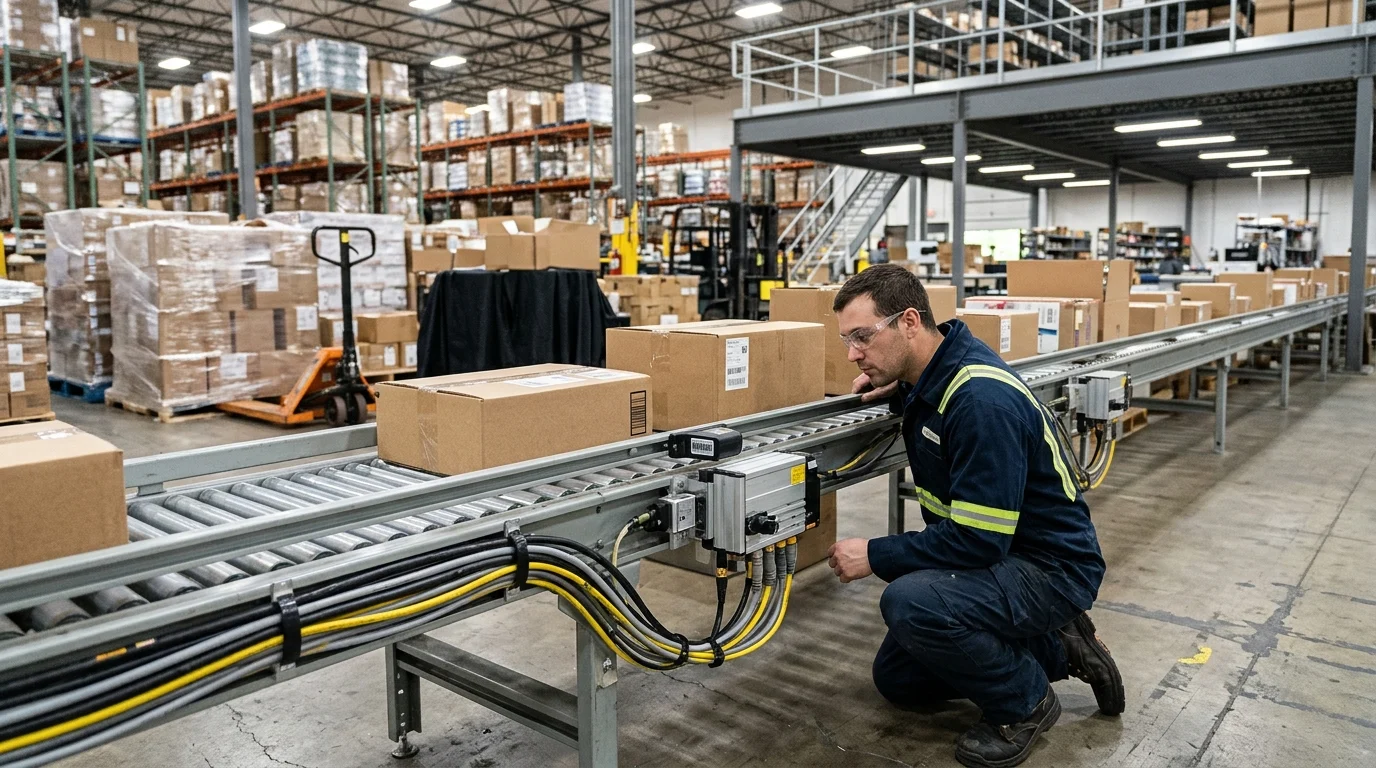
Evaluating integrated sensor and solenoid assemblies requires a holistic approach that weighs both electrical performance and supply chain robustness. Because these units serve as critical nodes in automated systems, a failure in either the actuation or feedback loop can trigger catastrophic downtime.
Procurement and engineering teams must collaborate to benchmark potential partners against traditional modular setups. This involves scrutinizing mean time between failures (MTBF), environmental resilience, and the commercial flexibility of the supplier.
How to Compare Integrated Suppliers Against Single-Component Sup
pliers
Comparing an integrated supplier to a traditional single-component vendor reveals stark differences in both technical deliverables and commercial terms. Integrated suppliers provide a validated sub-system rather than a raw component, shifting the burden of tolerance analysis and lifecycle testing away from the original equipment manufacturer.
The table below illustrates typical comparative metrics between modular sourcing and integrated supplier partnerships in the current automation market:
| Evaluation Metric | Single-Component Sourcing | Integrated Supplier Solution |
|---|---|---|
| Typical MOQ | 100 – 500 units (per SKU) | 500 – 2,000 units (custom assembly) |
| System MTBF | ~2.5 million cycles (estimated) | >5.0 million cycles (validated) |
| Assembly Time | 4 – 6 minutes per node | <1 minute per node (plug-and-play) |
| Warranty Liability | Split across 2-3 vendors | Single point of accountability |
| NRE Costs | Low to None | Moderate (Tooling & PCB design) |
While the initial Non-Recurring Engineering (NRE) costs and MOQs for custom integrated assemblies may be higher, the dramatic reduction in node assembly time and validated MTBF often justifies the investment for mid-to-high volume production lines.
How Environment Ratings and Electrical Interfaces Affect Selecti
on
The operational environment dictates the baseline specifications for any mechatronic assembly. Integrated units must maintain strict ingress protection, often requiring IP67 or IP69K ratings for washdown environments in food processing or heavy automation. Encapsulating both the sensor and the solenoid coil in a single, over-molded epoxy or thermoplastic housing prevents moisture ingress that typically plagues modular connections.
Electrical interfaces are equally critical. Modern systems frequently utilize IO-Link to transmit diagnostic data—such as coil temperature and cycle counts—alongside standard actuation commands. However, legacy protocols remain relevant in specialized sectors. For instance, robust 12V/24V pulsator solenoid coils designed for harsh agricultural equipment prioritize high-current DC interfaces and extreme thermal stability over complex digital diagnostics. Selecting the right interface ensures the integrated unit aligns perfectly with the machine's programmable logic controller (PLC) architecture without requiring expensive signal converters.
How Procurement and Engineering Teams Should Make the Right Choice
Transitioning to an integrated sourcing model requires rigorous cross-functional alignment. Engineering must validate the technical limits of the combined mechatronic unit, while procurement must ensure the supplier possesses the manufacturing scale and financial stability to support long-term production agreements.
Making the right choice hinges on a structured qualification process and a clear understanding of when integration provides a definitive competitive advantage over modularity.
Qualification Steps for Application-Matched Solutions
Validating an application-matched integrated solution demands a stringent testing protocol. Unlike standalone coils, where simple resistance and dielectric strength tests suffice, combined units must undergo dynamic system-level evaluations. Engineering teams should require suppliers to provide comprehensive lifecycle data, targeting a minimum endurance of 10 million to 50 million cycles depending on the pneumatic or hydraulic load.
Thermal shock and vibration testing are equally vital, as the embedded sensor electronics are highly sensitive to the heat generated by the adjacent solenoid coil.
Key Takeaways
- Specify integrated sensor and solenoid assemblies as complete mechatronic packages, not just by voltage, pressure, or coil ratings.
- Prioritize designs with shared PCBs and M8 or M12 connectors to cut wiring harness complexity by up to 40%.
- For high-speed sorting and packaging systems, target closed-loop response times below 15 milliseconds to reduce latency and improve deterministic control.
- Consolidating coils, valve bodies, and feedback sensors under one supplier can reduce five-year total cost of ownership by 15% to 20%.
- Evaluate suppliers on MTBF, environmental resilience, lead-time reliability, MOQ flexibility, and unified warranty accountability before awarding a program.
Frequently Asked Questions
What is an integrated sensor and solenoid assembly?
It combines electromagnetic actuation with real-time feedback, such as Hall effect sensors, pressure transducers, or LVDTs, in one engineered unit. Many designs share a PCB and use a single M8 or M12 connector for power and data.
Why are automation buyers moving away from single-component suppliers?
Separate suppliers for coils, valves, and sensors increase integration work, tolerance risks, lead-time tracking, and failure liability. A pre-integrated assembly simplifies validation, purchasing, inventory, and warranty management.
How much wiring reduction can integrated assemblies deliver?
A well-designed integrated sensor and solenoid unit can reduce wiring harness complexity by up to 40%, especially when power and feedback signals are routed through a unified connector.
What response time should buyers target for high-speed machinery?
For applications such as sorting and packaging, buyers should look for closed-loop response times under 15 milliseconds. Co-locating the sensor and actuator helps reduce signal noise and latency.
Can integrated sourcing reduce total cost of ownership?
Yes. Compared with managing separate component suppliers, a pre-integrated assembly can lower total cost of ownership by 15% to 20% over a five-year production run through faster installation, simpler inventory, and unified warranty support.
Post time: Oct-29-2026