
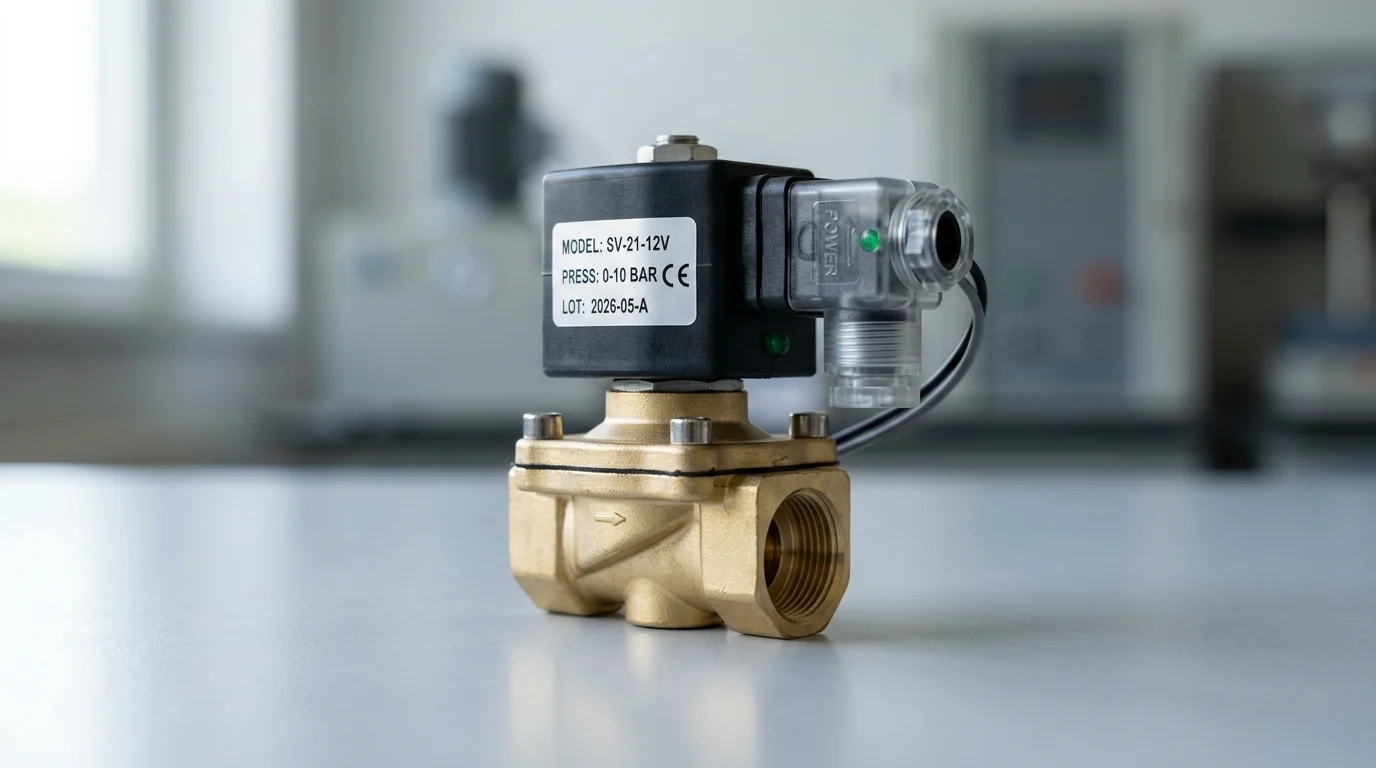
European fluid-control buyers are entering 2026 with less tolerance for inventory risk and more pressure to validate new designs quickly. In solenoid valve sourcing, low minimum order quantity is no longer just a purchasing convenience; it is becoming a practical test of supplier agility, compliance discipline, and engineering support. As interest rates raise stockholding costs and sectors such as heat pumps, hydrogen systems, and industrial automation demand faster iteration, procurement teams need smaller trial batches without sacrificing documentation or reliability. This article explains what low MOQ now means, why it matters for European buyers, and how to evaluate suppliers before moving from pilot orders to scaled production.
Why Low MOQ Matters for European Buyers
European procurement teams in the fluid control sector face unprecedented supply chain volatility approaching 2026. Transitioning to agile manufacturing requires a fundamental shift in how solenoid valves are sourced, tested, and integrated into production lines.
As product lifecycles shorten and customization demands increase, locking into massive inventory commitments is no longer a viable strategy for competitive engineering firms. Consequently, procuring components in small, flexible batches is transitioning from a niche luxury to a core supplier prerequisite.
Defining Low MOQ for Solenoid Valves
Historically, overseas manufacturers required Minimum Order Quantities (MOQs) ranging from 1,000 to 5,000 units to offset setup, machining, and tooling costs. For European buyers in 2026, a true “Low MOQ” is now defined as batches of 10 to 50 units for specialized configurations, and under 200 units for standard brass or stainless steel solenoid valves. This dramatic reduction allows engineering teams to validate pilot designs without tying up excessive working capital.
This shift is particularly critical when testing high-pressure hydraulic components. For instance, when evaluating a Rdda-LAN Direct Acting Relief Valve rated for 350 bar and 95 L/min flow rates, extensive field testing of a small batch is necessary to prevent catastrophic system failures in heavy machinery. A low MOQ threshold ensures these rigorous safety validations can occur iteratively before standardizing the bill of materials.
2026 Market Pressures Driving Low MOQ Demand
Several macroeconomic and regulatory pressures are driving this demand across the European Union. Central bank interest rates have increased inventory carrying costs by an estimated 15% to 22% compared to the previous decade. Holding thousands of solenoid valves in dead stock—especially those with specific voltage coils that may become obsolete if product specifications change—is a significant financial liability.
Furthermore, rapid iteration in emerging green technology sectors, such as hydrogen fuel cell thermal management and commercial heat pump manufacturing, requires continuous prototyping. Engineers must physically test multiple orifice sizes, flow coefficients (Kv values), and elastomer seal materials (like FKM, EPDM, or PTFE) against aggressive media. Low MOQ sourcing enables this rapid R&D cycle, allowing OEMs to pivot their designs within weeks rather than waiting out a six-month high-volume production schedule.
How to Compare Low MOQ Solenoid Valve Suppliers
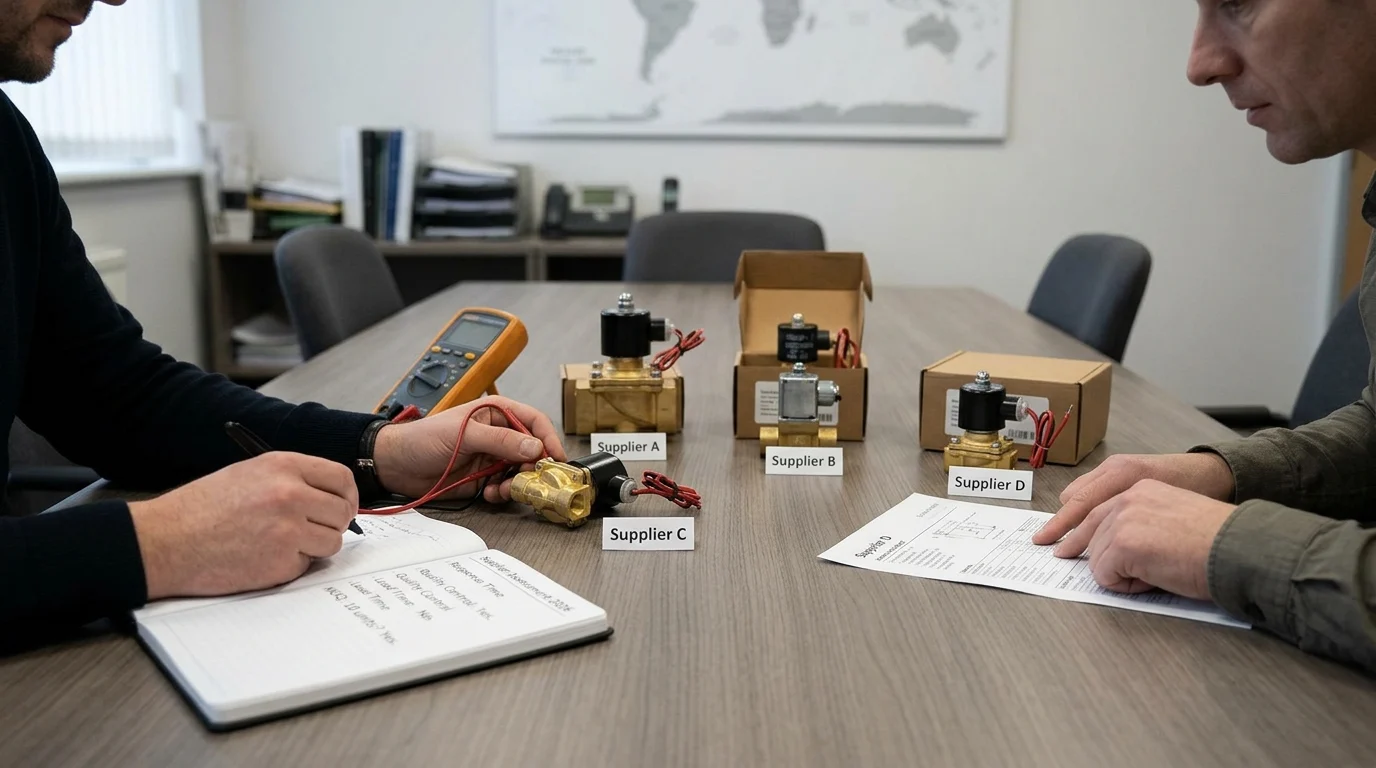
Identifying a supplier willing to produce small batches is only the first hurdle. Sourcing engineers must rigorously compare these agile vendors against established high-volume partners to ensure lowering the volume threshold does not introduce systemic risks.
Comparing low MOQ suppliers requires looking beyond the initial unit price. The evaluation must focus heavily on regulatory compliance, material consistency, and the long-term viability of scaling up production once the prototype phase concludes.
Key Specifications and Compliance Requirements
A low-volume order must still strictly adhere to European directives, including CE marking, RoHS, and REACH. For specialized industrial applications, ATEX certification for explosive environments or WRAS approval for potable water systems remains non-negotiable, regardless of the order size. Buyers must verify that a supplier delivering just 50 units can still provide full material traceability certificates, such as EN 10204 Type 3.1, for the valve body forgings.
Electrical compliance is equally critical. Agile suppliers must guarantee that their coils pass dielectric strength tests and meet ingress protection ratings of IP65 or IP67. If a manufacturer cuts corners on copper winding purity or uses substandard epoxy potting to expedite a small batch, the resulting thermal degradation and coil burnouts will negate any upfront inventory savings. Rigorous documentation demands must be enforced from the very first sample.
Quality, Lead Time, and Cost Trade-Offs
Evaluating low MOQ partners requires a comprehensive Total Cost of Ownership (TCO) perspective. While the unit price of a small batch is inevitably higher due to disrupted economies of scale, the reduction in dead stock and faster iteration cycles frequently offset this premium over the product lifecycle.
| Sourcing Metric | Traditional High-Volume Supplier | Agile Low-MOQ Supplier |
|---|---|---|
| Typical MOQ Threshold | 2,000 – 5,000 units | 50 – 200 units |
| Unit Cost Premium | Baseline (0%) | +15% to +35% |
| Prototype Lead Time | 8 – 14 weeks | 2 – 4 weeks |
| Tooling/NRE Costs | Amortized into unit price | Transparent upfront charge |
| Inventory Obsolescence Risk | High (sunk capital) | Low (just-in-time aligned) |
Procurement teams must weigh the typical 15% to 35% unit cost premium against the complete elimination of warehousing fees and obsolescence risk. A highly capable agile supplier will transparently separate Non-Recurring Engineering (NRE) costs from the raw unit price. This transparency allows European buyers to accurately forecast the exact financial trajectory of scaling from a 50-unit pilot to a 5,000-unit annual blanket order.
How to Test and Scale a New Low MOQ Supplier
Successfully utilizing low MOQ suppliers requires a disciplined, data-driven validation framework. European buyers must treat the initial small-batch order not as a final procurement solution, but as a high-stakes stress test of the supplier’s manufacturing process control.
Without a structured protocol for testing and scaling, buyers risk introducing unverified components into critical fluid systems, potentially resulting in costly field recalls and damaged brand reputation.
Step-by-Step Validation Workflow
The validation workflow begins before any hardware changes hands, starting with a comprehensive desktop audit to ensure the supplier holds a valid ISO 9001:2015 certification. Next, the buyer requests a First Article Inspection (FAI) report alongside a micro-batch of 5 to 10 units. These initial solenoid valves undergo extreme bench testing to measure response times in milliseconds, holding current stability, and pneumatic or hydraulic leak-down rates at maximum operating pressure.
If the FAI batch passes these physical benchmarks, the buyer initiates a pilot run of 50 to 100 units for live field integration and lifecycle testing—often targeting 1 million to 5 million actuation cycles. The critical metric during this phase is the defect rate, which ensures the supplier can maintain strict quality controls as production volumes begin to scale.
Key Takeaways
- Treat 10 to 50 units for customized valves and under 200 units for standard models as practical low MOQ benchmarks when screening suppliers.
- Use low MOQ orders to validate voltage coils, orifice sizes, Kv values, and seal materials before committing to high-volume production.
- Do not accept weaker documentation for small orders; require CE, RoHS, REACH, and any sector-specific approvals from the first trial batch.
- Factor inventory carrying costs into supplier comparisons, because excess stock can be financially risky when specifications change quickly.
- Confirm that a low MOQ supplier can scale production after testing so the prototype phase does not create a future supply bottleneck.
Frequently Asked Questions
What counts as a low MOQ for solenoid valves in 2026?
For European buyers, low MOQ typically means 10 to 50 units for customized solenoid valve configurations and under 200 units for standard brass or stainless steel models.
Why are European buyers prioritizing low MOQ suppliers?
Low MOQ reduces inventory risk, limits working capital exposure, and lets engineering teams validate new valve designs before committing to full-scale production.
Does low MOQ mean lower compliance standards?
No. Even small-batch solenoid valves should meet relevant CE, RoHS, and REACH requirements, plus application-specific approvals such as ATEX or WRAS when required.
How does low MOQ help with high-pressure hydraulic testing?
Small batches allow teams to test components such as 350 bar, 95 L/min hydraulic valves under real operating conditions before locking them into a bill of materials.
What should buyers compare beyond unit price?
Buyers should assess material consistency, certification support, coil and seal options, lead times, technical documentation, and the supplier’s ability to scale after validation.
Post time: Oct-30-2026