
Global OEM sourcing strategies are changing fast, and solenoid valves are no exception. As engineering teams in the US and Europe face pressure to reduce costs, secure capacity, and shorten development cycles, many are looking beyond traditional domestic suppliers. The shift is not simply about cheaper production; it reflects the rise of Chinese manufacturers with 20+ years of application-driven design experience, stronger quality systems, and increasingly sophisticated fluid control expertise. This article examines why experienced Chinese solenoid valve suppliers are gaining traction, what cost and capacity advantages they can offer, and how OEMs should evaluate partners carefully to protect performance, intellectual property, and long-term supply resilience.
Why US and EU OEMs Source Chinese Solenoid Valves
For decades, equipment manufacturers in North America and the European Union relied heavily on domestic or near-shore partners for fluid control components. However, driven by global supply chain restructuring and the need for scalable production, the landscape has shifted significantly. US and EU engineering teams are increasingly partnering with Chinese solenoid valve manufacturers that boast two decades or more of localized design experience. This transition is not solely a product of globalization; it is driven by the maturation of Chinese engineering ecosystems, where established suppliers have evolved from simple build-to-print job shops into comprehensive co-engineering partners capable of designing complex fluid control systems.
For applications ranging from medical ventilators to heavy agricultural machinery, these veteran suppliers offer a proven track record of solving intricate thermodynamic and fluid dynamic challenges. This 20+ years of design heritage is not merely about longevity; it manifests in concrete engineering depth, such as iterative armature design evolution, proprietary coil thermal modeling, and extensive long-term elastomer compatibility databases.
Cost, Engineering, and Capacity Drivers
The primary catalyst for this migration is a compelling intersection of cost efficiency, engineering agility, and scalable capacity. When partnering with experienced Chinese manufacturers, buyers commonly report unit cost reductions of 25% to 40% compared to Western counterparts without compromising critical performance tolerances, though these savings depend heavily on material costs and trade policies.
Furthermore, these facilities operate with immense economies of scale. Rather than smelting specialty steel in-house, mature suppliers leverage highly efficient supply chains to machine purchased magnetic stainless steel bar stock or outsourced brass forgings. A top-tier supplier frequently maintains a production capacity exceeding hundreds of thousands of units per month, supported by automated coil winding and CNC machining centers that ensure dimensional consistency across high-volume runs.
How to Compare Chinese Solenoid Valve Manufacturers
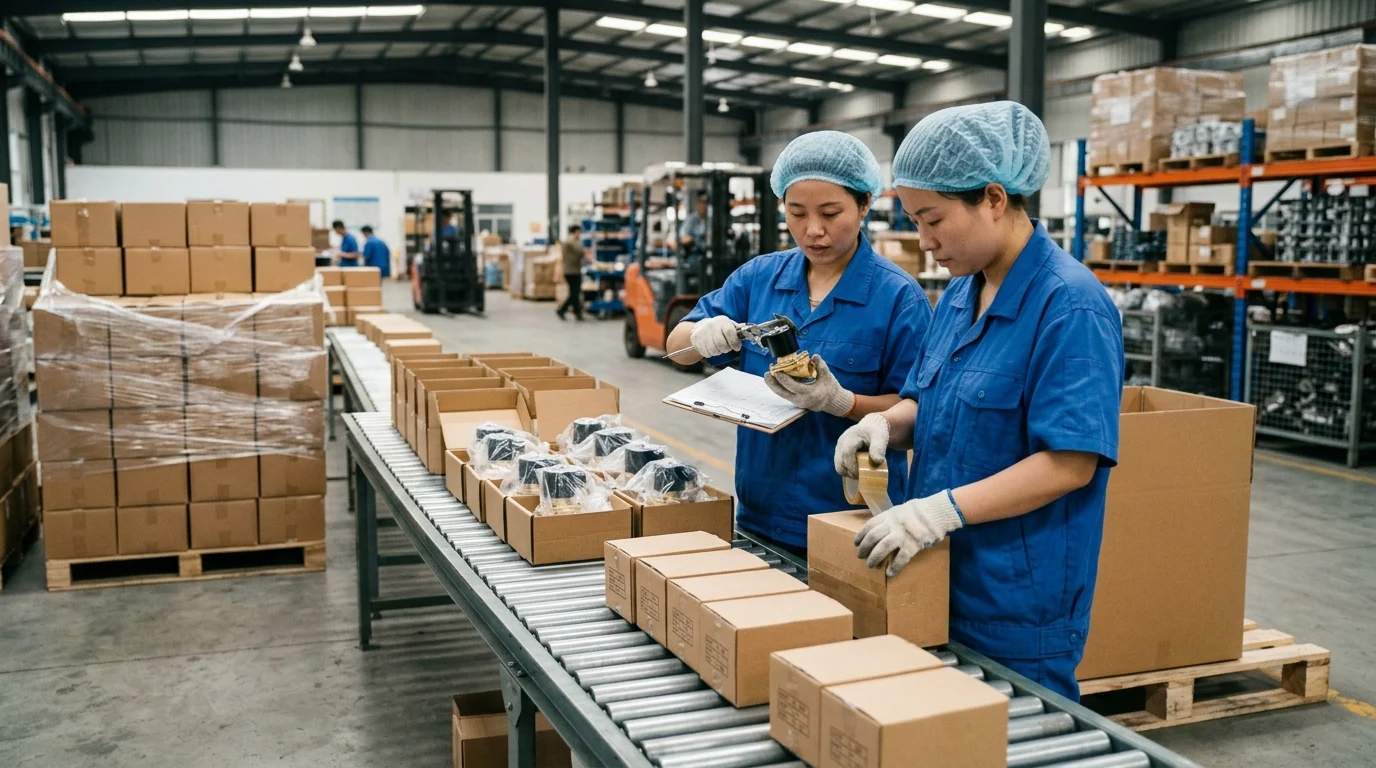
Identifying a reliable manufacturing partner demands a rigorous comparative analysis of technical capabilities, quality assurance protocols, and risk management strategies. When evaluating Chinese solenoid valve manufacturers, Western buyers must standardize their assessment metrics to ensure apples-to-apples comparisons across bids.
Crucially, this evaluation must also account for the true total cost of ownership and inherent sourcing risks. To eliminate scattered vulnerabilities, buyers should consolidate their risk mitigation and due diligence: navigating a highly heterogeneous market where capabilities vary sharply between Tier-1 coastal firms and smaller inland workshops, addressing intellectual property protection, and planning for tariff, geopolitical, and shipping volatility. A mature manufacturer will welcome stringent technical audits, provide transparent access to their material science data, and offer clear, legally binding frameworks for IP security and supply chain resilience.
Key Technical Specifications to Review
The core of any supplier comparison lies in their ability to consistently meet or exceed specific technical thresholds under extreme environmental conditions. Buyers must scrutinize operational parameters such as pressure differentials, response times, and power consumption profiles. It is important to note that advanced thresholds (such as 150+ bar or < 10 ms response times) are not standard catalog capabilities; they require custom engineering, non-recurring engineering (NRE) costs, and extended lead times.
| Specification Category | Standard Requirement | Advanced OEM Requirement (Heritage Supplier) |
|---|---|---|
| Operating Pressure Range | 0 to 10 bar | 0 to 150+ bar (High-pressure variants) |
| Actuation Response Time | < 50 milliseconds | < 10 milliseconds (Direct-acting) |
| Coil Insulation Class | Class F (155°C) | Class H (180°C) or higher |
| Environmental Protection | IP65 | IP67 / IP68 (Epoxy encapsulated) |
Manufacturers that have honed their craft over twenty years can often engineer compliance with these advanced specifications, offering customized orifice sizes and proprietary elastomer seals (such as FKM or FFKM) tailored to highly aggressive fluid media.
Certifications, Traceability, and Testing
Technical specifications must be backed by robust quality management systems to guarantee repeatability across millions of units. Elite Chinese manufacturers operate strictly under IATF 16949 (for automotive and heavy-duty applications) or ISO 9001:2015 frameworks.
Furthermore, they implement 100% end-of-line pneumatic or hydraulic leak testing, aiming for defect rates strictly controlled to industry-leading low defect rates, with top-tier facilities often targeting below 50 Parts Per Million (PPM) for highly optimized lines. Traceability is equally critical for US and EU compliance; established suppliers utilize laser-etched QR codes on every valve body, linking each unit back to specific raw material batches, CNC machine logs, and final testing parameters. To combat potential quality fade after the initial contract award, buyers should mandate recurring on-site audits and ensure golden-sample retention, rather than relying solely on pre-production validation.
How to Assess Supplier Experience
Evaluating a supplier’s experience requires looking beyond superficial marketing materials to evaluate their track record and engineering depth. Because the market is diverse, overstated “heritage” claims require independent verification. Purchasers must assess the longevity of a manufacturer’s tooling, the retention rate of their senior engineering staff, and the depth of their intellectual property portfolio to distinguish true Tier-1 partners from less mature operations.
A manufacturer with 20+ years of experience will typically demonstrate robust tooling and die lifespans (measured in high-volume mold shots) alongside exceptional valve service life, often engineering products to exceed 1,000,000 actuation cycles. Requesting historical case studies on custom manifold integrations, elastomer compatibility, or proprietary armature designs can rapidly separate established engineers from novice assemblers.
Practical Sourcing Steps for OEM Buyers
Understanding why Chinese engineering ecosystems have matured is only the first step; translating that market shift into tangible value requires a structured, phased approach to mitigate trans-Pacific supply chain risks. For US and EU purchasers, bridging the geographic and operational divide necessitates a formalized sourcing protocol that leaves no room for ambiguity.
By adhering to a strict process from the initial Request for Quotation (RFQ) through to mass production, engineering teams can lock in quality standards, protect their intellectual property, and ensure seamless integration into their existing assembly lines.
RFQ to Sample Approval Process
The RFQ phase should mandate the submission of comprehensive 3D CAD models,
Key Takeaways
- US and EU OEMs can often reduce solenoid valve unit costs by 25% to 40% by working with mature Chinese manufacturers, but savings must be evaluated against tariffs, materials, logistics, and quality requirements.
- Manufacturers with 20+ years of design experience are valuable when they can demonstrate real engineering depth, such as armature optimization, coil thermal modeling, and elastomer compatibility data.
- A reliable sourcing decision should compare total cost of ownership rather than unit price alone, including tooling, validation, shipping, warranty risk, and supply continuity.
- OEMs should verify supplier claims through technical audits, test documentation, material traceability, production capacity reviews, and references from comparable applications.
- Risk mitigation should be built into the sourcing process with IP protections, clear contracts, contingency planning, and due diligence across quality, geopolitical, and logistics variables.
Frequently Asked Questions
Why are US and EU OEMs sourcing solenoid valves from China?
Many OEMs are seeking lower unit costs, scalable production capacity, and faster engineering support. Established Chinese suppliers with 20+ years of design experience can often support custom valve development, high-volume manufacturing, and cost reductions of 25% to 40%, depending on specifications, materials, tariffs, and logistics.
Does lower cost mean lower solenoid valve quality?
Not necessarily. Mature Chinese manufacturers may use CNC machining, automated coil winding, validated elastomer data, and structured quality systems. Buyers should verify tolerances, test reports, certifications, material traceability, and long-term performance data before approving production.
What does 20+ years of design heritage indicate?
It suggests accumulated engineering knowledge rather than simple manufacturing age. In solenoid valves, this may include refined armature designs, coil thermal modeling, fluid dynamics expertise, and experience solving application-specific challenges across medical, agricultural, industrial, and mobility equipment.
How should OEMs compare Chinese solenoid valve manufacturers?
Use standardized criteria: engineering capability, production capacity, quality controls, material expertise, testing infrastructure, export experience, IP protection, and total cost of ownership. Comparing only quoted unit price can hide risks in tooling, validation, logistics, and warranty exposure.
What sourcing risks should buyers manage?
Key risks include inconsistent supplier capability, intellectual property exposure, tariffs, geopolitical disruption, shipping delays, and material variability. OEMs should use audits, clear contracts, dual sourcing plans, quality milestones, and transparent documentation to reduce these risks.
Post time: Sep-12-2026