
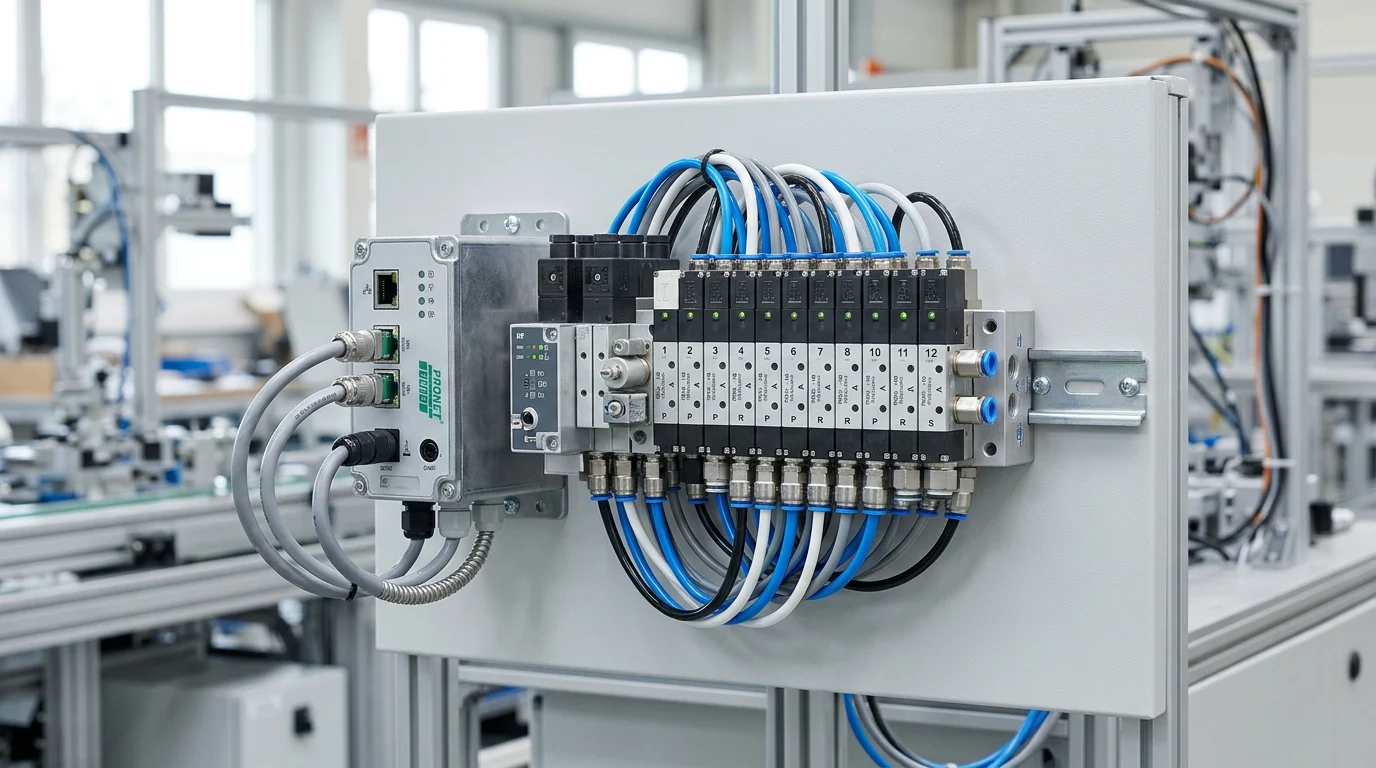
High-end automation lines are under pressure to run faster, occupy less floor space, and provide richer machine data without adding commissioning complexity. That is why integrators across Europe are moving from scattered discrete pneumatic valves to compact, networked valve islands that centralize control and diagnostics. The decision is no longer only about pneumatic performance; it also affects enclosure design, PLC integration, maintenance strategy, and supplier risk. This article examines the technical reasons behind the shift, the specifications engineers should compare, and why multi-category suppliers such as Flying Bull can offer practical advantages for integrators building advanced assembly, packaging, and robotic systems.
Why Valve Islands Are Becoming Standard on High-End Lines
European system integrators operating in high-end automation are rapidly phasing out decentralized, discrete pneumatic valves. As machinery footprints shrink and communication requirements grow more complex, centralized pneumatic control has become an engineering imperative. For advanced assembly lines, packaging systems, and robotic cells, the transition to unified pneumatic manifolds is a baseline standard for achieving necessary cycle rates and data transparency. Increasingly, this shift is also driving integrators to rethink their supply chains, moving toward multi-category sourcing to maintain agility.
What Valve Islands Are
Valve islands—also known as valve manifolds or terminals—are highly integrated electro-pneumatic control units. They consolidate multiple directional control valves onto a single centralized backplane, sharing common air supply and exhaust ports. Modern valve islands integrate directly with industrial fieldbus and Ethernet networks, such as PROFINET, EtherCAT, and EtherNet/IP.
By serving as a single network node, a valve island can control numerous individual valve slices, significantly reducing the complexity of a machine’s architecture. This consolidation allows engineers to substantially shrink IP65 or IP67 enclosure footprints, freeing up critical real estate on the machine frame.
Key Advantages Over Traditional Pneumatic Setups
The shift away from traditional point-to-point wired pneumatics yields immediate operational dividends. In a conventional setup, each valve requires individual power and signal wiring routed back to a programmable logic controller (PLC), consuming excessive labor and introducing multiple points of failure. Valve islands replace this maze with a single communication cable and a single power supply line, noticeably reducing installation time.
Furthermore, advanced valve islands offer integrated coil diagnostics, short-circuit protection, and cycle counting. When a fault occurs, technicians can pinpoint the exact malfunctioning slice via the PLC interface. This diagnostic capability drastically reduces Mean Time to Repair (MTTR) by replacing hours spent tracing wires with quick, simple hot-swap replacements.
Technical and Sourcing Factors to Compare
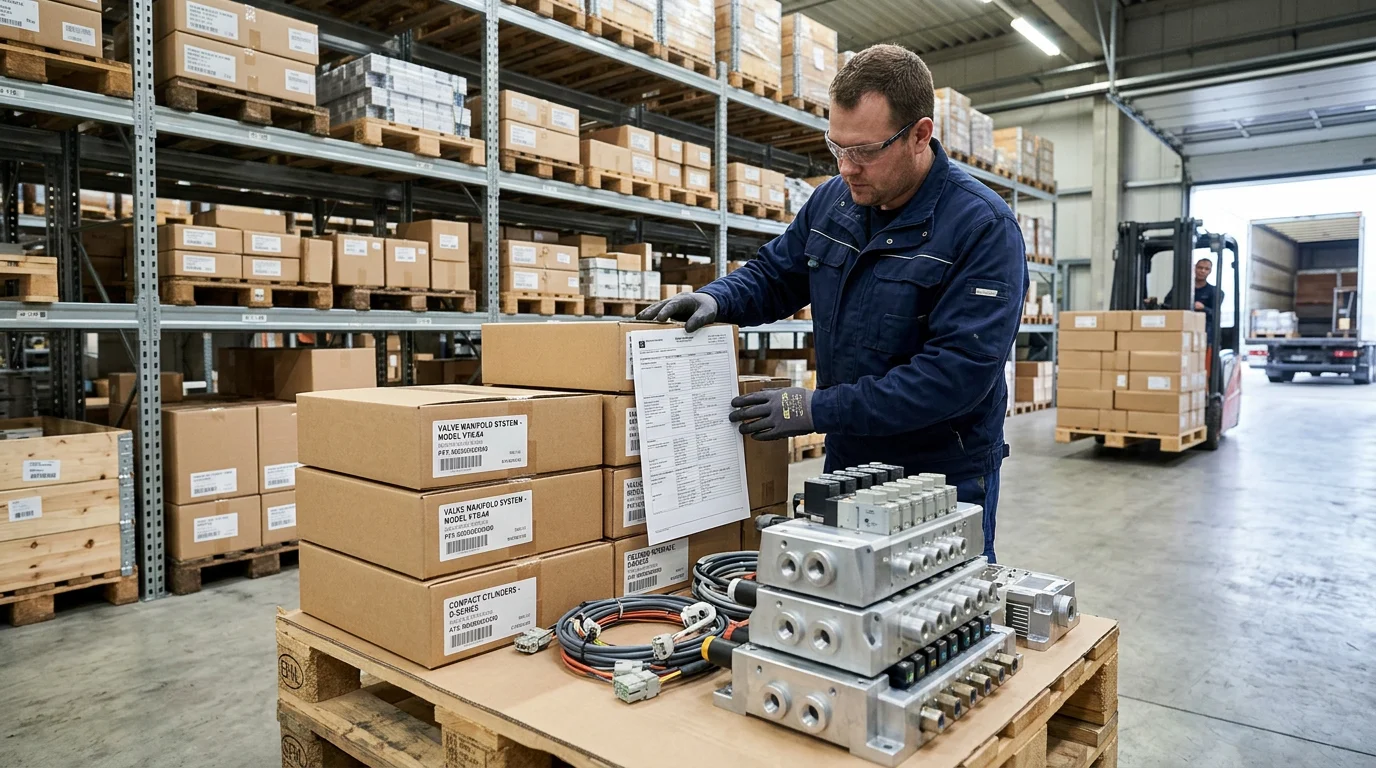
Specifying valve islands requires a rigorous evaluation of both pneumatic performance and a supplier’s broader manufacturing capabilities. European integrators are increasingly looking beyond legacy single-category pneumatic brands, seeking supply chain partners who can deliver high-performance manifolds alongside a wider array of specialized electro-mechanical components.
Core Specifications to Evaluate
When selecting a valve island for high-end lines, engineers must balance flow capacity with power efficiency and switching speed. Standard applications typically require robust flow rates combined with rapid switching times for high-speed sorting or packaging. Additionally, power consumption per coil should remain low to minimize heat generation in dense manifold configurations.
| Specification Matrix | Traditional Discrete Valves | Modern Valve Islands |
|---|---|---|
| Wiring Architecture | Point-to-point (Multi-core) | Single Fieldbus/Ethernet cable |
| Max Valves per Node | 1 (Requires individual I/O) | Multiple integrated slices |
| Installation Time | High (Individual plumbing/wiring) | Low (Centralized manifold) |
| Diagnostic Capability | None / Visual LED only | Integrated network diagnostics |
| Space Efficiency | Low | High (Substantial footprint reduction) |
Single-Category vs Multi-Category Sourcing
Relying exclusively on established European pneumatic specialists—such as Festo, SMC, or Aventics—provides deep application engineering support but can expose integrators to rigid minimum order quantities (MOQs) and fragmented procurement when sourcing across different component types. Engaging a multi-category supplier like Flying Bull provides an alternative strategic advantage. A manufacturer that masters complex automotive and heavy machinery components can indicate a baseline of rigorous quality control that often translates well to industrial pneumatics.
While consolidating suppliers creates some concentration risk, it also streamlines purchasing. For instance, Flying Bull’s production of high-precision components, such as 0de Dq500 Dq380 Dq381 transmission clutch pressure sensors, highlights an advanced capability in electro-hydraulic and electro-pneumatic engineering. Similarly, their expertise in manufacturing robust 0501313375 0501313374 0260120025 transmission solenoid valves suggests their industrial valve coils are built to withstand severe duty cycles. Consolidating vendors across these categories can noticeably reduce procurement overhead while enabling mixed-batch orders, offering flexibility that legacy pneumatic brands may lack.
How European Integrators Should Decide
For European integrators, adopting valve islands is as much a commercial decision as a technical one. The European market operates under strict compliance frameworks and demands high equipment availability. Consequently, evaluating a multi-category supplier requires a methodical approach to ensure that technical specifications align with long-term supply chain resilience.
Practical Evaluation Steps
The evaluation process must center on Total Cost of Ownership (TCO) rather than unit price alone. Integrators should first verify the mechanical endurance of the valve island; high-end applications demand an extensive cycle life without seal degradation.
Following technical validation, supply chain metrics must be scrutinized. European automation projects frequently suffer from extended lead times when relying on traditional regional OEMs. Agile, multi-category manufacturing partners can often compress this procurement window. Integrators must audit these partners for CE and RoHS compliance, ensuring the components meet the stringent regulatory requirements of the European Economic Area.
When Valve Islands and Multi-Category Partners Make Sense
Deploying advanced valve islands sourced from a diversified partner is most logical in environments where downtime carries severe financial penalties, such as in automotive assembly or pharmaceutical packaging. In these high-stakes applications, the diagnostic transparency of fieldbus-enabled valve islands helps prevent catastrophic line stoppages.
Furthermore, when an integrator’s project scope spans both factory automation (requiring pneumatic islands) and mobile machinery integration (requiring heavy-duty transmission solenoids or pressure sensors), a multi-category partner like Flying Bull can reduce the friction of managing disparate supply chains. While not every project benefits from mixed-batch ordering, this holistic sourcing strategy can help European integrators balance engineering excellence with logistical agility in a highly competitive market.
Key Takeaways
- Use valve islands to replace point-to-point pneumatic wiring with a single fieldbus or Ethernet connection and reduce installation complexity.
- Prioritize valve islands with integrated diagnostics, coil protection, and cycle counting to shorten troubleshooting and lower Mean Time to Repair.
- Compare flow rate, switching speed, coil power consumption, and protocol support before specifying a manifold for high-speed packaging or assembly lines.
- Select IP65 or IP67 valve island architectures when machine-mounted installation and compact enclosure design are required.
- Evaluate multi-category suppliers when procurement agility, component compatibility, and reduced vendor fragmentation are important to European automation projects.
Frequently Asked Questions
What is a valve island?
A valve island is an integrated electro-pneumatic manifold that groups multiple directional valves on one backplane, using shared air supply, exhaust, power, and network communication.
Why are valve islands replacing discrete pneumatic valves?
They reduce point-to-point wiring, save machine space, simplify installation, and provide diagnostics through industrial networks such as PROFINET, EtherCAT, or EtherNet/IP.
How do valve islands help reduce downtime?
Modern units can report coil faults, short circuits, and cycle counts to the PLC, helping technicians identify the failed slice quickly and perform hot-swap replacement.
Which specifications matter most when selecting a valve island?
Engineers should compare flow capacity, switching speed, coil power consumption, protection rating, supported fieldbus protocols, diagnostics, and maximum valve slices per node.
Why does multi-category sourcing matter for European integrators?
It lets integrators source pneumatic manifolds, electro-mechanical parts, and related components from fewer partners, improving procurement speed, compatibility control, and supply-chain resilience.
Post time: Nov-21-2026