
Introduction
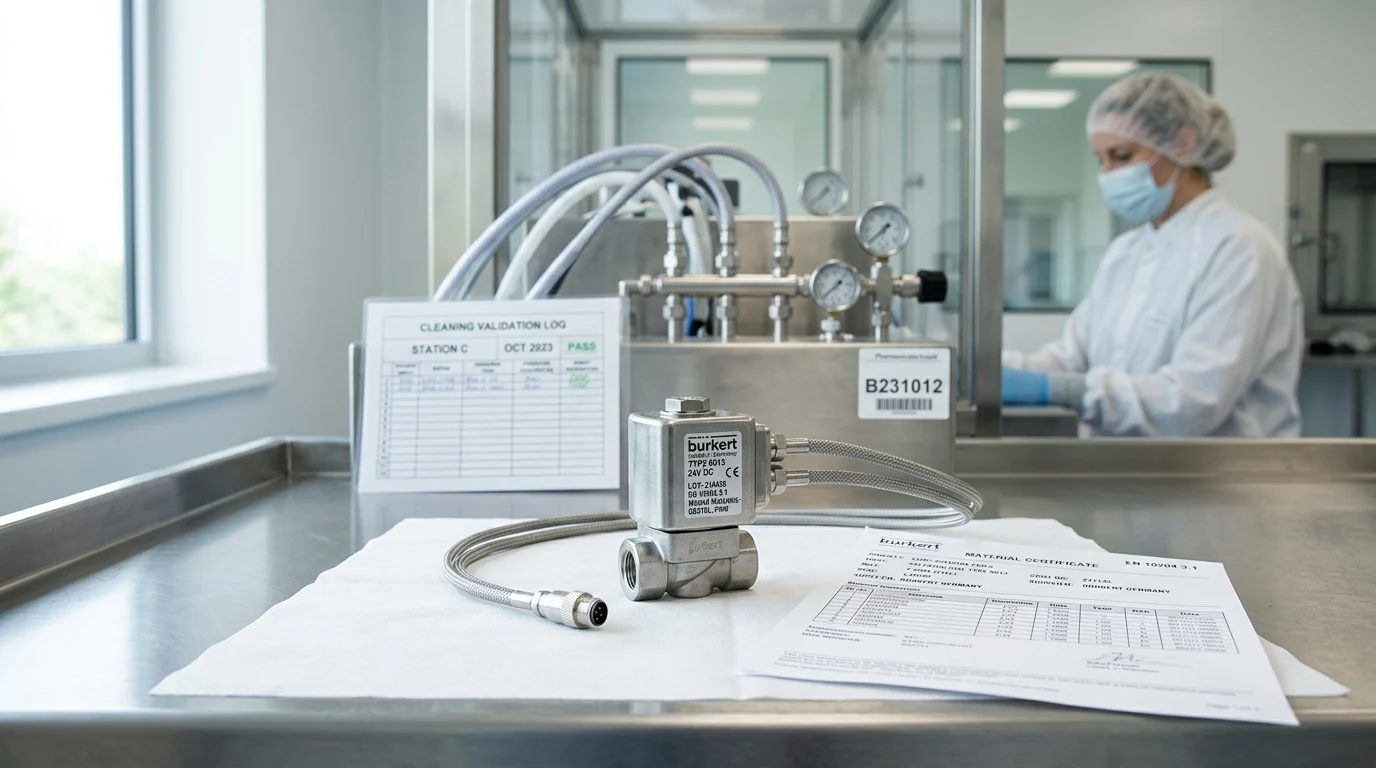
In European pharmaceutical production, solenoid coils must do more than deliver reliable actuation: they also need to fit tightly within GMP expectations for contamination control, traceability, and cleanroom durability. Even when installed outside the product contact path, their materials, surface design, and resistance to aggressive washdown procedures can affect audit readiness and operational risk. This article explains how cleaning validation applies to these components, which material certifications support compliance, and what engineers and quality teams should verify before approval. The goal is to help readers connect technical coil specifications with Annex 1 expectations and practical qualification decisions on the factory floor.
GMP Requirements for Solenoid Coils in European Pharmaceutical Applicati
Solenoid coils are integral components in European pharmaceutical production, driving the precise fluid control systems required for dosing, mixing, and sterilization. Although the coil itself frequently resides outside the direct fluid path, its operation within sterile or highly controlled cleanroom environments necessitates strict adherence to Good Manufacturing Practice (GMP) guidelines. European pharmaceutical facilities face intense regulatory scrutiny, meaning every component within a manufacturing suite must support a contamination-free production ecosystem.
Defining GMP Compliance for Solenoid Coils
Compliance for solenoid coils in these settings extends beyond basic electrical safety to encompass environmental resilience and hygienic design. Under European GMP frameworks—particularly Annex 1, which governs the manufacture of sterile medicinal products—equipment must not introduce particulate or microbial contamination. Solenoid coils deployed in these zones must feature robust, crevice-free housings capable of achieving an IP69K ingress protection rating. This rating ensures the electrical components remain hermetically sealed against the high-pressure, high-temperature washdowns common in pharmaceutical cleanrooms. Furthermore, encapsulation materials must not off-gas or degrade when exposed to the ambient conditions of ISO Class 5 cleanroom environments, ensuring zero impact on air quality. Solenoid coils operating continuously at 24V DC must also manage heat dissipation effectively to prevent localized temperature spikes that could disrupt sensitive biological processes.
Contamination, Traceability, and Audit Risks
The inability to trace component origins or verify material safety presents a critical audit risk during regulatory inspections by the European Medicines Agency (EMA). Pharmaceutical manufacturers require continuous documentation linking every piece of equipment to its manufacturing batch. For solenoid coils, this necessitates EN 10204 Type 3.1 material certificates, which provide traceable proof of the housing and encapsulation materials’ chemical compositions. If a coil’s exterior degrades and flakes into the production environment, the resulting cross-contamination can force the quarantine or destruction of entire pharmaceutical batches, costing millions of euros. Rigorous traceability ensures that any identified defect can be isolated to a specific supplier lot, mitigating widespread operational risks and satisfying stringent EMA audit requirements.
Cleaning Validation and Material Certification Criteria

Validating the cleaning processes for pharmaceutical equipment is a cornerstone of GMP compliance. Solenoid coils must be designed to withstand aggressive cleaning protocols without compromising their structural integrity or electrical performance. Material certification serves as the baseline for this validation, ensuring that all exposed surfaces are chemically compatible with industry-standard sanitizing agents.
Key Material Certification and Surface Contact Considerations
Even when solenoid coils are designated as non-contact components, their proximity to the process line mandates strict material certifications. Housings are typically constructed from 316L stainless steel or high-grade encapsulated thermoset plastics that comply with USP Class VI and FDA standards. To prevent biofilm formation and facilitate effective cleaning, the exterior surfaces of these coils must maintain a surface roughness of Ra ≤ 0.8 µm. This micro-smooth finish eliminates microscopic crevices where sporicidal agents, such as hydrogen peroxide vapor or sodium hydroxide solutions, might otherwise fail to penetrate. Providing comprehensive documentation—including material safety data sheets, surface finish certificates, and extractables or leachables test reports—is mandatory for passing European cleaning validation protocols and ensuring long-term operational compliance.
Comparing Cleanability and Chemical Resistance
Different coil encapsulation and housing materials offer varying degrees of resistance to the thermal and chemical stresses of Clean-in-Place (CIP) and Steam-in-Place (SIP) procedures. Pharmaceutical engineers must carefully compare these properties to select the optimal component for specific cleanroom zones.
| Material | Cleanability (Surface Roughness) | Chemical Resistance | Max Temperature Tolerance |
|---|---|---|---|
| Stainless Steel 316L Housing | Excellent (Ra ≤ 0.8 µm) | Very High (Resists caustic sodas) | Up to 150°C (SIP compatible) |
| Epoxy Encapsulated | Good (Smooth finish) | High (Resists mild acids/bases) | Up to 135°C |
| Polyamide (PA66) | Moderate | Moderate (Susceptible to strong oxidizers) | Up to 105°C |
As demonstrated, 316L stainless steel or high-grade epoxy encapsulation is essential for zones subjected to 135°C SIP sterilization cycles. Lower-grade materials like standard PA66 may degrade over time, leading to micro-cracking that harbors pathogens and ultimately fails cleaning validation tests.
Implementation and Supplier Qualification
Transitioning from specification to procurement requires a structured approach to supplier qualification. European pharmaceutical producers must ensure that their supply chain partners operate with the same commitment to quality control and GMP principles as the end-user facilities. This involves comprehensive auditing and the establishment of strict sourcing criteria.
Practical Qualification Steps for Suppliers
Qualifying a supplier for pharmaceutical-grade solenoid components requires a deep dive into their manufacturing processes. Auditors typically look for ISO 9001 certified quality management systems as a baseline. Manufacturers like Feiniu (Ningbo) Electronic Technology Co., Ltd. demonstrate industry capability by maintaining comprehensive quality frameworks for their solenoid valves, coils, valve islands, and control modules. During the qualification phase, pharmaceutical buyers must assess the supplier’s statistical process control, demanding a component defect rate of less than 0.1%. Furthermore, suppliers must prove their capacity to execute rigorous end-of-line testing—including dielectric strength and thermal cycling tests—ensuring every shipped coil meets the exact specifications required for critical dosing and fluid control applications.
Decision Criteria for Final Sourcing
Final sourcing decisions balance compliance guarantees with supply chain logistics. Procurement teams evaluate the reliability of a supplier’s lead times, which typically must fall within a strict 4- to 6-week window to prevent costly production line stoppages. Minimum Order Quantities (MOQs) also play a vital role; suppliers who can accommodate flexible MOQs—ranging from 50 units for specialized pilot plants to 5,000 units for full-scale commercial production—offer significant strategic value. Ultimately, the decision hinges on the supplier’s ability to consistently deliver fully certified, GMP-ready solenoid coils while providing transparent, rapid technical support to assist with ongoing European regulatory compliance and lifecycle management.
Key Takeaways
- The most important conclusions and rationale for GMP Compliance for Solenoid Coils in European Pharmaceutical Production: Cleaning Validation and Material Certification
- Specs, compliance, and risk checks worth validating before you commit
- Practical next steps and caveats readers can apply immediately
Frequently Asked Questions
What documents should a GMP-ready solenoid coil supplier provide?
Ask for EN 10204 3.1 material certificates, surface finish proof, cleaning compatibility data, and extractables/leachables or USP Class VI/FDA support where relevant.
Does a solenoid coil need GMP documentation if it does not touch the product?
Yes. In European pharma, non-contact parts in cleanrooms still need traceability, cleanable surfaces, and materials that will not shed particles or degrade during cleaning.
Which coil housing materials are best for CIP and SIP environments?
316L stainless steel is preferred for strong chemical resistance and SIP up to about 150°C. High-grade epoxy can work, but standard PA66 is less suitable in aggressive washdown zones.
Why is IP69K important for solenoid coils in pharmaceutical cleanrooms?
IP69K helps ensure the coil remains sealed during high-pressure, high-temperature washdowns, reducing ingress risk and supporting contamination control in GMP areas.
What surface finish helps a solenoid coil pass cleaning validation?
Specify smooth, crevice-free external surfaces with Ra ≤ 0.8 µm where applicable. This improves cleanability and reduces the chance of residue or biofilm retention.
Post time: Jun-13-2026