
Introduction
As European CCS projects move from pilot scale to long-life infrastructure, component selection around CO2 injection and monitoring becomes far more demanding than in conventional process systems. Solenoid coils sit at the center of valve actuation, where supercritical CO2, abrupt pressure changes, low-temperature shocks, and continuous energization can quickly expose design weaknesses. This article explains which operating conditions matter most when specifying coils for CCS service, how thermal, electrical, and mechanical requirements interact, and what engineers should evaluate to support reliability, safety, and maintainability in European transport and storage networks.
CCS operating demands for solenoid coils
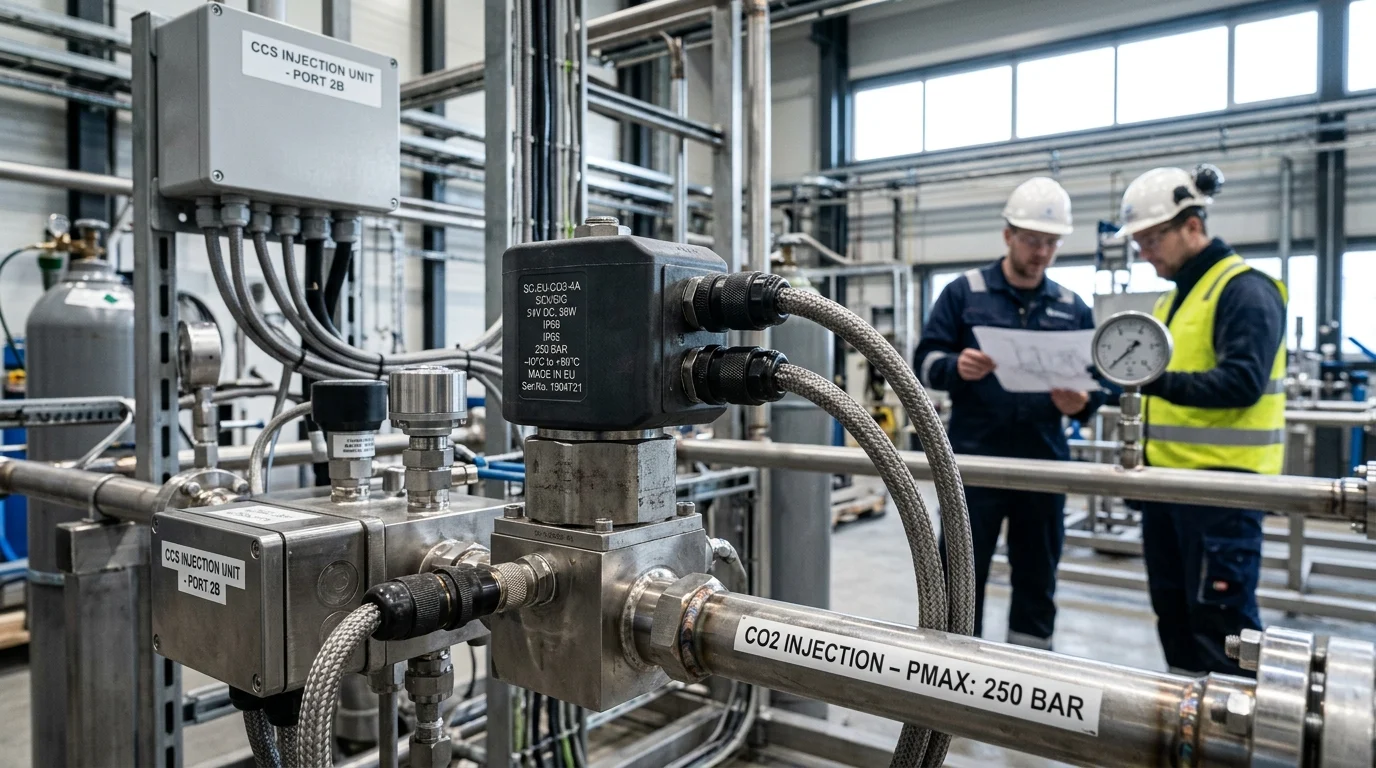
Carbon Capture and Storage (CCS) infrastructure in Europe relies heavily on precise fluid control systems to manage the transportation and geological sequestration of carbon dioxide. From the Northern Lights project in Norway to the Porthos network in the Netherlands, solenoid coils serve as a critical electromechanical interface. They actuate valves for CO2 injection wells, pipeline routing, and continuous monitoring stations. The operating environment of a CCS facility imposes extreme mechanical and thermal stresses on these components, necessitating highly specialized coil designs that far exceed standard industrial specifications.
CO2 phase behavior and duty cycles
Handling carbon dioxide requires managing its complex phase behavior. In pipeline transport and injection, CO2 is typically maintained in a supercritical state (sCO2), which requires pressures exceeding 73.8 bar (1,070 psi) and temperatures above 31.1°C. However, pressure drops during valve actuation can trigger rapid phase changes, causing severe Joule-Thomson cooling. Ambient temperatures around the valve body can plummet to -50°C in a matter of seconds. Solenoid coils must maintain magnetic flux and structural integrity across these extreme thermal gradients.
Furthermore, injection valves frequently operate under a 100% continuous duty cycle (ED 100%), meaning the coil remains energized indefinitely. This continuous operation generates significant internal heat, demanding superior thermal dissipation to prevent coil burnout and ensure reliable fluid control.
Key operating risks
The primary operating risks for solenoid coils in European CCS projects stem from harsh environmental exposure and aggressive internal conditions. Many European storage sites are located in offshore North Sea environments, exposing equipment to high salinity, persistent moisture, and corrosive atmospheres. Coils must feature advanced encapsulation, typically requiring an Ingress Protection rating of IP67 or IP68, to prevent moisture ingress that could lead to short circuits.
Additionally, the high-flow compressors used in CO2 injection generate substantial mechanical vibration, often exceeding 5G of acceleration. Coils must be securely mounted and potted with vibration-resistant resins to prevent the severing of internal copper windings, ensuring reliable actuation during emergency shutdown (ESD) scenarios.
Core selection criteria for solenoid coils
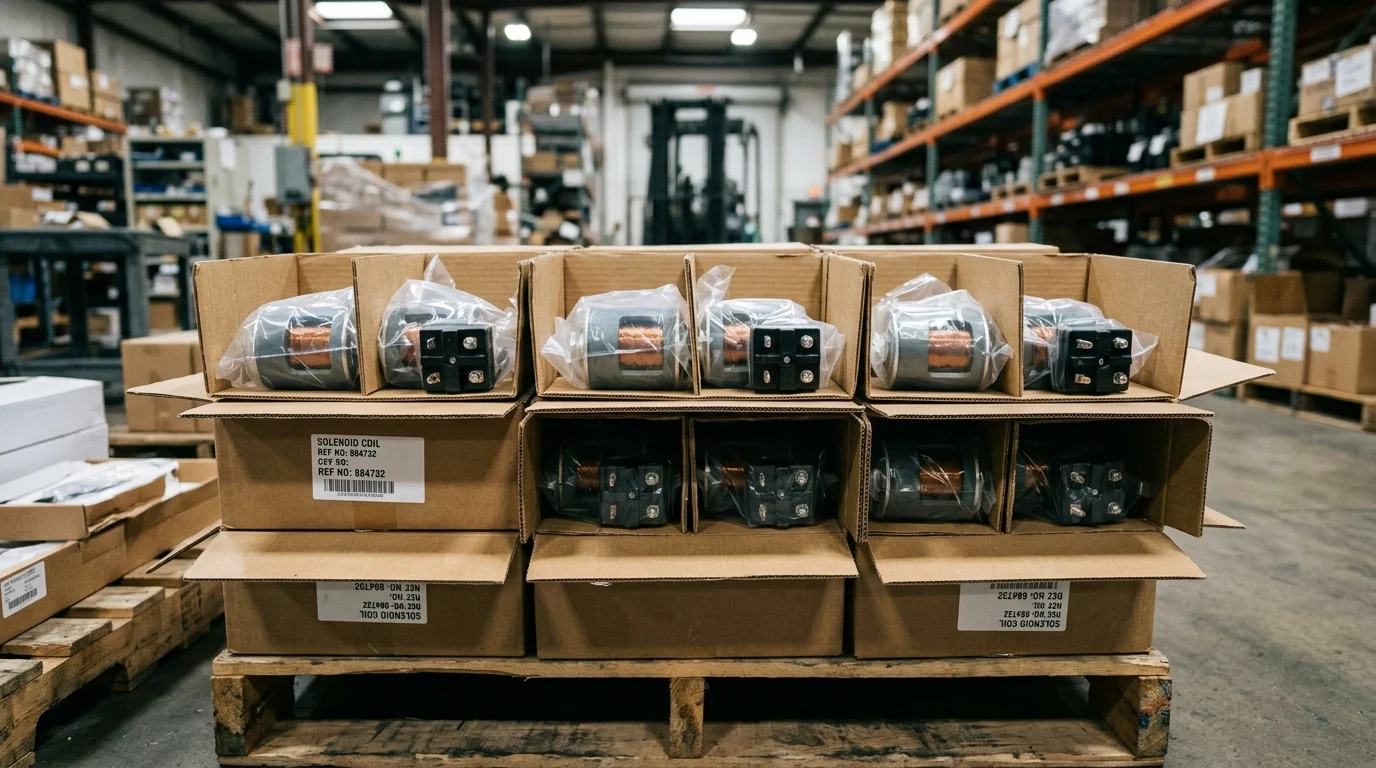
Translating the harsh operational demands of CCS into technical specifications requires engineers to carefully balance electrical efficiency, thermal endurance, and regulatory compliance. The core selection criteria dictate how well the solenoid coil will perform under continuous stress without compromising the safety of the wider injection network. High-pressure valves require substantial magnetic flux to overcome the differential pressure of supercritical CO2, meaning the coil’s electrical characteristics are paramount.
Voltage, power, and insulation
European industrial standards typically require solenoid coils to operate on 24V DC or 230V AC power supplies. In CCS applications, power consumption must be optimized to reduce the thermal load on the valve assembly. Coils generally range from 5W to 20W depending on the required actuation force.
Because continuous energization generates internal heat, the insulation class is a critical specification. Standard Class F (155°C) insulation is rarely sufficient for enclosed, continuously energized CCS valves operating in variable ambient temperatures. Engineers must specify Class H (180°C) or even Class N (200°C) magnet wire insulation to ensure long-term reliability and prevent dielectric breakdown under heavy duty cycles.
Comparison factors for CCS applications
When comparing coils for carbon capture applications, procurement teams must evaluate several distinct tiers of performance. Selecting the right tier depends on the specific location of the valve within the CCS network, ranging from upstream amine capture facilities to offshore high-pressure injection platforms. The table below outlines the key differences between standard components and those engineered for severe CCS environments.
| Specification | Standard Industrial Coil | ATEX/IECEx Certified Coil | Deep-Cryogenic Coil |
|---|---|---|---|
| Temperature Range | -20°C to +80°C | -40°C to +120°C | -196°C to +80°C |
| Insulation Class | Class F (155°C) | Class H (180°C) | Class H (180°C) |
| Ingress Protection | IP65 | IP66 / IP67 | IP68 |
| Typical Cost Premium | Baseline (1.0x) | 2.5x to 3.0x | 4.0x to 5.0x |
Compliant coil selection for European CCS projects
Specifying solenoid coils for European CCS projects requires strict adherence to regional safety directives. Equipment must comply with the CE marking framework and, crucially, the ATEX Directive (2014/34/EU) for explosive atmospheres. Even though CO2 itself is non-flammable, capture processes frequently occur alongside hydrocarbon processing, natural gas refining, or hydrogen production, necessitating explosion-proof certifications for all electromechanical components.
Step-by-step specification process
The specification process begins by defining the exact state of the CO2 media and the surrounding hazardous area classification, typically identifying whether the installation falls under ATEX Zone 1 or Zone 2. Next, engineers must select the appropriate electrical parameters.
For high-pressure injection valves requiring significant initial force, specifying dual-power modules or pulse control instruments can be highly beneficial. These modules deliver a high-power pulse to open the valve, then automatically drop the holding current by up to 70%, drastically reducing heat generation and extending coil life. Finally, environmental protection must be verified, ensuring the coil utilizes thermoset epoxy or polyurethane encapsulation suited for corrosive offshore environments and passes dielectric strength testing at 1,500V.
Final decision guidance
The final procurement decision should prioritize the Total Cost of Ownership (TCO) and verifiable reliability metrics over initial component costs. In continuous CCS operations, a coil failure can lead to severe injection downtime, costing thousands of euros per hour, or create safety hazards. Engineers should require a Mean Time Between Failures (MTBF) exceeding 100,000 hours.
Partnering with manufacturers that maintain rigorous quality management systems—such as Feiniou (Ningbo) Electronic Technology, which specializes in durable electromagnetic coils, dual-power modules, and pilot assemblies—ensures that the components meet the stringent demands of European industrial applications. Thorough documentation, including material traceability and certified testing reports, is mandatory to achieve final commissioning approval in European carbon capture networks.
Key Takeaways
- The most important conclusions and rationale for Carbon Capture and Storage (CCS): Specifying Solenoid Coils for CO2 Injection and Monitoring in European Projects
- Specs, compliance, and risk checks worth validating before you commit
- Practical next steps and caveats readers can apply immediately
Frequently Asked Questions
What voltage is typically used for CCS solenoid coils in Europe?
Most projects specify 24V DC or 230V AC. Match the coil to the valve, control system, and site standard to avoid overheating or weak actuation.
Why is ED 100% duty important for CO2 injection valves?
Injection and monitoring valves may stay energized continuously. Choose an ED 100% coil so it can run indefinitely without burnout during normal operation.
What insulation class should a CCS solenoid coil have?
For European CCS service, Class H (180°C) is usually the minimum practical choice. Use Class N where ambient heat and continuous duty are especially severe.
Which IP rating is suitable for offshore CCS environments?
IP67 is a solid minimum for North Sea moisture and salt exposure. Use IP68 where washdown, standing water, or long-term moisture ingress is a concern.
When should ATEX or IECEx certified coils be specified?
Specify them in hazardous areas where explosive atmospheres may be present, such as parts of capture, compression, or injection systems. Verify zone classification before ordering.
Post time: Jun-09-2026