
Introduction
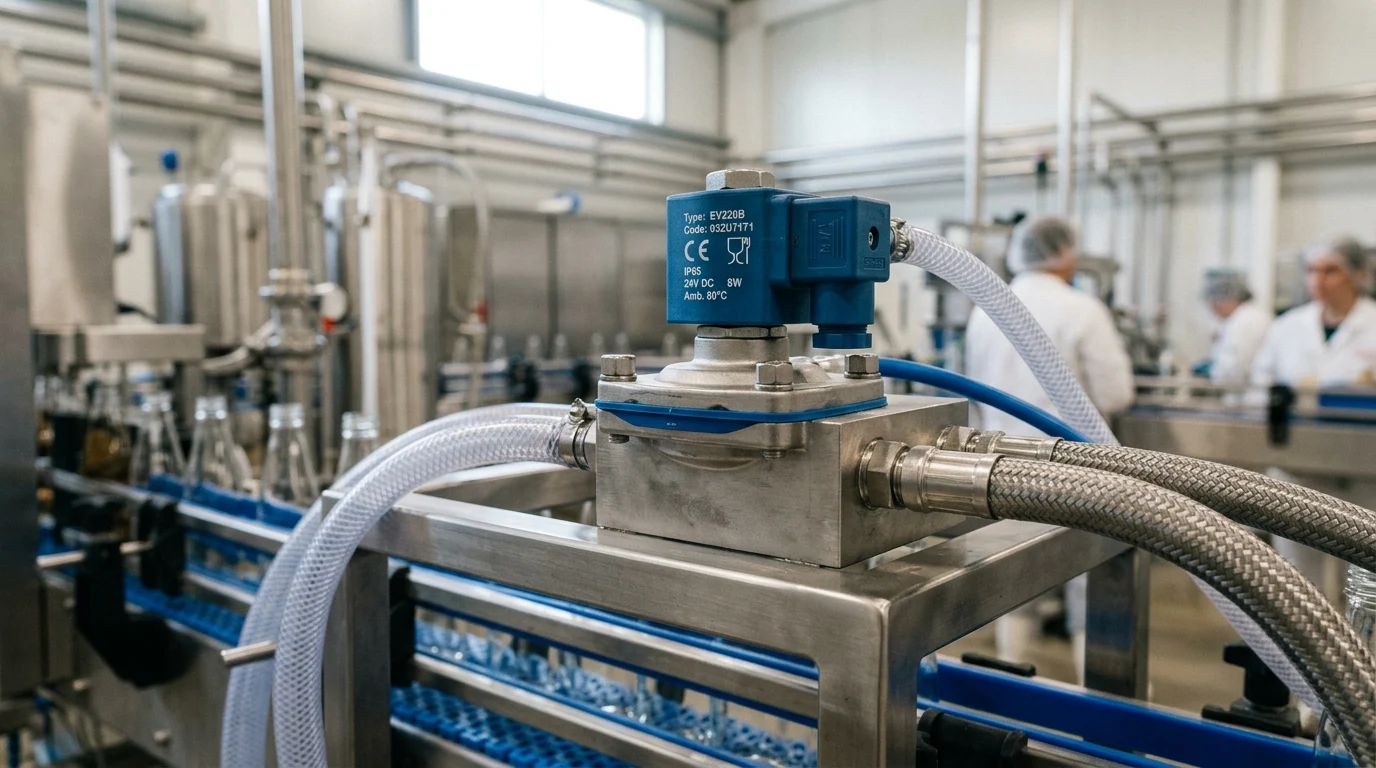
European food machinery often relies on solenoid valves and coils in areas where moisture, cleaning chemicals, or product splash can bring components close to food. In those cases, Regulation (EC) 1935/2004 becomes a key compliance benchmark, requiring materials to avoid harmful migration and to preserve food composition, taste, and odor. This article explains how the regulation applies to solenoid coil materials, what manufacturers should review in encapsulants and housings, and why documentation, testing, and supplier control matter for market access. The discussion that follows connects the legal framework to practical design and sourcing decisions in hygienic equipment.
Why Food Contact Materials Regulation (EC) 1935/2004 Matters
For European food machinery manufacturers, ensuring the safety of every component interacting with food or beverage processing lines is a non-negotiable legal requirement. Solenoid valves and their accompanying coils are ubiquitous in these automated systems, regulating the flow of steam, water, and sensitive ingredients. When these components are located in splash zones or direct contact areas, they fall strictly under Regulation (EC) 1935/2004. This overarching European framework dictates the safety standards for Food Contact Materials (FCM), ensuring that industrial hardware does not compromise public health or alter food composition.
How the Regulation Applies to Food Contact Materials
The core principle of Regulation (EC) 1935/2004, detailed in Article 3, mandates that materials must not transfer constituents to food in quantities that could endanger human health. For solenoid coils, which often utilize epoxy encapsulations or specialized polymers, this means the chemical makeup must be strictly controlled. Any unlisted chemical substances migrating from the coil housing or valve body into the food stream must not exceed the default detection limit of 10 parts per billion (ppb). Furthermore, the regulation requires that materials do not cause an unacceptable change in the composition of the food or a deterioration in its organoleptic characteristics, such as taste and odor.
Business Risks, Market Access, and Product Liability
Failure to comply with these stringent requirements introduces severe business risks. Without demonstrable compliance, machinery cannot legally enter or be operated within the European Single Market, directly jeopardizing CE marking and broader commercial viability. A single non-compliant solenoid coil costing less than €20 can halt the deployment of a €500,000 automated filling machine at customs or during a facility inspection. Additionally, product liability risks are substantial; if a chemical migration event triggers a food recall, machinery manufacturers face catastrophic financial damage and statutory fines that can easily exceed €50,000 per violation, depending on the enforcing EU member state.
What Determines Compliance
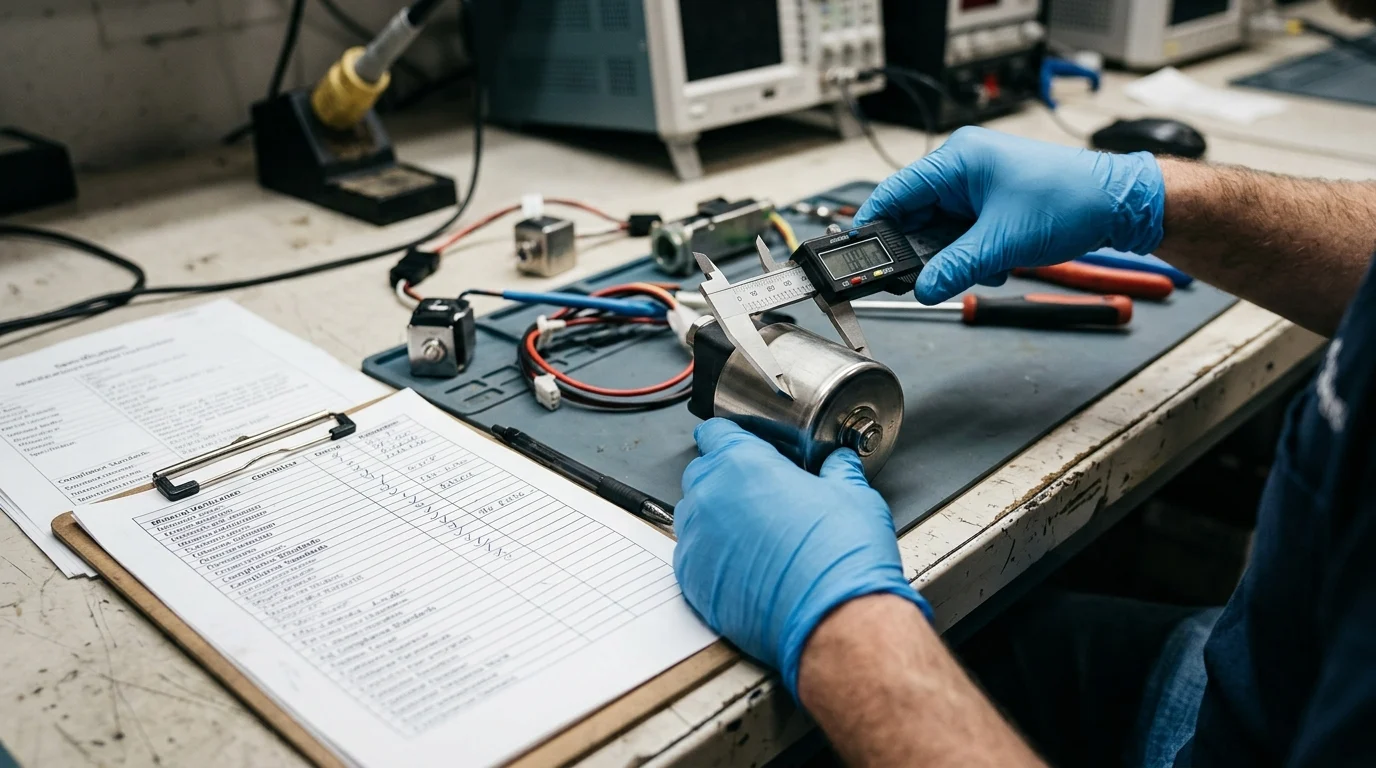
Determining whether a solenoid coil complies with Regulation (EC) 1935/2004 requires a deep dive into material science and rigorous quality assurance documentation. Compliance is not merely a static design feature but an ongoing, documented state of manufacturing control.
Design, Material, and Documentation Requirements
The foundation of compliance lies in the selection of raw materials. Solenoid coils intended for food processing environments must utilize food-grade encapsulations, such as specific grades of Polytetrafluoroethylene (PTFE) or certified food-safe epoxies. These materials must pass stringent migration testing to ensure the Overall Migration Limit (OML) remains below the statutory threshold of 10 mg/dm² of food contact surface. Additionally, specific chemical components within the plastics must comply with Specific Migration Limits (SML) established under related directives, such as Regulation (EU) No 10/2011 for plastics.
| Material Type | Food Contact Suitability | Max Operating Temp | Typical Migration Risk |
|---|---|---|---|
| Standard Industrial Epoxy | Low (Unless certified) | 155°C | High (BPA derivatives) |
| Food-Grade PA66 | Medium (Requires SML testing) | 120°C | Moderate |
| PTFE Encapsulated | High (Broadly compliant) | 200°C | Low (<1 mg/dm²) |
Engineers must select materials that not only meet these chemical thresholds but also withstand the aggressive thermal and chemical environments of Clean-in-Place (CIP) and Sterilize-in-Place (SIP) processes without degrading.
How to Build a Defensible Technical File
A defensible Technical File is the ultimate proof of compliance. This file must center on a comprehensive Declaration of Compliance (DoC), a legally binding document stating that the component meets all relevant EU frameworks. To build this file, manufacturers must execute and record migration tests under realistic operational conditions, such as exposing the component to specific food simulants for 2 hours at 70°C. Furthermore, Article 17 of the regulation mandates strict traceability. Manufacturers must maintain detailed production, batch routing, and material sourcing records for a minimum of 5 years, allowing rapid identification of the source of any potential contamination issues.
How OEMs and Buyers Should Make Procurement Decisions
For Original Equipment Manufacturers (OEMs) and procurement teams, sourcing compliant solenoid coils involves balancing strict regulatory mandates with supply chain realities. Selecting the right manufacturing partner is as critical as the engineering specifications themselves.
Supplier Qualification Steps to Reduce Sourcing Risk
Effective supplier qualification minimizes sourcing risk. Buyers must audit potential suppliers to ensure they operate under Good Manufacturing Practice (GMP) as outlined in Regulation (EC) 2023/2006. This requires verifying that the supplier’s Quality Management System (QMS) is robust enough to prevent cross-contamination during the production of food-grade and non-food-grade coils. Enterprises like Feiniu (Ningbo) Electronic Technology Co., Ltd., which focus extensively on the R&D and manufacturing of solenoid valves and coils, demonstrate the necessity of establishing a comprehensive, certified QMS to meet industry standards. Procurement teams should demand lot-level traceability and target suppliers capable of maintaining a defect rate of less than 500 Parts Per Million (PPM) for critical food-contact components.
A Practical Framework for Balancing Compliance and Cost
Achieving compliance invariably impacts procurement costs, requiring a strategic framework to balance safety and budget. Fully certified, food-grade solenoid coils often carry a 15% to 30% price premium over standard industrial variants due to the cost of specialized polymers, rigorous batch testing, and GMP-compliant cleanroom assembly protocols. Additionally, suppliers may enforce higher Minimum Order Quantities (MOQs)—often jumping from a standard 1,000 units to 5,000 units—to justify the setup costs and purge cycles of dedicated food-grade production runs. Buyers must integrate these cost premiums and elevated MOQs into their total cost of ownership models, recognizing that the upfront investment in compliant components is a vital insurance policy against the devastating costs of regulatory penalties and market exclusion.
Key Takeaways
- The most important conclusions and rationale for Food Contact Materials Regulation (EC) 1935/2004: Ensuring Solenoid Coil Safety in European Food Machinery
- Specs, compliance, and risk checks worth validating before you commit
- Practical next steps and caveats readers can apply immediately
Frequently Asked Questions
When does a solenoid coil fall under EC 1935/2004?
If the coil or its housing is in direct food contact or located in a splash zone where migration into food is possible, it should be assessed under EC 1935/2004.
What documents should buyers request from coil suppliers?
Ask for a Declaration of Compliance, migration test reports, material specifications, and traceability records showing batch and raw material control.
What migration limits are most relevant for food-safe solenoid coils?
Check that overall migration stays below 10 mg/dm² and that any specific substances meet applicable SMLs, especially under EU 10/2011 for plastics.
Which coil materials are typically safer for European food machinery?
PTFE encapsulated designs and certified food-safe epoxies are common choices because they generally offer lower migration risk and better resistance to CIP/SIP conditions.
How long should traceability records be retained for compliant food machinery components?
Keep production, batch, and material sourcing records for at least 5 years so contamination sources can be identified quickly during audits or recalls.
Post time: Jun-13-2026