
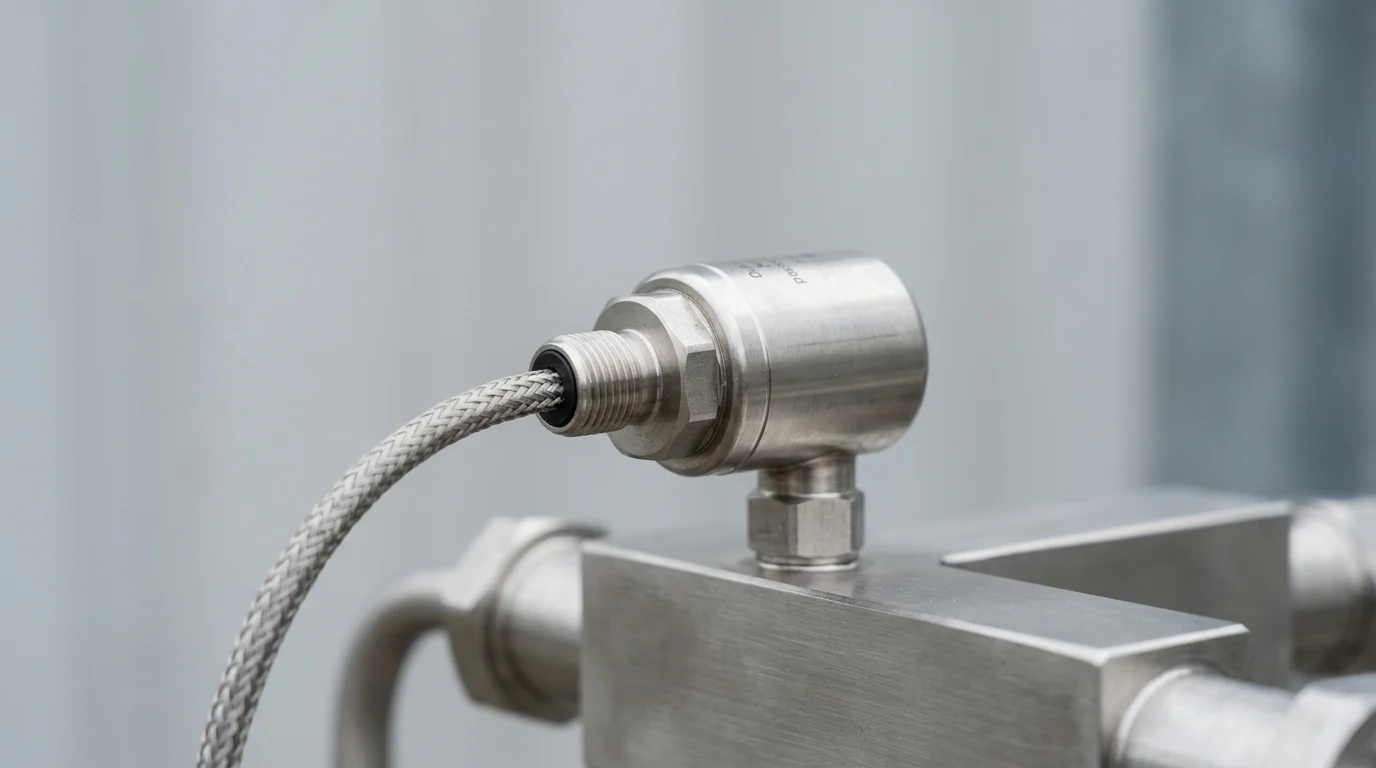
Heavy equipment reliability increasingly depends on how well electronic sensing and mechanical actuation work as one system. For North American OEMs building hydraulic and powertrain platforms, a pressure or position sensor is only as valuable as the solenoid response it helps control. Flying Bull’s dual-technology model focuses on that connection: aligning signal accuracy, EMI protection, sealing, vibration resistance, and actuation speed within a unified subsystem. This article examines where integrated sensor-solenoid sourcing can reduce engineering risk, which specifications matter most, and when a discrete multi-vendor architecture may still be the smarter choice.
Flying Bull Dual-Technology Overview
Modern heavy equipment demands closed-loop control systems that perfectly synchronize input accuracy with output execution. Flying Bull’s dual-technology approach integrates precision sensors for high-fidelity environmental and positional data with durable solenoids designed for robust mechanical force. Together, they form unified, highly reliable sub-systems for hydraulic and powertrain applications.
Why OEMs Should Evaluate Sensors and Solenoids
Sourcing sensors and solenoids from disparate manufacturers often causes integration friction and signal interface incompatibility. By evaluating a dual-technology provider like Flying Bull, engineering teams ensure the sensor’s electrical characteristics natively match the solenoid’s actuation profile. This unified sourcing also guarantees consistent environmental protection, as engineers design both components to meet stringent IP69K sealing standards against high-pressure washdowns and fluid ingress.
Heavy Equipment Failure Modes Addressed
Unforgiving environments expose heavy machinery’s electro-mechanical components to severe degradation. Flying Bull’s integrated systems directly combat primary failure modes like thermal shock, extreme vibration, and particulate contamination. Flying Bull engineers and tests these components to withstand continuous vibration profiles up to 20G RMS (per standard ISO/SAE protocols) and operational thermal cycling from -40°C to +125°C, according to manufacturer-supplied datasheets. By utilizing matched thermal expansion coefficients in potting compounds and housing materials, the dual-technology framework prevents micro-cracking and moisture ingress. This effectively mitigates the most common causes of premature hydraulic valve failure in the field.
Sensor and Solenoid Comparison Points
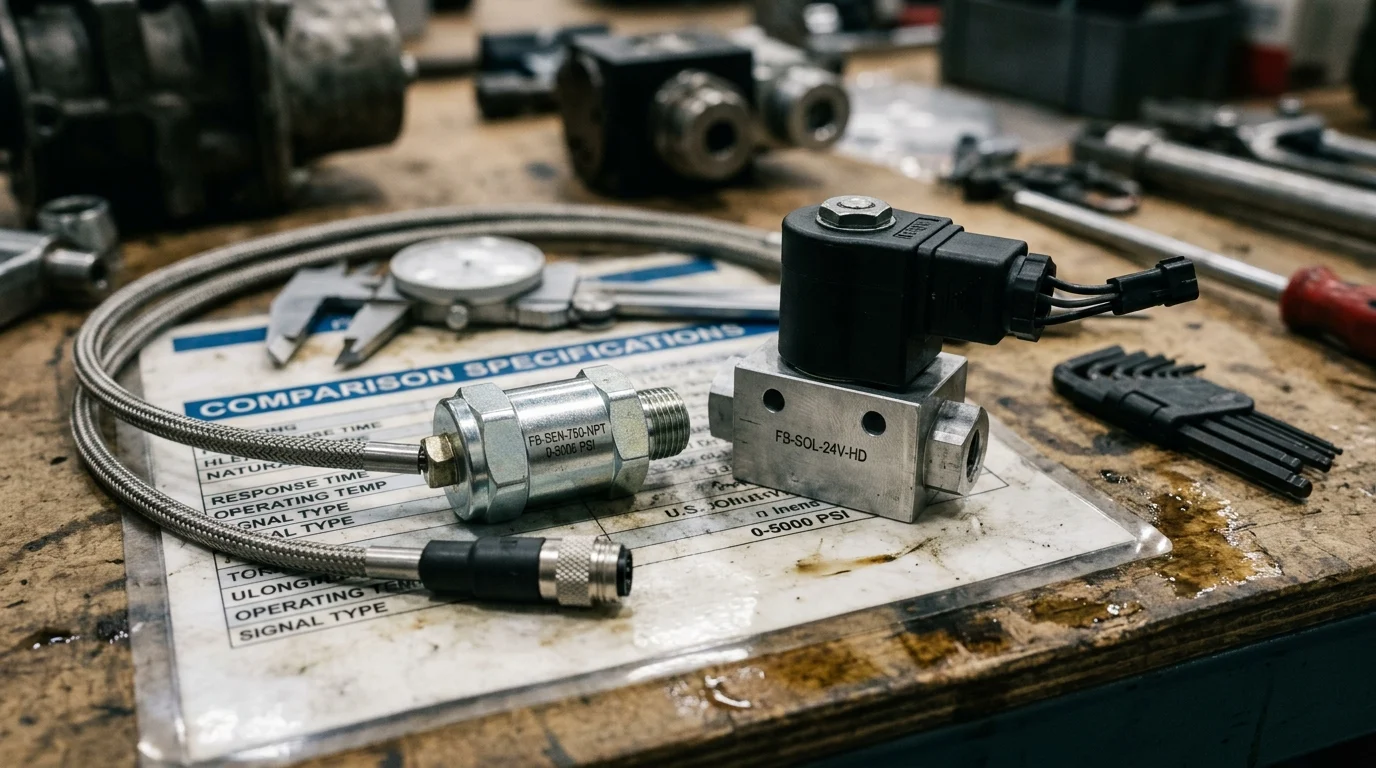
When engineering electro-hydraulic circuits, the choice between integrated dual-technology systems and discrete multi-vendor sourcing dictates overall machine efficiency. While sourcing discrete components allows OEMs to select highly specialized parts for niche applications, an integrated strategy simplifies engineering. A unified approach aligns critical performance benefits: it significantly reduces signal latency to optimize active load-damping responsiveness, maximizes electromagnetic interference (EMI) immunity through matched shielding, and consolidates warranty liabilities into a single-source accountability model. However, OEMs should independently verify these manufacturer-provided laboratory metrics through third-party field testing to ensure real-world performance matches controlled benchmarks.
Despite these advantages, discrete multi-vendor components remain preferable in specific scenarios. For legacy retrofits, ultra-niche specialization requiring highly bespoke actuation, or remote field repairability where swapping a single standardized part is critical, a decoupled architecture often provides the necessary flexibility and accessibility.
Key Sensor Specifications to Compare
Engineers must prioritize several critical specifications when evaluating the sensor half of the system. High-fidelity pressure and position sensors require an error margin below ±0.5% over the full scale to maintain accurate hydraulic metering. Compatibility with heavy-duty communication protocols, particularly CAN bus (SAE J1939), remains essential for modern diagnostics. Additionally, the electrical architecture must support standard 5V DC reference voltages. When paired with a matched solenoid, the integrated shielding ensures the sensor signal remains uncorrupted by the heavy current draws of nearby actuation components, starter motors, and alternators.
Trade-Offs in Response Time, Durability, and Cost
Actuation requires balancing mechanical force, electrical draw, and longevity. Heavy equipment solenoids typically operate on 12V or 24V DC systems, drawing between 1.5A and 3.0A to achieve sub-30-millisecond response times. While proportional solenoids offer superior flow control, they require complex pulse-width modulation (PWM) drivers that must perfectly interpret sensor data. Flying Bull mitigates these integration trade-offs by using high-grade copper windings and advanced magnetic flux designs. Per Flying Bull’s specifications, this approach extends mechanical durability for long-term field reliability under maximum system pressure.
However, OEMs must weigh these integration benefits against potential cost premiums, field serviceability limits, and vendor lock-in risks. In highly integrated assemblies, repair granularity decreases. A localized sensor failure may force technicians to replace the entire sensor-solenoid unit, increasing individual replacement costs compared to swapping discrete components.
| Specification Category | Integrated Dual-Technology System | Discrete Multi-Vendor Components | Primary Impact |
|---|---|---|---|
| Signal Latency | Optimized (up to 15ms reduction from typical 40-50ms baselines per manufacturer lab tests) | Variable based on integration | Active load-damping responsiveness |
| Lifecycle Testing | Up to 10 million cycles (per Flying Bull datasheets) | Variable system lifespan | Long-term field reliability |
| EMI Immunity | High (shielding aligned) | Dependent on individual shielding | Signal corruption near heavy current |
| Warranty & Support | Single-source accountability | Multiple vendor management | Total cost of ownership and maintenance |
Application for North American OEMs
North American OEMs must navigate supply chain volatility and strict environmental regulations through strategic vendor partnerships. Flying Bull’s dual-technology systems offer a streamlined pathway to achieving Tier 4 Final and Stage V emissions compliance by enabling precise engine and hydraulic load management. However, unified sourcing introduces single-source dependency risks. To mitigate supplier lock-in, Flying Bull offers transparent second-source qualification support—providing open CAD files, standardized mounting footprints, and royalty-free CAN protocols so OEMs can qualify alternative vendors if necessary—alongside long-term obsolescence management to maintain supply chain resilience.
Procurement and Engineering Evaluation Steps
Integrating these systems into North American manufacturing facilities demands rigorous validation. Engineering and procurement teams typically initiate evaluation through the Production Part Approval Process (PPAP). Flying Bull supports Level 3 PPAP documentation by providing comprehensive dimensional layouts, material certifications, and failure mode and effects analysis (FMEA) for both components. Procurement departments must also factor in production timelines. While standard off-the-shelf components may ship within 4 to 6 weeks, custom-calibrated dual-technology assemblies generally require an 8- to 12-week lead time for initial tooling and validation runs. This extended timeline requires careful forecasting and presents a scheduling barrier for OEMs accustomed to faster turnarounds.
Decision Criteria for Selecting Flying Bull
Selecting a dual-technology partner requires evaluating the total cost of ownership (TCO) against supply chain reliability. A detailed TCO analysis of integrated systems often reveals savings through reduced assembly line calibration, fewer warranty claims, and simplified bill of materials (BOM) management. Decision-makers should prioritize vendors holding active ISO 9001 certifications for off-highway equipment alongside IATF 16949 credentials. Additionally, North American OEMs must consider Minimum Order Quantity (MOQ) thresholds. Flying Bull typically accommodates mid-volume production runs with MOQs starting at 500 units for custom configurations.
Key Takeaways
- Evaluate sensors and solenoids together when designing electro-hydraulic systems to reduce interface mismatches, signal latency, and warranty complexity.
- Prioritize components rated for IP69K sealing when equipment is exposed to washdowns, fluid ingress, dust, and jobsite contamination.
- Use pressure and position sensors with accuracy below ±0.5% full scale, 5V reference compatibility, and SAE J1939 CAN bus support for modern diagnostics.
- Specify solenoids that match the machine’s 12V or 24V DC architecture and can meet sub-30-millisecond response targets where fast hydraulic actuation is required.
- Validate manufacturer claims such as 20G RMS vibration resistance and -40°C to +125°C thermal cycling through application-specific field testing.
- Choose discrete multi-vendor components when legacy compatibility, niche customization, or simplified field replacement outweighs integrated-system benefits.
Frequently Asked Questions
Why should OEMs consider sourcing sensors and solenoids from one provider?
A dual-technology provider can reduce integration friction by matching sensor electrical characteristics with solenoid actuation behavior, improving signal integrity, environmental protection, and accountability across the electro-hydraulic subsystem.
What failure modes does Flying Bull’s approach target?
The approach addresses thermal shock, vibration, particulate contamination, moisture ingress, and micro-cracking, which are common contributors to premature hydraulic and powertrain component failures in heavy equipment.
Which environmental ratings matter for heavy equipment components?
IP69K sealing is important because it helps protect sensors and solenoids from high-pressure washdowns, fluid ingress, and harsh jobsite contamination.
What sensor accuracy should engineers look for?
For hydraulic metering and position feedback, engineers should compare sensors with error margins below ±0.5% full scale, along with support for 5V reference voltage and SAE J1939 CAN bus communication.
How do matched sensors and solenoids improve EMI resistance?
Matched shielding and electrical design help prevent sensor signals from being corrupted by nearby high-current solenoids, starter motors, alternators, and other electromagnetic noise sources.
Post time: Sep-07-2026