
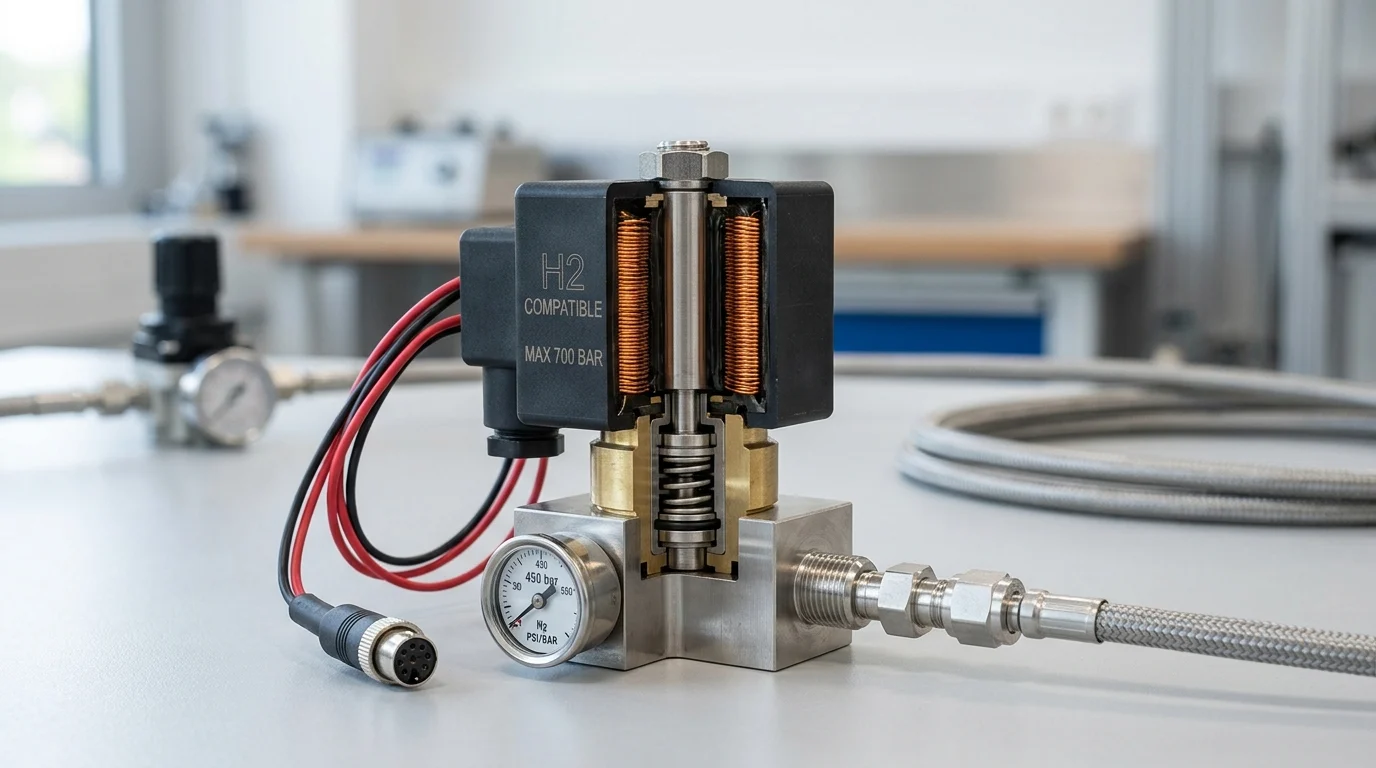
High-pressure hydrogen systems leave little margin for weak materials or generic component choices. In storage trailers, dispensers, and onboard tanks, solenoid coils must actuate valves reliably while exposed to pressures that can reach 700 bar, rapid pressure cycling, and severe temperature swings. The challenge is not only electromagnetic performance; it is also whether copper windings, insulation, potting compounds, and housings can resist hydrogen permeation, decompression damage, and low-temperature brittleness. This article examines the operating conditions that define hydrogen service, the material compatibility risks that affect coil reliability, and the practical design considerations engineers should evaluate when specifying solenoid coils for safe storage and transport infrastructure.
Hydrogen Storage and Transport Requirements
The transition toward a hydrogen-based economy hinges on the safe, efficient storage and transport of hydrogen gas across the supply chain. High-pressure hydrogen systems require robust control mechanisms to manage gas flow precisely while preventing catastrophic leaks. Solenoid valves serve as the primary actuation components in these systems, relying entirely on the electromagnetic force generated by solenoid coils. Because hydrogen molecules are exceptionally small and highly reactive under extreme pressure, the materials used in these coils must withstand severe mechanical and environmental stressors.
Industry standards dictate that bulk transport systems, such as tube trailers, operate between 300 bar and 500 bar, while passenger mobility applications and dispensing stations typically utilize 700 bar (70 MPa) systems. These extreme pressures subject adjacent electronic components to rapid pressure changes and intense thermal fluctuations that can easily compromise standard industrial materials if not properly specified.
Role of High-Pressure Hydrogen Solenoid Coils
High-pressure hydrogen solenoid coils provide the electromagnetic field necessary to open or close pilot and main valve stages in hydrogen dispensers, transport trailers, and onboard vehicle storage tanks. Unlike standard pneumatic or hydraulic coils, these components must generate a high-density magnetic flux to overcome the immense static pressure of compressed hydrogen gas pushing against the valve armature.
To achieve this, the coils are often over-molded or encapsulated to isolate the internal copper windings from the ambient environment. This isolation ensures that any incidental hydrogen exposure or external condensation does not compromise the electrical integrity of the system or lead to dangerous short circuits in hazardous zones.
Key Terms and Operating Conditions
Engineers evaluating solenoid coils for hydrogen infrastructure must account for severe and fluctuating operating conditions. Ambient temperature ratings frequently must span from -40°C to +85°C. However, localized temperatures near the valve seat during rapid hydrogen depressurization can drop dramatically due to the Joule-Thomson effect, requiring materials that do not become brittle at cryogenic extremes.
Key phenomena to monitor include hydrogen permeation, where pressurized gas diffuses at a molecular level through polymer sealants and potting compounds. Another critical condition is rapid gas decompression (RGD), which occurs when system pressure drops suddenly, causing gas trapped within the coil’s encapsulation to expand explosively and fracture the housing.
Material Compatibility Risks
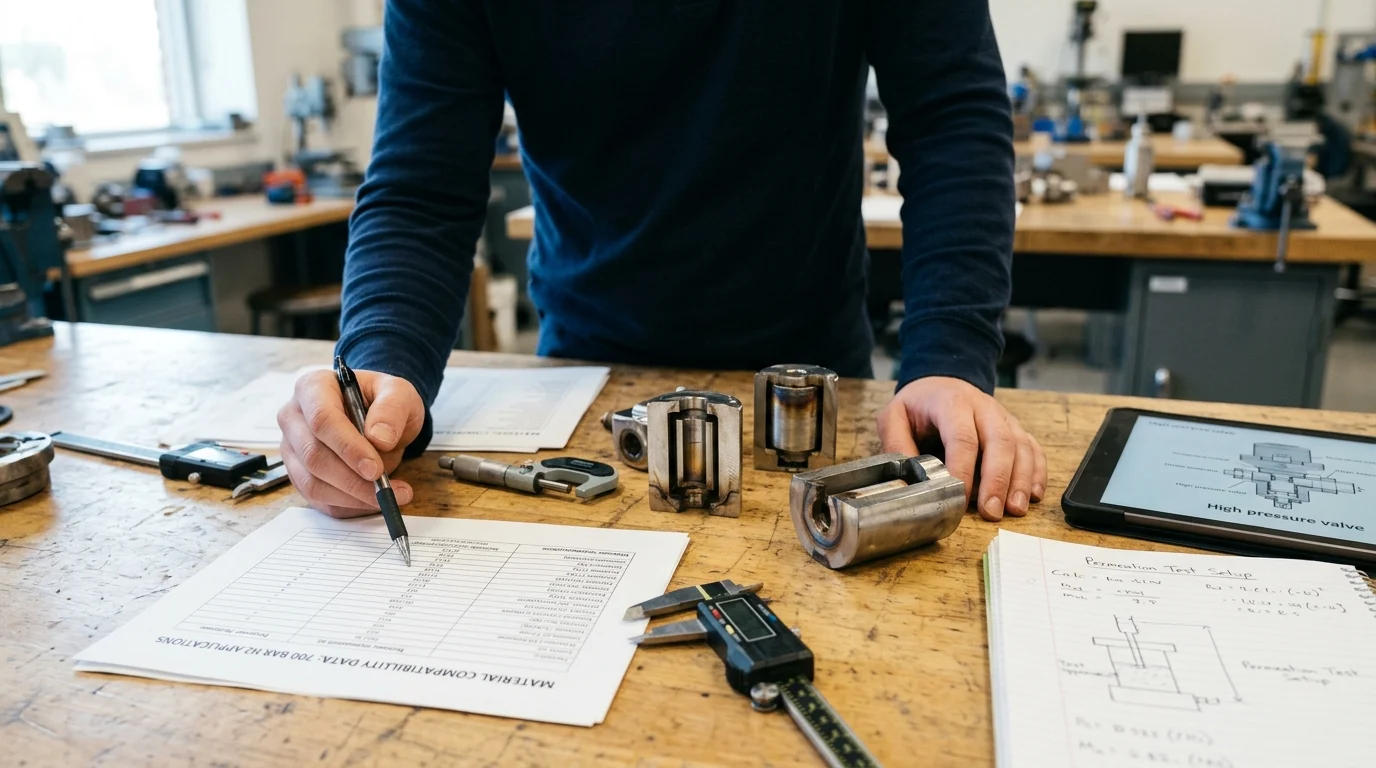
Material compatibility represents the most critical risk factor in designing and selecting solenoid coils for high-pressure hydrogen environments. The high diffusivity of the hydrogen molecule means it can easily penetrate micro-voids in standard industrial polymers and metals.
Over time, continuous exposure combined with aggressive thermal cycling accelerates material degradation. If improper materials are utilized, the resulting degradation can lead to electrical shorts, a loss of magnetic efficiency, or the complete structural failure of the coil housing, posing severe safety risks in explosive environments.
Copper Windings, Insulation, and Varnish Selection
The selection of copper for the electromagnetic windings is paramount for long-term reliability. Standard electrolytic tough pitch (ETP) copper contains trace amounts of oxygen. When exposed to hydrogen at elevated temperatures, the gas reacts with this oxygen to form steam, creating internal micro-fissures—a destructive process known as hydrogen embrittlement. Therefore, oxygen-free high thermal conductivity (OFHC) copper, which boasts a purity of 99.99%, is strictly required for these coils.
Furthermore, the insulation wire and protective varnish must possess high dielectric strength and chemical resistance. Class H (180°C) or Class N (200°C) insulation systems are standard industry practice. These windings are typically reinforced with specialized epoxy resins or polyurethane potting compounds through a vacuum impregnation process. This manufacturing method eliminates microscopic air pockets, resulting in an encapsulation that exhibits low hydrogen permeability and high elasticity to survive rapid decompression events without cracking.
Material Comparison for Hydrogen Exposure
To mitigate operational risks, engineering teams must carefully evaluate the performance of various materials under prolonged hydrogen exposure before finalizing coil specifications. The table below outlines the comparative compatibility of standard industrial materials versus hydrogen-optimized materials used in advanced solenoid coil construction.
| Component | Standard Material | Hydrogen-Optimized Material | Key Performance Difference |
|---|---|---|---|
| Windings | ETP Copper | OFHC Copper (99.99% pure) | Eliminates hydrogen embrittlement risk; maintains electrical conductivity over time. |
| Encapsulation | Standard Epoxy | Low-Permeability Polyurethane | Reduces gas diffusion rates by up to 85%; prevents RGD micro-cracking during pressure drops. |
| Bobbins | Nylon 6/6 | PPS (Polyphenylene Sulfide) | PPS offers superior dimensional stability and structural integrity at 700 bar and -40°C. |
| Outer Casing | Carbon Steel | 316L Stainless Steel | 316L effectively resists hydrogen embrittlement, oxidation, and galvanic corrosion. |
Specification, Sourcing, and Validation
Procuring solenoid coils for high-pressure hydrogen applications demands a rigorous, data-driven approach to specification and vendor validation. The supply chain for hydrogen-compatible components is highly specialized, requiring buyers to partner with manufacturers capable of maintaining strict quality management systems, such as IATF 16949.
Companies such as Feiniu (Ningbo) Electronic Technology Co., Ltd. exemplify the type of specialized manufacturers focusing on advanced solenoid coils, valves, and actuators, where robust research and development and comprehensive testing are seamlessly integrated into the production lifecycle to ensure absolute reliability in the field.
Qualification and Testing Steps
The qualification process for hydrogen solenoid coils involves extensive environmental, electrical, and mechanical testing. Components must typically comply with stringent international safety standards, such as the EC79 directive for hydrogen-powered motor vehicles or ISO 19880-3 for gaseous hydrogen fueling stations.
Validation protocols mandate severe thermal shock testing, vibration testing, and lifecycle endurance running between 100,000 and 200,000 operational cycles under pressure. Additionally, mass spectrometry helium leak testing is heavily utilized as a safe proxy for hydrogen gas. During these tests, acceptable permeation rates are strictly maintained below 1 × 10^-4 mbar L/s to ensure the long-term hermeticity of the coil assembly.
Procurement Decision Criteria
When sourcing these specialized electromagnetic coils, procurement teams must carefully balance technical compliance with commercial viability and supply chain resilience.
Key Takeaways
- Specify solenoid coils for the actual hydrogen pressure class, because tube trailers may operate at 300–500 bar and mobility systems commonly require 700 bar compatibility.
- Use encapsulated or over-molded coil designs to isolate copper windings from hydrogen exposure, condensation, and hazardous-zone electrical risks.
- Evaluate polymers, potting compounds, and insulation systems for hydrogen permeation and rapid gas decompression resistance before approving them for service.
- Design for wide thermal exposure, including ambient ratings near -40°C to +85°C and localized cooling from rapid hydrogen depressurization.
- Avoid assuming standard pneumatic or hydraulic solenoid coils are suitable, because high-pressure hydrogen demands higher magnetic force and stricter material compatibility.
Frequently Asked Questions
Why are solenoid coils critical in high-pressure hydrogen systems?
Solenoid coils generate the electromagnetic force that opens and closes hydrogen valves in dispensers, tube trailers, and onboard storage systems, helping control flow and prevent leaks.
What pressures must hydrogen solenoid coils be designed around?
Bulk hydrogen transport commonly operates at 300–500 bar, while mobility and dispensing applications often use 700 bar systems, creating demanding mechanical and thermal conditions.
What is hydrogen permeation in coil materials?
Hydrogen permeation occurs when small hydrogen molecules diffuse through polymers, sealants, or encapsulation materials, potentially weakening insulation and compromising electrical integrity over time.
Why is rapid gas decompression a risk for encapsulated coils?
During sudden depressurization, hydrogen trapped inside encapsulation can expand rapidly, cracking housings or potting compounds and exposing internal windings to failure.
What temperature range should engineers consider?
Hydrogen infrastructure often requires ratings from -40°C to +85°C, with additional concern for localized cold spots caused by rapid depressurization and the Joule-Thomson effect.
Post time: Jun-24-2026