
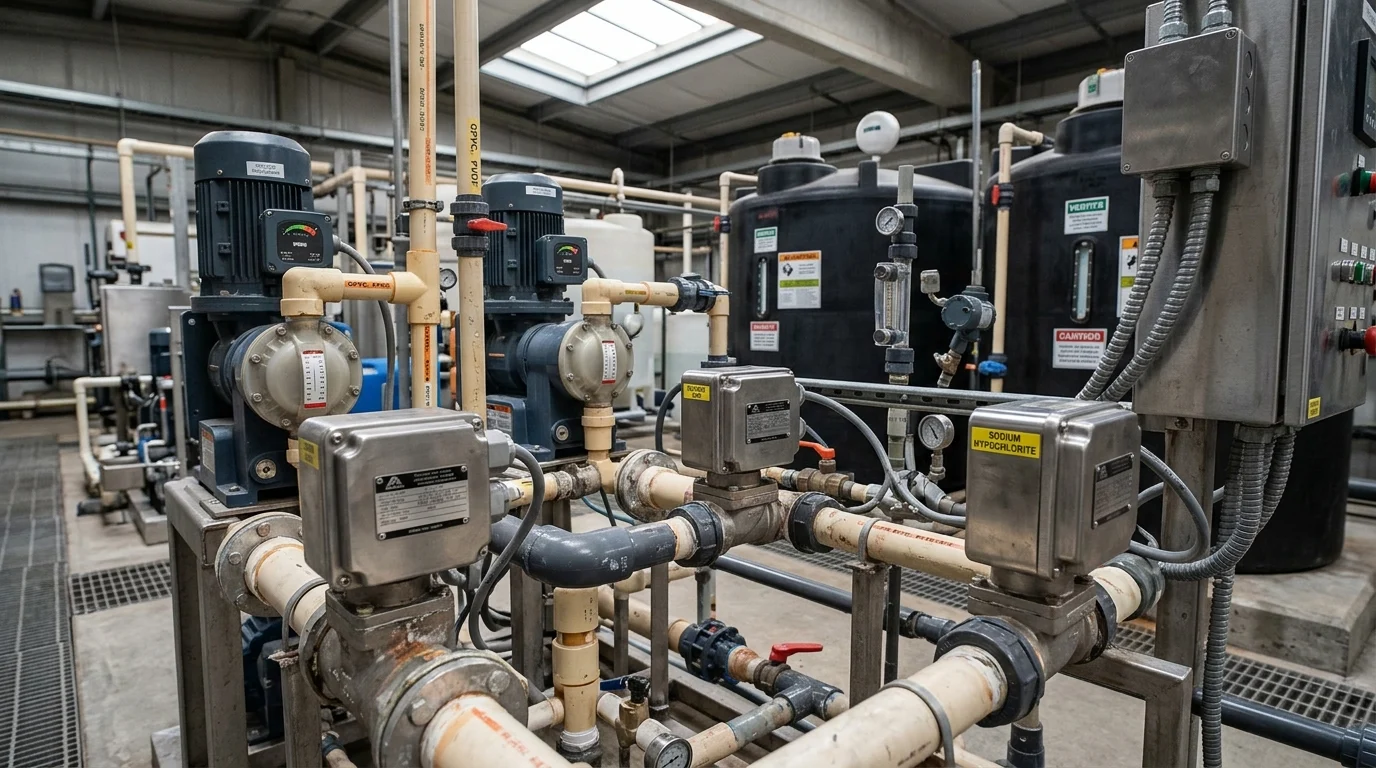
In wastewater treatment, a small coil failure can become a costly compliance problem. Automated dosing systems depend on solenoid valves to meter acids, caustics, disinfectants, and coagulants with precision, yet the surrounding environment is often saturated with corrosive vapors, high humidity, and chemical splash risk. Choosing the right corrosion-resistant solenoid coil is therefore not just a component decision—it is a reliability, safety, and regulatory safeguard. This article explains why standard coils degrade in aggressive dosing rooms, how failures affect uptime and effluent quality, and which specifications—encapsulation material, insulation class, and IP sealing rating—matter most when selecting coils for demanding industrial wastewater applications.
Why Corrosion-Resistant Solenoid Coils Matter in Industrial Wastewater T
Industrial wastewater treatment relies heavily on automated dosing systems to neutralize acidic or alkaline effluents, precipitate heavy metals, and manage complex biological loads. At the heart of these critical fluid control systems are solenoid valves, where the solenoid coil acts as the vital electromagnetic actuator. In aggressive chemical dosing applications, standard commercial coils quickly degrade, making specialized corrosion-resistant variants an operational necessity.
Common corrosion risks in wastewater environments
Wastewater treatment facilities routinely handle harsh reagents such as sodium hypochlorite (often used at 12-15% concentration for disinfection), sulfuric acid (up to 98% for pH adjustment), and highly caustic sodium hydroxide. Ambient environments in chemical dosing rooms expose electromechanical equipment to highly corrosive vapors, high relative humidity exceeding 90%, and occasional direct chemical splashing. When solenoid coils lack adequate environmental protection, acidic or caustic fumes penetrate the exterior housing, aggressively attacking the internal copper windings and ferrous magnetic components. Even trace amounts of airborne hydrogen sulfide found in municipal and industrial wastewater plants can cause rapid sulfidation of unprotected electrical contacts. This relentless chemical attack frequently leads to premature coil failure within 3 to 6 months of installation if standard off-the-shelf components are deployed.
Failure modes that affect safety, uptime, and compliance
The degradation of solenoid coils in these environments leads to critical failure modes. Insulation breakdown is the most prevalent issue, where chemical ingress lowers the dielectric strength of the potting material, causing internal short circuits, ground faults, or complete thermal burnout. A failed coil immediately halts the flow of essential neutralizing agents. This sudden loss of control risks a discharge of non-compliant effluent, a scenario that can incur regulatory fines that can reach tens of thousands of dollars per violation. Furthermore, partial coil degradation may result in sluggish valve actuation, reduced magnetic pull force, or erratic dosing profiles. These mechanical inconsistencies directly impact the precision of pH control and coagulation processes, driving up chemical consumption costs and compromising overall facility safety.
Key Specifications for Solenoid Coils in Aggressive Chemical Application
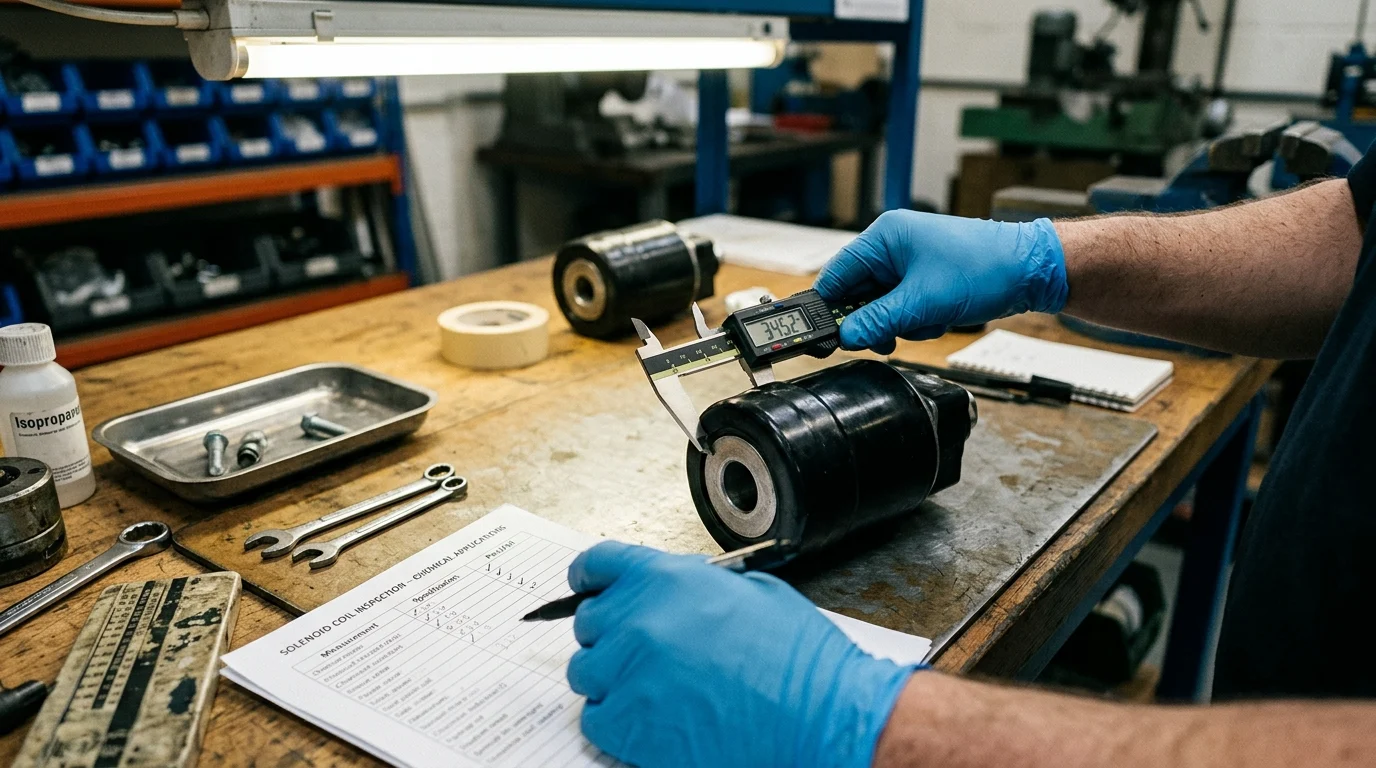
Specifying the correct solenoid coil for wastewater dosing requires a thorough understanding of the operational environment and the specific chemical agents involved. Engineers must meticulously evaluate encapsulation technologies, thermal ratings, and ingress protection standards to ensure long-term, uninterrupted reliability.
Encapsulation materials, insulation class, and sealing ratings
To survive aggressive dosing applications, coils must be fully encapsulated in chemically inert polymers that prevent vapor and liquid penetration. Epoxy resin is a standard choice for general moisture resistance, but aggressive wastewater environments often require advanced thermoplastics like PPS (Polyphenylene Sulfide) or PBT (Polybutylene Terephthalate) for superior chemical resistance. Insulation class is equally critical; while Class F (rated to 155°C) is an industry standard, upgrading to Class H (rated to 180°C) provides a necessary thermal buffer for continuous-duty dosing applications. Furthermore, environmental sealing ratings must strictly meet or exceed IP65. For areas subject to heavy washdowns, chemical spills, or potential submersion, IP67 or IP68 ratings are mandatory. It is important to note that IP68 ratings require specific clarification of depth and duration conditions per IEC 60529, as the standard allows these parameters to be defined by the manufacturer and they are often misused in procurement specifications.
| Encapsulation Material | Chemical Resistance Profile | Max Temperature Rating | Typical Wastewater Application |
|---|---|---|---|
| Standard Epoxy Resin | Moderate (Water, mild salts) | 155°C (Class F) | General water handling, low-fume environments |
| PBT (Polybutylene Terephthalate) | High (Alcohols, weak acids) | 155°C (Class F) | Mild acid/alkaline dosing, outdoor exposure |
| PPS (Polyphenylene Sulfide) | Very High (Strong acids/bases) | 180°C (Class H) | Concentrated sulfuric acid, sodium hypochlorite |
Electrical, thermal, and chemical compatibility requirements
Electrical compatibility extends beyond merely matching the supply voltage (e.g., 24V DC or 110/220V AC). In high-cycle dosing applications, power consumption and heat dissipation are major operational concerns. Voltage fluctuations of ±10% are common in industrial plants, requiring coils designed with wide voltage tolerances to prevent overheating. Advanced configurations using dual-power modules or specialized pulse control instruments—such as kick-and-drop circuits that deliver an initial high-power pulse to open the valve before dropping to a lower holding state—can reduce the holding current by up to 70%. This significantly lowers the coil’s operating temperature and extends its operational lifespan. Additionally, thermal cycling in the presence of harsh chemicals accelerates the aging of potting compounds. The coil must maintain structural integrity without micro-cracking, ensuring the copper windings remain hermetically sealed throughout a minimum lifecycle of millions of actuation cycles.
How to Select and Source Corrosion-Resistant Solenoid Coils
Procuring the right solenoid coils involves aligning technical specifications with rigorous quality assurance protocols and reliable manufacturing partnerships. A strategic sourcing approach mitigates maintenance headaches, reduces unplanned downtime, and optimizes the total cost of ownership for industrial wastewater treatment facilities.
Practical selection steps for engineering and maintenance teams
Engineering and maintenance teams should begin the selection process by auditing the specific dosing environment, documenting ambient temperatures, chemical concentrations, and historical component failure data. If standard coils are experiencing the premature failures noted earlier, an immediate upgrade in encapsulation material or sealing rating is financially justified. While corrosion-resistant coils typically cost two to five times more than standard coils upfront, this initial investment is quickly offset by lifecycle savings from reduced downtime and maintenance. Next, operators must calculate the required actuation force and duty cycle—typically specifying ED 100% for continuous operation—to ensure the coil will not overheat under peak system loads. Standardizing on specific, sealed coil interfaces, such as DIN EN 175301-803 connectors equipped with over-molded cables, can further eliminate vulnerable moisture ingress points. Implementing a preventative replacement schedule based on these operational metrics prevents unexpected dosing interruptions.
Supplier capabilities, testing support, and lifecycle value
Partnering with a manufacturer specializing in industrial valve components—such as pulse valves, pilot assemblies, actuators, and specialized wiring boxes—ensures access to comprehensive fluid control expertise.
Key Takeaways
- Specify fully encapsulated solenoid coils for chemical dosing areas where acids, caustics, hypochlorite, or hydrogen sulfide vapors are present.
- Use chemically resistant materials such as PPS or PBT when epoxy encapsulation may not provide enough protection against aggressive wastewater reagents.
- Select coils rated at least IP65, and upgrade to IP67 or IP68 where washdowns, splashing, spills, or temporary submersion are possible.
- Choose Class H insulation rated to 180°C for continuous-duty dosing systems that need more thermal margin than Class F insulation rated to 155°C.
- Avoid standard off-the-shelf coils in harsh dosing rooms, as unprotected components can fail within 3 to 6 months under severe corrosion exposure.
- Treat coil reliability as a compliance issue because failed or sluggish valve actuation can disrupt pH control, chemical dosing accuracy, and effluent quality.
Frequently Asked Questions
Why do standard solenoid coils fail in wastewater dosing systems?
Standard coils often lack protection against corrosive vapors, high humidity, and chemical splashes. Acids, caustics, hypochlorite, and hydrogen sulfide can penetrate housings, attack copper windings and contacts, and cause insulation breakdown or burnout.
Which chemicals create the highest corrosion risk for solenoid coils?
Common high-risk chemicals include 12–15% sodium hypochlorite, concentrated sulfuric acid, sodium hydroxide, and airborne hydrogen sulfide. These agents can corrode metals, degrade insulation, and shorten coil life if the coil is not properly encapsulated and sealed.
What IP rating is recommended for chemical dosing rooms?
At minimum, solenoid coils should meet IP65 for protection against dust and water jets. In areas exposed to heavy washdowns, spills, or possible temporary submersion, IP67 or IP68 ratings are more appropriate.
Is epoxy encapsulation enough for aggressive wastewater environments?
Epoxy can provide general moisture resistance, but more aggressive dosing environments may require chemically resistant thermoplastics such as PPS or PBT. Material selection should match the specific chemicals, vapor exposure, and cleaning practices at the site.
Why does insulation class matter for solenoid coils?
Insulation class defines the maximum temperature the coil materials can tolerate. Class F is rated to 155°C, while Class H is rated to 180°C, giving continuous-duty dosing applications a stronger thermal safety margin.
Post time: Jun-22-2026