
Introduction
Across European farms, automated irrigation and fertilizer dosing increasingly depend on components that can deliver precise control without adding significant energy demand. Low-power solenoid coils play a central role by opening and closing valves with minimal electrical consumption, making them especially valuable in solar-powered, battery-backed, and remote field installations. This article explains how these coils support accurate fluid management, reduce operating costs, and improve system reliability under the practical constraints of modern precision agriculture. It also outlines where they fit within irrigation and fertigation equipment, and what technical and operational factors matter when selecting them for agricultural use.
Why Low-Power Solenoid Coils Matter in Precision Agriculture
The integration of automated systems in European agriculture has fundamentally shifted how resources are managed, placing a premium on highly energy-efficient components. As off-grid, solar-powered, and battery-operated farming installations become the standard across the continent to meet sustainability targets, component-level power consumption is under strict scrutiny. Low-power solenoid coils serve as the critical electromechanical interface in these automated networks, translating minimal electrical input into reliable mechanical action for fluid control.
By replacing traditional high-draw components with low-power alternatives, agricultural equipment manufacturers and farm operators can drastically reduce the energy footprint of their automated setups. Where a standard agricultural solenoid might draw 10 to 15 watts during continuous operation, modern low-power variants typically consume under 3 watts. This significant reduction is vital for maintaining the autonomy of remote precision agriculture nodes, allowing them to function continuously without requiring oversized solar panels, extensive trenching for power lines, or high-capacity battery banks.
Applications in Irrigation and Fertilizer Dosing
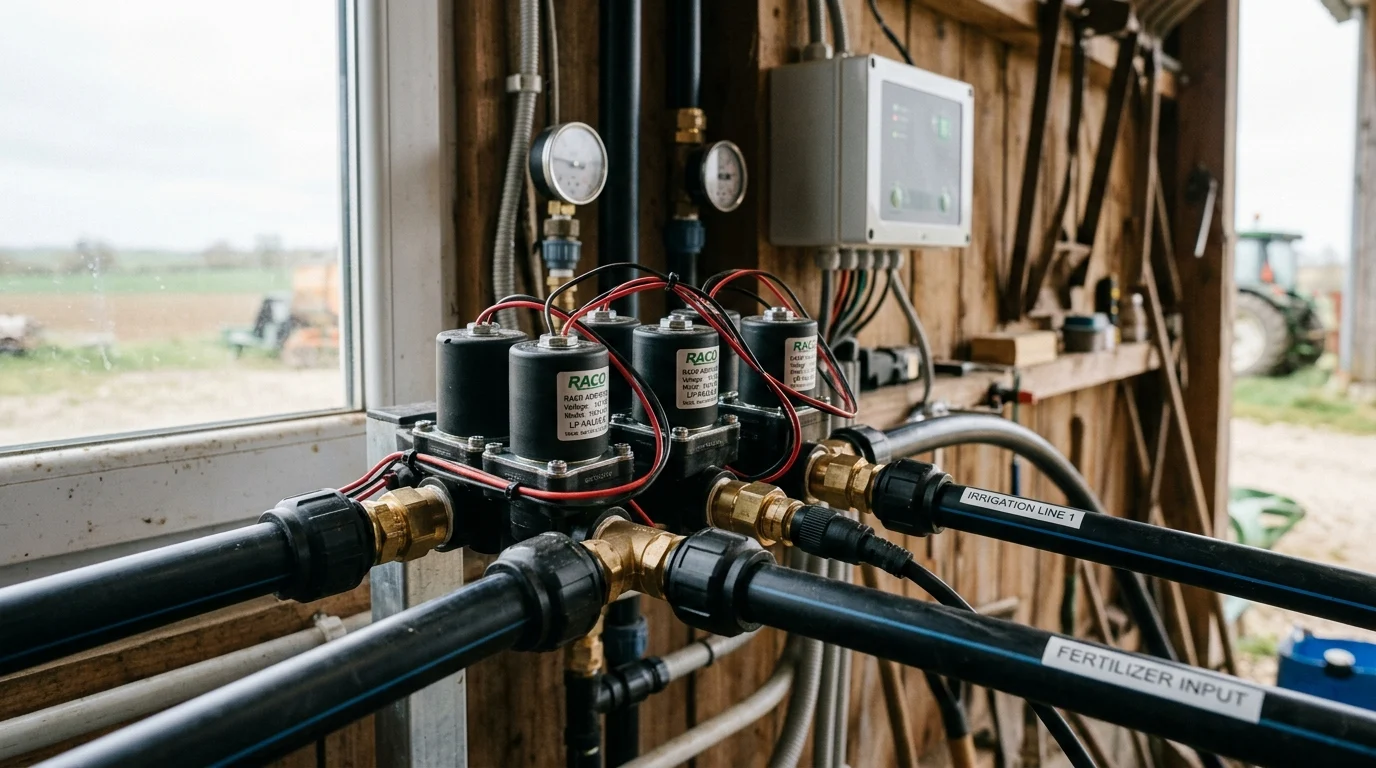
In precision agriculture, the primary applications for these coils involve the meticulous regulation of water and liquid fertilizers. Automated drip irrigation and fertigation systems rely heavily on solenoid valves to open and close fluid pathways based on real-time soil moisture and weather sensor data. Low-power coils actuate these valves, ensuring that crops receive precise micro-doses of nutrients exactly when needed to optimize yield.
Pulse valves and continuous-duty actuators are frequently deployed within these complex dosing networks. Because fertigation requires highly accurate mixing ratios, the solenoid coils must deliver consistent magnetic force to maintain stable valve positioning over time. The inherently low energy requirement allows multiple valves to operate simultaneously on a single decentralized control module, enabling highly granulated, multi-zone control across expansive crop fields and commercial greenhouse operations.
Operating Conditions in European Farming
European farming environments present a diverse array of environmental challenges, ranging from the intense summer heat of Mediterranean vineyards to the freezing, damp conditions of Nordic agricultural facilities. Solenoid coils must maintain complete operational integrity across these fluctuating environmental extremes without suffering from thermal breakdown, condensation buildup, or moisture ingress.
Consequently, coils deployed in European agriculture typically require a minimum ingress protection rating of IP65, with IP67 being heavily preferred for systems exposed directly to rain, mud, or heavy soil moisture. Operating voltages are heavily standardized around 12V DC and 24V DC to ensure seamless compatibility with standard agricultural control panels and renewable energy storage systems. Furthermore, the external casings of these components must robustly resist the corrosive nature of the chemical fertilizers and herbicides frequently pumped through the adjacent valve bodies.
How to Select the Right Solenoid Coil
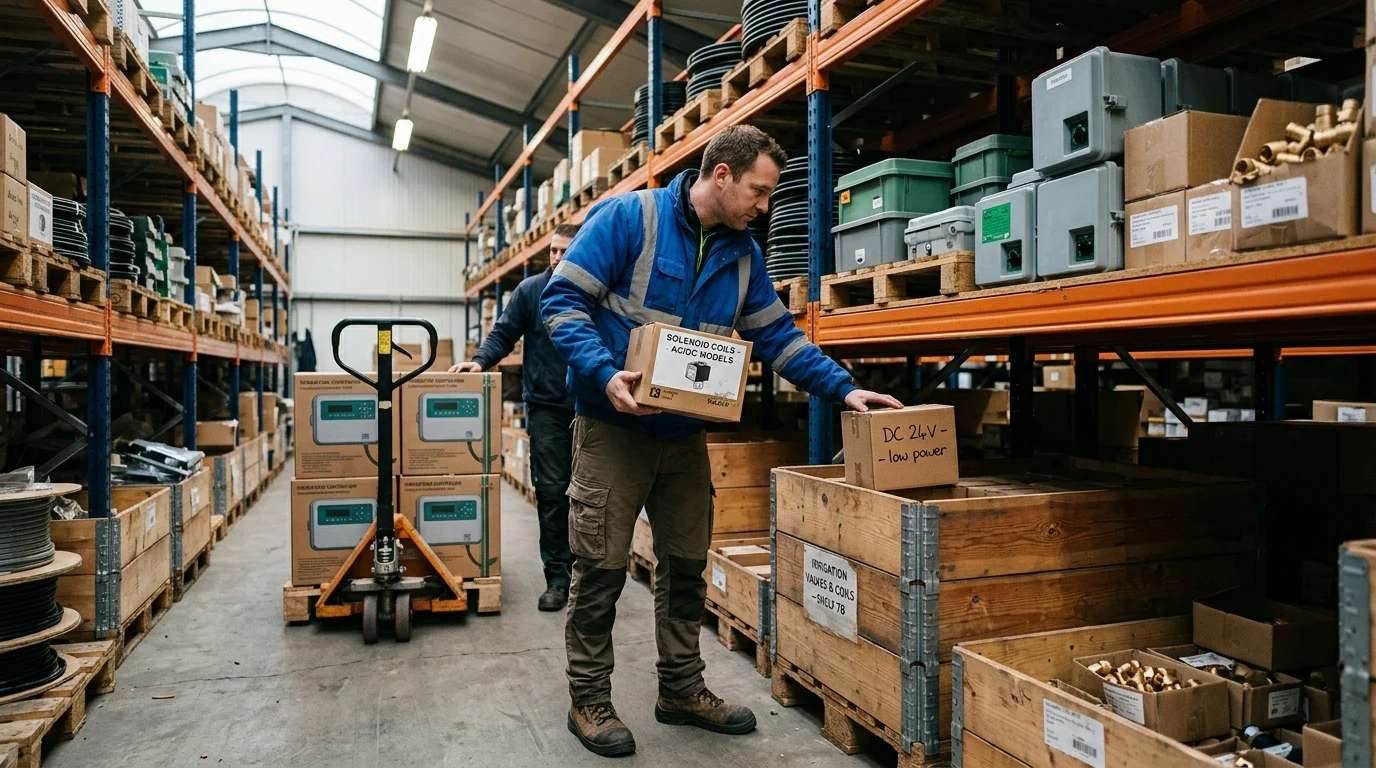
Selecting the appropriate solenoid coil for an irrigation or fertigation system is a critical engineering decision that dictates overall system resilience. Buyers must evaluate a complex matrix of electrical efficiencies, thermal tolerances, and supply chain variables to ensure long-term reliability. A well-specified coil minimizes maintenance interventions and prevents catastrophic crop losses associated with unexpected irrigation failures.
Key Technical Criteria
When evaluating technical specifications, engineers must prioritize the duty cycle, insulation class, and actuation response time. For agricultural systems requiring valves to remain open for extended watering periods, a 100% ED (continuous duty) rating is mandatory. Insulation classes, such as Class F (rated up to 155°C) or Class H (rated up to 180°C), dictate the coil’s ability to withstand internal heat generation without degrading the internal copper winding insulation.
| Specification | Standard Solenoid Coil | Low-Power Solenoid Coil |
|---|---|---|
| Power Consumption | 10W – 15W | 1.5W – 3W |
| Typical Voltage | 24V AC / 110V AC | 12V DC / 24V DC |
| Heat Generation | High (requires cooling) | Minimal (safe for enclosed spaces) |
| Response Time | 10 – 20 milliseconds | 20 – 50 milliseconds |
While low-power coils exhibit slightly slower response times compared to high-power alternatives, this variance is entirely negligible in agricultural fluid control. In farming applications, the strategic priority is maintaining energy conservation and thermal stability rather than achieving microsecond actuation precision.
Key Sourcing Criteria
Beyond technical specifications, the sourcing strategy plays a pivotal role in component selection. European equipment manufacturers must partner with suppliers that demonstrate robust quality management systems and comprehensive research and development capabilities. Suppliers like Feiniu (Ningbo) Electronic Technology Co., Ltd., which specialize in rigorous automotive and construction machinery parts alongside agricultural electromagnetic components, offer the manufacturing discipline required for high-reliability field applications.
Procurement teams must also negotiate Minimum Order Quantities (MOQs) and assess production scalability. Custom low-power coils designed for proprietary valve manifolds often require MOQs ranging from 500 to 1,000 units. Ensuring the supplier has the capacity to produce complementary components—such as pulse controllers, dual-power modules, pilot assemblies, and specialized junction boxes—can significantly streamline the procurement process and guarantee seamless component interoperability.
How Farms and OEMs Can Make the Final Decision
The final decision-making process for integrating low-power solenoid coils requires a highly structured approach that bridges engineering validation with commercial viability. Farm operators and equipment manufacturers must meticulously align their technical requirements with the realities of regulatory compliance, long-term operational costs, and global logistics.
Specification, Testing, and Implementation Steps
The implementation phase begins with rigorous prototyping and physical validation. Engineers must test the coil and valve assembly under realistic pressure differentials, typically ranging from 0.5 to 10 bar, to ensure the low-power magnetic field is sufficient to overcome both the fluid pressure and internal spring tension without stalling.
Following hydraulic testing, accelerated life cycle testing is absolutely essential. A high-quality solenoid coil intended for demanding agricultural use should be rated for a minimum lifespan of 1 million to 5 million actuation cycles. Field trials should subsequently be conducted in actual European farming environments, monitoring the coils for voltage drops over long cable runs and assessing their physical resilience against seasonal temperature shifts and prolonged UV exposure.
Balancing Compliance, Logistics, and Cost
Regulatory compliance is a non-negotiable factor for any
Key Takeaways
- The most important conclusions and rationale for Precision Agriculture: Low-Power Solenoid Coils for Automated Irrigation and Fertilizer Dosing Systems in European Farms
- Specs, compliance, and risk checks worth validating before you commit
- Practical next steps and caveats readers can apply immediately
Frequently Asked Questions
What voltage is best for automated irrigation solenoid coils on European farms?
12V DC and 24V DC are the safest choices. They match most farm control panels, solar-battery systems, and remote irrigation nodes used across Europe.
How much power can a low-power solenoid coil save?
Typical low-power coils use about 1.5W to 3W, versus 10W to 15W for standard coils. This helps reduce battery size and supports longer off-grid operation.
Which IP rating should I choose for outdoor fertigation valves?
Choose at least IP65 for general agricultural use. For direct exposure to rain, mud, or heavy moisture, IP67 is the better option.
Do low-power solenoid coils work for continuous irrigation cycles?
Yes, if they are rated 100% ED continuous duty. This is important when valves must stay open for long watering or dosing periods without overheating.
What materials matter when coils are used near fertilizers and herbicides?
Use coils with corrosion-resistant housings and sealed construction. This helps prevent damage from chemical exposure, condensation, and wet field conditions.
Post time: Jun-18-2026