
Introduction
Reliable pitch control in North Sea offshore turbines depends on more than valve selection alone; solenoid coil specification directly affects response accuracy, thermal stability, and fail-safe performance under salt spray, vibration, and continuous duty. In hydraulic pitch systems, coils must convert control signals into consistent valve actuation while tolerating harsh ambient conditions and frequent micro-adjustments without overheating or drifting. This article outlines the key requirements engineers should evaluate, from duty cycle and insulation class to corrosion resistance, ingress protection, and emergency operation expectations, so readers can better align coil choice with turbine reliability, safety, and maintenance targets.
Why Pitch Control Coil Specification Matters in Offshore Wind Turbines
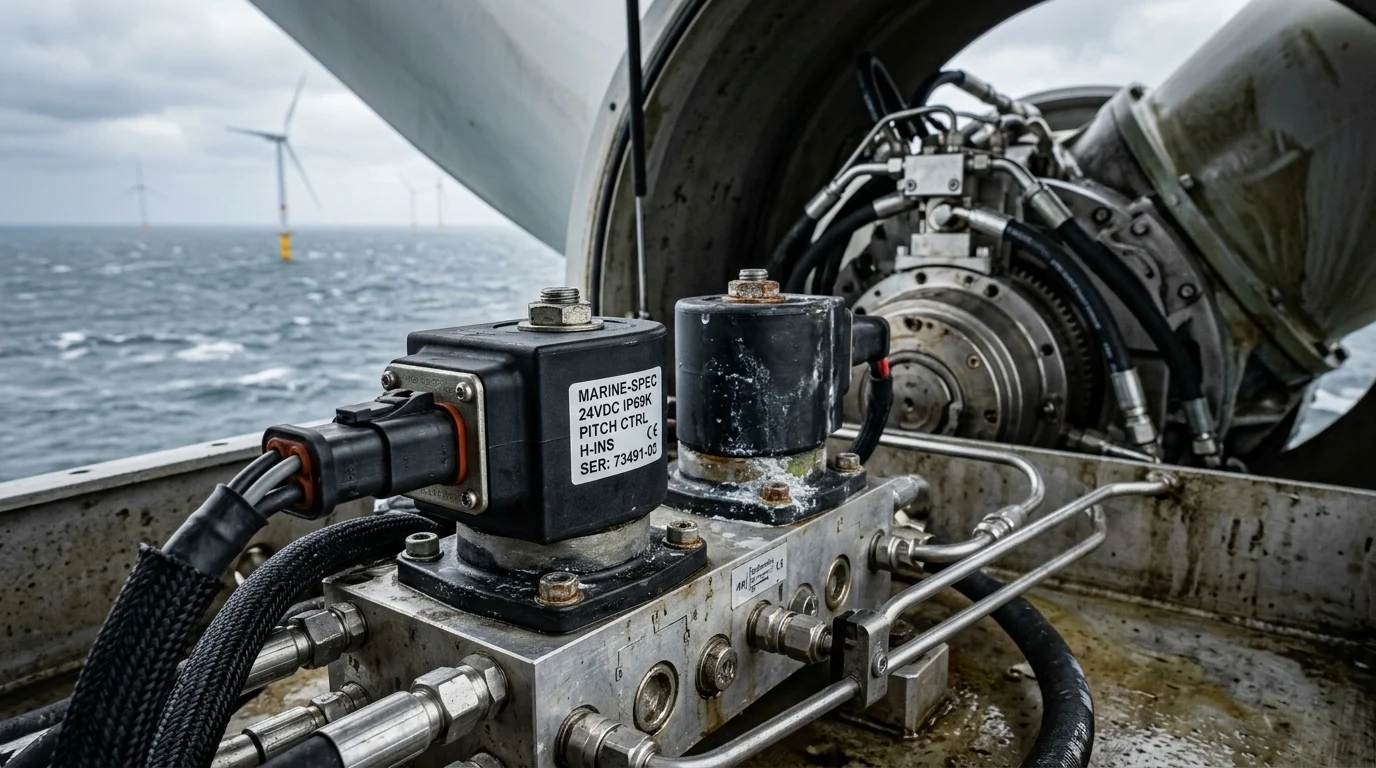
Hydraulic pitch control systems are the primary mechanisms for regulating aerodynamic torque and ensuring structural safety in modern offshore wind turbines. Operating in the harsh marine environment of the North Sea, these systems rely heavily on proportional and directional hydraulic valves to actuate the massive rotor blades. At the heart of these valves are electromagnetic solenoid coils, which translate electronic control signals into mechanical hydraulic flow. Given the extreme operational demands of offshore platforms, the exact specification of these coils is a fundamental engineering priority.
Duty cycles and fail-safe requirements
Pitch systems operate dynamically, constantly adjusting blade angles to optimize power capture and shed aerodynamic loads during turbulent wind conditions. This requires solenoid coils to perform high-frequency micro-adjustments, often referred to as dithering, without suffering from thermal breakdown or magnetic hysteresis. The duty cycle for these components is exceptionally demanding; proportional valve coils must typically be rated for a 100% duty cycle (ED) under continuous energization.
Furthermore, fail-safe mechanisms are non-negotiable in offshore wind applications. During a grid loss event, extreme wind gust, or emergency shutdown, the pitch system must execute an emergency feathering maneuver, driving the multi-ton blades to a 90-degree position within 10 to 15 seconds. If a directional valve coil fails to actuate the hydraulic accumulator release, the turbine risks catastrophic structural overload. Consequently, the reliability of the coil directly dictates the safety of the entire multi-million-euro asset.
Commercial risks of underspecified coils
The financial implications of underspecifying solenoid coils for North Sea installations are severe. While a standard industrial solenoid coil may cost less than €50, the cost of replacing a failed unit offshore is exponentially higher. A single unscheduled maintenance intervention requiring a crew transfer vessel (CTV) or helicopter can incur logistical costs ranging from €10,000 to €50,000 per day.
Additionally, the downtime of a modern 10 to 15 MW offshore turbine results in thousands of euros in lost generation revenue daily. Weather windows in the North Sea can delay maintenance access for weeks during the winter months, turning a minor component failure into a massive commercial loss. Procuring highly specified, marine-grade coils mitigates these operational expenditures and protects the project’s levelized cost of energy (LCOE).
Critical Solenoid Coil Specifications for Offshore Wind Turbines
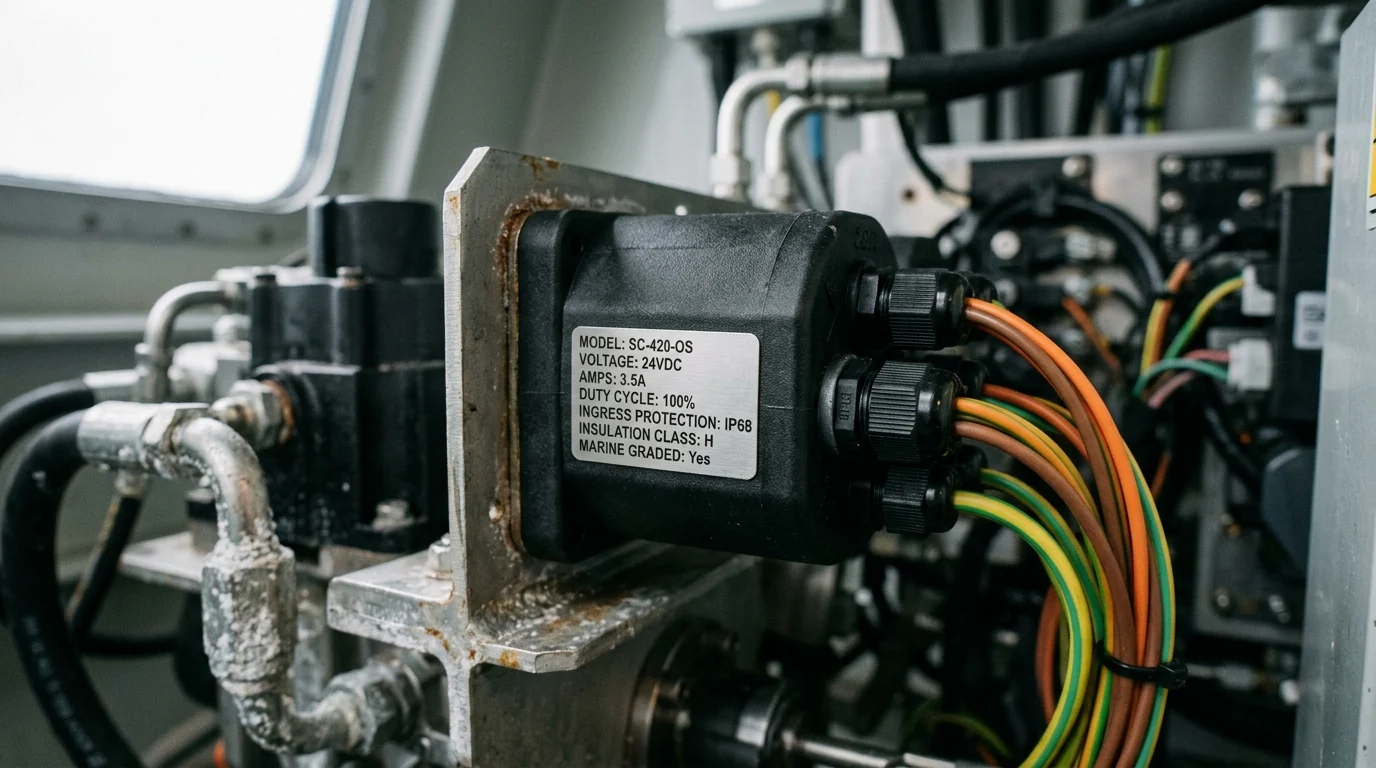
Translating the operational demands of the North Sea into technical parameters requires engineers to evaluate electrical limits, thermal management, and environmental barriers. The nacelle and hub environments expose components to high salinity, extreme humidity, and aggressive temperature fluctuations, rendering standard industrial solenoids entirely unsuitable for long-term offshore deployment.
Voltage tolerance, insulation class, and environmental protectio
n
Electrical networks within wind turbine hubs can experience significant power quality variations. Solenoid coils specified for offshore pitch valves must tolerate voltage fluctuations of at least ±10% to ±15% of their nominal rating (typically 24V DC) without dropping the valve spool or overheating. To manage the internal heat generated by continuous proportional control, coils should utilize Class H insulation, which is rated to withstand internal operating temperatures up to 180°C.
Environmental protection is equally critical. The constant presence of marine aerosols requires a minimum ingress protection rating of IP67, though IP69K is increasingly specified to withstand high-pressure condensation and maintenance washdowns. The encapsulation material must provide a hermetic seal against salt fog and moisture ingress; glass-filled polyamides or advanced epoxy overmolding are standard prerequisites for offshore environments.
Comparison criteria for standard and custom coils
When specifying coils, engineers must weigh the capabilities of standard off-the-shelf industrial components against custom-engineered marine variants. While custom coils present higher upfront costs, their lifecycle performance in offshore hubs justifies the investment.
| Specification Parameter | Standard Industrial Coil | Custom Offshore Marine Coil |
|---|---|---|
| Ingress Protection | IP65 / IP67 | IP67 / IP69K |
| Insulation Class | Class F (155°C) | Class H (180°C) |
| Salt Spray Resistance | 96 to 240 hours | 1,000+ hours (ISO 9227) |
| Voltage Tolerance | ±5% to ±10% | ±15% to ±20% |
| Integrated Protection | Optional | Standard (TVS diodes for surge) |
| Relative Cost Factor | 1x | 3x to 5x |
Custom offshore coils frequently incorporate integrated transient voltage suppression (TVS) diodes to protect the turbine’s programmable logic controllers (PLCs) from inductive voltage spikes when the coil is de-energized. Furthermore, they utilize specialized marine-grade connectors, such as Deutsch DT or Amphenol series, packed with dielectric grease to prevent terminal corrosion.
Final Selection and Qualification of Offshore Wind Solenoid Coils
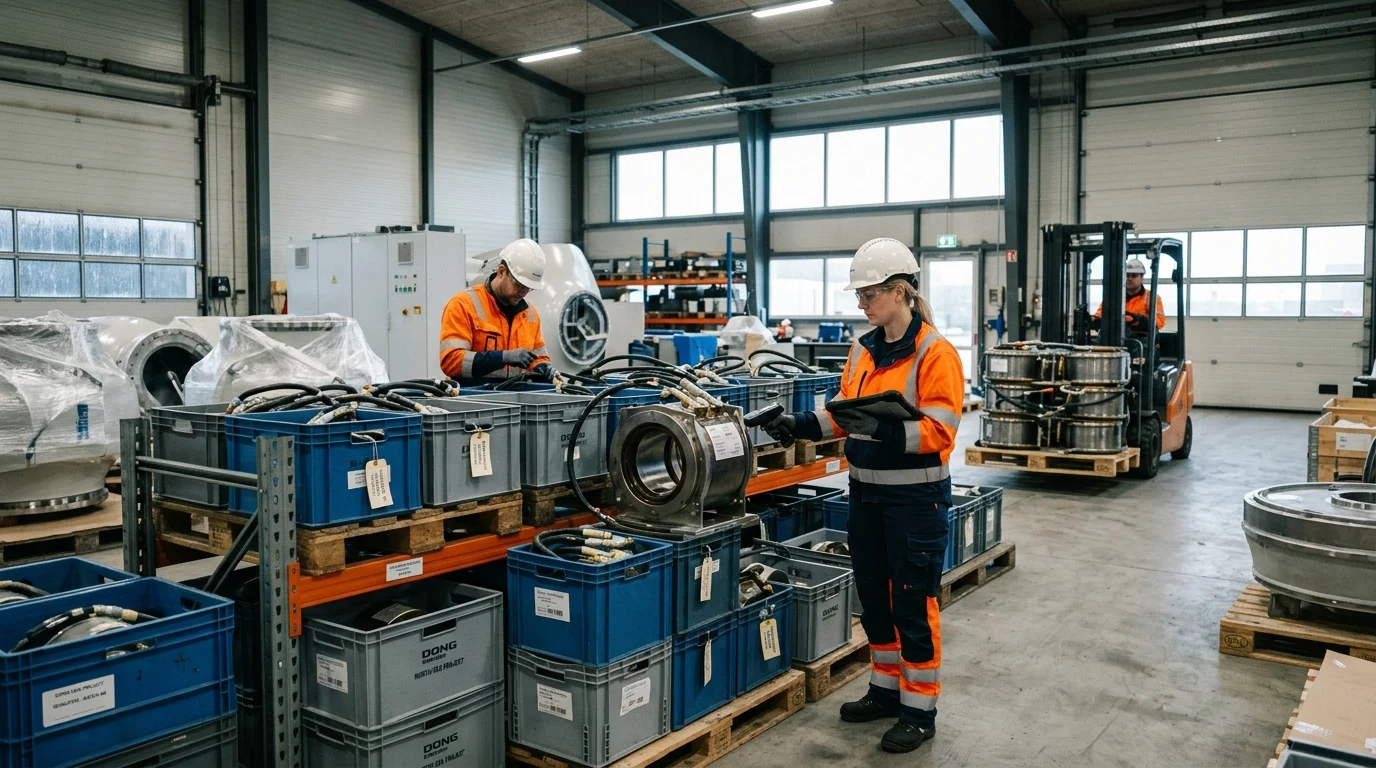
The final phase of procurement transitions from theoretical specification to rigorous physical validation and supply chain structuring. Solenoid coils destined for North Sea pitch systems must pass exhaustive laboratory testing to prove their compliance with international offshore standards before they are approved for serial production.
Compliance checks, testing, and qualification steps
Component qualification for offshore wind is governed by stringent frameworks, including IEC 61400 standards and specific DNV guidelines. Testing protocols simulate the harshest expected lifecycle conditions. Thermal cycling tests typically require the coil to function flawlessly while transitioning between ambient extremes of -40°C to +80°C. To validate corrosion resistance, components undergo accelerated salt mist exposure according to ISO 9227, with offshore specifications demanding a minimum survival of 720 to 1,000 hours without electrical degradation or encapsulation cracking.
Because the rotor hub is a highly dynamic environment subject to continuous rotational forces and aerodynamic buffeting, vibration testing is mandatory. Coils must be tested to IEC 60068-2-6 standards, demonstrating the ability to withstand up to 5G of continuous vibration across varying frequencies without suffering structural fatigue, connector fretting, or internal wire breakage.
Sourcing resilience and retrofit compatibility
Beyond technical qualification, sourcing resilience is a primary concern for operations and maintenance (O&M) providers.
Key Takeaways
- The most important conclusions and rationale for Offshore Wind Turbine Pitch Control: Specifying Solenoid Coils for Harsh Marine Environments in the North Sea
- Specs, compliance, and risk checks worth validating before you commit
- Practical next steps and caveats readers can apply immediately
Frequently Asked Questions
Why is a 100% duty cycle important for pitch control solenoid coils?
Pitch valves make continuous micro-adjustments during operation. A 100% ED coil can stay energized without overheating, helping avoid thermal failure and unstable blade angle control.
What ingress protection rating should North Sea pitch control coils have?
Specify at least IP67 for moisture and salt exposure. IP69K is better where condensation, washdowns, or aggressive hub cleaning are expected.
Which insulation class is recommended for offshore turbine solenoid coils?
Class H insulation is the safer choice. Its 180°C thermal rating supports continuous proportional control and higher internal heat loads in enclosed nacelle or hub spaces.
How much voltage variation should offshore pitch control coils tolerate?
Aim for coils that handle about ±10% to ±15% of nominal voltage, commonly 24V DC. This helps prevent valve dropout or overheating during power quality fluctuations.
Are custom marine-grade coils worth the extra cost offshore?
Usually yes. Higher-spec coils reduce failure risk, vessel callouts, and lost generation, which can far outweigh the higher purchase price in North Sea service.
Post time: May-19-2026