
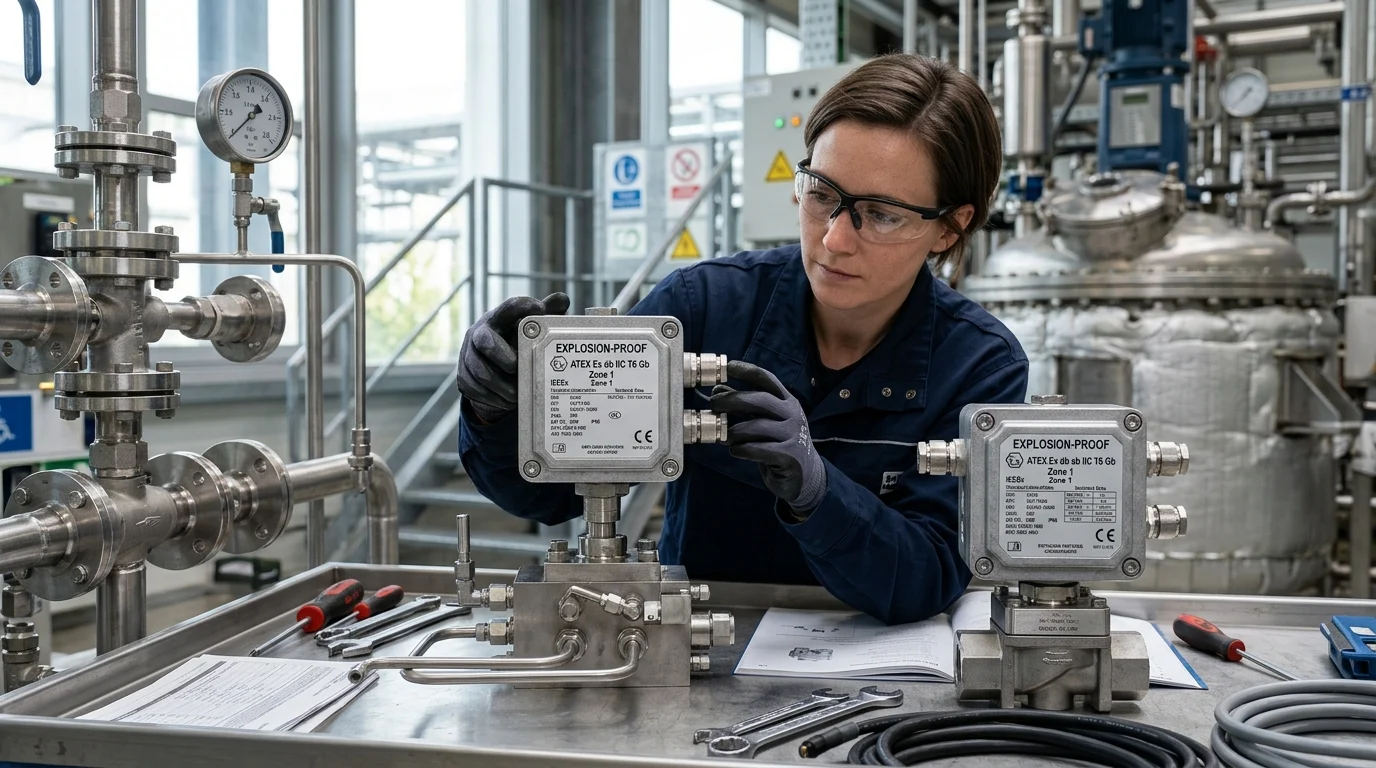
Introduction
In European chemical plants, choosing a solenoid coil for Zone 0 or Zone 1 service means balancing ignition protection, valve performance, and strict ATEX-driven compliance under real operating conditions. The right selection depends on more than a hazardous-area label: gas group, temperature class, ambient range, duty cycle, enclosure integrity, and compatibility with the valve and control system all affect safety and reliability. This article outlines the key differences between Zone 0 and Zone 1 applications, explains the certification and design details that matter most, and shows how to avoid common specification errors that can lead to shutdowns, inspection findings, or elevated explosion risk.
Why Explosion-Proof Solenoid Coils Matter in Zone 0
European chemical plants operate under some of the world’s most stringent safety regulations, particularly concerning volatile atmospheres. At the heart of process automation in these facilities are solenoid valves, which control the flow of aggressive or flammable media. Selecting the correct explosion-proof solenoid coils for these valves is not merely a compliance exercise; it is a fundamental engineering requirement to prevent catastrophic ignition in highly hazardous areas.
Key risks and downtime impacts
The presence of flammable gases, vapors, or mists in chemical processing creates an environment where a single electrical spark or elevated surface temperature can lead to an explosion. The primary risk associated with improperly specified solenoid coils is the uncontrolled release of thermal or electrical energy. If a coil fails or overheats in a volatile atmosphere, the resulting ignition can cause severe personnel injury and structural devastation.
Beyond the immediate safety hazards, the operational downtime impacts are severe. In major European petrochemical facilities, unplanned shutdowns due to equipment failure or safety breaches can incur costs ranging from €50,000 to €150,000 per hour in lost production. Selecting a coil that fails to meet the rigorous demands of the environment not only risks regulatory fines but also threatens the facility’s overall economic viability.
Core definitions and Zone 0 basics
Understanding the classification of hazardous areas is the first step in specifying the correct solenoid coil. Under European standards, a Zone 0 environment is defined as an area where an explosive atmosphere consisting of a mixture of air and flammable substances is present continuously, for long periods, or frequently. Quantitatively, this typically translates to the hazardous mixture being present for more than 1,000 hours per year.
In contrast, Zone 1 is an area where an explosive atmosphere is likely to occur occasionally in normal operation, generally between 10 and 1,000 hours per year. Because Zone 0 represents a constant explosion risk, equipment installed in these areas must utilize the highest level of protection, ensuring that ignition is impossible even in the event of two simultaneous independent equipment faults. Solenoid coils destined for Zone 0 must adhere strictly to these elevated safety thresholds, which severely limits the types of electrical protection methods available to engineers compared to Zone 1 applications.
Technical and Regulatory Selection Criteria
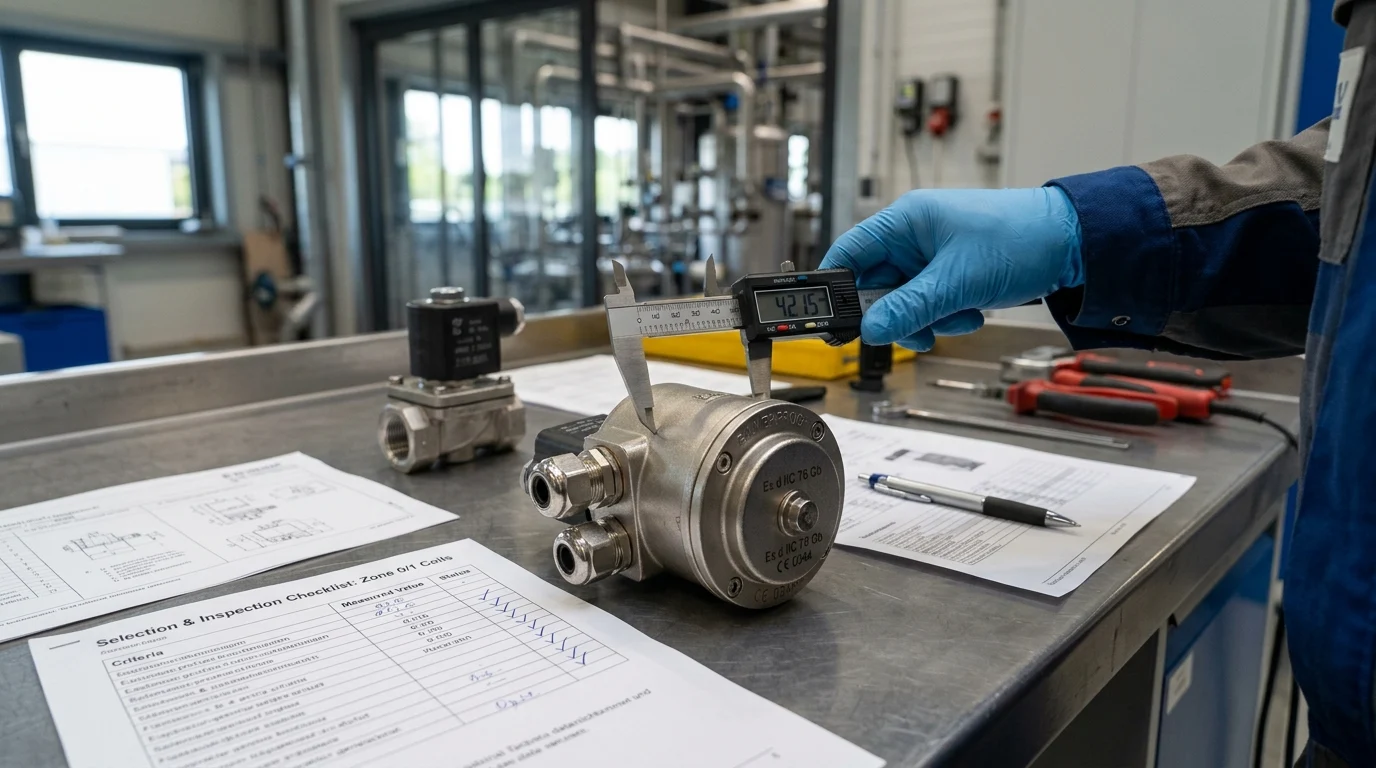
Navigating the regulatory landscape and technical specifications is critical for ensuring that solenoid coils are legally compliant and functionally appropriate for European chemical plants. Engineers must align their component choices with both regional directives and internationally recognized protection concepts.
Protection concepts, ATEX, and IECEx
Equipment intended for use in explosive atmospheres within the European Union must comply with the ATEX Directive 2014/34/EU. While ATEX is a statutory requirement in Europe, many facilities also demand IECEx certification to standardize safety protocols across global operations. The certification dictates the specific protection concept applied to the solenoid coil.
For Zone 0, the only universally accepted protection concept for electrical equipment is Intrinsic Safety “ia” (Ex ia). This method restricts the electrical and thermal energy available in the circuit to levels well below what is required to ignite a specific gas mixture. Typically, Ex ia solenoid coils operate at very low power thresholds, often requiring less than 1.2W of power and operating below 30V DC. In Zone 1, engineers have broader options, including Flameproof “d” (Ex d) enclosures, which are designed to contain an internal explosion and cool escaping gases, and Encapsulation “m” (Ex m), which isolates the sparking components from the atmosphere using a resin compound.
How to compare options effectively
When comparing solenoid coils for hazardous areas, plant engineers must weigh the protection method against maintenance requirements and installation costs. Intrinsic safety requires an external barrier to limit energy, while flameproof enclosures rely on robust mechanical construction.
| Protection Concept | Allowed Zones | Typical Power Consumption | Maintenance in Live State | Enclosure Weight/Size |
|---|---|---|---|---|
| Ex ia (Intrinsic Safety) | Zone 0, 1, 2 | < 1.2 Watts | Permitted | Lightweight / Compact |
| Ex d (Flameproof) | Zone 1, 2 | 2 to 10 Watts | Strictly Prohibited | Heavy / Bulky |
| Ex m (Encapsulation) | Zone 1, 2 | 2 to 8 Watts | Strictly Prohibited | Medium / Compact |
Evaluating these options requires looking beyond just the coil itself. While an Ex d coil might offer higher actuation power for larger valves in Zone 1, its heavy enclosure and strict prohibition on live maintenance make it cumbersome. Conversely, an Ex ia coil is mandatory for Zone 0 and allows for live maintenance, but it requires careful matching with a compatible intrinsically safe barrier in the control cabinet.
How to Make a Defensible Final Decision
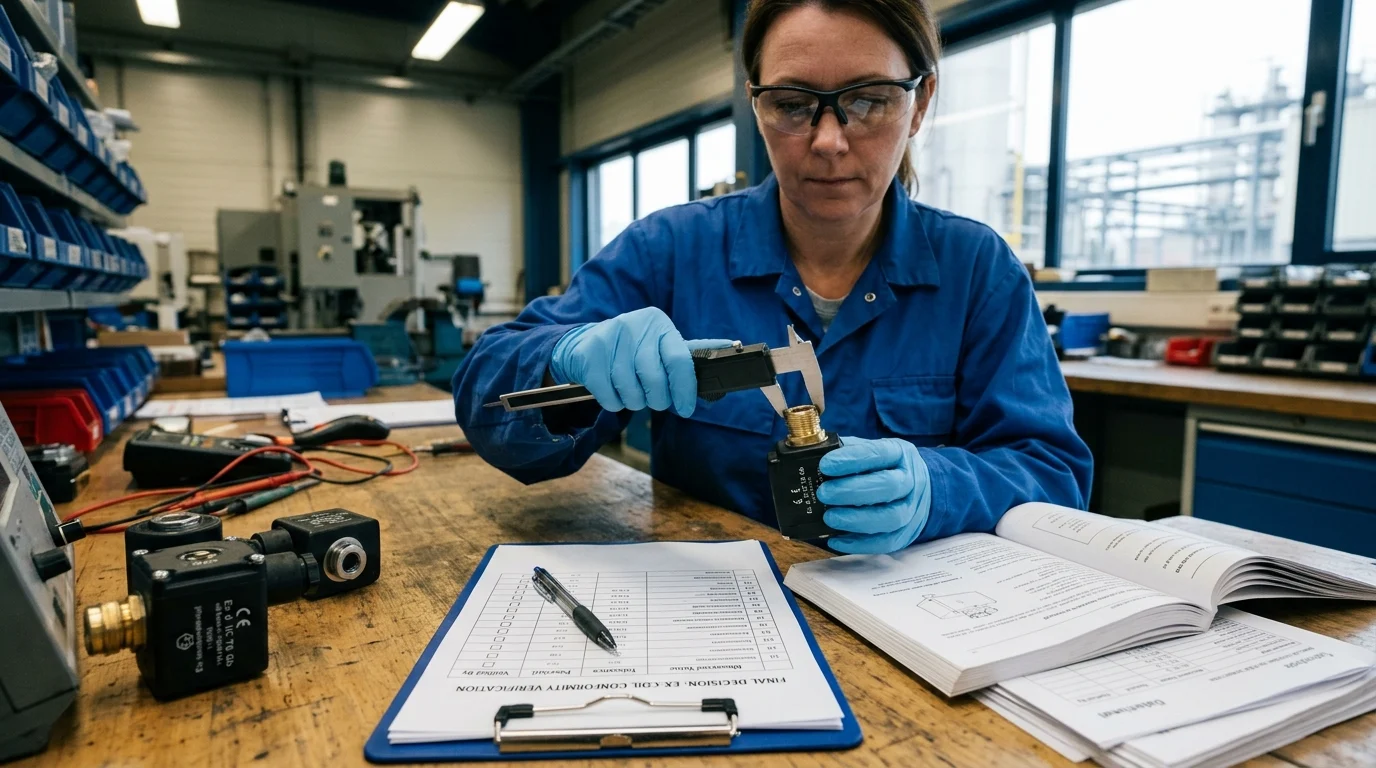
Moving from theoretical specifications to a final procurement decision requires a structured approach. Plant managers and instrumentation engineers must balance initial capital expenditures with long-term operational flexibility, ensuring the chosen solenoid coils integrate seamlessly into existing safety systems.
Step-by-step selection process
The selection process should follow a rigorous, step-by-step methodology to ensure no critical parameters are overlooked. First, clearly classify the installation zone (Zone 0 vs. Zone 1) and identify the specific gas group (e.g., IIA, IIB, or IIC) and temperature class (T1 through T6) present in the environment. A coil rated for T6 ensures its maximum surface temperature will not exceed 85°C, making it safe for highly volatile gases like carbon disulfide.
Next, determine the functional requirements of the valve, including the necessary actuation power and the required Safety Integrity Level (SIL).
Key Takeaways
- The most important conclusions and rationale for Selecting Explosion-Proof Solenoid Coils for Zone 0 and Zone 1 Hazardous Areas in European Chemical Plants
- Specs, compliance, and risk checks worth validating before you commit
- Practical next steps and caveats readers can apply immediately
Frequently Asked Questions
Which solenoid coil protection type is suitable for Zone 0 in European chemical plants?
Use an Ex ia intrinsically safe coil. For Zone 0, this is the standard electrical protection concept because it limits energy below ignition levels even under fault conditions.
Can Ex d or Ex m solenoid coils be used in Zone 0?
Generally no. Ex d flameproof and Ex m encapsulated coils are common for Zone 1, but Zone 0 applications typically require Ex ia intrinsic safety.
What certifications should a coil have for EU hazardous areas?
At minimum, it should comply with ATEX 2014/34/EU. Many chemical plants also prefer IECEx certification for easier global standardization and audit acceptance.
What electrical limits are typical for Ex ia solenoid coils?
They usually run on low energy, often below 30 V DC and around or under 1.2 W. Always verify the exact certified parameters on the coil and barrier documentation.
Why is correct coil selection so important for plant uptime?
A mis-specified coil can overheat or spark, triggering shutdowns, safety incidents, and major production losses. Choosing the right certified coil reduces ignition risk and unplanned downtime.
Post time: May-18-2026