
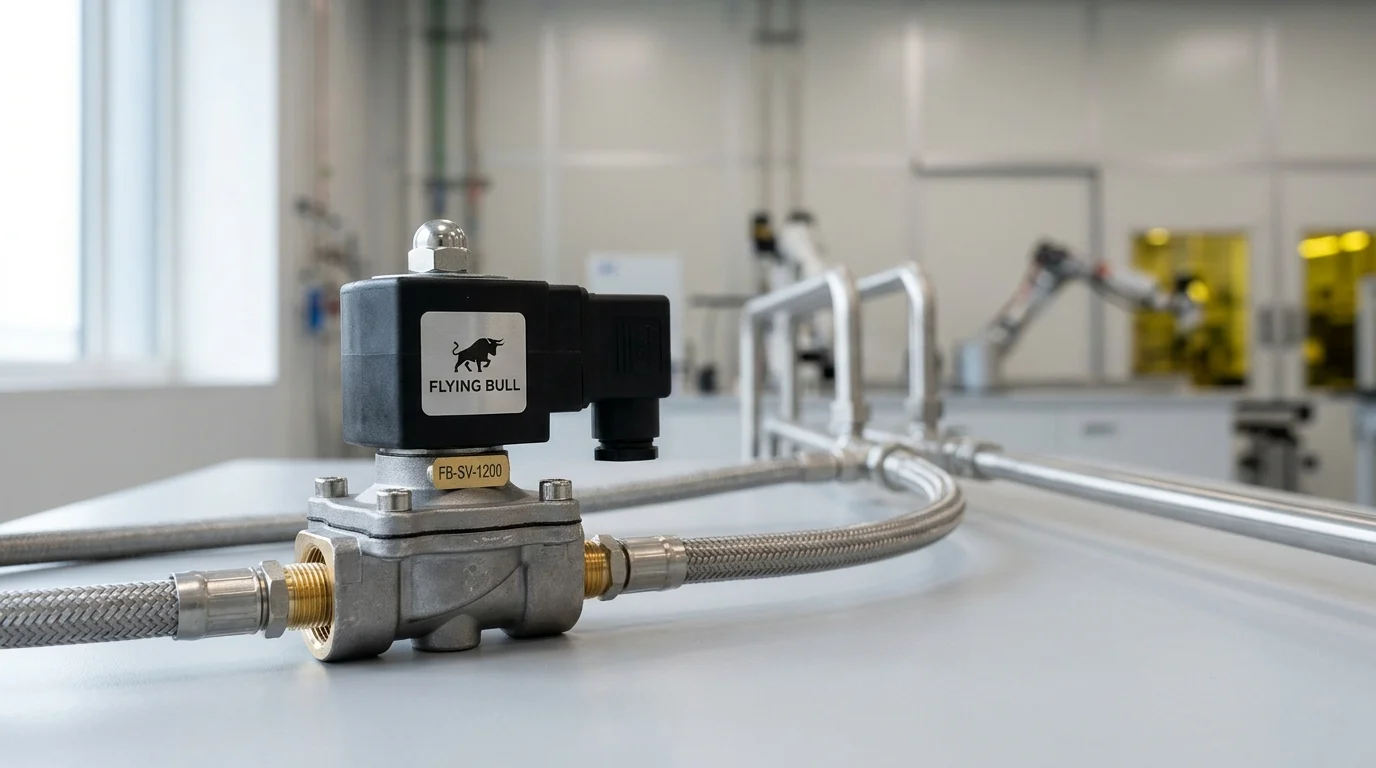
As governments and chipmakers accelerate wafer fab construction, the pressure is shifting from headline equipment purchases to the less visible systems that keep fabs running. Utility networks for cooling water, clean dry air, nitrogen, vacuum, and purge service rely on thousands of automated control points, and solenoid valves are becoming a critical procurement category. With global fab investment expected to surpass $500 billion by 2030, suppliers must meet higher expectations for reliability, pressure stability, thermal control, and scalable delivery. This article examines how fab expansion is reshaping valve demand, where sub-fab requirements differ from tool-level ultra-high-purity applications, and how Flying Bull can serve this evolving market.
Why Fab Expansion Is Driving Solenoid Valve Demand
The global push to localize semiconductor manufacturing has triggered an unprecedented wave of wafer fabrication plant construction. Driven by legislative frameworks like the U.S. CHIPS Act and the European Chips Act, industry analysts project over $500 billion in global fab investments by 2030. This massive capital injection is fundamentally altering the supply chain for critical fluid and gas control components. Solenoid valves, which act as critical control components for automated process media, are experiencing a massive demand surge. As facility footprints expand to accommodate next-generation node architectures, the reliance on high-precision, automated valving becomes essential for project completion and operational uptime. Flying Bull, an established manufacturer of precision electromagnetic control components, fits into this ecosystem by providing scalable, high-reliability solenoid solutions that bridge the gap between heavy industrial robustness and the precise fluid management required in sub-fab utility systems.
New Wafer Fabs, Tool Density, and Utility Needs
Modern 300mm wafer fabs operate at a scale that dwarfs traditional manufacturing facilities. A single advanced logic or memory fab can require between 10,000 and 15,000 solenoid valves to manage facility-wide utilities, according to standard facility engineering estimates. Tool density within the cleanroom dictates the complexity of the sub-fab architecture, where highly dense manifolds govern the distribution of Process Cooling Water (PCW), Clean Dry Air (CDA), and bulk nitrogen. The sheer volume of these utility drops requires solenoid valves that offer exceptionally low failure rates and optimized flow coefficients (Cv) to minimize pressure drops. A single valve malfunction can trigger a cascade of tool faults, potentially ruining semiconductor batches worth millions of dollars and causing severe energy inefficiencies across the facility.
Key Definitions and System Boundaries
Understanding the system boundaries within a semiconductor facility is essential for specifying the correct solenoid valves. While established players like Swagelok, Parker, Fujikin, and SMC dominate the ultra-high purity (UHP) tool-level market, the massive sub-fab architecture presents an opening for agile manufacturers. Utility-level valves operate in the sub-fab and handle bulk gas and water distribution at pressures ranging from rough vacuum up to 150 psi for standard process gases, and occasionally up to 3,000 psi for specialty high-pressure purge lines. In contrast, tool-level valves are integrated directly into the semiconductor manufacturing equipment, controlling UHP media with extreme precision. Engineering robust electromagnetic coils and valve bodies that maintain stable actuation across these varying pressure differentials ensures that the boundary between facility utilities and sensitive process tools remains secure, isolated from pressure spikes, and free from cross-contamination.
Key Solenoid Valve Specifications for Semiconductor Fabs
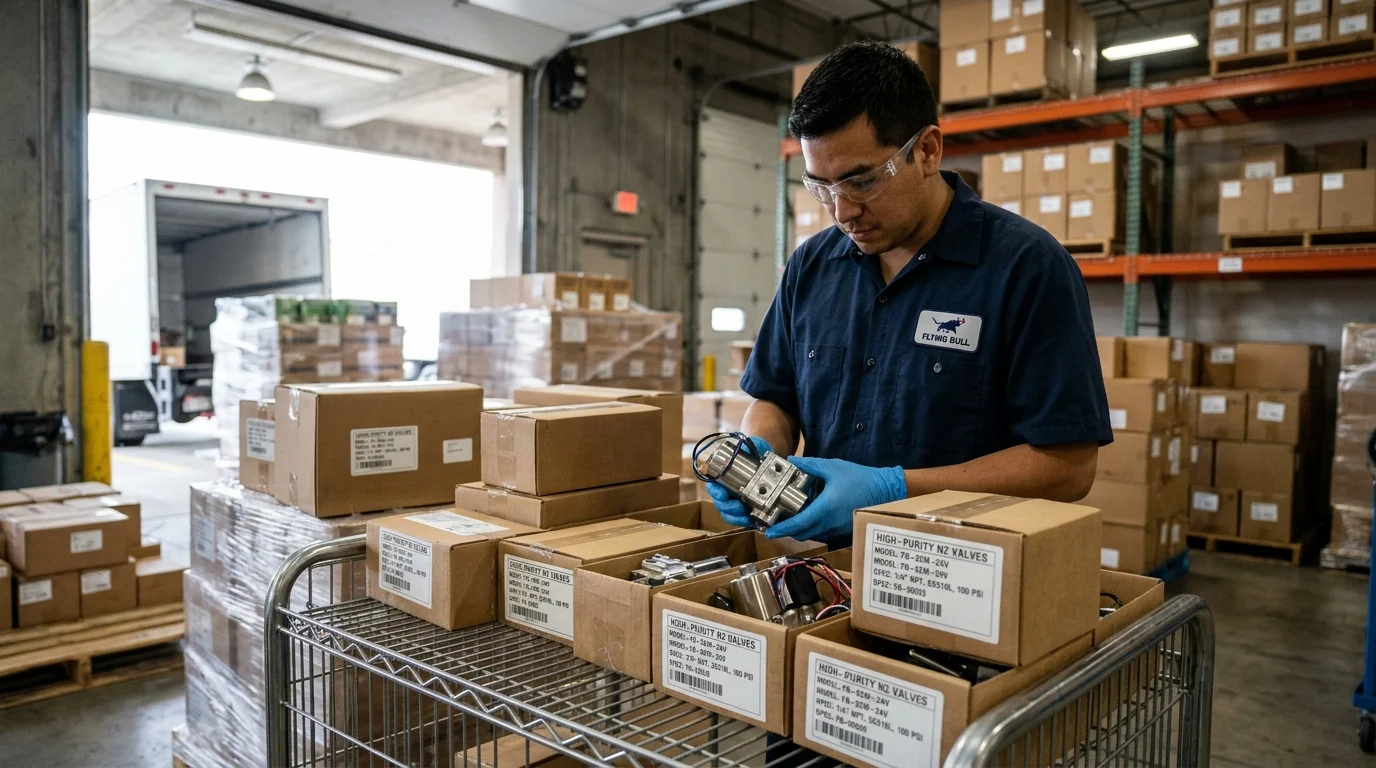
Semiconductor manufacturing leaves zero margin for error regarding particulate contamination, fugitive emissions, or thermal disruption. The specifications for solenoid valves in this sector are governed by strict industry guidelines, such as SEMI F104 for UHP components, and rigorous customer audit requirements from leading foundries. Engineers must evaluate wetted materials, actuation speed, and structural integrity under continuous duty cycles, while ensuring the electromagnetic coil does not transfer excessive heat to temperature-sensitive chemical media. Furthermore, the internal geometry of the valve must minimize dead legs—areas where stagnant fluid can accumulate and breed micro-bacterial contaminants or trap reactive gas particles.
Materials and Media Compatibility
Media compatibility dictates the foundational architecture of the valve. For highly corrosive gases, wetted components must be machined from Vacuum Induction Melted/Vacuum Arc Remelted (VIM/VAR) stainless steel to eliminate microscopic impurities. For ultra-pure water (UPW) and aggressive wet chemicals, perfluoroalkoxy (PFA) or polytetrafluoroethylene (PTFE) flow paths are mandatory. While legacy semiconductor suppliers dominate the cleanroom, manufacturers with roots in high-stress automotive and industrial components are increasingly qualifying for sub-fab utility lines. The structural integrity and material processing required for extreme environments—demonstrated in heavy-duty components like the 3871711 904-7125 valve—prove that cross-industry manufacturing expertise can meet the rigorous demands of facility-level gas and water distribution.
General Industrial vs. Semiconductor-Grade Valves
The distinction between general industrial fluid control and semiconductor-grade valving is best illustrated through rigorous performance and manufacturing metrics. Semiconductor-grade valves are assembled, tested, and packaged in heavily regulated environments to prevent particulate introduction prior to installation.
| Specification | General Industrial Valve | Semiconductor-Grade Valve |
|---|---|---|
| Inboard Leak Rate | 1 x 10⁻⁴ atm cc/sec | < 1 x 10⁻⁹ atm cc/sec (Helium) |
| Wetted Materials | Brass, 304 SS, Buna-N | 316L VIM/VAR SS, PFA, FFKM |
| Assembly Environment | Standard Factory Floor | ISO Class 4 / Class 10 Cleanroom |
| Surface Finish (Ra) | 1.0 µm – 3.2 µm | < 0.15 µm (Electropolished) |
| Cycle Life Expectancy | 1 – 2 Million Cycles | 10 – 50 Million Cycles |
By understanding these distinct parameters, procurement teams can avoid integrating sub-standard components that could compromise an entire cleanroom environment.
How to Source Solenoid Valves for Semiconductor Projects
The rapid expansion of the semiconductor industry has strained the existing supply chain, pushing lead times for specialized high-purity solenoid valves from a historical baseline of 8 weeks to upward of 24 to 36 weeks. Furthermore, new fab suppliers face grueling qualification cycles that often last 12 to 24 months. Sourcing these critical components now requires a strategic approach that moves beyond transactional purchasing and embraces supply chain diversification. Buyers and facility engineers must collaborate closely to audit potential suppliers, ensuring they possess the necessary quality management systems (QMS) and scalable manufacturing capacity to meet tight fab construction schedules.
Procurement and Engineering Evaluation Steps
The engineering evaluation of a solenoid valve supplier begins with a comprehensive audit of their manufacturing traceability and testing protocols. Facilities require 100% helium leak testing on all gas-delivery valves and extensive cycle testing to validate lifespan without degradation in sealing integrity. Procurement teams must verify compliance with SEMI standards and the supplier's ability to provide complete material test reports (MTRs) for every batch of metal used. Evaluating a manufacturer’s cross-industry expertise can also be highly beneficial.
Key Takeaways
- Global fab investment projected to exceed $500 billion by 2030 is expanding demand for reliable fluid and gas control components.
- A single advanced 300mm fab can require about 10,000 to 15,000 solenoid valves across sub-fab utility networks.
- Engineers should separate sub-fab utility valve requirements from ultra-high-purity tool-level valve specifications before selecting suppliers.
- Valve selection should prioritize low failure rates, optimized Cv values, stable actuation, and controlled coil heat under continuous-duty operation.
- Flying Bull is positioned for scalable utility-level and industrial solenoid valve applications where robust electromagnetic control and repeatable performance are required.
Frequently Asked Questions
Why are new semiconductor fabs increasing demand for solenoid valves?
Fab construction is expanding utility networks for process cooling water, clean dry air, nitrogen, vacuum, and purge lines. Each new 300mm fab can require thousands of automated valves to keep these systems stable and reliable.
How many solenoid valves can a modern 300mm fab use?
Facility engineering estimates suggest an advanced 300mm logic or memory fab may require roughly 10,000 to 15,000 solenoid valves across sub-fab utilities and supporting systems.
Where do Flying Bull solenoid valves fit in semiconductor facilities?
Flying Bull fits best in scalable utility and industrial-control applications where robust electromagnetic actuation, reliable cycling, and stable fluid or gas control are needed outside the most demanding ultra-high-purity tool-level zones.
What is the difference between sub-fab and tool-level valves?
Sub-fab valves manage facility utilities such as CDA, PCW, nitrogen, and purge lines. Tool-level valves are integrated into semiconductor equipment and often require ultra-high-purity performance for direct process media control.
What specifications matter most for fab solenoid valves?
Engineers should evaluate wetted materials, pressure rating, Cv value, actuation stability, continuous-duty coil performance, leakage control, heat generation, and compatibility with contamination-sensitive environments.
Post time: Nov-05-2026