
Solenoid Coil Troubleshooting Flowchart for Maintenance Teams
Why Solenoid Coil Troubleshooting Matters
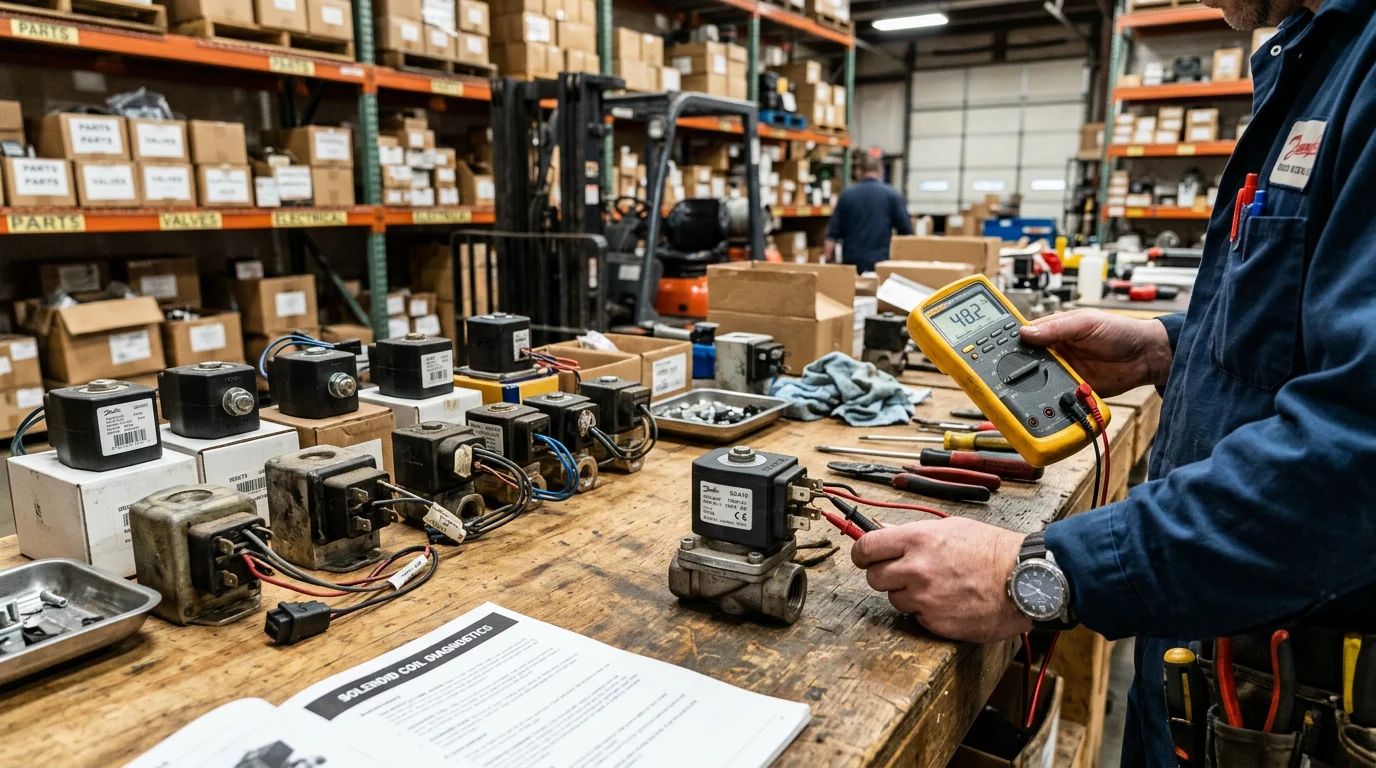
For B2B distributors, procurement teams, and maintenance managers, the operational health of fluid control systems relies on accurate diagnostics. A Solenoid Coil acts as the primary electromagnetic actuator in numerous industrial applications, from heavy machinery to precision automotive systems. When these components fail, operational paralysis can cost facilities thousands of dollars per hour.
A standardized troubleshooting flowchart is not merely a technical guide; it is a strategic tool for procurement and supply chain personnel. By systematically identifying root causes rather than immediately replacing parts, organizations prevent the recurring destruction of new inventory. This analytical approach bridges the gap between the factory floor and purchasing, ensuring replacement capital is deployed effectively.
Furthermore, analyzing aggregate failure data transforms reactive maintenance into proactive sourcing. When wholesale buyers understand how and why inventory fails under specific operational stresses, they can negotiate better specifications, demand higher manufacturing standards, and optimize the total cost of ownership (TCO) for their component catalog.
Reduce downtime and replacement errors
Unplanned downtime is a massive hidden cost in industrial operations. A structured troubleshooting flowchart ensures technicians do not blindly swap out a Solenoid Coil without verifying if the underlying issue is electrical or mechanical. This prevents the immediate burnout of replacement parts, reducing system downtime and eliminating misdiagnosis errors that drain spare parts inventory.
Align maintenance and procurement on failure data
Siloed operations often result in procurement reordering the same inadequate components that maintenance constantly replaces. Standardizing the troubleshooting process allows maintenance to provide procurement with objective failure data, such as recurrent thermal overload or moisture ingress. This alignment helps buyers source upgraded components with higher IP ratings or superior insulation classes.
Use findings to improve sourcing decisions
Troubleshooting data directly informs vendor selection and component specification. If a specific batch of coils repeatedly fails due to poor winding insulation, procurement can use this evidence to challenge suppliers, demand better quality control, or shift sourcing to manufacturers with certified quality management systems.
Initial Checks Before Testing
Before utilizing advanced electrical testing equipment, a visual and administrative verification process must occur. This preliminary phase isolates basic physical and compatibility errors that often masquerade as complex electrical faults. For wholesale buyers, ensuring the correct component was dispatched and installed is the first line of defense against warranty claims.
Many failures occur because the installed component does not match the application’s environmental or electrical demands. A thorough initial check prevents technicians from wasting hours diagnosing a functional coil installed in the wrong voltage circuit or exposed to corrosive media it was not rated to handle.
Mandating these checks helps organizations quickly filter out user error, improper installation, and environmental damage. This expedites repairs and provides immediate feedback to inventory managers regarding potential stock mislabeling or misallocation.
Verify nameplate and electrical specifications
Technicians must cross-reference the coil’s nameplate data with the system’s electrical supply. Verifying alternating current (AC) versus direct current (DC), voltage levels, and power consumption ensures the component matches the circuit’s output. Installing a 24V DC coil on a 120V AC circuit causes immediate catastrophic failure.
Confirm application and fit
Physical compatibility is as critical as electrical matching. The coil’s inner diameter must perfectly match the valve’s armature tube. A loose fit reduces magnetic flux efficiency, causing AC coils to continuously draw excessive inrush current, inevitably leading to overheating and premature burnout.
Inspect for visible damage and contamination
Visual inspections can reveal cracked housings, melted epoxy encapsulation, or severe oxidation on terminal spades. Moisture ingress from washdown procedures or environmental exposure is a leading cause of short circuits. Documenting visible damage helps procurement determine if a more robust, weather-sealed connector is required for future orders.
Electrical Diagnosis Steps
Once physical checks are complete, the flowchart progresses to quantitative electrical testing. This phase requires calibrated multimeters and megohmmeters to assess the internal integrity of the copper windings. For B2B suppliers dealing with RMA (Return Merchandise Authorization) requests, requiring customers to provide these electrical readings is essential for validating warranty claims.
Electrical diagnostics remove guesswork from component evaluation. By measuring specific properties, technicians can pinpoint whether a coil has suffered an open circuit (broken wire), a short circuit (melted insulation), or an intermittent fault caused by thermal expansion. This data is invaluable for quality assurance teams evaluating product longevity.
Understanding the electrical failure mode dictates the urgency and scale of the intervention. A single open circuit might indicate a manufacturing defect, whereas widespread short circuits across multiple machines suggest a facility-wide power surge requiring systemic electrical protection.
Test resistance, continuity, and insulation
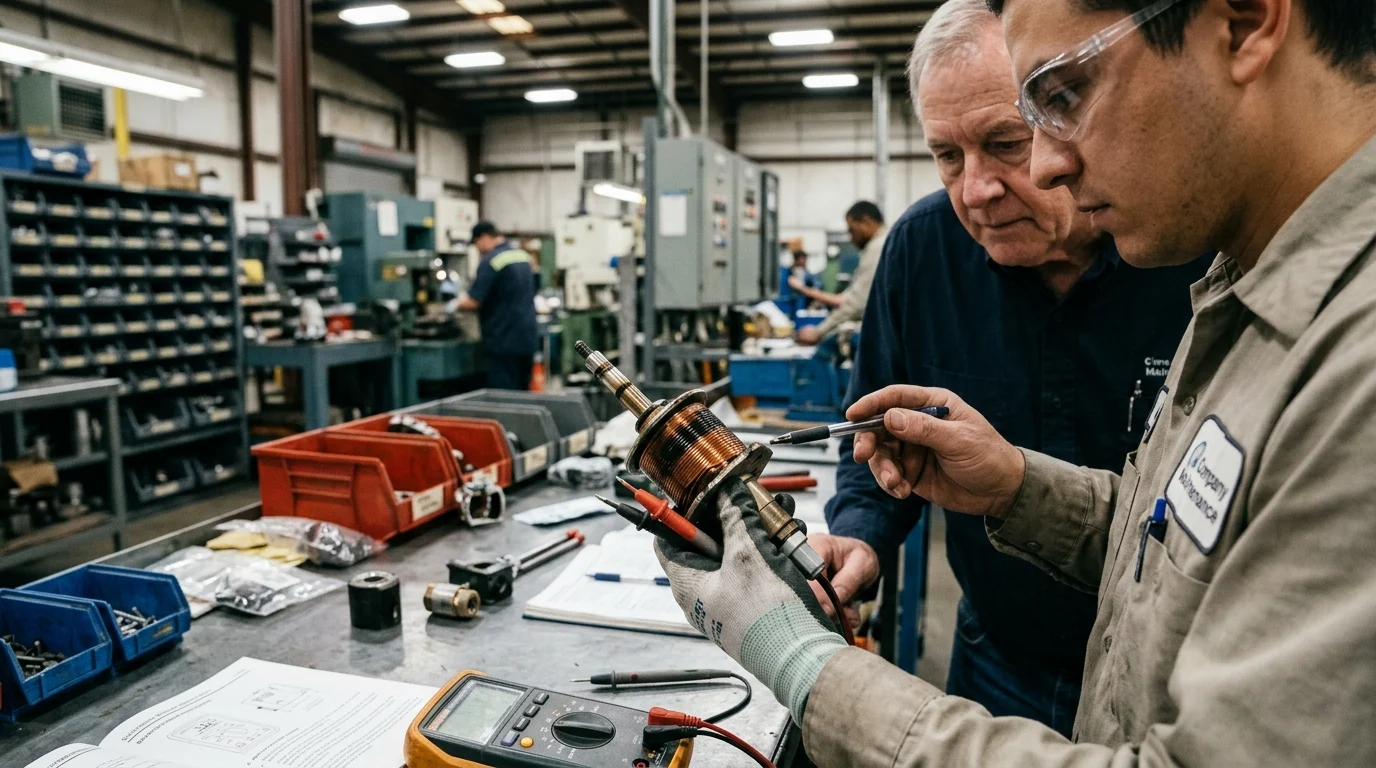
Using a digital multimeter, technicians measure resistance across the coil terminals and compare it to the manufacturer’s baseline. Infinite resistance indicates an open circuit, while near-zero resistance indicates a short. Additionally, a megohmmeter should test insulation resistance between the windings and the external metal casing to detect dangerous ground faults.
Check current draw and power supply
Measuring actual voltage at the coil terminals during actuation ensures the power supply is not dropping under load. For AC coils, technicians must monitor current draw to ensure it drops from the high inrush current to the lower holding current once the armature actuates. Failure to drop indicates an incomplete magnetic circuit.
Identify open, short, overcurrent, or intermittent faults
Intermittent faults are notoriously difficult to diagnose, often requiring technicians to test the coil when hot, as thermal expansion can separate broken internal wires. Classifying the exact nature of the fault—whether a dead short or an overcurrent condition—helps maintenance trace the issue to either a localized component failure or a broader systemic power anomaly.
Separate Coil Faults from Valve or System Issues
A critical juncture in the troubleshooting flowchart is distinguishing between a failed electrical coil and a mechanically jammed valve. Coils are frequently the victims of mechanical failures rather than the root cause. Wholesale buyers must understand this dynamic to prevent customer disputes where a perfectly manufactured coil is blamed for a system-level mechanical blockage.
When a valve’s internal components seize due to debris, rust, or degraded seals, the armature cannot complete its stroke. In AC systems, this prevents the coil from achieving its closed magnetic circuit, causing it to draw continuous inrush current until it overheats and fails. Replacing the coil without cleaning or replacing the valve guarantees a repeat failure.
To optimize maintenance budgets, procurement teams should encourage purchasing complete valve-and-coil assemblies or dedicated rebuild kits rather than isolated coils, particularly for older systems where mechanical wear is highly probable.
Spot signs of mechanical blockage or wear
Technicians must remove the coil and manually inspect the valve’s pilot tube and armature. Scoring on the armature, degraded O-rings, or particulate buildup from unfiltered media are clear indicators that the mechanical side of the valve is compromising the electrical actuator’s performance.
Compare actuation, temperature, and media conditions
Extreme temperatures severely impact electromagnetic efficiency. If the fluid media is exceptionally hot, or if the valve is located near a high-heat source, the ambient temperature may exceed the coil’s insulation class rating (e.g., Class F or Class H). This external heat reduces the coil’s magnetic force and accelerates insulation degradation.
Map symptoms to coil, valve, or control faults
Utilizing a diagnostic matrix helps technicians categorize symptoms accurately, ensuring the correct department (electrical vs. mechanical) addresses the root cause.
| Symptom observed | Potential Electrical Fault | Potential Mechanical Fault |
|---|---|---|
| Coil is cold, no actuation | Open circuit, blown fuse | N/A (Power not reaching valve) |
| Coil is extremely hot, buzzing | Incorrect AC voltage applied | Armature jammed, incomplete stroke |
| Valve actuates sluggishly | Low voltage supply (voltage drop) | High media viscosity, worn spring |
Replacement Selection Criteria
When diagnostics confirm a replacement is necessary, the sourcing process must be rigorous. B2B buyers must evaluate both technical specifications and the supplier’s manufacturing pedigree. Sourcing from global platforms like Aliexpress can yield cost-effective results, provided procurement strictly adheres to technical and compliance checklists.
Selecting the right replacement involves assessing the operational environment and upgrading specifications where historical failure data dictates. For instance, transitioning from a standard DIN connector to an encapsulated IP67 design might increase the unit cost slightly but will drastically reduce TCO in high-moisture environments.
Furthermore, evaluating the supplier’s engineering background is paramount. Companies such as Feiniu (Ningbo) Electronic Technology Co., Ltd. demonstrate the importance of partnering with manufacturers focused on automotive and machinery parts, possessing robust R&D capabilities, and maintaining stringent quality management systems for products ranging from pulse valves to dual-power modules.
Match voltage, wattage, and duty cycle
Procurement must ensure the replacement coil matches the original voltage and wattage precisely. Additionally, the duty cycle rating is crucial; a coil rated for intermittent duty will burn out if placed in an application requiring 100% continuous energization (ED 100%).
Check protection, connector, and mounting compatibility
The physical connection interface must align with existing wiring infrastructure. Buyers should verify if the application requires standard spade terminals, flying leads, or specific DIN 43650 connectors. The Ingress Protection (IP) rating must also match or exceed the environmental demands of the installation site.
Review quality, traceability, and compliance
Industrial procurement requires strict adherence to international standards. Buyers must verify CE, RoHS, and UL certifications where applicable. Traceability features, such as laser-etched batch codes, allow buyers to track performance and manage potential recalls efficiently.
Assess supplier engineering and production capability
Reliable B2B sourcing demands evaluating the manufacturer’s overall capability. Suppliers with comprehensive quality management systems and a broad portfolio—including valve islands, actuators, and pulse controllers—generally possess the engineering depth required to ensure consistent coil winding tension, superior epoxy potting, and reliable long-term performance.
Inventory and Supply Planning After Troubleshooting

Troubleshooting should not end with a repaired machine; it must feed directly into supply chain optimization. By analyzing the frequency and types of failures identified in the flowchart, inventory managers can dynamically adjust stocking strategies, ensuring capital is not tied up in obsolete parts while critical spares remain readily available.
Effective supply planning mitigates the impact of global supply chain disruptions. When procurement teams understand the exact lead times and failure rates of specific electrical components, they can implement data-driven safety stock levels, preventing costly expedited shipping fees and prolonged operational downtime.
Furthermore, post-troubleshooting data helps optimize the physical handling and storage of these components. Coils are sensitive to moisture and physical impact; upgrading warehouse protocols based on failure analysis ensures spare parts do not degrade while sitting on the shelf.
Set safety stock using failure and lead-time data
By calculating the Mean Time Between Failures (MTBF) derived from troubleshooting logs, buyers can establish accurate safety stock thresholds. Factoring in supplier lead times ensures replacement inventory is automatically reordered before critical shortages impact production schedules.
Improve packaging and labeling for handling
If visual inspections reveal corrosion on unused spare parts, procurement must demand better packaging from suppliers. Utilizing vacuum-sealed anti-static bags with desiccants, combined with clear barcode labeling, protects copper windings from environmental degradation and streamlines warehouse picking accuracy.
Plan logistics, spare kits, and after-sales support
Instead of purchasing individual coils, buyers should collaborate with suppliers to create comprehensive spare parts kits that include the coil, armature, springs, and O-rings. This kitting strategy simplifies logistics, ensures technicians have all necessary components for a complete rebuild, and significantly improves after-sales service response times.
Key Takeaways and Buyer FAQ
Implementing a standardized troubleshooting flowchart fundamentally changes how an organization manages its fluid control assets. It transitions maintenance from a culture of parts-swapping to a culture of root-cause analysis, providing B2B buyers with the empirical data needed to make highly informed purchasing decisions.
For distributors and importers, educating end-users on these troubleshooting steps reduces unjustified warranty claims and builds long-term trust. When buyers confidently understand the interplay between electrical diagnostics and mechanical failures, they can navigate supplier negotiations with greater authority and technical precision.
Ultimately, the integration of maintenance diagnostics with procurement strategy yields a more resilient supply chain, lower operational costs, and higher overall equipment effectiveness across industrial facilities.
Standardize the troubleshooting workflow
Creating Standard Operating Procedures (SOPs) based on the flowchart ensures every technician follows the same logical steps. This consistency guarantees the failure data fed back to procurement is accurate and actionable.
Use records to improve total cost of ownership
Tracking the lifespan and failure modes of different coil brands allows procurement to conduct accurate TCO analyses. Paying a 15% premium for a coil with superior Class H insulation is easily justified if troubleshooting records prove it lasts three times longer than cheaper alternatives.
Apply a replacement and supplier review checklist
Before finalizing bulk orders, buyers should utilize a stringent checklist covering electrical specs, environmental ratings, certification compliance, and manufacturer quality management systems. This prevents the accidental introduction of substandard components into the operational ecosystem.
Address common buyer questions on warranty and batch risk
Q: How do we handle warranty claims for burned-out coils?
A: Distributors should require customers to submit resistance readings and mechanical valve inspection reports. If the valve was jammed, the warranty claim on the coil is typically invalid, as the failure was mechanically induced.
Q: How can we mitigate the risk of batch defects?
A: Source from manufacturers with robust traceability protocols and demand sample testing for resistance and insulation breakdown before accepting large wholesale shipments.
Key Takeaways
- Wholesale sourcing and supply-chain implications for Solenoid Coil
- Specifications, compliance, and commercial terms buyers should validate
- Actionable recommendations for distributors and procurement teams