
Solenoid Coils Noise Reduction for EU Workplace Compliance
Why Noise Reduction Matters for EU Workplace Compliance
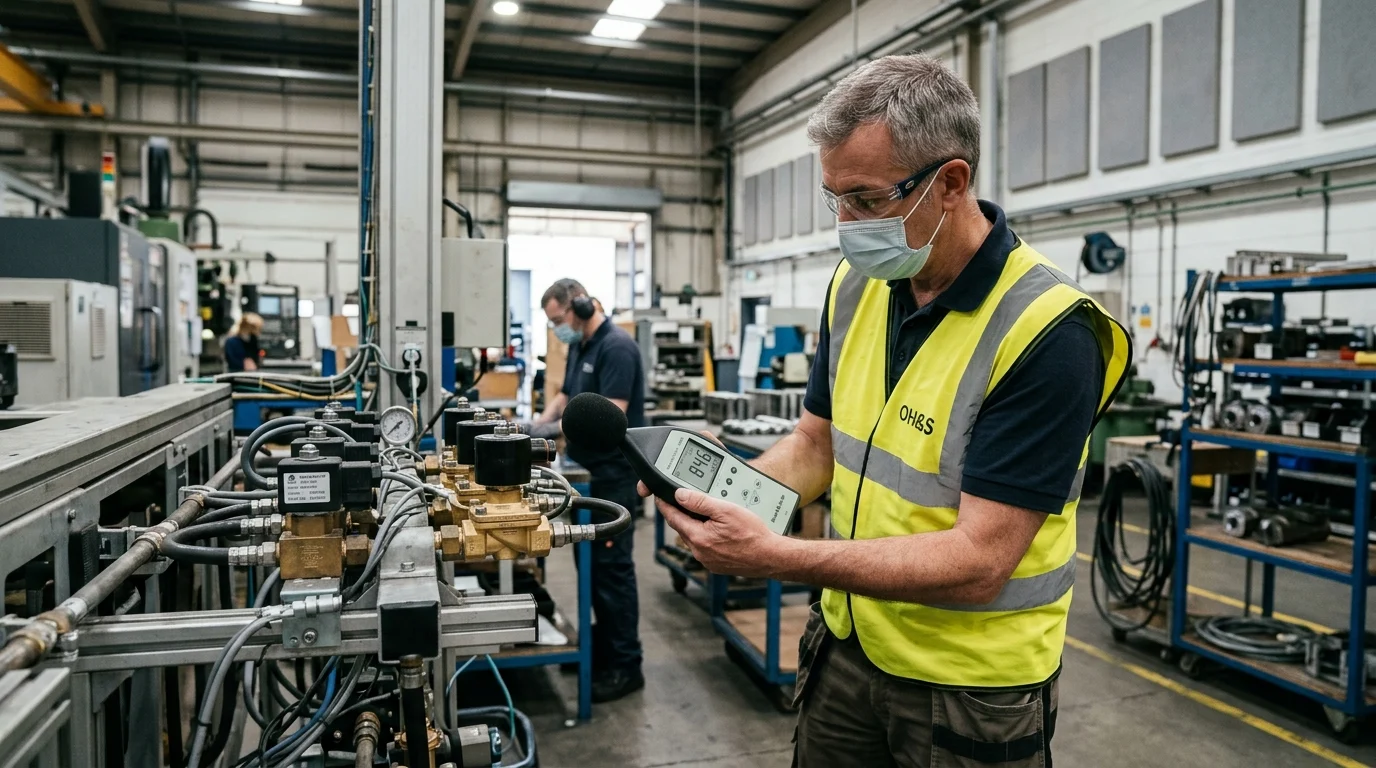
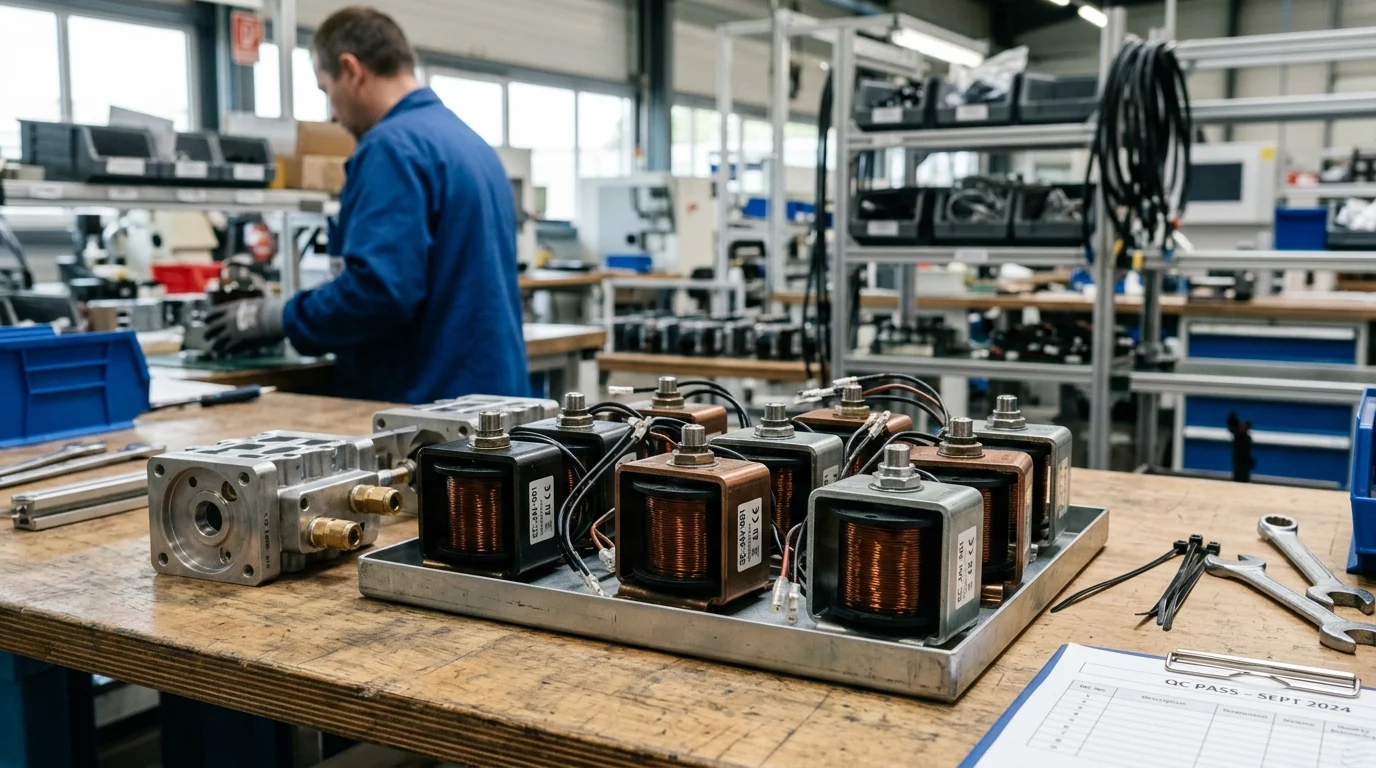
For B2B wholesale buyers and equipment manufacturers targeting the European Union, compliance with occupational noise regulations is a critical procurement factor. The EU enforces strict workplace noise limits, such as Directive 2003/10/EC, which mandates employer action if daily noise exposure exceeds specific decibel thresholds. Because automated machinery and fluid control systems rely heavily on solenoid coils, the cumulative acoustic output of these components significantly impacts a facility’s overall noise profile.
Procurement teams must recognize that sourcing low-noise solenoid coils is a regulatory necessity, not an optional premium feature. Failing to meet these acoustic standards can result in blocked shipments, product recalls, or rejection by European distributors refusing to take on compliance liabilities. Evaluating the noise generation of electromagnetic components during the sourcing phase is essential for maintaining smooth market access.
By prioritizing acoustic performance alongside standard electrical specifications, importers safeguard their supply chains. Partnering with manufacturers who understand these stringent European standards ensures the final assembled machinery meets all necessary CE and occupational safety requirements.
Impact of workplace noise limits on sourcing decisions
Workplace noise limits directly dictate the technical specifications procurement officers must include in Requests for Quotation (RFQs). Buyers can no longer source generic coils based solely on voltage and price; they must actively seek suppliers capable of providing acoustic test data. This shift forces importers to evaluate vendor engineering capabilities, favoring manufacturers utilizing advanced encapsulation and precision machining to minimize decibel output.
Why low-noise coils reduce commercial and operational risk
Sourcing low-noise components drastically reduces the commercial risk of contract cancellations from end-users facing workplace safety audits. Quiet machinery prevents the need for expensive post-installation acoustic shielding. While buyers might occasionally source standard replacement parts from platforms like Aliexpress for immediate, non-critical repairs, bulk OEM procurement requires direct factory partnerships to guarantee consistent acoustic compliance and mitigate operational risks.
How quieter coils improve operator comfort and equipment acceptance
Beyond legal compliance, low-noise solenoid coils enhance machinery’s ergonomic value. Equipment operating without the constant, irritating hum or clicking of standard solenoids is perceived as higher quality. This improves operator comfort, reduces fatigue, and ultimately leads to higher acceptance rates and better market positioning in competitive EU markets.
Main Noise Sources in Solenoid Coils
Understanding the root causes of noise in solenoid coils allows procurement teams to ask the right technical questions during supplier audits. Solenoid noise is generally categorized into mechanical impacts and electromagnetic vibrations. When a coil is energized, the magnetic field induces physical movement; any inefficiency or misalignment in this process translates into audible sound.
For B2B buyers, grasping these technical nuances is vital for troubleshooting and quality control. If a batch of solenoid valves generates excessive noise, buyers must know whether the issue stems from manufacturing defects, poor material selection, or improper installation. This knowledge is crucial when negotiating quality claims with suppliers.
By identifying the exact noise source, importers can collaborate with manufacturers to implement design modifications—such as upgrading to DC coils or improving the encapsulation process—ensuring the final product meets EU acoustic standards.
Mechanical, magnetic, and installation-related noise factors
Mechanical noise typically occurs when the armature physically strikes the pole piece during activation (the “clack” sound). Magnetic noise, or “AC hum,” is caused by the alternating current reversing direction, which makes the magnetic field fluctuate and internal components vibrate. Installation-related noise occurs when coils are mounted loosely on valve bodies, amplifying these vibrations through the machinery chassis.
Effects of voltage, duty cycle, frequency, and armature movement
Voltage drops can cause the armature to chatter instead of seating firmly, creating severe mechanical noise. High duty cycles and rapid switching frequencies exacerbate vibration, leading to faster wear and louder operation over time. Ensuring the coil’s voltage exactly matches the power supply, and that the frequency aligns with the localized grid (e.g., 50Hz in the EU), is critical for silent operation.
Applications where noise issues are most common
Noise issues are particularly problematic in environments requiring high concentration or patient care. Solenoid coils used in medical devices, dental chairs, office automation, and indoor HVAC systems face the strictest acoustic scrutiny. In these applications, even minor buzzing can lead to immediate product rejection by the end-user.
Key Solenoid Coil Specifications for Low-Noise Performance
To guarantee low-noise performance, wholesale buyers must define rigorous technical specifications. A standard solenoid coil might function perfectly from an electrical standpoint but fail miserably in acoustic tests. Procurement criteria must bridge the gap between electrical efficiency and mechanical stability.
High-quality manufacturers, such as FeiNiu (Ningbo) Electronic Technology Co., Ltd., focus heavily on the structural integrity of components like transmission solenoid valves and pulse coils. By specifying premium insulation and potting materials, buyers ensure internal windings are locked in place, preventing the micro-vibrations that cause audible hum.
Furthermore, environmental protections like IP ratings play a dual role. A high IP rating protects the coil from dust and moisture while acting as an acoustic barrier, dampening internal sounds before they reach the external environment.
Voltage, power, insulation class, temperature rise, and IP rating
Selecting the correct voltage and power consumption is the first step in minimizing magnetic chatter. Insulation classes (such as Class F or H) dictate the coil’s ability to withstand temperature rises without the potting compound degrading. An IP65 rating or higher ensures the thick epoxy encapsulation effectively seals the unit, providing substantial sound dampening.
Design and material choices that support quieter operation
For AC applications, a high-quality copper shading ring is non-negotiable; it prevents the magnetic flux from dropping to zero, thereby eliminating AC hum. Additionally, specifying precision-machined armatures with tight tolerances prevents lateral movement and mechanical rattling during actuation.
Standard vs noise-optimized coil specification comparison
| Feature | Standard Solenoid Coil | Noise-Optimized Solenoid Coil |
|---|---|---|
| Encapsulation | Basic plastic casing | Full epoxy resin potting |
| AC Hum Mitigation | Standard shading ring | Precision-welded copper shading ring |
| Armature Fit | Standard tolerance | High-precision tight tolerance |
| Acoustic Output | 50 – 65 dB | < 45 dB |
How to Verify EU Compliance and Supplier Quality
Verifying a supplier’s ability to consistently produce low-noise solenoid coils requires a comprehensive audit of their quality management systems. Importers cannot rely on verbal assurances; they must demand documented proof of compliance with EU standards. This involves scrutinizing factory certifications, testing protocols, and material traceability.
A robust factory will have an in-house testing laboratory capable of measuring sound power levels in controlled environments. Buyers should request to see these facilities during factory audits or via virtual tours. The presence of automated winding machines and vacuum potting equipment strongly indicates the supplier can maintain the tight tolerances required for low-noise operation.
Furthermore, assessing a supplier’s broader product portfolio reveals their engineering depth. A manufacturer successfully designing complex components like dual-power modules, valve islands, and sophisticated pulse controllers is generally more capable of engineering a precise, low-noise solenoid coil than a basic assembly workshop.
Required compliance documents and test records
Buyers must request CE declarations of conformity, RoHS compliance certificates, and specific acoustic test reports. These documents should reference recognized standards, such as ISO 3744 for sound power level determination, proving the coils meet strict EU workplace thresholds.
Factory quality systems, process control, and traceability
Ensure the supplier holds an active ISO 9001 certification. Process control is vital; vacuum encapsulation prevents air bubbles in the resin, which can act as acoustic resonance chambers. Batch traceability ensures that if a noise issue arises in the field, the defective production run can be isolated immediately.
How to assess broader supplier engineering capabilities
Review the supplier’s ability to offer customized solutions. Can they modify the magnetic circuit to reduce impact noise? Do they manufacture complementary components like pilot assemblies and connectors? Comprehensive engineering capabilities suggest the supplier can troubleshoot and resolve complex acoustic challenges effectively.
Sourcing and Qualification Steps to Reduce Claims
A well-structured sourcing process is the best defense against receiving non-compliant, noisy solenoid coils. The qualification phase must be rigorous, moving from detailed RFQs to comprehensive sample testing before mass production is authorized. This phased approach minimizes financial exposure and prevents costly product recalls in the EU market.
Clear communication of acoustic expectations from the outset is critical. If a buyer only specifies dimensions and voltage, the supplier will naturally optimize for cost, often sacrificing the premium materials needed for sound dampening. Procurement teams must frame noise reduction as a primary acceptance criterion.
While standard wholesale platforms like Aliexpress can be useful for benchmarking prices or sourcing quick prototypes, securing reliable low-noise components for OEM production requires direct negotiation regarding Minimum Order Quantities (MOQs), tooling costs, and long-term quality agreements.
How to define acoustic requirements in RFQs
Include precise decibel limits in the RFQ (e.g., “Operational noise must not exceed 45 dB measured at a distance of 1 meter under standard load”). Specify whether testing should be conducted on the bare coil or mounted on a specific valve body, as the mounting surface dramatically affects resonance.
Sample testing, pilot orders, and incoming inspection
Always mandate sample testing in the actual application environment, not just on a test bench. Once samples are approved, place a pilot order to verify the factory can maintain acoustic consistency across a larger batch. Incoming inspection should randomly sample coils for noise levels before they enter the assembly line.
How MOQ, customization, and engineering support affect value
Custom noise-optimized coils often require higher MOQs due to specialized potting processes and unique shading rings. However, the engineering support provided by a dedicated manufacturer adds immense long-term value, offsetting initial tooling costs by virtually eliminating EU compliance claims and end-user rejections.
Packaging, Logistics, and After-Sales Planning

The physical integrity of a solenoid coil is directly tied to its acoustic performance. Even a perfectly manufactured low-noise coil can begin to hum or rattle if it sustains micro-damage during international shipping. Therefore, B2B buyers must negotiate strict packaging standards to protect components from shock and vibration during transit from the factory to the EU.
Logistics planning also extends to inventory management. Because custom low-noise coils may have longer production times due to the curing processes of premium epoxy resins, buyers must forecast accurately. Running out of stock and rushing a production batch can lead to compromised curing times, ultimately resulting in noisier coils.
Finally, establishing clear after-sales protocols ensures any acoustic failures discovered post-installation are handled swiftly. A strong warranty agreement protects the buyer’s margins and holds the manufacturer accountable for batch consistency.
Packaging and labeling to prevent transit-related noise issues
Specify shock-absorbing packaging materials, such as custom-molded EPE foam or heavy-duty blister packs, rather than bulk binning. Dropping a coil can crack the internal potting or misalign the armature tube, instantly turning a low-noise component into a noisy liability.
Managing lead times, batch consistency, and spare parts
Factor in the extended lead times required for proper vacuum potting and resin curing. Maintain a strategic buffer stock of spare parts to avoid pressuring the supplier into rushing production, which is a common cause of degraded acoustic performance and batch inconsistency.
Warranty, returns, and field-failure reporting terms
Draft clear warranty terms that explicitly cover acoustic degradation over time, not just total electrical failure. Establish a field-failure reporting system so that if end-users report excessive noise, the data can be fed back to the supplier for immediate corrective action.
Buyer Checklist and FAQ
To navigate the complexities of sourcing low-noise solenoid coils for EU compliance, procurement professionals should utilize a standardized checklist. This ensures no critical technical or regulatory requirement is overlooked during supplier evaluation. Balancing cost with compliance is the ultimate goal of B2B purchasing.
While it is tempting to source the cheapest available components, experienced buyers understand the total cost of ownership. A coil that saves a few cents on the unit price but causes machinery to fail an EU workplace noise audit will ultimately cost thousands of dollars in retrofitting and lost reputation.
By addressing common questions and maintaining strict evaluation criteria, buyers can build resilient supply chains. Whether sourcing specialized transmission valves or standard pulse coils, prioritizing acoustic performance guarantees smoother market entry and higher end-user satisfaction.
Key checkpoints for supplier shortlisting
- Verify ISO 9001 and CE/RoHS documentation.
- Request historical acoustic test reports (ISO 3744).
- Confirm the use of vacuum epoxy encapsulation.
- Audit packaging standards for transit shock protection.
- Evaluate capabilities for custom shading rings and tight-tolerance armatures.
How to balance price, compliance, and long-term value
Invest in higher upfront unit costs for fully potted, precision-machined coils to avoid the catastrophic costs of EU compliance fines and product recalls. The long-term value of a quiet, reliable component far outweighs the marginal savings of sourcing unverified standard coils from generic platforms like Aliexpress for bulk OEM needs.
Common buyer questions about low-noise solenoid coils
Q: Why do AC coils make more noise than DC coils?
A: AC coils experience alternating magnetic flux, which can cause the armature to vibrate (AC hum). DC coils provide a constant magnetic pull, making them inherently quieter, though AC coils can be silenced with proper shading rings.
Q: Can a standard coil be retrofitted to reduce noise?
A: Rarely. Mechanical noise can sometimes be reduced by adding dampening washers, but internal magnetic hum requires a complete redesign of the coil’s encapsulation and shading mechanisms.
Key Takeaways
- Wholesale sourcing and supply-chain implications for Solenoid Coils
- Specifications, compliance, and commercial terms buyers should validate
- Actionable recommendations for distributors and procurement teams