
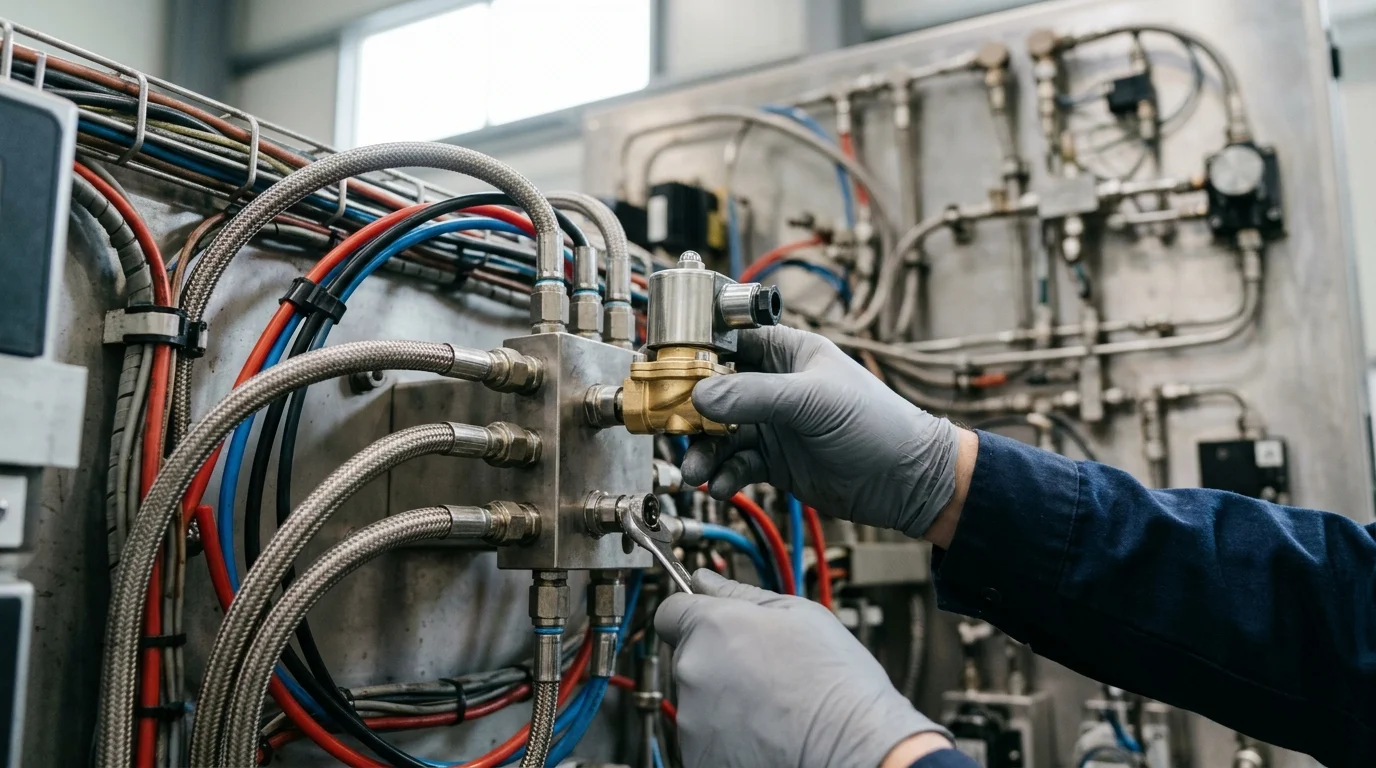
Procurement teams are no longer searching only for the cheapest solenoid valve—they are searching for parts that keep equipment running without redesign work. Across US industrial operations, extended OEM lead times, tighter maintenance budgets, and high equipment utilization have made exact-fit aftermarket valves a strategic priority. A true drop-in replacement can eliminate 40 to 60 hours of engineering changes by matching the original valve’s ports, mounting, electrical interface, and performance profile. This article explains why demand is rising, what buyers must verify before approving a replacement, and how technical details like Cv, MOPD, and response time determine whether a valve is truly interchangeable.
Why US Buyers Search for Drop-In Replacements
The US industrial procurement landscape has shifted drastically over the past three years. Driven by volatile supply chains, fluctuating raw material availability, and tightening maintenance budgets, sourcing professionals are pivoting away from rigid, single-source original equipment manufacturer (OEM) dependencies. Managing inventory carrying costs while ensuring maximum uptime has made exact-match aftermarket sourcing a top priority for facility engineers.
What the Term Means in Procurement
In industrial fluid control, a “drop-in replacement” designates a component that requires absolutely zero modifications to the existing system architecture. For solenoid valves, this means the port dimensions, mounting bracket hole spacing, electrical connector type, and overall envelope dimensions match the OEM specification perfectly.
By utilizing a true drop-in component, engineering teams bypass the standard 40 to 60 hours typically required to redesign piping layouts, machine custom manifold adapter plates, or update programmable logic controller (PLC) actuation parameters. The replacement valve simply bolts onto the existing manifold, plugs into the current wiring harness, and performs identically to the original unit, ensuring production resumes with minimal interruption.
Why Demand Is Increasing
The surge in search volume for these exact-match components stems directly from ongoing OEM lead time expansions. Standard solenoid valves that historically carried a 2- to 4-week delivery window are frequently experiencing 12- to 16-week delays, forcing facilities into unacceptable downtime scenarios. Furthermore, secondary market buyers are actively seeking relief from OEM markups that often range from 30% to 50% above the cost of equivalent aftermarket alternatives.
This urgency is particularly acute in the heavy machinery, agriculture, and material handling sectors, where equipment utilization rates directly impact profitability. For example, sourcing a precise 0260130019 transmission pressure regulator valve without enduring OEM delays is critical for keeping high-value logistical assets like Kalmar loaders operational on the tarmac.
How to Verify a True Drop-In Solenoid Valve Replacement
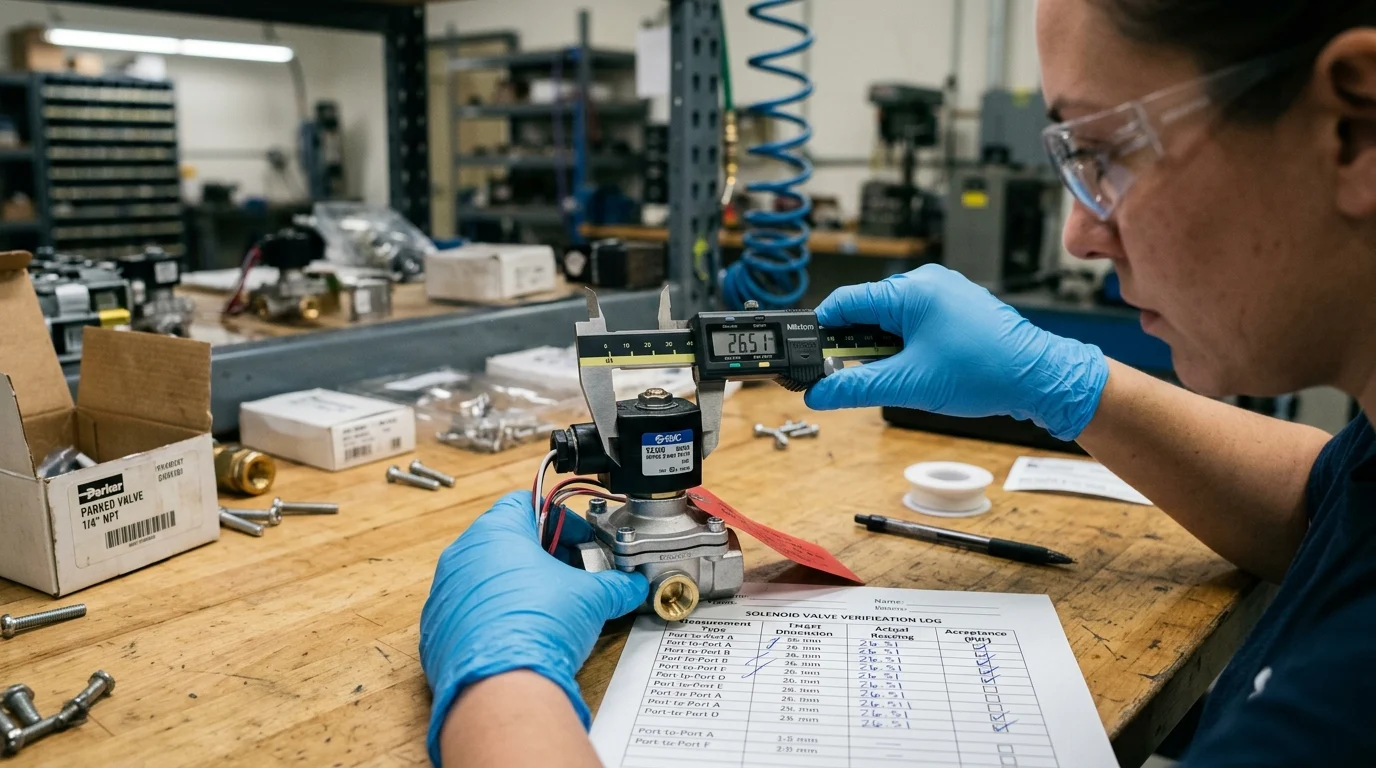
Identifying a component labeled as a replacement is only the preliminary step; verifying its exact functional parity requires rigorous technical scrutiny. Procurement engineers must validate that the aftermarket solenoid valve mirrors the original across three primary operational domains: mechanical fit, electrical characteristics, and fluid dynamics.
Key Mechanical, Electrical, and Flow Specifications
The most critical fluidic metric is the flow coefficient (Cv), which dictates the volume of fluid passing through the valve at a specific pressure drop. A viable drop-in replacement must match the OEM Cv rating within a strict +/- 5% tolerance to prevent system starvation or dangerous over-pressurization. Additionally, the Maximum Operating Pressure Differential (MOPD) must align perfectly, often requiring verification up to 150 psi for standard pneumatic applications or exceeding 3,000 psi in heavy hydraulic circuits.
Response times are equally vital; a heavy-duty valve actuating in 50 milliseconds cannot replace a 20-millisecond valve in high-speed pneumatic sorting applications without causing severe timing faults downstream. The table below outlines standard acceptable tolerances when qualifying a drop-in replacement.
| Specification Category | OEM Baseline Requirement | Acceptable Drop-In Tolerance |
|---|---|---|
| Flow Coefficient (Cv) | Stated Nameplate Value | +/- 5% |
| Actuation Response Time | 20 ms | +/- 2 ms |
| Coil Resistance / Draw | 24V DC / 18 Ohms | +/- 5% |
| Port Threading & Pitch | 1/2″ NPT | Exact Match Only (0% variance) |
Certifications, Materials, and Coil Requirements
Beyond basic dimensions and flow rates, the internal wetted materials and external certifications dictate the valve’s survivability and regulatory compliance. Elastomer seals must match the media compatibility exactly—substituting standard NBR for FKM (Viton) in high-temperature or aggressive chemical applications guarantees premature seal degradation and catastrophic leaks.
Coil insulation classes are also non-negotiable. A Class H coil rated for 180°C continuous operation cannot be substituted with a Class F (155°C) coil in high-ambient industrial environments without risking electrical shorts. This level of exact material and sensor integration is mirrored in complex automotive and heavy-duty transmission systems, where components like the Dq500 clutch pressure sensor require stringent adherence to original thermal and material specifications to function correctly within the mechatronic unit.
Furthermore, environmental enclosures must maintain identical ingress protection. Procurement must verify that an IP67 or NEMA 4X rating is not downgraded during the swap, ensuring the replacement remains impervious to high-pressure washdowns and heavy dust environments.
How to Source and Validate Replacement Options
Successfully integrating drop-in solenoid valves into a mature industrial supply chain requires a structured, data-driven validation protocol. Procurement teams must carefully balance the immediate operational need for component availability with the long-term imperative of system reliability and safety.
Pre-Approval Testing and Documentation Steps
Before committing to a bulk purchase order or integrating a new supplier into the approved vendor list, engineers should mandate a First Article Inspection (FAI) based on a production-grade sample. This validation typically involves requesting comprehensive Material Test Reports (MTRs) to confirm alloy compositions, as well as checking for specific regulatory compliance such as RoHS or REACH.
Best practices dictate subjecting the sample to an accelerated endurance test, often spanning 10,000 to 50,000 cycles on a test bench, to monitor for coil degradation, internal seat wear, or shifts in magnetic response time. Additionally, procurement should evaluate the supplier’s historical quality management data—ideally backed by ISO 9001 certification—targeting a defect rate of strictly less than 500 Parts Per Million (PPM) to ensure lot-to-lot consistency matches or exceeds OEM expectations.
When Drop-In Replacement Is the Right Strategy
The drop-in strategy is most effective when maintaining legacy equipment, supporting mature production lines, or servicing heavy machinery where unpredicted downtime carries a severe financial penalty, often exceeding $10,000 per hour in lost revenue. In these high-stakes scenarios, the ability to restore operations immediately without re-engineering the fluid control architecture is paramount.
Conversely, for early-stage R&D projects where flow parameters, pressure drops, and spatial constraints remain fluid, a custom-engineered or modular solution may offer more flexibility than a rigid drop-in replacement.
Key Takeaways
- Prioritize true drop-in solenoid valves when OEM lead times stretch from 2–4 weeks to 12–16 weeks and downtime risk becomes unacceptable.
- Verify port dimensions, mounting patterns, connectors, and valve envelope size before approving any replacement for installation.
- Match Cv within about +/- 5% to prevent system starvation, pressure instability, or unsafe over-pressurization.
- Confirm MOPD, voltage, coil behavior, seal compatibility, and response time before treating an aftermarket valve as functionally equivalent.
- Use qualified aftermarket options to reduce exposure to OEM markups that can run 30% to 50% above equivalent replacement alternatives.
Frequently Asked Questions
What does drop-in replacement mean for a solenoid valve?
It means the valve matches the OEM unit closely enough to install without changing ports, brackets, wiring, manifolds, PLC settings, or surrounding system architecture.
Why are US buyers searching for drop-in solenoid valves more often?
OEM lead times have expanded from typical 2- to 4-week windows to 12- to 16-week delays, while maintenance teams are under pressure to reduce downtime and avoid 30% to 50% OEM markups.
Which specifications must match for a true drop-in replacement?
Buyers should verify port dimensions, mounting hole spacing, connector type, envelope size, voltage, coil characteristics, Cv rating, MOPD, pressure range, seal material, and response time.
How close should the Cv rating be to the OEM valve?
A qualified drop-in replacement should generally match the OEM flow coefficient within about +/- 5% to avoid flow starvation, over-pressurization, or process instability.
Can an aftermarket solenoid valve perform as well as an OEM part?
Yes, if it is verified against the OEM mechanical, electrical, and fluid performance requirements. The label alone is not enough; technical validation is essential.
Post time: Nov-09-2026