
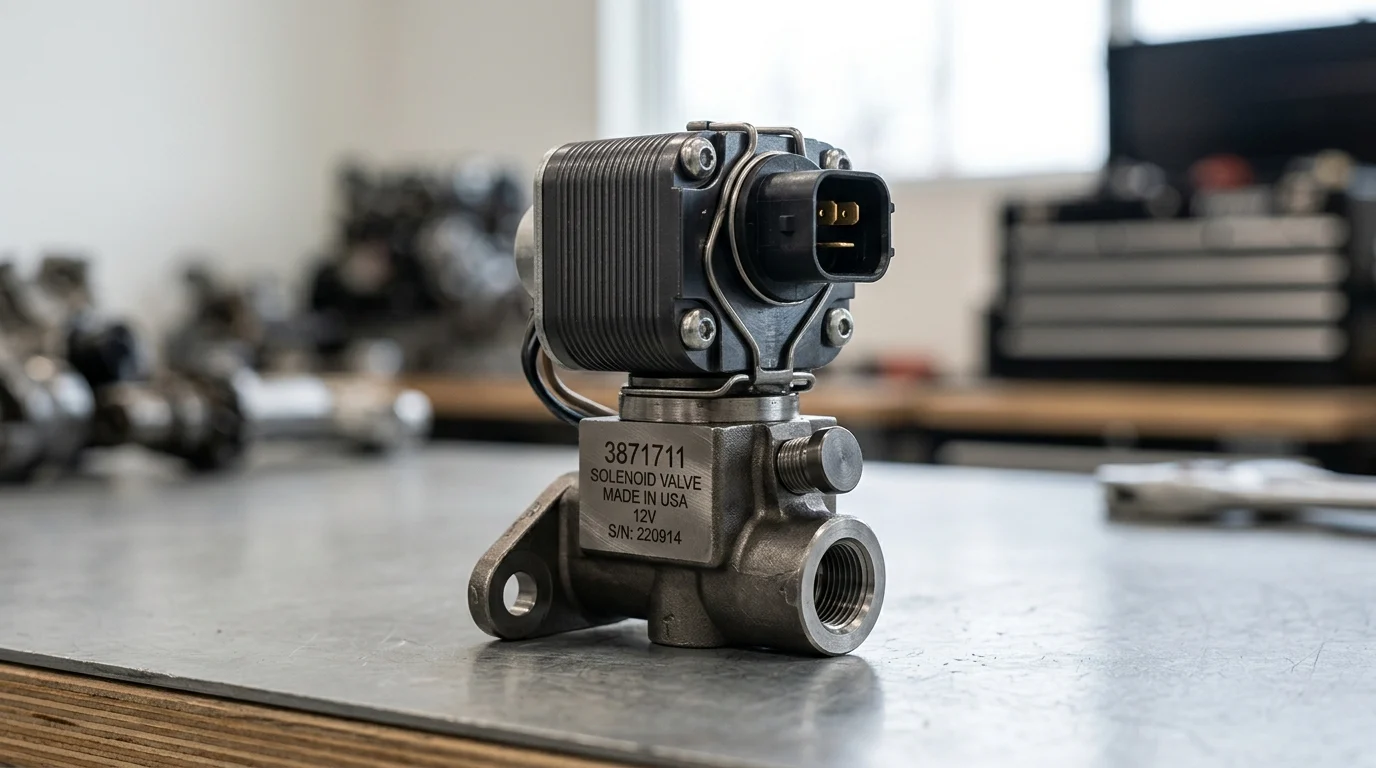
When a heavy-duty diesel descends a long grade, reliable engine braking is not optional—it is a major factor in brake life, driver control, and fleet safety. In Cummins ISM11 and QSM11 platforms, the 3871711 solenoid valve plays a small but decisive role by converting an ECM command into controlled hydraulic oil flow for the Jacobs Engine Brake. If that actuation is slow, weak, or inconsistent, retarding performance can drop quickly and trigger unnecessary troubleshooting costs. This article explains how the valve works, what failure symptoms look like, and why technicians should verify oil pressure, wiring, ECM signals, and related brake components before replacing it.
Why the 3871711 Solenoid Valve Matters for Jake Brake Performance
Specifically engineered for Cummins ISM11 and QSM11 engine architectures, the 3871711 solenoid valve is the critical electromechanical actuator for compatible Jacobs Engine Brake systems. Located under the valve cover and connected via the engine’s internal wiring harness, this component controls the flow of pressurized engine oil into the brake housing. It initiates the mechanical sequence required to alter exhaust valve timing, transforming the power-producing diesel engine into an energy-absorbing air compressor. In demanding commercial applications, the Jake Brake relies heavily on the precise timing and flow capacity of this valve to prevent relevant ECM fault codes and ensure reliable retardation.
Operating under typical engine lubrication pressures of 40 to 60 psi that feed the specific Jake Brake actuation circuit, the valve must actuate instantly to provide the necessary retarding horsepower. This retarding power naturally varies depending on engine RPM and is required for safe downhill navigation and reduced service brake wear.
How the 3871711 Solenoid Valve Converts ECM Commands
When the driver activates the engine brake and lifts off the throttle, the Engine Control Module (ECM) transmits a precise 12V or 24V DC electrical signal to the solenoid. This current energizes the internal electromagnetic coil, creating a magnetic field that lifts the internal armature against a calibrated return spring.
Once the armature is lifted, the valve opens the hydraulic circuit, allowing pressurized engine oil to fill the master/slave piston assembly. This hydraulic pressure transfers the motion of the injector cam to the exhaust valves, opening them near the top dead center of the compression stroke and releasing compressed air. Technicians should consult specific Jacobs service bulletins for exact response time parameters. While illustrative examples often cite response times under 200 milliseconds to ensure seamless braking engagement, these figures should not be treated as universal OEM gospel without verifying the specific manual.
Symptoms of a Weak or Delayed Solenoid Valve
Component degradation within the valve typically manifests as inconsistent or delayed engine braking. If the internal coil degrades due to thermal cycling, its electrical resistance may drift outside the specified OEM range. Note that baseline resistance changes dynamically with oil temperature, and a weak magnetic field will ultimately fail to fully open the oil ports.
Mechanical symptoms include sluggish engagement or a complete loss of retarding power, which can drop the engine’s braking capability well below its maximum rated retarding performance achieved at peak RPM. Additionally, worn O-rings can cause internal oil bypass, leading to insufficient hydraulic pressure in the brake housing and erratic Jake Brake performance during steep descents.
It is crucial to note, however, that weak or delayed Jake Brake performance can also result from ECM faults, wiring harness issues, low engine oil pressure, or mechanical wear in the master/slave piston assembly. Technicians must rule out ECM and wiring faults before condemning the solenoid, ensuring the valve itself is the true root cause.
How Fleets Should Compare OEM and Aftermarket Options
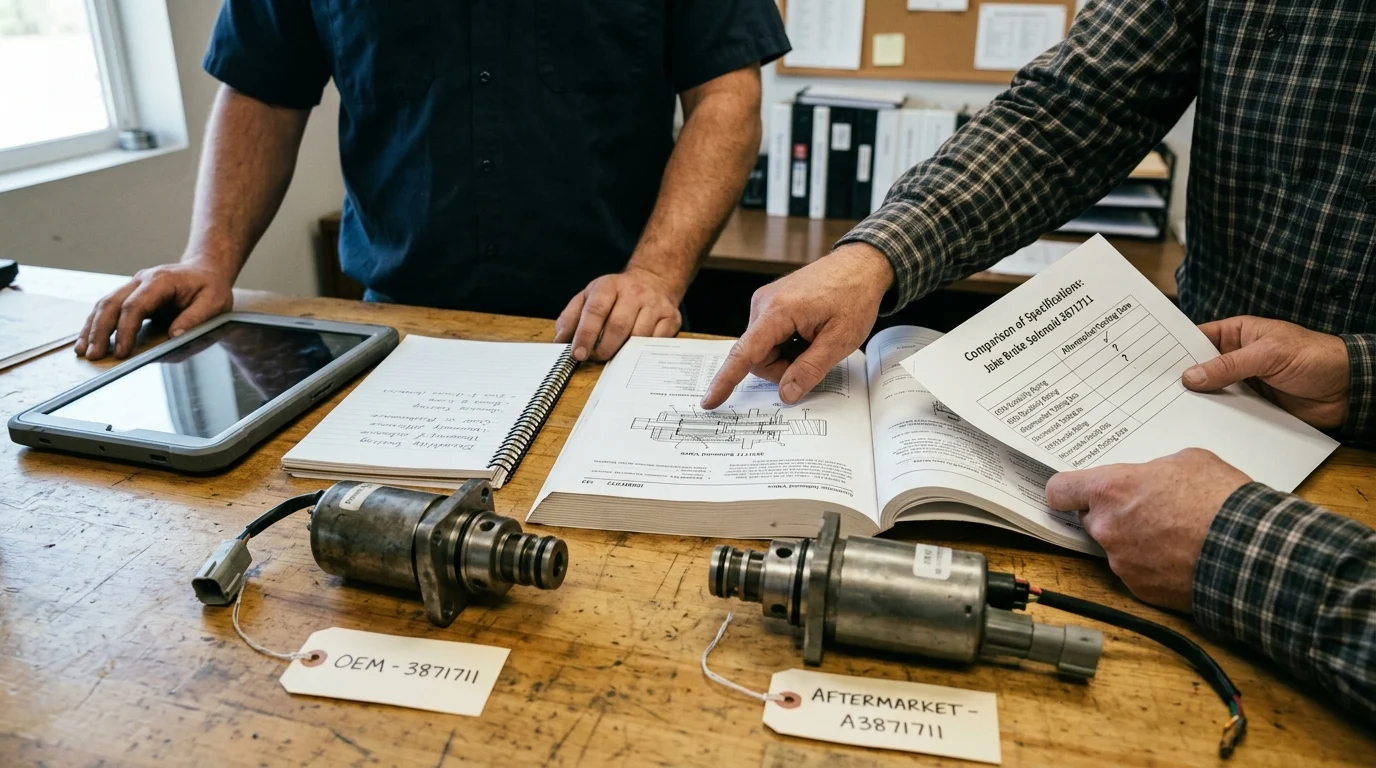
When deciding between genuine OEM replacement valves and aftermarket alternatives, it is essential to conduct a rigorous evaluation of upfront costs, material specifications, and the resulting impact on vehicle uptime. Because the solenoid operates in a high-temperature, vibration-heavy environment, substandard manufacturing can lead to premature failure. Buyers must look beyond the initial purchase price and scrutinize the engineering tolerances and sealing materials used in the valve’s construction. Additionally, buyers should verify whether part number 3871711 is subject to manufacturer supersessions or cross-references that vary by engine serial number (ESN), as Cummins or Jacobs may issue updated replacements over time.
Key Specifications and Sealing Materials to Check
The durability of the valve is largely dictated by its sealing components and coil insulation. High-quality units utilize Viton (FKM) O-rings, which maintain their elasticity and sealing properties in engine oil temperatures reaching up to 150°C (302°F). Economy alternatives often substitute standard Nitrile (NBR) rubber, which hardens and fails prematurely under extreme thermal stress.
Furthermore, the electromagnetic coil must feature Class H insulation, rated for 180°C, to prevent short circuits during prolonged heavy-haul operations. It is also critical to verify that the internal spool valve is machined from hardened steel to resist the abrasive effects of microscopic soot particles suspended in the engine oil.
How to Compare Price, Quality, and Warranty
Analyzing the total cost of ownership involves comparing price points against expected lifecycles and warranty coverage. Genuine OEM valves provide maximum reliability but carry a premium price tag, whereas aftermarket options range from high-tier replacements to low-cost economy parts.
Below is a comparative breakdown of typical market offerings. Please note that the cost and lifecycle tiers in the table below are illustrative estimates only, not representative of fixed market tiers, as aftermarket pricing and durability vary widely by supplier, region, and duty cycle:
| Component Tier | Cost Tier | O-Ring Material | Coil Insulation | Standard Warranty | Expected Lifecycle |
|---|---|---|---|---|---|
| Genuine OEM | High | Viton (FKM) | Class H (180°C) | 12 to 24 Months | High |
| Premium Aftermarket | Medium | Viton (FKM) | Class H (180°C) | 12 Months | Medium |
| Economy Aftermarket | Low | Nitrile (NBR) | Class F (155°C) | 3 to 6 Months | Low |
Installation, Sourcing, and Maintenance Best Practices
Maximizing the operational lifespan of the Jacobs Engine Brake system requires strict adherence to installation protocols and proactive inventory management. The valve is a precision instrument, and improper handling or contaminated oil can compromise its functionality instantly.
Always utilize proper diagnostic tools to confirm solenoid failure before replacement, ensuring that related electrical harnesses or ECM outputs are not the actual root cause of the braking malfunction.
Diagnostic, Installation, Torque, and Cleanliness Checks
Electrical Diagnosis: Before installing a new valve, verify the electrical integrity of the circuit. While a digital multimeter is commonly used, technicians must note that ECM solenoid outputs are often Pulse Width Modulated (PWM).
Key Takeaways
- Use the 3871711 solenoid valve only in compatible Cummins ISM11 and QSM11 Jake Brake applications to ensure correct oil flow and actuation.
- Verify the ECM signal, internal wiring harness, and oil pressure before replacing the solenoid, because several faults can create the same weak-braking symptoms.
- Treat delayed or inconsistent Jake Brake engagement as a warning sign of possible coil degradation, oil bypass, or hydraulic circuit restriction.
- Check O-rings and brake housing oil sealing during service, since internal leakage can reduce hydraulic pressure and retarding performance.
- Confirm resistance and response specifications from the correct Jacobs or Cummins service documentation instead of relying on generic values.
Frequently Asked Questions
What does the 3871711 solenoid valve do in a Jake Brake system?
It acts as the electromechanical oil-control valve that lets pressurized engine oil enter the brake housing, enabling the Jacobs Engine Brake to open exhaust valves at the right moment for retarding power.
Which engines commonly use the 3871711 solenoid valve?
The 3871711 solenoid valve is engineered for compatible Cummins ISM11 and QSM11 engine applications equipped with Jacobs Engine Brake systems.
What are common symptoms of a failing 3871711 solenoid valve?
Typical symptoms include delayed Jake Brake engagement, inconsistent retarding power, no engine brake response, fault codes, or erratic braking on long downhill grades.
Can low oil pressure cause Jake Brake problems similar to a bad solenoid?
Yes. Low engine oil pressure, oil bypass from worn O-rings, wiring faults, ECM issues, or master/slave piston wear can mimic solenoid failure and should be checked first.
What voltage signal activates the 3871711 solenoid valve?
Depending on the engine configuration, the ECM typically sends a 12V or 24V DC signal to energize the solenoid coil and open the hydraulic circuit.
Post time: Aug-21-2026