
Introduction
For European buyers, choosing a solenoid coil supplier is not only about price, lead time, or technical specifications. Long-term performance depends just as much on what happens after delivery: how warranty claims are handled, whether spare parts remain available, and how quickly technical teams can respond when failures disrupt production. This article outlines the after-sales support standards many European procurement and engineering teams now expect, including practical benchmarks for service speed, documentation, and problem resolution. It also helps readers assess which supplier commitments reduce downtime, protect maintenance budgets, and support compliance in demanding industrial and automotive applications.
Why After-Sales Support for Solenoid Coils Matters
Solenoid coils are critical components in fluid control systems, automotive transmissions, and industrial automation. While initial product quality is paramount, the lifecycle of these electromagnetic devices relies heavily on robust after-sales support.
For European procurement professionals, evaluating a supplier’s post-sale infrastructure is as critical as analyzing their manufacturing capabilities. A proactive support system ensures continuous operation and mitigates the severe financial impacts of unexpected machinery failures.
Key scope and service elements
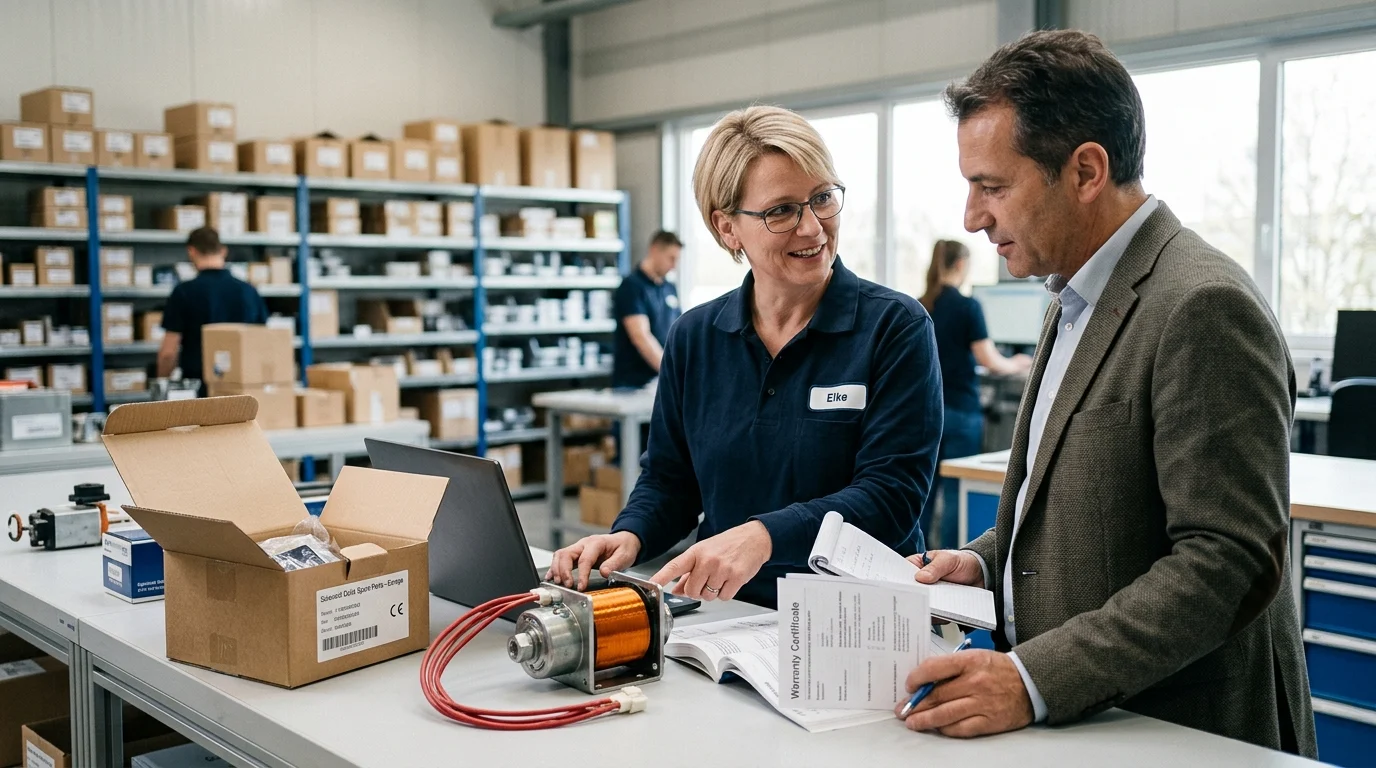
Comprehensive after-sales support extends far beyond basic defect replacement. Key service elements encompass rapid technical troubleshooting, failure analysis, preventive maintenance guidance, and seamless spare parts provisioning. Leading manufacturers, such as those specializing in automotive and construction machinery components, structure their support around stringent quality management systems.
In practical terms, European buyers expect suppliers to maintain a defect rate strictly below 50 PPM (Parts Per Million) for industrial applications. When anomalies do occur, the support scope must mandate the initiation of an 8D problem-solving report within 24 to 48 hours, ensuring root cause analysis is prioritized and corrective actions are swiftly implemented.
Risks of weak support
The risks associated with inadequate after-sales support are severe, directly impacting operational continuity and profitability. If a supplier lacks a responsive technical team or a localized support strategy, a simple coil failure can escalate into prolonged system downtime.
In high-volume European manufacturing facilities, unscheduled machinery downtime can easily incur costs exceeding €10,000 per hour. Furthermore, weak support often manifests as poor documentation or delayed root-cause identification, forcing buyers to absorb the financial burden of repeated field failures. Without a structured warranty and replacement protocol, procurement teams face compounded risks of supply chain disruption and compromised end-user safety.
What European Buyers Compare
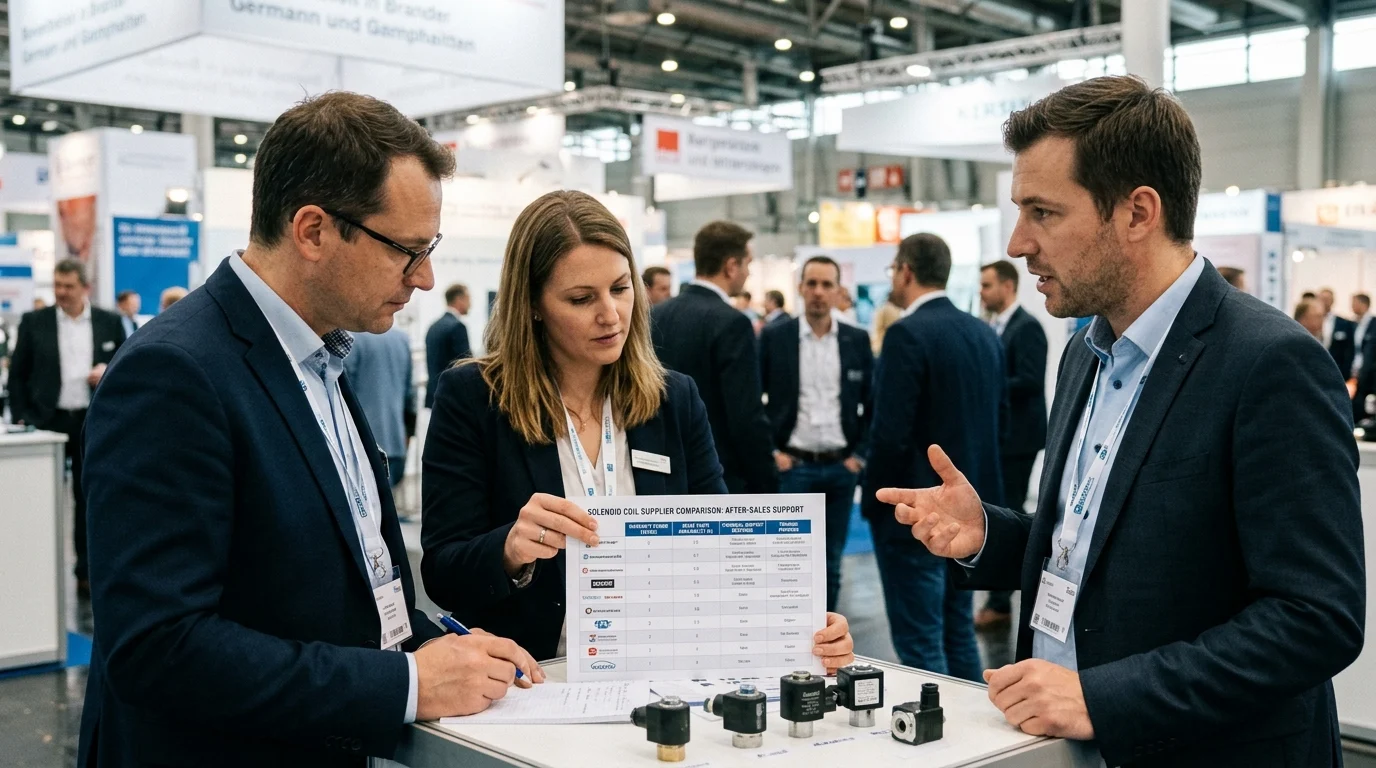
When sourcing solenoid coils internationally, European buyers meticulously compare the after-sales frameworks of potential suppliers. The focus shifts from initial unit cost to the reliability of the supplier’s safety net, ensuring compliance with strict regional liability regulations and operational standards.
Warranty and technical assistance
Warranty terms and the accessibility of technical assistance form the baseline of European buyer comparisons. Standard industry warranties for commercial solenoid coils typically span 12 to 24 months. However, buyers sourcing components for critical infrastructure or heavy-duty machinery increasingly demand extended terms of up to 36 months.
Technical assistance is evaluated on response times and engineering depth. European buyers prioritize suppliers who can offer localized support or guarantee a maximum 12-hour response window to bridge time zone differences. The ability of a supplier to remotely diagnose electrical anomalies or provide clear, English-language technical documentation is considered a non-negotiable metric during the vendor assessment phase.
Spare parts and lead times
Spare parts availability and expedited lead times are equally critical comparison points. Solenoid coils operating in harsh environments may require periodic replacement of associated pilot components or connectors. European buyers expect suppliers to maintain strategic buffer stocks or offer rapid prototyping for replacement parts.
| Support Metric | Tier 1 Supplier Expectation | Tier 2 Supplier Expectation |
|---|---|---|
| Standard Warranty | 24 – 36 months | 12 months |
| Technical Response Time | < 12 hours | 24 – 48 hours |
| Spare Parts Lead Time | 7 – 14 days (expedited) | 4 – 6 weeks |
| Failure Analysis | Full 8D report within 48 hours | Basic replacement only |
Procurement agreements often stipulate that critical spare parts must be available with a lead time of 7 to 14 days, contrasting sharply with standard production runs that may require 6 to 8 weeks. Suppliers who can meet these expedited timelines demonstrate superior supply chain agility.
How to Use Support in Supplier Selection
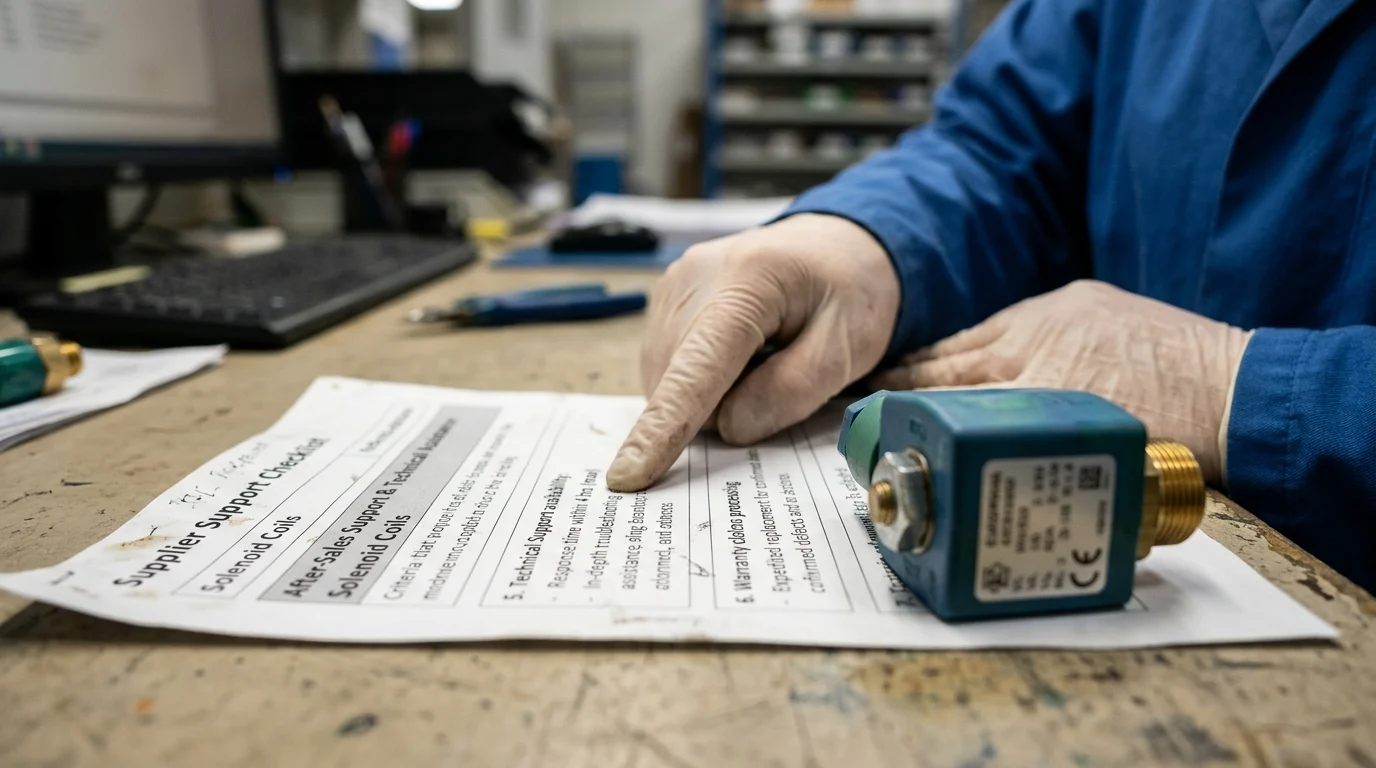
Integrating after-sales support capabilities into the supplier selection process requires a structured approach. Procurement teams must translate qualitative service promises into measurable criteria to ensure long-term operational stability and cost efficiency.
Evaluation steps
Evaluation begins with a thorough audit of the supplier’s quality management certifications, such as ISO 9001 or IATF 16949, which dictate formal continuous improvement and customer service protocols. Buyers should request historical Return Merchandise Authorization (RMA) data to assess actual performance. A robust supplier should demonstrate a first-contact resolution rate exceeding 85% for technical inquiries.
Additionally, procurement teams must evaluate the clarity of the supplier’s warranty policy, specifically looking for hidden clauses regarding shipping costs for defective units or minimum order quantities (MOQ) applied to spare parts. An acceptable MOQ for emergency replacement coils should ideally be set to zero or single digits to accommodate immediate field repairs.
Turning support into a buying decision
Turning these support metrics into a definitive buying decision relies heavily on Total Cost of Ownership (TCO) analysis. While a supplier might offer solenoid coils at a 15% lower unit price, the lack of an expedited 7-day replacement program or comprehensive failure analysis can quickly negate these initial savings through increased downtime.
By monetizing the value of a 24-month warranty versus a 12-month warranty, and calculating the risk mitigation provided by 48-hour 8D reporting, buyers can objectively justify partnering with a more supportive, albeit potentially higher-priced, manufacturer. Ultimately, robust after-sales support transforms a transactional vendor into a strategic partner capable of sustaining European market demands.
Key Takeaways
- The most important conclusions and rationale for After-Sales Support for Solenoid Coils: What European Buyers Expect from Suppliers (Warranty, Spare Parts, Technical Help)
- Specs, compliance, and risk checks worth validating before you commit
- Practical next steps and caveats readers can apply immediately
Frequently Asked Questions
What warranty period do European buyers usually expect for solenoid coils?
Most expect 12–24 months, while critical or heavy-duty applications often require 24–36 months in the supply agreement.
How fast should a supplier respond to technical issues?
A strong target is within 12 hours, with remote troubleshooting and clear English-language support to reduce downtime quickly.
What spare parts lead time is considered acceptable?
For critical replacements, buyers typically expect 7–14 days, supported by buffer stock or expedited production options.
What should happen if a solenoid coil fails in the field?
The supplier should start an 8D report within 24–48 hours, provide root-cause analysis, and define corrective actions and replacement steps.
Which certifications help confirm reliable after-sales support?
ISO 9001 is a basic benchmark, and IATF 16949 is especially valued for automotive-related solenoid coil suppliers.
Post time: May-07-2026