
Introduction
When solenoid coils reach the end of their service life, they become more than a maintenance issue: in European facilities, they often fall under WEEE obligations that govern collection, treatment, and recovery. Handling them correctly affects legal compliance, audit readiness, environmental performance, and the value recovered from copper and ferrous materials. This article explains how to identify coils that qualify as end-of-life electrical waste, what WEEE requires from industrial operators, and which recycling practices help separate reusable materials from hazardous or mixed residues. It also sets out practical steps for storage, documentation, and working with approved recyclers so disposal decisions support both compliance and operational efficiency.
End-of-Life Solenoid Coils and WEEE Compliance
Industrial automation relies heavily on electromagnetic components, requiring European facilities to manage their disposal under strict environmental frameworks. The Waste Electrical and Electronic Equipment (WEEE) Directive imposes rigorous standards on discarded electronic components. Facility managers must process these units through regulated channels that prioritize material recovery over generic landfilling.
Defining end-of-life solenoid coils
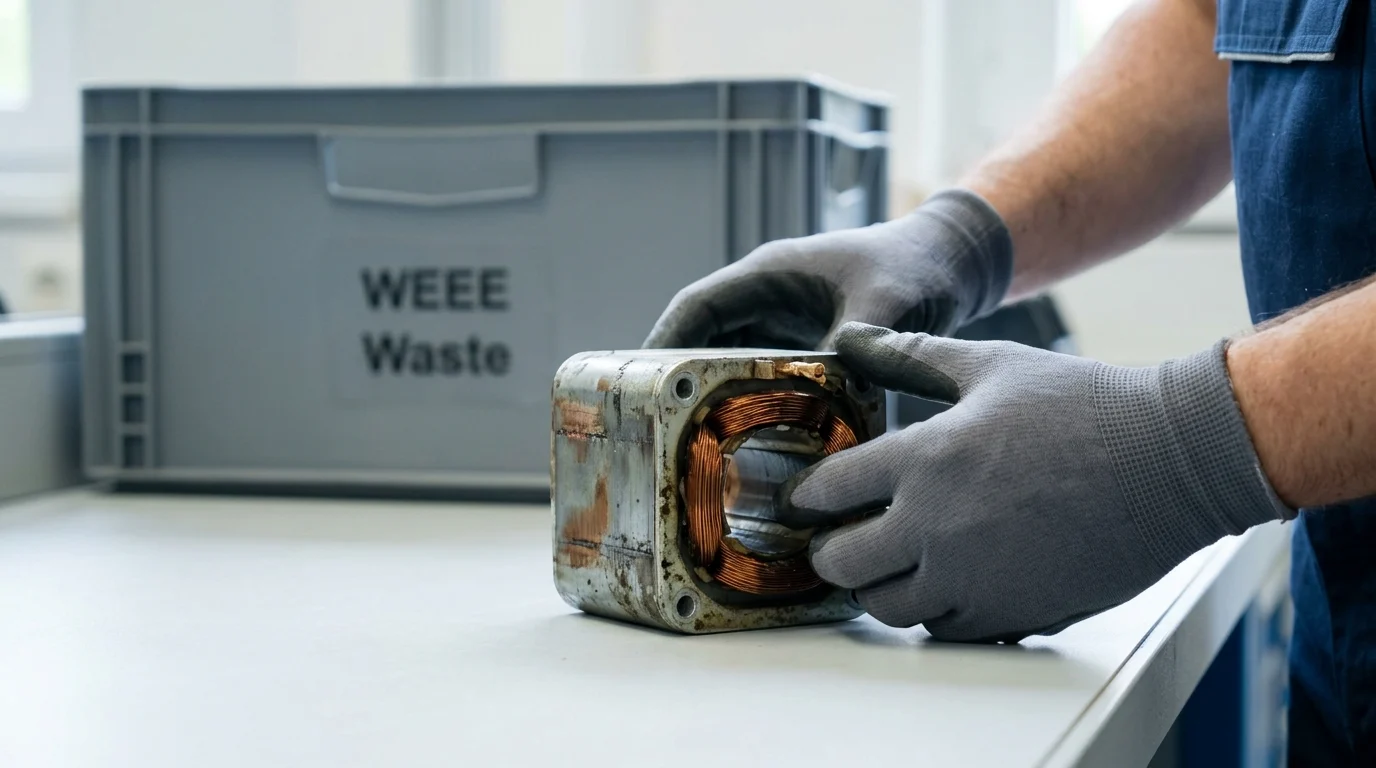
Solenoid coils typically reach end-of-life status after 10,000 to 50,000 hours of continuous operation, depending on application severity and thermal cycling. At this stage, internal Class F or Class H insulation resistance often degrades below the critical 1-megaohm threshold, leading to short circuits. Additionally, thermoplastic encapsulation—commonly PA66 or PET—may exhibit physical stress fractures. Structurally, these components consist of valuable copper windings, ferrous metal cores, and synthetic resins. Once they cross the operational threshold and can no longer generate the required electromagnetic force, they transition functionally and legally into regulated electronic waste requiring specialized handling.
Commercial and operational risks of non-compliance
Failing to process these end-of-life components through certified WEEE channels introduces substantial commercial liabilities. Regulatory bodies across EU member states enforce strict compliance and can levy severe fines exceeding €50,000 per violation for the misclassification of industrial e-waste. Beyond direct financial penalties, non-compliance triggers comprehensive audits that disrupt operations and jeopardize a facility’s ISO 14001 environmental management certifications. Losing this certification risks severe reputational damage among tier-one supply chain partners who mandate strict sustainability audits. Exclusion from lucrative public procurement tenders is also a common consequence for violating European waste directives.
WEEE Compliance and Recycling Best Practices
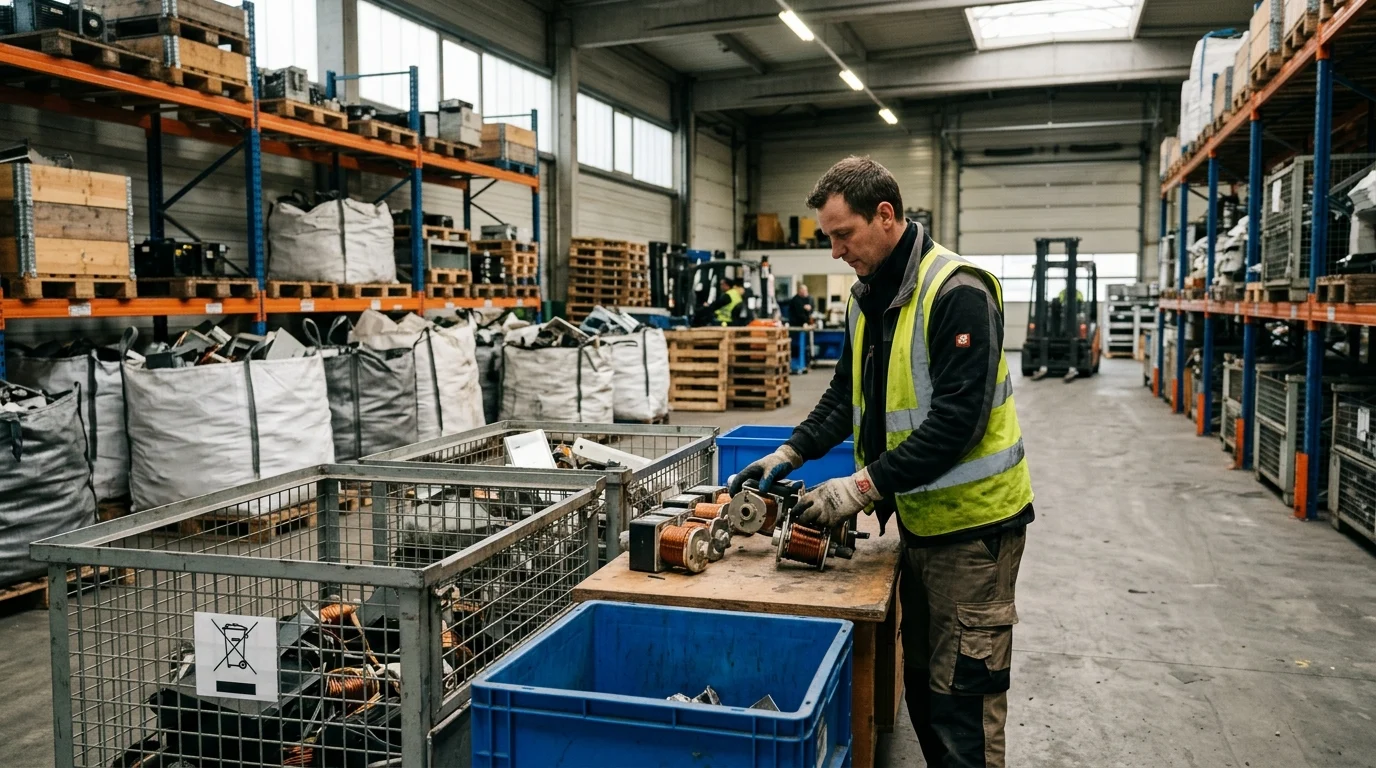
Transitioning solenoid coils from active service to compliant waste streams requires a deep understanding of material compositions and statutory documentation. European best practices dictate that manufacturing facilities must maximize material recovery while maintaining an unbroken chain of custody, ensuring heavy-duty B2B components avoid unregulated scrap yards.
Material, component, and documentation checks
Proper handling begins with rigorous material checks prior to disposal. A standard industrial solenoid coil contains a significant concentration of valuable metals, typically comprising 30% to 40% high-purity copper by weight, alongside electrical steel armatures. Facilities must accurately classify this waste using the European Waste Catalogue (EWC). Standard coils are typically assigned the EWC code 16 02 14 for discarded equipment not containing hazardous components. If contaminated with hazardous hydraulic fluids, they require the 16 02 13* classification. Accurate documentation is non-negotiable; facilities must utilize standardized waste transfer notes to track the exact tonnage of outgoing shipments, satisfying annual WEEE reporting requirements.
Criteria for evaluating reuse and recycling options
Evaluating recycling options depends on the physical condition of the discarded coils and the economic viability of recovery processes. While direct rewinding is generally unviable for commercial coils under 5 kilograms, raw material recycling remains highly profitable. Facilities must assess recycling partners based on processing methods, recovery yields, and associated fees. Mechanical shredding separates metals through magnetic sorting, while thermal processing burns away polymer encapsulation. Chemical stripping offers the highest purity of recovered copper but at a premium cost.
| Recycling Method | Primary Material Recovered | Typical Recovery Yield | Processing Cost Band (€/ton) |
|---|---|---|---|
| Mechanical Shredding | Copper, Ferrous Metals | 90% – 95% | €150 – €250 |
| Thermal Processing | Metals (Plastics consumed) | 95% – 98% | €300 – €450 |
| Chemical Stripping | Pure Copper, Resins | >98% | €500 – €700 |
Practical Decision Workflow for European Facilities
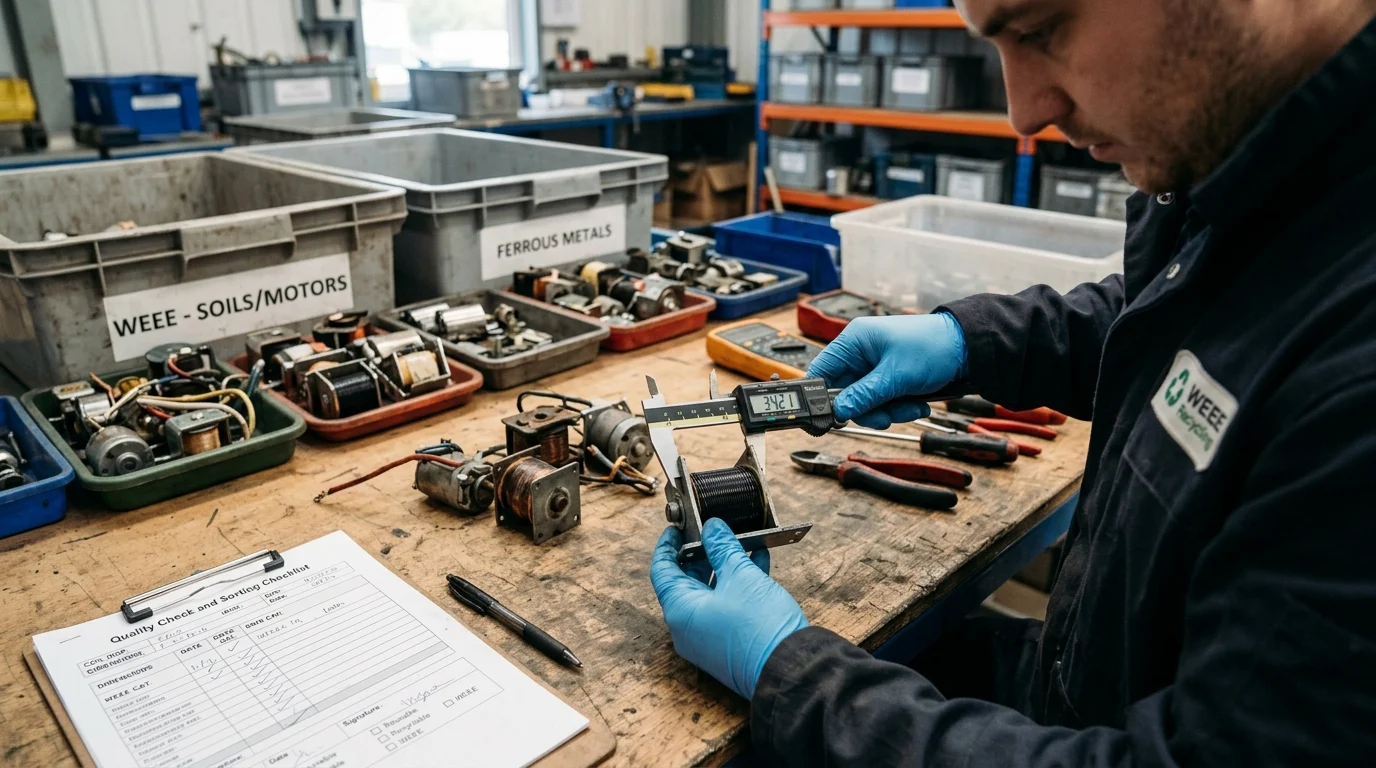
Implementing a fully compliant disposal strategy requires European facility managers to establish clear, repeatable workflows. Translating complex WEEE regulations into daily maintenance operations ensures that end-of-life components are handled systematically. Integrating these procedures into facility management software automates lifecycle tracking and streamlines the handover to certified waste contractors.
Step-by-step process for internal teams
Internal maintenance teams should follow a standardized process for managing discarded components. First, technicians must segregate end-of-life coils from general industrial steel scrap immediately upon removal. Mixing these components drastically lowers the financial rebate for the copper content. Second, facilities should establish secure, weatherproof WEEE bins to prevent environmental contamination from residual machine oils. Finally, teams should log the weight of discarded units. Facilities achieve the best logistical outcomes by batching components into minimum quantities of 500 kilograms. Dispatching bulk batches optimizes freight costs and secures significantly higher per-kilogram rebate rates from specialized metal recyclers.
Selecting qualified suppliers and recyclers
The final critical step is selecting qualified recycling partners. Facilities must verify that chosen waste management contractors hold active WEEE treatment permits and can provide formal certificates of destruction. These certificates are legally required to demonstrate a minimum recycling efficiency of 85%, aligning with recovery targets for industrial equipment. Furthermore, facilities can proactively manage lifecycle impacts by sourcing durable replacement components from established manufacturers. For example, Feiniou (Ningbo) Electronics Technology Co., Ltd. specializes in manufacturing high-quality automotive and construction machinery parts, including transmission solenoids, drain valves, pulse controllers, and terminal boxes. Partnering with suppliers that utilize robust quality management systems ensures extended operational lifespans for new components, thereby reducing the frequency of disposal events and lowering total cost of ownership.
Key Takeaways
- The most important conclusions and rationale for How to Handle End-of-Life Solenoid Coils: WEEE Compliance and Recycling Best Practices for European Facilities
- Specs, compliance, and risk checks worth validating before you commit
- Practical next steps and caveats readers can apply immediately
Frequently Asked Questions
When does a solenoid coil count as end-of-life under WEEE handling?
Treat it as end-of-life when it no longer delivers required force, insulation resistance drops below 1 megaohm, or the housing shows heat or stress damage. Then move it into your regulated e-waste workflow.
Which EWC code should European facilities use for discarded solenoid coils?
Use 16 02 14 for coils without hazardous contamination. If the coil is contaminated with hazardous hydraulic fluid or similar substances, use 16 02 13* and handle it as hazardous waste.
Can solenoid coils go to a normal scrap yard?
No. Send them through a certified WEEE or authorized industrial e-waste contractor. This protects chain-of-custody records, supports annual reporting, and reduces the risk of fines or audit issues.
What records should be kept when recycling end-of-life solenoid coils?
Keep waste transfer notes, EWC classification, shipment dates, contractor details, and exact tonnage. Store these with maintenance or asset records so annual WEEE reporting and ISO 14001 audits are easier.
What recycling method is usually best for small commercial solenoid coils?
For most coils under 5 kg, material recycling is more practical than rewinding. Mechanical shredding is often the lowest-cost option, while chemical stripping suits facilities that need higher copper purity.
Post time: Apr-25-2026