
Introduction
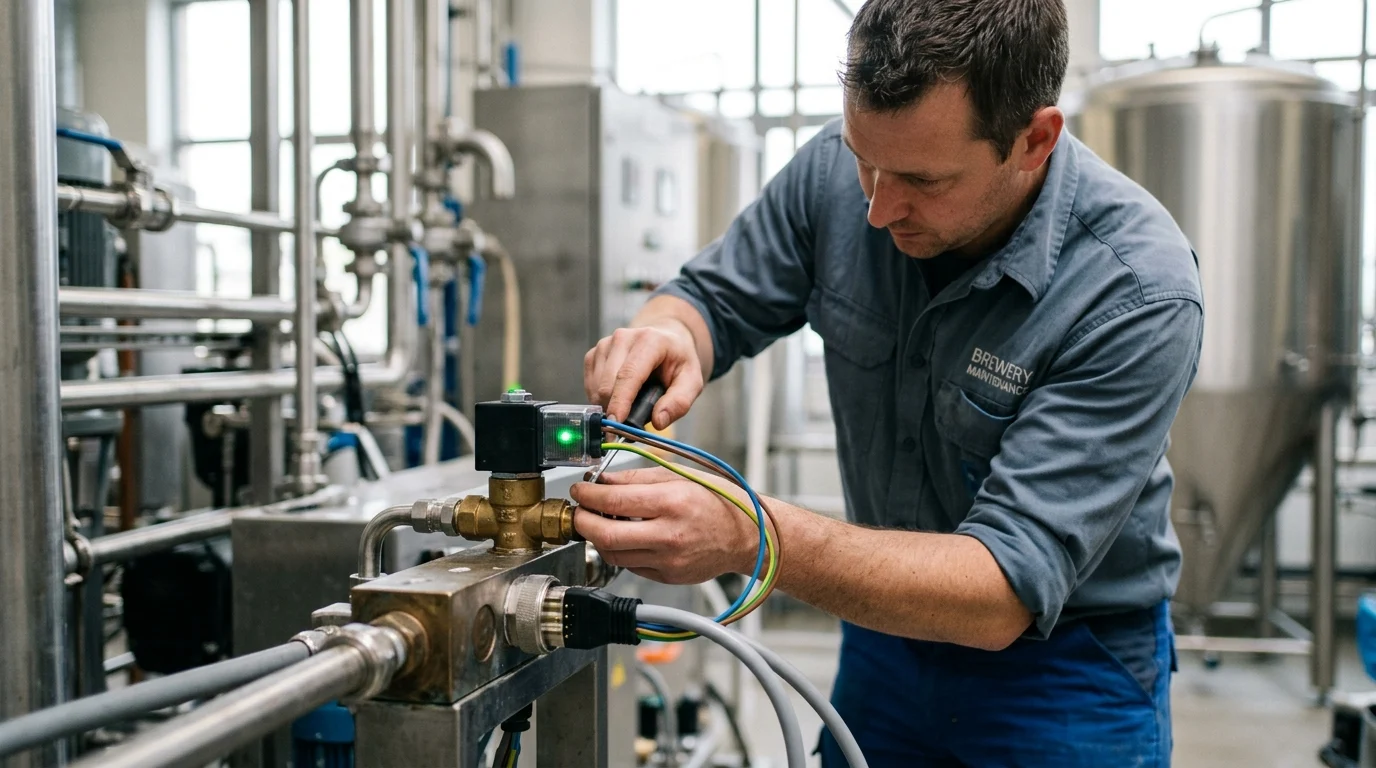
At a large Belgian brewery, frequent solenoid valve coil failures were disrupting fermentation chilling and wort boiling operations, especially under heavy washdown exposure and repeated thermal cycling. This case examines how replacing standard field-wireable connectors with pre-wired coils featuring LED indication cut coil-related service calls by 60%. The article shows what was causing the failures, why the upgraded coil design performed better in a wet, high-temperature environment, and how the change improved troubleshooting speed, maintenance efficiency, and line uptime. It also offers practical insight for engineers evaluating low-cost component upgrades in other automated food and beverage plants.
Why Pre-Wired Coils with LED Indication Worked
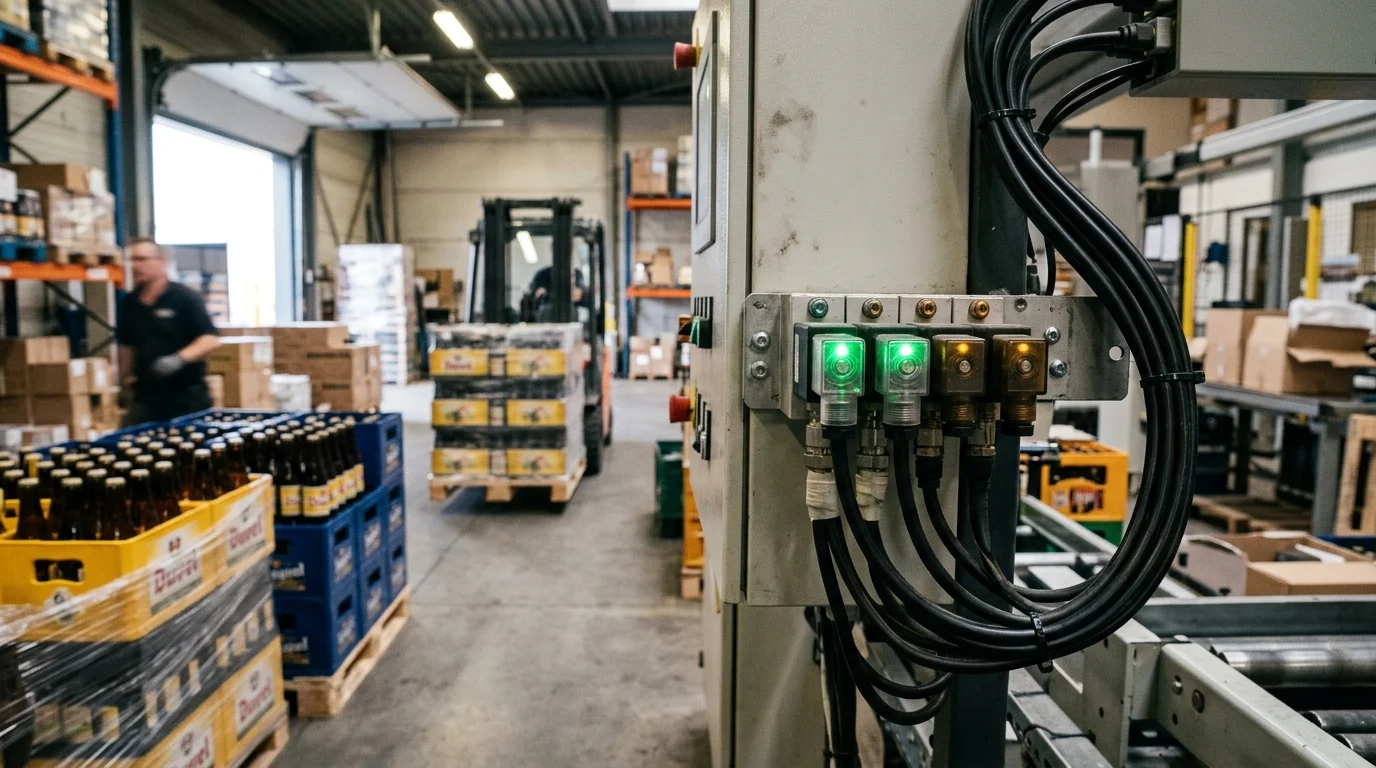
The success of this intervention at the Belgian facility was not merely the result of adding a diagnostic light to a standard component; it stemmed from addressing the mechanical and environmental vulnerabilities of the legacy hardware. The transition to pre-wired LED coils offered a synergistic improvement in both component durability and diagnostic speed, creating a significantly more resilient fluid control architecture.
Technical and operational drivers of improvement
From a technical standpoint, the primary driver of improvement was the shift to overmolded, IP67 and IP69K-rated coil assemblies. Unlike standard field-wireable connectors where human error during installation can easily compromise the rubber gasket, pre-wired coils are encapsulated in polyurethane or epoxy at the factory. This structural upgrade prevented the caustic soda and peracetic acid used in brewery washdowns from degrading the electrical contacts. The IP69K rating ensured the components could withstand high-pressure cleaning jets up to 1,450 PSI at 80°C.
Operationally, the standard 24V DC LED indicators slashed troubleshooting time dramatically. Maintenance logs from the brewery indicated that the average time to diagnose a malfunctioning valve dropped from 45 minutes to under 5 minutes per incident. Because operators could visually identify faults without opening electrical cabinets or probing live wires, the plant experienced a safer, more streamlined maintenance workflow, directly contributing to the 60% drop in escalated electrical service calls.
Key comparison points for performance and maintenance
Comparing the legacy components to the upgraded solution reveals stark contrasts in both performance metrics and total lifecycle costs. The enclosed design and visual feedback loop inherently lower the total cost of ownership over a typical three-year production cycle.
| Performance Metric | Traditional DIN Coils | Pre-Wired LED Coils |
|---|---|---|
| Ingress Protection | IP65 (variable by installation) | IP67 / IP69K (factory sealed) |
| Average Diagnostic Time | 30 – 45 minutes | < 5 minutes |
| Annual Replacement Rate | 15% | 3% |
| Diagnostic Tool Required | Digital Multimeter | Visual Inspection |
| Washdown Tolerance | Low (susceptible to seal degradation) | High (fully encapsulated) |
This data illustrates why the initial 15% to 20% higher procurement cost of pre-wired variants is rapidly offset by maintenance labor savings and increased machine uptime. By completely removing the diagnostic guesswork, the facility transformed a recurring operational headache into a predictable, manageable maintenance routine.
Applying the Lessons in Other Plants
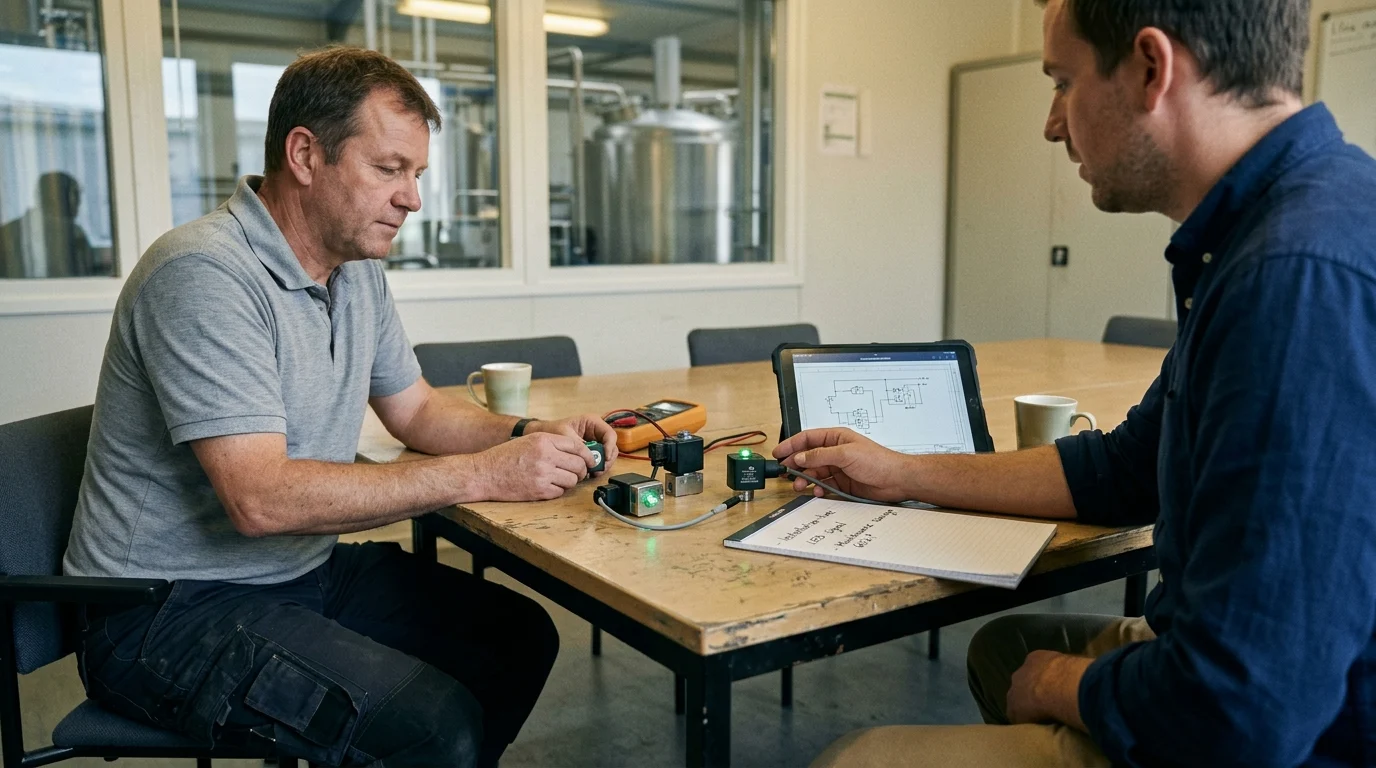
The operational efficiencies realized by the Belgian brewery offer actionable insights for other continuous-process manufacturing facilities. Whether operating in the food and beverage sector, pharmaceuticals, or heavy machinery manufacturing, plant managers can replicate these results by adopting a systematic approach to component upgrades and rigorous vendor qualification.
Implementation steps for similar facilities
Facilities looking to implement similar upgrades should begin with a comprehensive audit of existing pneumatic and fluid control manifolds. Identifying high-failure zones—such as steam valves, CIP (Clean-in-Place) systems, and heavy washdown areas—allows for targeted and cost-effective intervention.
A recommended strategy is a phased rollout, starting with a 50-unit pilot installation in the most demanding environmental zone. During this phase, maintenance teams should establish proper cable routing protocols, ensuring minimum bend radii are respected to prevent strain on the pre-wired jackets. Once the reduction in fault-finding time and failure rates is validated over a 90-day period, procurement can confidently scale the upgrade to a full 500-unit facility modernization. Standardizing cable lengths to 2-meter or 5-meter increments and standardizing on a single control voltage further simplifies spare parts inventory.
How to assess vendors and product quality
Securing these operational gains requires
Key Takeaways
- The most important conclusions and rationale for Case Study: Reducing Coil-Related Service Calls by 60% at a Belgian Brewery Using Pre-Wired Coils with LED Indication
- Specs, compliance, and risk checks worth validating before you commit
- Practical next steps and caveats readers can apply immediately
Frequently Asked Questions
Why did the brewery cut coil-related service calls by 60%?
It replaced standard DIN-connected coils with factory-sealed pre-wired coils with LED indication, reducing moisture-related failures and making faults faster to identify.
How do LED indicators help maintenance teams?
The LED shows power status instantly. If it’s on, check for a mechanical valve issue; if it’s off, inspect wiring, control signals, or the power supply.
Why were the old coils failing in this brewery environment?
Daily chemical washdowns, condensation, and thermal cycling damaged connector seals, allowing moisture ingress that caused shorts and erratic valve operation.
What specifications mattered most for the upgraded coils?
IP67/IP69K protection, 24V DC LED indication, and a factory-overmolded pre-wired design were key to surviving high-pressure washdowns and speeding diagnostics.
Where do pre-wired LED coils deliver the biggest payoff in a plant?
They’re most valuable on washdown-exposed, high-cycle valve stations like bottling, fermentation chilling, and wort boiling lines where downtime costs are high.
Post time: Apr-28-2026