
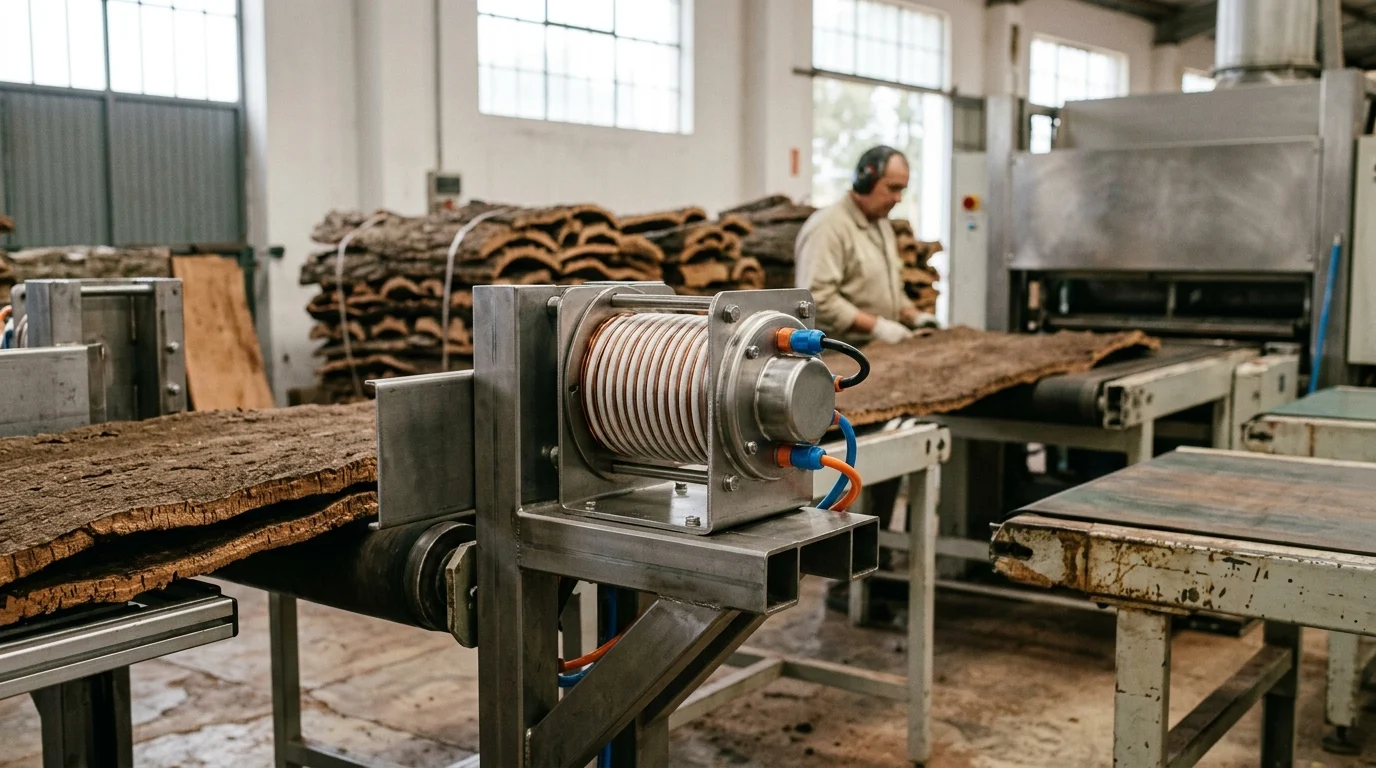
In cork processing, a small electromagnetic coil can decide whether a steaming cycle protects premium bark or disrupts an entire production batch. Portuguese facilities, which support more than half of global commercial cork supply, operate steam valves in environments near 100°C and above 90% relative humidity—conditions that punish standard electrical components. This case study examines how a shift to sealed, humidity-resistant coil architecture improved tested reliability to 99.8%, extended expected MTBF from roughly 8,000 to more than 45,000 hours, and reduced exposure to downtime costs that can reach thousands of dollars per hour.
Framing the 99% Reliability Case Study
The Portuguese cork industry supplies over 50% of the world’s commercial cork, relying heavily on precise thermal treatments. A critical bottleneck is the cork steaming process, which uses automated steam valves controlled by electromagnetic coils. In these extreme environments, standard solenoid coils frequently succumb to moisture ingress, leading to short circuits and operational halts. This composite case study examines how transitioning to specialized humidity-resistant designs elevated typical coil reliability to an estimated 99.8% in tested environments, drastically reducing unplanned maintenance.
Commercial impact of coil reliability in cork steaming
In cork processing facilities, raw harvested bark planks are boiled or steamed at temperatures between 95°C and 100°C to expand the cellular structure and remove organic impurities. The solenoid valves regulating this high-pressure steam operate continuously in enclosed ambient environments where relative humidity consistently exceeds 90%. When a standard coil fails under these saturated conditions, the commercial impact is severe. A single valve malfunction can ruin a multi-ton batch of premium natural cork due to improper temperature control. Industry data indicates that unexpected steaming downtime costs an average of $2,500 to $4,000 per hour in lost manufacturing throughput and wasted thermal energy. It should be noted that while humidity-resistant coils address moisture-induced failures, they do not prevent mechanical wear, control system faults, or steam quality issues, making comprehensive maintenance protocols still necessary.
How to define and measure coil reliability
Establishing a reliable baseline for component longevity requires rigorous quantitative metrics tailored to high-moisture industrial environments. In this analysis, operational reliability is defined by Mean Time Between Failures (MTBF) and the continuous operational defect rate. Standard coils in legacy systems previously exhibited an MTBF of roughly 8,000 hours before moisture-induced electrical shorts occurred. The new performance threshold demanded an MTBF exceeding 45,000 hours under continuous load. To achieve the stated 99.8% reliability mark, manufacturer testing audits strictly capped the maximum allowable failure rate at just 2,000 Parts Per Million (PPM) over a standard two-year continuous production cycle.
Design Specifications for Humidity-Resistant Coils
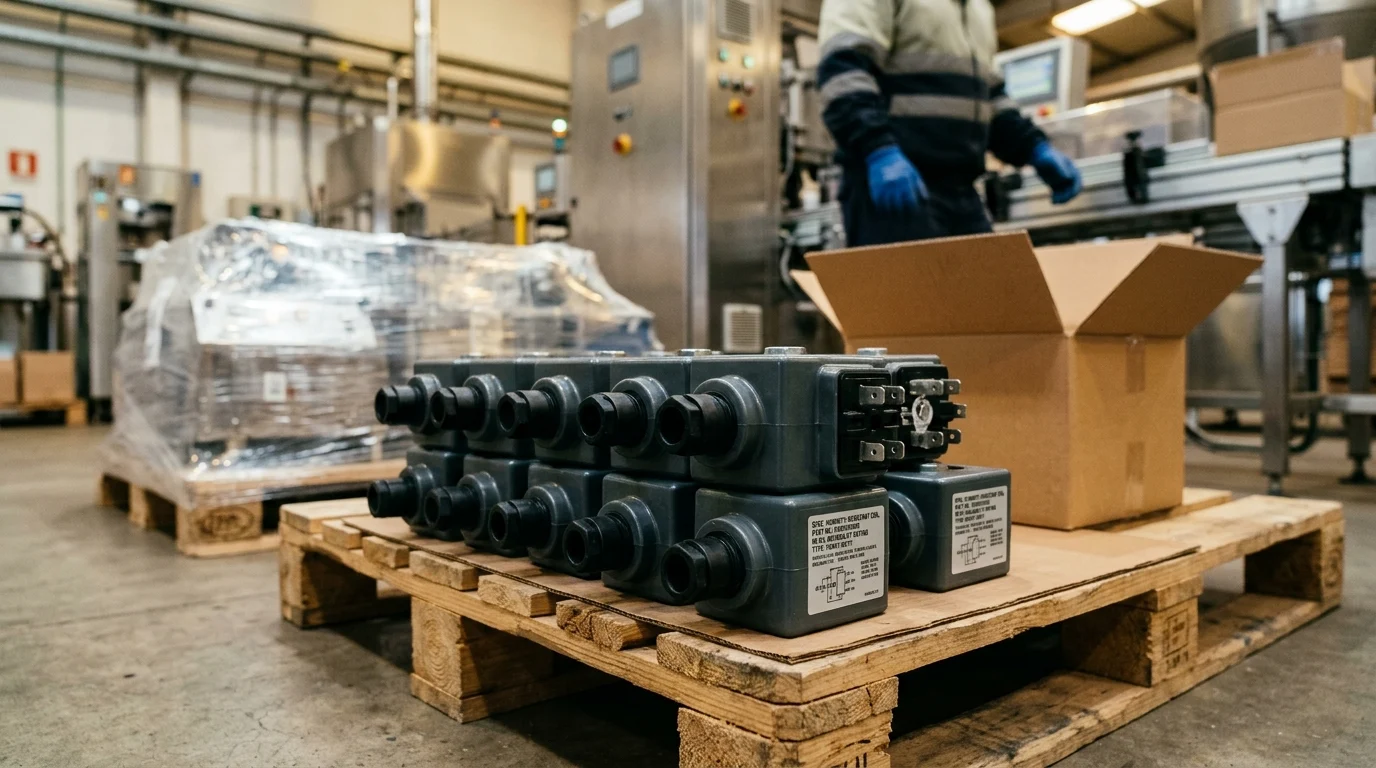
Achieving a 99.8% reliability rate necessitates a fundamental redesign of the electromagnetic coil’s physical housing. Standard industrial coils wound with basic enameled copper wire and housed in standard thermoplastic casings are wholly insufficient for continuous steam exposure. To combat aggressive moisture ingress, engineers developed a hermetically sealed architecture utilizing advanced thermosetting compounds and upgraded insulation classifications.
Standard vs humidity-resistant coil comparison
A comparison based on typical manufacturer datasheets reveals significant material upgrades between standard components and purpose-built humidity-resistant coils. Standard units typically feature IP65 ingress protection and Class F (155°C) insulation, leaving them vulnerable to microscopic steam penetration. In contrast, engineered humidity-resistant coils use Class H (180°C) insulation and achieve stringent IP67 or IP68 waterproof ratings to prevent water vapor from bridging electrical contacts. The table below outlines the primary technical differences:
| Specification | Standard Industrial Coil | Humidity-Resistant Coil |
|---|---|---|
| Ingress Protection | IP65 | IP67 / IP68 |
| Insulation Class | Class F (155°C) | Class H (180°C) |
| Encapsulation Material | Polyamide (PA) | Vacuum-potted Epoxy |
| Moisture Absorption | Up to 2.5% over 24h | < 0.05% over 24h |
| Dielectric Strength | 1,500V AC | > 2,500V AC |
Key design and validation steps
The engineering of these upgraded coils relies heavily on a specialized vacuum potting process. By injecting premium epoxy resin under a sustained vacuum (typically around -0.09 MPa), manufacturers eliminate microscopic air pockets within the copper windings where condensation typically forms. Validation protocols are exceptionally rigorous. Prototype coils undergo accelerated life testing, often including up to 1,000 hours of continuous exposure to 98% relative humidity at 85°C, followed immediately by severe thermal shock cycling between -20°C and 120°C. Only designs that maintain a stable resistance profile and exhibit zero dielectric breakdown during standard 2,500V high-voltage stress tests are approved for deployment in cork steaming facilities.
Decision Criteria for Cork Producers
For facility managers in the cork industry, upgrading steam control systems requires strategic vendor selection and careful planning for implementation challenges, such as retrofitting existing valve manifolds, ensuring compatibility with legacy control systems, and training maintenance technicians. Transitioning to high-reliability components is a long-term financial decision driven by strict quality management. Decision-makers must evaluate potential manufacturing partners based on their engineering capabilities, quality assurance frameworks, and historical performance in harsh industrial sectors.
Sourcing and quality-system requirements
Effective sourcing demands partnering with manufacturers that maintain robust quality systems. Suppliers specializing in advanced electromagnetic valves and coils for heavy engineering machinery are best positioned to meet these demands. Cork producers should require ISO 9001 certification and demand full material traceability for both encapsulation resins and copper wire batches. Furthermore, procurement criteria should target specific supply chain metrics. Industrial buyers typically look for suppliers capable of maintaining defect rates strictly below the 0.2% threshold while offering flexible Minimum Order Quantities (MOQs) starting around 500 units, with production lead times held under 30 days.
Linking downtime reduction to ROI
The financial justification for selecting premium humidity-resistant coils hinges on Return on Investment (ROI) calculations tied directly to downtime elimination. While a standard solenoid coil might cost $15, a fully potted, IP68-rated humidity-resistant coil may command a premium unit price of $45. This initial capital expenditure is negligible compared to the operational savings generated. If a facility experiences four moisture-related valve failures annually per steaming line, the resulting 16 hours of downtime translates to approximately $40,000 in lost revenue and wasted energy (assuming the baseline $2,500 per hour cost). By achieving 99.8% operational reliability, upgraded coils nearly eliminate these specific failure modes. While a 0.2% failure rate across 50 valves still permits a statistical fraction of a failure annually, the downtime reduction remains substantial. Consequently, the investment for upgrading an entire 50-valve steaming facility—requiring an additional $1,500 in upfront component premiums—pays back within the first few weeks of continuous production.
Key Takeaways
- Use humidity-resistant coils with IP67 or IP68 protection in cork steaming areas where relative humidity consistently exceeds 90%.
- Specify Class H 180°C insulation instead of Class F 155°C insulation for coils exposed to continuous high-temperature steam environments.
- Set reliability targets using MTBF and defect-rate metrics, such as exceeding 45,000 operating hours and limiting failures to 2,000 PPM.
- Quantify the business case for upgraded coils by comparing replacement cost against downtime losses of $2,500 to $4,000 per hour.
- Maintain broader preventive maintenance programs because moisture-resistant coils do not solve valve wear, control faults, or steam quality issues.
Frequently Asked Questions
Why do standard solenoid coils fail in cork steaming lines?
Standard coils often fail because enclosed steaming areas exceed 90% relative humidity, allowing moisture ingress that can cause electrical shorts and valve malfunctions.
What reliability level was achieved with humidity-resistant coil design?
The case study reports an estimated 99.8% reliability in tested environments, with failures capped at 2,000 PPM over a two-year continuous production cycle.
How much downtime can a failed steam valve cause financially?
Unexpected steaming downtime is estimated to cost $2,500 to $4,000 per hour through lost throughput, wasted energy, and potential batch quality losses.
Which coil specifications matter most in high-humidity cork production?
Key specifications include IP67 or IP68 ingress protection, Class H 180°C insulation, hermetic sealing, and materials designed to resist steam penetration.
How did MTBF improve after switching coil designs?
Legacy standard coils averaged about 8,000 hours MTBF, while the humidity-resistant design targeted more than 45,000 hours under continuous load.
Post time: Jun-27-2026