
Introduction
Across European hospitals, medical gas delivery depends on fast, precise valve actuation under strict safety margins, making solenoid coils a critical but often overlooked component. Their performance affects how reliably oxygen, medical air, and other gases move through manifolds, zone valves, and alarmed pipeline networks. This article explains how solenoid coils support stable flow and pressure control, where common failure risks emerge, and which reliability standards matter in hospital environments shaped by European regulatory and operational requirements. It also sets up the practical criteria engineers, OEMs, and facility teams should use when evaluating coil design, duty cycle, thermal behavior, and long-term system resilience.
Why solenoid coils matter in medical gas delivery systems
Medical gas delivery systems are the central respiratory lifelines of modern European hospitals, responsible for distributing critical resources such as oxygen, nitrous oxide, and medical air. At the heart of these complex pneumatic networks are solenoid valves, which rely entirely on electromagnetic solenoid coils to function. The reliability of these coils directly dictates the safety, precision, and efficiency of the entire gas distribution infrastructure.
Role in system operation
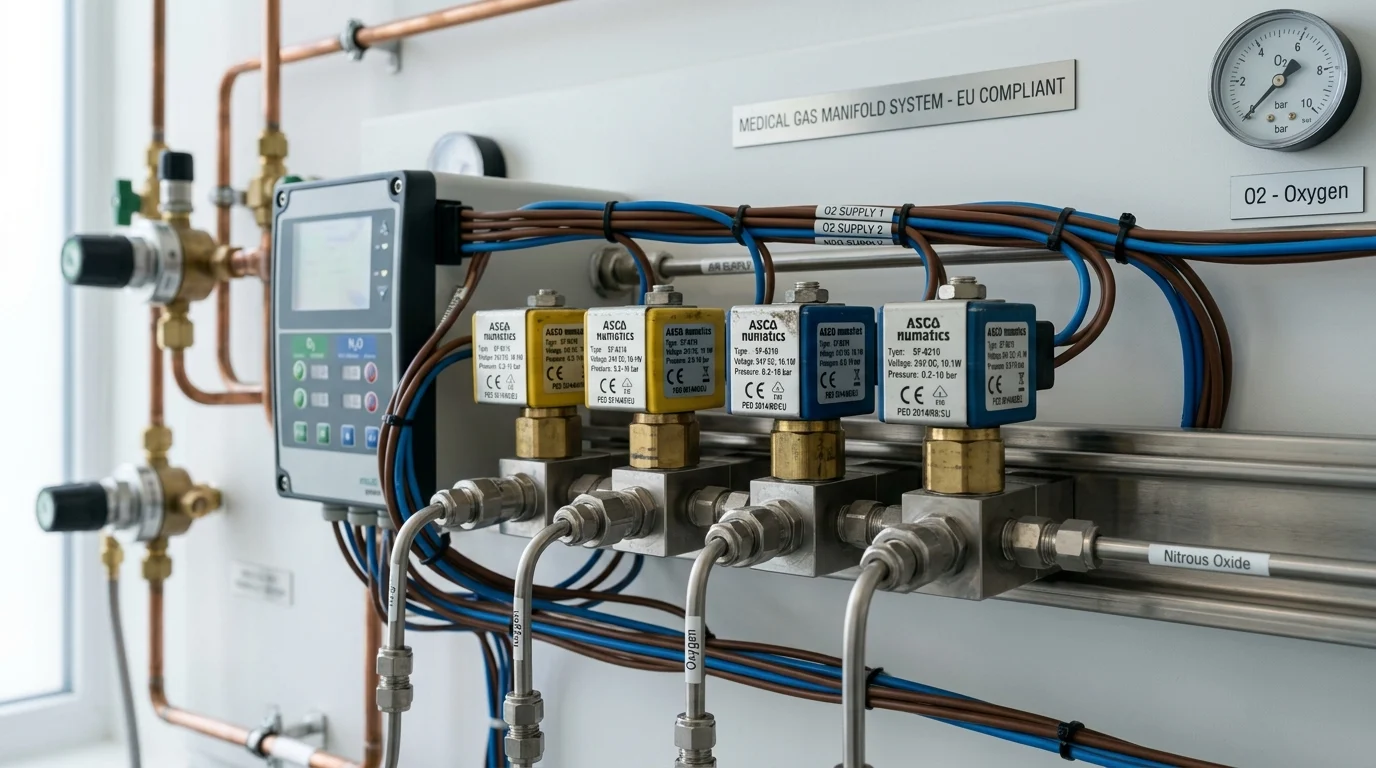
In a medical gas manifold or zone valve box, the solenoid coil acts as the primary electromechanical interface. When energized, the coil generates a magnetic field that lifts the internal valve armature, allowing gases to flow at precisely regulated pressures. Within European healthcare facilities, these pipelines are typically maintained between 4.0 and 5.0 bar (400 to 500 kPa) for standard medical gas applications.
Because these pneumatic systems often operate continuously to support patient ventilation, the coil must sustain a stable magnetic flux without excessive power draw. Any fluctuation in the electromagnetic force can lead to pressure drops or inconsistent flow rates. Such deviations can immediately trigger facility pressure alarms and potentially jeopardize critical care environments, including operating theaters and intensive care units.
Key failure modes and effects
Understanding failure modes is essential for facility managers and original equipment manufacturers (OEMs). The most prevalent failure mode is thermal degradation. Continuous operation under heavy loads can cause the internal copper windings to overheat, eventually breaking down the enamel insulation and triggering an electrical short. Another critical failure vector is moisture ingress, particularly in plant rooms with fluctuating humidity, which can corrode internal electrical connections.
In medical applications, a catastrophic coil failure typically results in a valve failing closed, instantly cutting off the gas supply to the affected zone. To mitigate these life-threatening risks, medical-grade coils are engineered with robust encapsulation and high-grade windings to achieve a Mean Time Between Failures (MTBF) exceeding 500,000 cycles, ensuring uninterrupted operation throughout a prolonged service life.
Reliability standards and design criteria
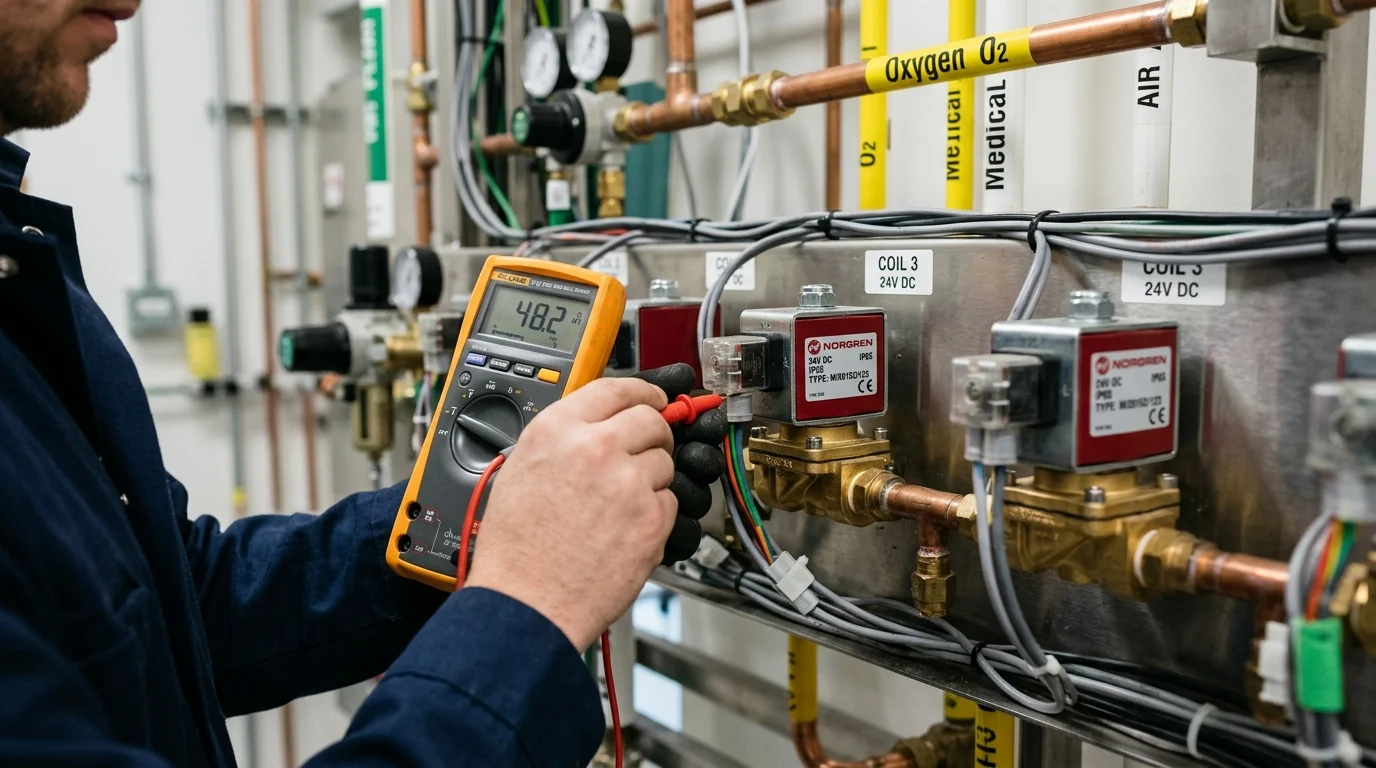
European hospitals are bound by stringent regulatory frameworks, including the Medical Device Regulation (MDR) 2017/745 and ISO 7396-1 for medical gas pipeline systems. To maintain compliance, the solenoid coils integrated into these systems must adhere to rigorous design criteria and international reliability standards, ensuring fail-safe operation under continuous mechanical and electrical stress.
Duty cycle, thermal rise, and insulation class
Medical gas systems frequently require valves to remain open for days or weeks at a time, necessitating coils rated for 100% Continuous Duty (ED 100%). This operational demand makes thermal management a primary design constraint. Coils are categorized by their insulation class, which dictates the maximum permissible operating temperature before internal degradation occurs. For hospital environments, Class F and Class H represent the industry standards.
| Insulation Class | Maximum Temperature Limit | Typical Application Scenario |
|---|---|---|
| Class B | 130°C (266°F) | Intermittent duty, low-demand commercial systems |
| Class F | 155°C (311°F) | Standard continuous medical gas valves |
| Class H | 180°C (356°F) | High-ambient or high-density hospital manifolds |
Selecting a Class F or H coil ensures that even with a standard thermal rise of 60°C to 80°C under continuous load, the internal windings remain well within safe operational thresholds, preventing premature burnout.
Comparison factors for coil selection
Beyond thermal ratings, several comparative factors drive the component selection process. Voltage tolerance is critical; coils must typically handle fluctuations of ±10% from the nominal voltage without dropping the magnetic hold or overheating. Power consumption is another differentiating metric. Advanced 24V DC solenoid coils designed for medical pneumatics are engineered to draw under 5 watts during continuous holding, significantly reducing both energy expenditure and localized heat generation.
Furthermore, environmental protection ratings are evaluated to prevent moisture and dust ingress. Coils specified for hospital plant rooms or zone valve boxes generally require a minimum rating of IP65. This ingress protection ensures that standard hospital cleaning protocols, ambient humidity, and particulate matter do not compromise the electrical integrity of the valve assembly.
How hospitals and OEMs should evaluate and source coils
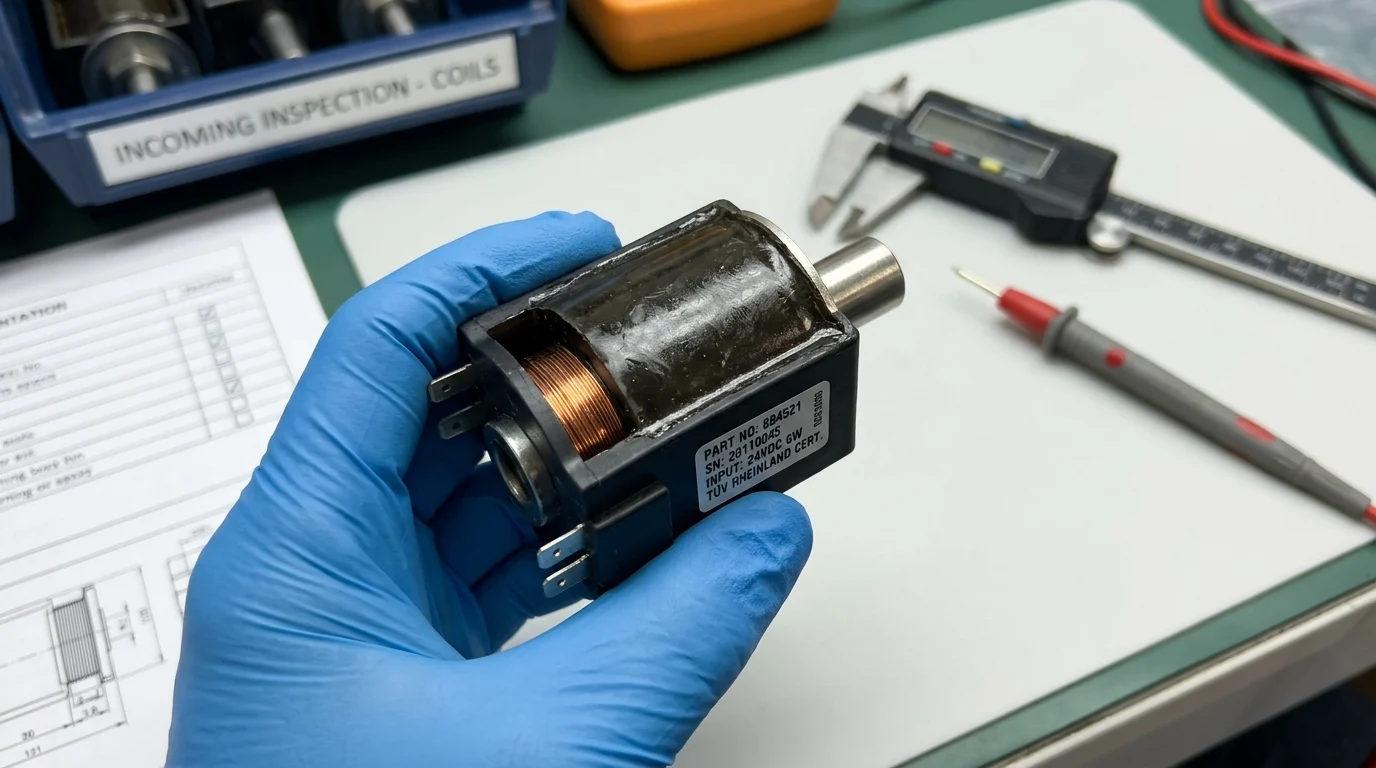
Procuring solenoid coils for medical gas systems is not a standard commodity purchase. Both hospital facility managers handling maintenance operations and OEMs designing new manifolds must implement strict evaluation protocols. The sourcing strategy must balance unit economics with uncompromising patient safety, longevity, and regulatory traceability.
Qualification and supplier audit checklist
Supplier qualification must begin with a comprehensive audit of the manufacturer’s quality management systems. OEMs should prioritize partners holding ISO 13485 certification, which governs the lifecycle and production of medical device components. Audits must verify the traceability of raw materials, particularly the purity of the copper windings and the thermal resilience of the encapsulation plastics.
Leading electronic component manufacturers maintain rigorous testing protocols, targeting defect rates below 50 Parts Per Million (PPM). The audit checklist should also mandate documented proof of dielectric strength testing and endurance cycling. This documentation guarantees that every production batch meets the precise electromagnetic tolerances required for life-support gas regulation.
Replacement and purchasing decisions
When integrating these components into European hospital supply chains, lifecycle costs and logistics play a pivotal role. Medical-grade replacement coils typically range from €15 to €45 per unit, depending on custom connector specifications, voltage requirements, and insulation classes. However, the cost of a system failure far outweighs component pricing, making preventative replacement strategies essential.
Facilities generally mandate coil replacements every 5 to 7 years during scheduled manifold overhauls, regardless of the component’s apparent condition. For OEMs, managing supply chain risk requires negotiating Minimum Order Quantities (MOQs)—often ranging from 500 to 1,000 units for custom profiles—while ensuring suppliers maintain 4 to 6 weeks of buffer inventory to absorb sudden spikes in demand. Ultimately, sourcing decisions must prioritize transparent manufacturing practices and verifiable longevity to safeguard critical hospital infrastructure.
Key Takeaways
- The most important conclusions and rationale for The Role of Solenoid Coils in Medical Gas Delivery Systems: Reliability Standards for European Hospitals
- Specs, compliance, and risk checks worth validating before you commit
- Practical next steps and caveats readers can apply immediately
Frequently Asked Questions
Why are 100% continuous-duty solenoid coils important in hospital gas systems?
Medical gas valves may stay energized for days. An ED 100% coil maintains stable valve actuation without overheating, helping prevent pressure drops, alarms, and unplanned gas interruption.
Which insulation class is usually suitable for European hospital medical gas valves?
Class F is commonly used for continuous-duty service, while Class H is preferred in hotter plant rooms or dense manifolds. Both offer better thermal margin than Class B.
What IP rating should a solenoid coil have in hospital plant rooms?
Choose at least IP65. It helps protect the coil against dust, humidity, and routine washdown exposure that can otherwise cause corrosion or electrical failure.
What voltage tolerance should a medical gas solenoid coil handle?
A practical target is ±10% of nominal voltage. This helps the valve hold reliably during supply fluctuations without excessive heat or loss of magnetic force.
What happens if a solenoid coil fails in a medical gas delivery system?
In many designs, the valve fails closed, cutting gas flow to the affected zone. That is why hospitals should specify medical-grade coils with strong encapsulation and high cycle life.
Post time: Apr-25-2026