
Introduction
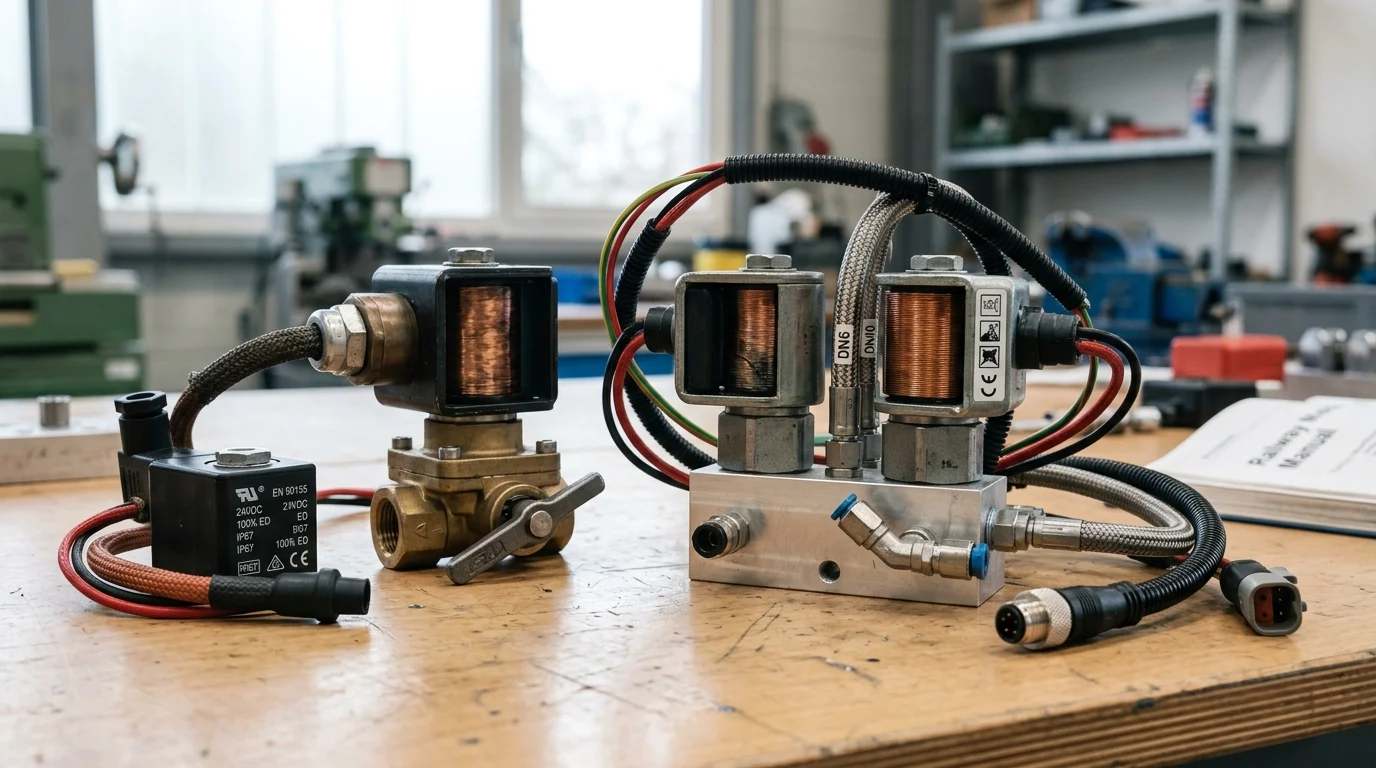
Rail applications place unusual demands on solenoid coils, especially in braking and door systems where response time, thermal behavior, and fail-safe operation directly affect safety and service reliability. Choosing the right coil is not only a matter of force and duty cycle; it also requires matching the component to railway-specific electrical conditions, vibration, temperature variation, and strict compliance targets such as EN 50155 and fire safety requirements. This article outlines the key selection factors engineers should evaluate, explains how braking and door applications differ, and shows how standards influence materials, insulation, and long-term performance in rolling stock environments.
Selecting Solenoid Coils for Railway Braking and Door Systems
Railway braking and door systems rely heavily on precision electromechanical components to ensure passenger safety, schedule adherence, and operational reliability. Solenoid coils serve as the critical actuation mechanism within these systems, translating electrical control signals into rapid, dependable mechanical action. Because these components operate in highly demanding transit environments—facing constant vibration, temperature extremes, and voltage fluctuations—selecting the appropriate coil requires a rigorous engineering approach. This process must prioritize long-term durability, rapid response characteristics, and strict adherence to international railway standards.
Duty profiles and application needs
The operational demands placed on a solenoid coil depend entirely on its specific application within the rolling stock, dictating its fundamental design and thermal management needs. Braking systems generally mandate continuous duty profiles, almost universally specified as 100% ED (Continuous Duty). In these critical applications, the coils must remain continuously energized to hold the pneumatic or mechanical brakes open during transit, ensuring they fail-safe by closing instantly in the event of a power loss. Conversely, pneumatic or electric door control mechanisms frequently utilize intermittent duty profiles, such as 25% or 40% ED. These door systems require high initial actuation forces to overcome mechanical friction, rubber seal resistance, and aerodynamic pressure, but they remain unpowered during the majority of the journey between stations.
Key performance baselines
Establishing precise baseline performance metrics is the foundational step in the specification process. Engineers must carefully define the required actuation force, stroke length, and exact response times under varying load conditions. For emergency braking applications, solenoid coils must typically demonstrate response times of under 50 milliseconds to meet safety-critical stopping distance regulations and prevent catastrophic collisions. Additionally, baseline specifications must account for the inherent instability of railway power networks. Train battery supplies and power distribution lines are notoriously volatile, subject to sudden spikes and drops. Consequently, coils must be designed to reliably operate across a wide and demanding voltage tolerance band, typically required to function flawlessly between 70% and 125% of the nominal supply voltage.
Technical and Compliance Factors

Procuring components for railway systems extends far beyond meeting baseline mechanical performance; it necessitates documented adherence to comprehensive regulatory frameworks. The overarching standard governing electronic and electromechanical equipment used on rolling stock is EN 50155, which dictates the rigorous environmental and operational parameters components must endure without failure. Simultaneously, fire safety standards are absolute and non-negotiable, requiring specialized material selection across the entire coil assembly to prevent the catastrophic spread of flames and toxic smoke within enclosed passenger compartments.
Electrical, thermal, and environmental requirements
Railway environments subject components to extreme thermal, environmental, and mechanical stress profiles. Under the EN 50155 standard, solenoid coils must often meet the rigorous TX temperature class, ensuring reliable operation in ambient temperatures ranging from -40°C to +85°C. To manage internal heat generation safely, especially in 100% ED continuous braking applications, coils are typically wound with Class H insulation wire, rated to withstand internal operating temperatures up to 180°C. Furthermore, all non-metallic materials must comply with EN 45545-2 fire safety regulations. The plastics, bobbins, and epoxy potting compounds used in the coil assembly must meet Hazard Level 3 (HL3) requirements. This enforces stringent limits on the material’s oxygen index (which must generally exceed 32%), smoke density, and overall toxicity. Mechanical resilience is equally critical; bogie-mounted components must routinely pass EN 61373 Category 1, Class B shock and vibration testing, while also maintaining ingress protection ratings of IP67 or higher to block moisture and brake dust.
Supplier evaluation criteria
Selecting a reliable manufacturing partner requires a thorough evaluation of their quality management systems, traceability protocols, and production capabilities. Ideal suppliers hold specialized railway industry certifications, most notably ISO/TS 22163 (formerly the IRIS standard), which indicates a mature quality management system specifically tailored to the safety and reliability demands of transit applications. Procurement teams should target suppliers capable of maintaining strict quality control thresholds, demanding an overall defect rate of less than 50 Parts Per Million (PPM) for critical safety components. Manufacturers like Feiniu (Ningbo) Electronic Technology Co., Ltd. demonstrate the importance of robust in-house research and development, alongside comprehensive automated testing facilities, in delivering specialized electromagnetic components that consistently meet these exacting global standards.
Final Decision Process
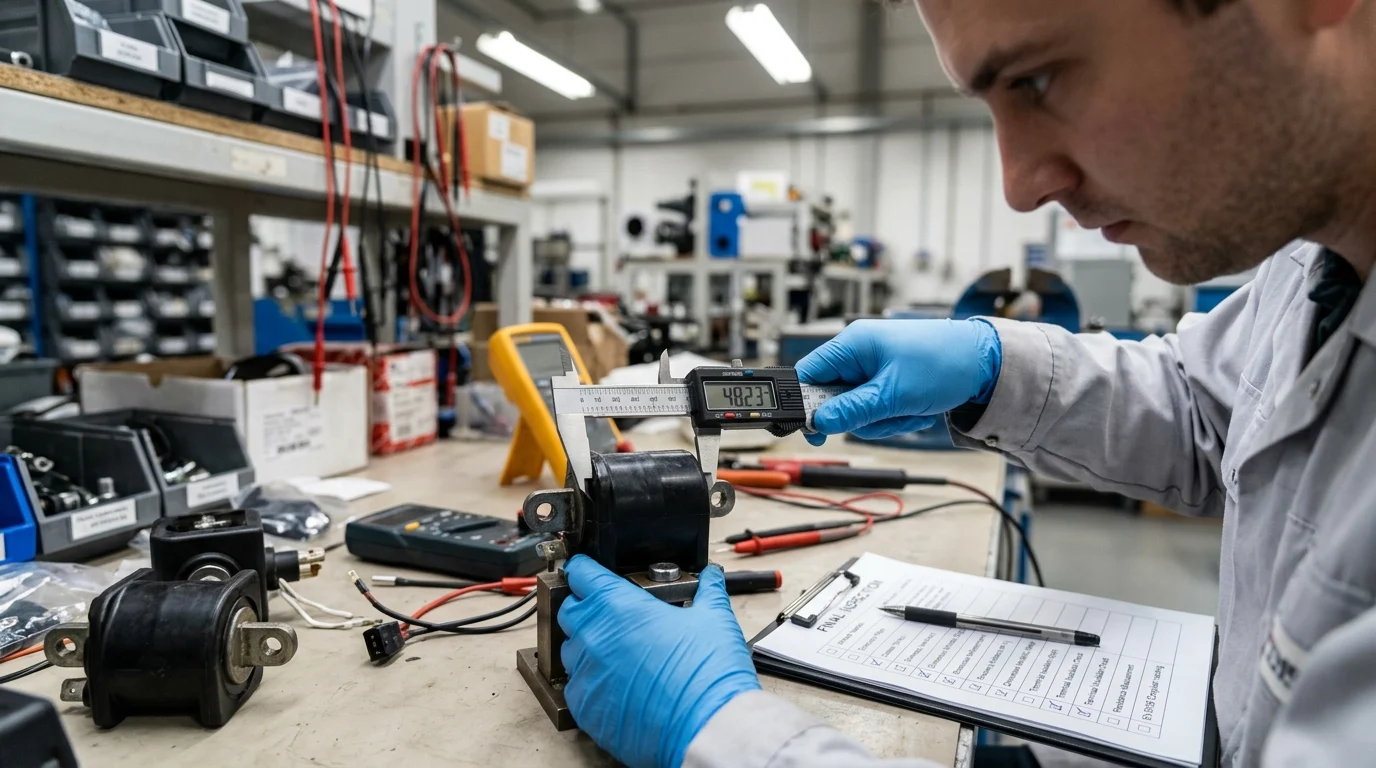
Finalizing the selection of solenoid coils for railway applications is a multi-disciplinary effort that requires close alignment between electrical engineering, safety compliance, and procurement teams. The ultimate objective is to identify and source a component that not only survives the rigorous 30-year expected lifespan of a typical rail vehicle but also aligns with strict project budgets, maintenance schedules, and global supply chain realities.
Step-by-step selection workflow
Implementing a structured procurement workflow minimizes technical risk and ensures all regulatory requirements are satisfied before mass production and fleet integration begin. The process typically initiates with environmental profiling, progresses through strict compliance verification, and culminates in rigorous physical prototyping and lifecycle testing.
| Procurement Phase | Key Engineering & Sourcing Actions | Target Metrics & Deliverables |
|---|---|---|
| 1. Parameter Definition | Map duty cycles, voltage bands, and force profiles. | 100% ED for brakes; 70-125% voltage tolerance. |
| 2. Compliance Audit | Verify material certifications against railway norms. | EN 50155 (Temp Class TX), EN 45545-2 (HL3). |
| 3. Prototype Testing | Subject samples to accelerated life and vibration testing. | >10 million cycle lifespan; EN 61373 Class B. |
| 4. Supplier Validation | Assess production capacity and quality control systems. | ISO/TS 22163 certification; <50 PPM defect rate. |
By following this standardized matrix, engineering teams can systematically eliminate substandard components early in the design phase, preventing costly redesigns late in the vehicle manufacturing cycle.
Balancing compliance, quality, and cost
While technical specifications and safety certifications represent non-negotiable baselines, procurement teams must carefully balance these stringent requirements against commercial and logistical constraints.
Key Takeaways
- The most important conclusions and rationale for Selecting Solenoid Coils for Railway Braking and Door Systems: Meeting EN 50155 and Fire Safety Standards
- Specs, compliance, and risk checks worth validating before you commit
- Practical next steps and caveats readers can apply immediately
Frequently Asked Questions
What duty cycle should a railway brake solenoid coil use?
Brake hold-open applications typically need 100% ED continuous duty so the coil can stay energized safely without overheating.
What duty cycle is common for railway door solenoid coils?
Door actuators often use 25% or 40% ED, providing high pull force during opening or closing without continuous energization.
Which standards matter most when selecting railway solenoid coils?
Focus on EN 50155 for rolling stock operation, EN 45545-2 HL3 for fire safety, and EN 61373 for shock and vibration.
What voltage range should the coil handle in rail vehicles?
Specify reliable operation from about 70% to 125% of nominal voltage to tolerate common railway power dips and surges.
What environmental protection is recommended for bogie-mounted coils?
Choose coils rated for TX temperatures (-40°C to +85°C), IP67 or higher sealing, and Class H insulation for thermal durability.
Post time: Apr-23-2026