
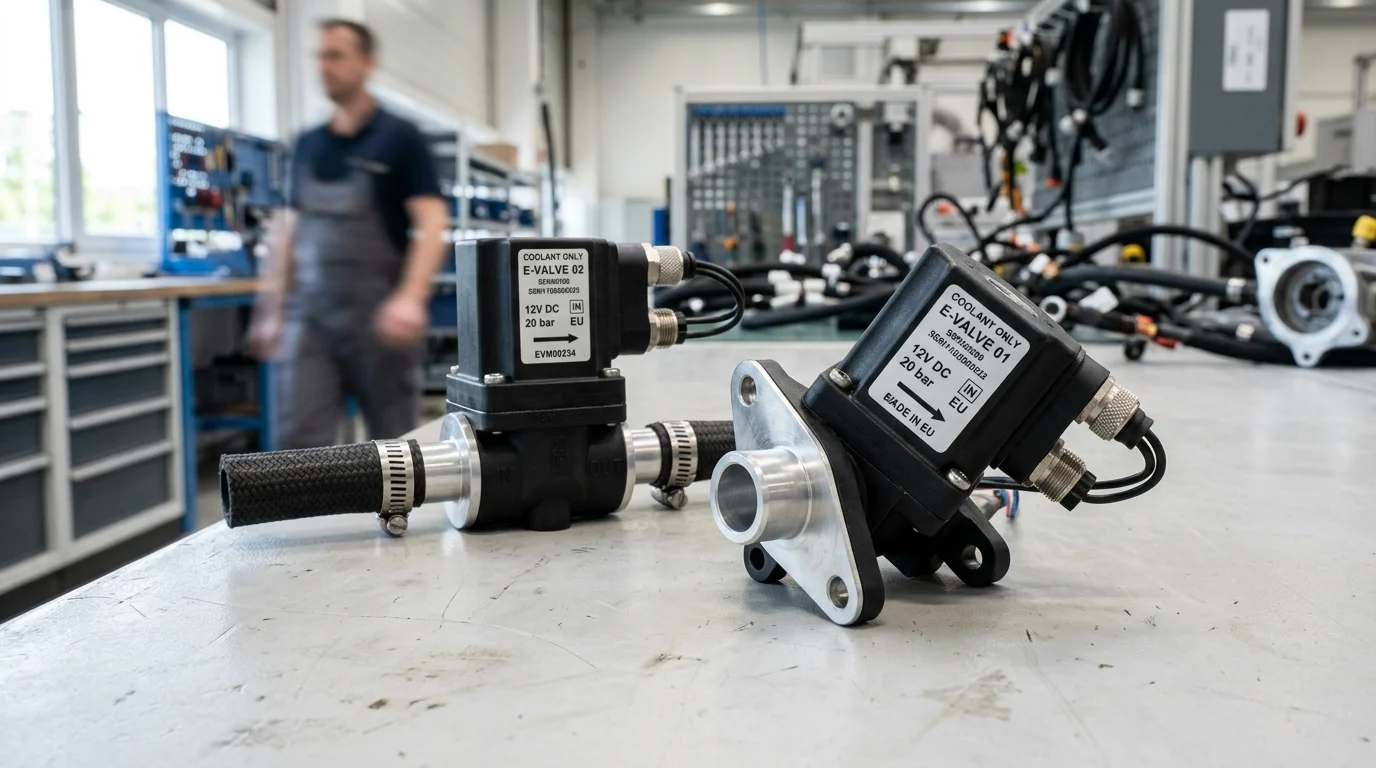
Europe’s EV production surge is raising the bar for every component inside the thermal management loop. As battery packs become denser, charging rates climb, and winter efficiency remains a practical concern, coolant flow can no longer be treated as a background function. Coolant solenoid valves now play a direct role in battery protection, power electronics cooling, motor efficiency, and even cabin comfort. Their ability to switch circuits quickly and reliably helps manufacturers balance safety, range, and durability under demanding real-world conditions. This article examines why these valves matter, how they support modern EV architectures, and which performance factors engineers should prioritize for European vehicle platforms.
Why Coolant Solenoid Valves Matter in EV Thermal Management
The rapid expansion of European electric vehicle (EV) production has placed unprecedented demands on thermal management systems. Central to these systems are coolant solenoid valves, electromechanical devices responsible for directing the flow of liquid coolants across various vehicle subsystems. As European manufacturers push for higher energy densities, ultra-fast charging capabilities (supported by expanding local networks like Ionity), and stricter emissions targets, precise thermal regulation becomes a critical engineering challenge. The integration of highly reliable fluid control mechanisms is foundational to achieving the operational longevity and performance metrics expected by modern consumers.
Role in Battery, Motor, and Power Electronics Cooling
Solenoid valves act as the primary control gates within complex EV cooling loops. In battery packs, they regulate coolant flow to maintain cell temperatures within the optimal 15°C to 35°C range, mitigating the risk of thermal runaway during high-power operations. For electric motors and power electronics, such as inverters and DC-DC converters, these valves divert cooling fluid to dissipate intense localized heat generated during rapid acceleration or heavy load conditions.
By dynamically opening and closing based on real-time sensor data, these components ensure that each critical subsystem receives the exact volume of coolant required to prevent overheating without over-cooling, which can increase fluid viscosity and parasitic pump loads. Modern European EV architectures frequently utilize 3-way and 4-way solenoid valves to switch between distinct cooling and heating circuits, enabling waste heat recovery from the electric motor to warm the battery or passenger cabin during winter operations.
Impact on Efficiency, Safety, and Vehicle Performance
The strategic deployment of coolant solenoid valves directly influences the overall efficiency and safety profile of an electric vehicle. Efficient thermal management can extend an EV’s driving range by up to 10% in extreme weather conditions, according to industry thermal management studies, by minimizing the energy consumed by the heating, ventilation, and air conditioning (HVAC) and battery thermal systems. Furthermore, rapid actuation ensures immediate thermal intervention during fast-charging cycles, safeguarding battery longevity.
Failure to maintain these precise thermal parameters can lead to accelerated cell degradation, power derating, or catastrophic thermal events. Actuation speeds, with response times often targeted under 50 milliseconds by Tier 1 suppliers, are essential to counteract sudden temperature spikes. To mitigate critical failure modes—such as valve sticking or coil burnout—functional safety standards like ISO 26262 are rigorously applied. This ensures that diagnostic requirements are met and immediate fail-safe measures are activated during anomalies. Consequently, the reliability of these valves is a non-negotiable aspect of vehicle design, directly impacting safety ratings and warranty liabilities for European automakers.
Key Specifications and Valve Design Options
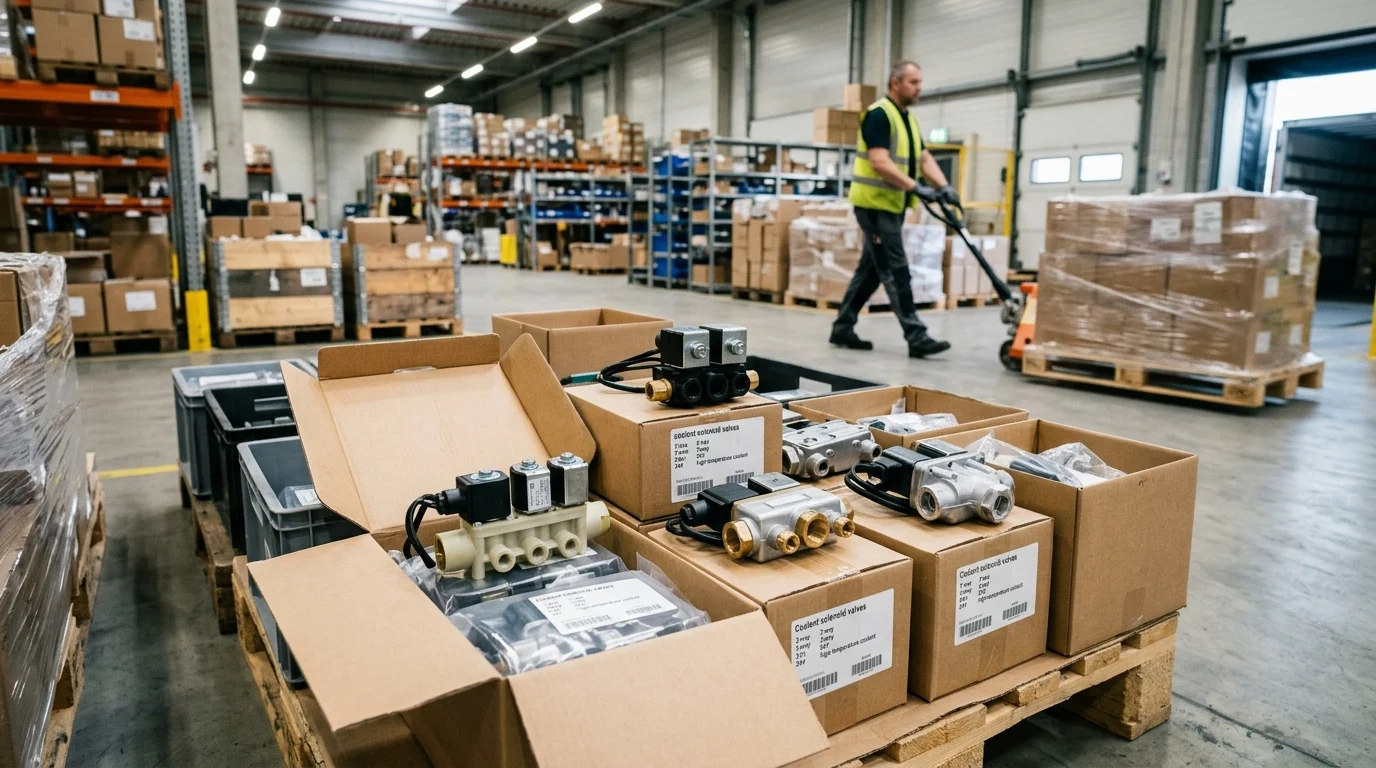
Selecting the appropriate coolant solenoid valve requires a rigorous evaluation of operational parameters and architectural constraints. Engineers must balance hydraulic performance with electrical efficiency and packaging limitations to meet the stringent requirements of modern EV platforms. As vehicle designs become more compact, the physical footprint and weight of these components are heavily scrutinized, driving innovation toward miniaturized yet highly capable valve assemblies.
Performance Criteria: Flow, Pressure, Temperature, and Response Time
Valve specifications are dictated by the rigorous demands of automotive thermal circuits. Operating pressures typically range from 0.5 to 3.0 bar, though systems must withstand burst pressures exceeding 5.0 bar to ensure structural integrity during pump surges. Flow rates are equally critical; a standard battery cooling loop may require a flow coefficient capable of passing 10 to 30 liters per minute with minimal pressure drop.
Temperature resilience is another vital metric, with valves expected to function flawlessly in ambient conditions from -40°C to +120°C. Furthermore, electrical consumption must be minimized, often restricted by OEM specifications to a holding power of less than 15 watts to preserve battery capacity.
| Valve Parameter | Typical EV Specification Range | Critical Impact |
|---|---|---|
| Operating Pressure | 0.5 – 3.0 bar | Ensures fluid circulation without leaks |
| Fluid Temperature | -40°C to +120°C | Prevents freezing or material degradation |
| Flow Rate | 10 – 30 L/min | Determines cooling capacity per subsystem |
| Response Time | < 50 ms | Crucial for rapid thermal intervention |
| Holding Power | < 15 W | Minimizes parasitic drain on the battery |
Direct-Acting, Pilot-Operated, and Proportional Valve Types
The internal mechanics of the valve determine its suitability for specific cooling tasks. Direct-acting solenoid valves utilize a magnetic field to lift the armature and open the orifice directly. They offer exceptional reliability and fast response times, though they are generally limited to lower flow rates due to the magnetic force required to overcome high fluid pressures.
Pilot-operated valves, conversely, use system pressure to assist in opening the main seal, making them ideal for high-flow applications while requiring less electrical power for actuation. For the most advanced thermal systems, proportional solenoid valves are increasingly adopted. Unlike simple on/off mechanisms, proportional valves provide variable flow control by adjusting the armature position relative to the input current, enabling highly granular temperature regulation essential for next-generation European EV architectures.
| Valve Type | Flow Capacity | Response Time | Primary EV Application |
|---|---|---|---|
| Direct-Acting | Low to Medium | Very Fast | Low-pressure loops, rapid shut-off |
| Pilot-Operated | High | Moderate | Main battery cooling, high-flow circuits |
| Proportional | Variable | Fast to Moderate | Granular temperature regulation |
Sourcing and Validation for European EV Programs
Securing a robust supply chain for coolant solenoid valves is a paramount concern for European automotive original equipment manufacturers (OEMs) and Tier 1 integrators. The regional regulatory environment, combined with high consumer expectations for vehicle lifespan and performance, necessitates stringent sourcing protocols and comprehensive validation procedures that span multiple continents. Furthermore, localized supply-chain resilience and component recyclability have become central to aligning with European regulatory priorities, driving OEMs to source from suppliers with strong regional footprints and sustainable manufacturing practices.
Compliance, Quality, and Material Requirements
Suppliers targeting the European market must adhere to rigorous automotive standards, including UNECE
Key Takeaways
- Design EV coolant valve systems to maintain battery cell temperatures within the 15°C to 35°C operating window for safety, performance, and long-term battery health.
- Specify fast-acting solenoid valves with response targets under 50 milliseconds to handle rapid thermal changes during ultra-fast charging and high-load driving.
- Use 3-way and 4-way valve architectures where heat must be shared between the battery, motor, power electronics, and cabin heating circuits.
- Prioritize valve diagnostics and fail-safe behavior aligned with ISO 26262 to reduce risks from sticking, coil burnout, and uncontrolled coolant flow.
- Optimize coolant flow control to reduce HVAC and pump energy demand, which can help improve EV range by up to 10% in extreme weather conditions.
Frequently Asked Questions
What does a coolant solenoid valve do in an electric vehicle?
It controls the flow of liquid coolant between the battery, motor, power electronics, and HVAC circuits. By opening and closing based on sensor inputs, it helps keep each subsystem within safe and efficient temperature limits.
Why are these valves important for EV battery safety?
Battery cells typically perform best around 15°C to 35°C. Coolant solenoid valves help maintain that range, reducing the risk of overheating, accelerated degradation, power derating, or thermal runaway during fast charging and high-load driving.
How can coolant valve performance affect EV range?
Precise coolant control reduces wasted energy from pumps, HVAC, and unnecessary cooling. In extreme weather, efficient thermal management can help extend driving range by up to 10% by using heat and cooling resources more intelligently.
What response time is expected for EV coolant solenoid valves?
Many Tier 1 suppliers target actuation response times under 50 milliseconds. Fast switching helps the thermal system react quickly to sudden temperature changes during acceleration, heavy load operation, or rapid charging.
Why are 3-way and 4-way valves common in modern EVs?
They allow coolant to be redirected between different heating and cooling loops. This supports functions such as battery preconditioning, cabin heating, and waste heat recovery from motors or power electronics.
Post time: Jul-06-2026