
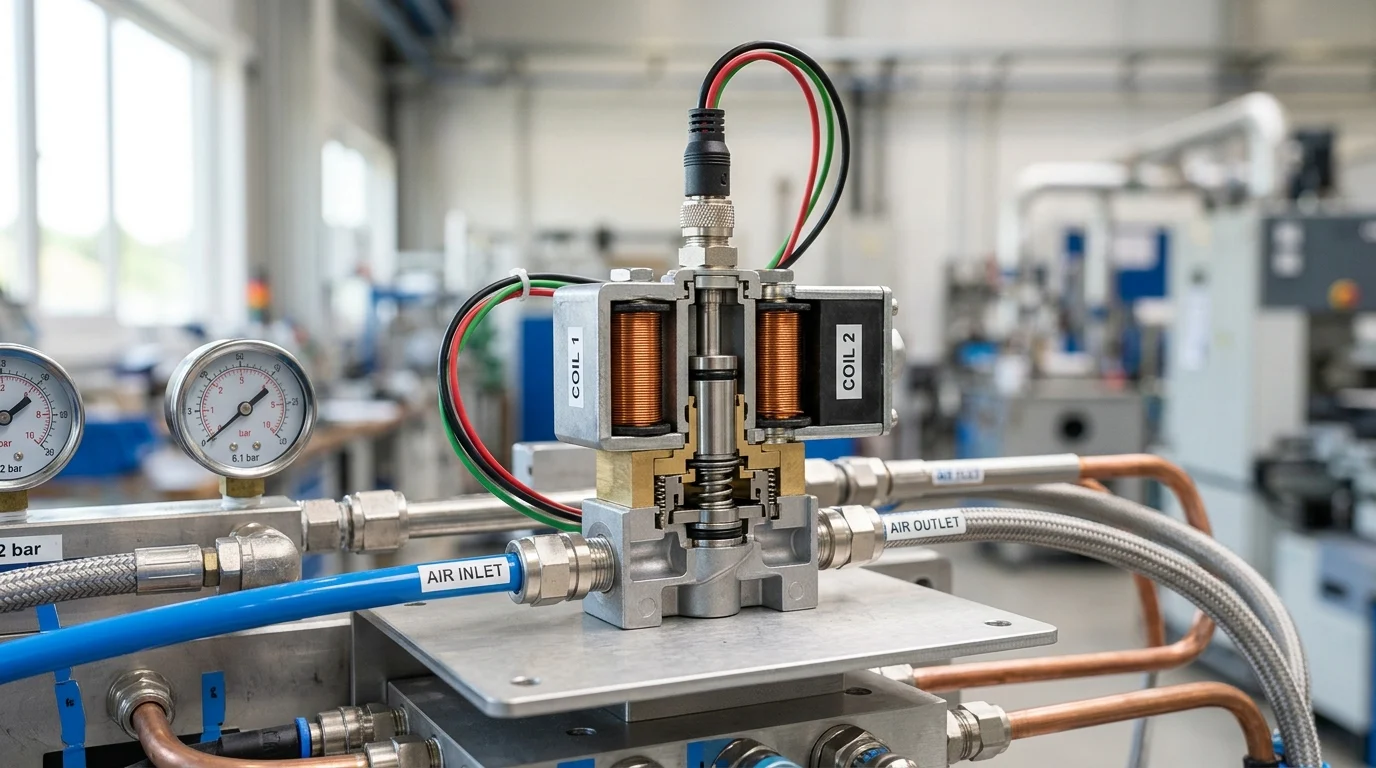
Compressed air is one of the most expensive utilities in modern manufacturing, often accounting for 10% to 30% of a facility’s electricity use. While compressors, leaks, and pressure drops get most of the attention, the electrical load from continuously energized pneumatic solenoid valves is easy to overlook. Dual-winding pick-and-hold valve technology targets that hidden waste by using high power only for the milliseconds needed to actuate, then switching to a low-wattage holding coil. This article explains how the technology works, where the claimed energy savings are realistic, and which pneumatic applications are most likely to see a meaningful return.
Why Dual-Coil Switching Technology Matters
Compressed air systems are notoriously energy-intensive, frequently consuming between 10% and 30% of a manufacturing facility’s total electricity. Within these pneumatic networks, solenoid valves act as the critical control gates, directing airflow to cylinders, actuators, and tools. While engineers routinely optimize compressors and fix leaks, the continuous electrical draw of standard directional control valves is often ignored.
Dual-coil switching technology addresses this specific inefficiency. By fundamentally altering how electromagnetic force is applied during the actuation and holding phases, these solenoid valves can reduce the coil’s electrical holding power consumption by up to 80% compared to traditional high-power single-coil designs. It is important to note that this saving applies strictly to the electrical power of the valve coils, not the total energy consumption of the compressed air system. Nevertheless, this targeted reduction provides an immediate impact on operational expenditures without compromising pneumatic performance.
What Double-Coil Solenoid Valves Are
In the pneumatics industry, the term “double-coil” can be confusing because it refers to two entirely different concepts:
- Two-Directional Solenoids: A directional valve with two separate actuating solenoids (e.g., a 5/2 double-solenoid valve used to shift a spool in two directions).
- Dual-Winding Pick-and-Hold Coils: A single solenoid enclosure containing two distinct electrical windings designed for energy savings.
This article focuses exclusively on the latter, which we will refer to consistently as dual-winding pick-and-hold technology.
In this specific design, the valve utilizes two distinct electrical windings housed within a single enclosure, paired with an integrated electronic switching mechanism. The primary winding, known as the actuation or pull-in coil, is designed to generate a high-intensity magnetic field. This field overcomes the internal spring tension and static friction to shift the valve spool, a process that requires a typical 15 to 20 watts of power but lasts only 30 to 50 milliseconds.
Once the valve reaches its end position, the internal solid-state switching mechanism de-energizes the primary coil and engages the secondary holding coil. Because maintaining the spool’s position requires only a fraction of the initial force, the holding coil operates on just 1.5 to 3 watts, depending on valve size, pressure, and voltage. This drastic reduction in continuous power draw prevents the coil from overheating and eliminates unnecessary electrical waste.
Best Compressed Air Applications
This technology delivers the highest return on investment in pneumatic systems characterized by long duty cycles. Applications where valves remain energized for extended periods, such as continuous packaging lines, bulk material pneumatic conveying, and automated sorting facilities, benefit immensely from the reduced holding wattage. Conversely, rapid-cycling applications (e.g., actuating >1 Hz or energized for less than 10% of a cycle) see little to no energy benefit because the valve rarely reaches the low-power holding phase.
Furthermore, reduced-power holding valves are highly effective in systems operating within standard industrial pressure ranges of 2 to 10 bar. In explosive or highly regulated environments, the reduced thermal footprint of a low-wattage holding coil helps facilities meet strict T-class temperature ratings. However, it is crucial to note that lower coil temperature alone does not make a valve suitable for explosive atmospheres; these components must still carry appropriate certifications (such as ATEX or IECEx) and often require intrinsic safety barriers and strict adherence to hazardous-area installation standards.
Double-Coil vs Single-Coil Solenoid Valves
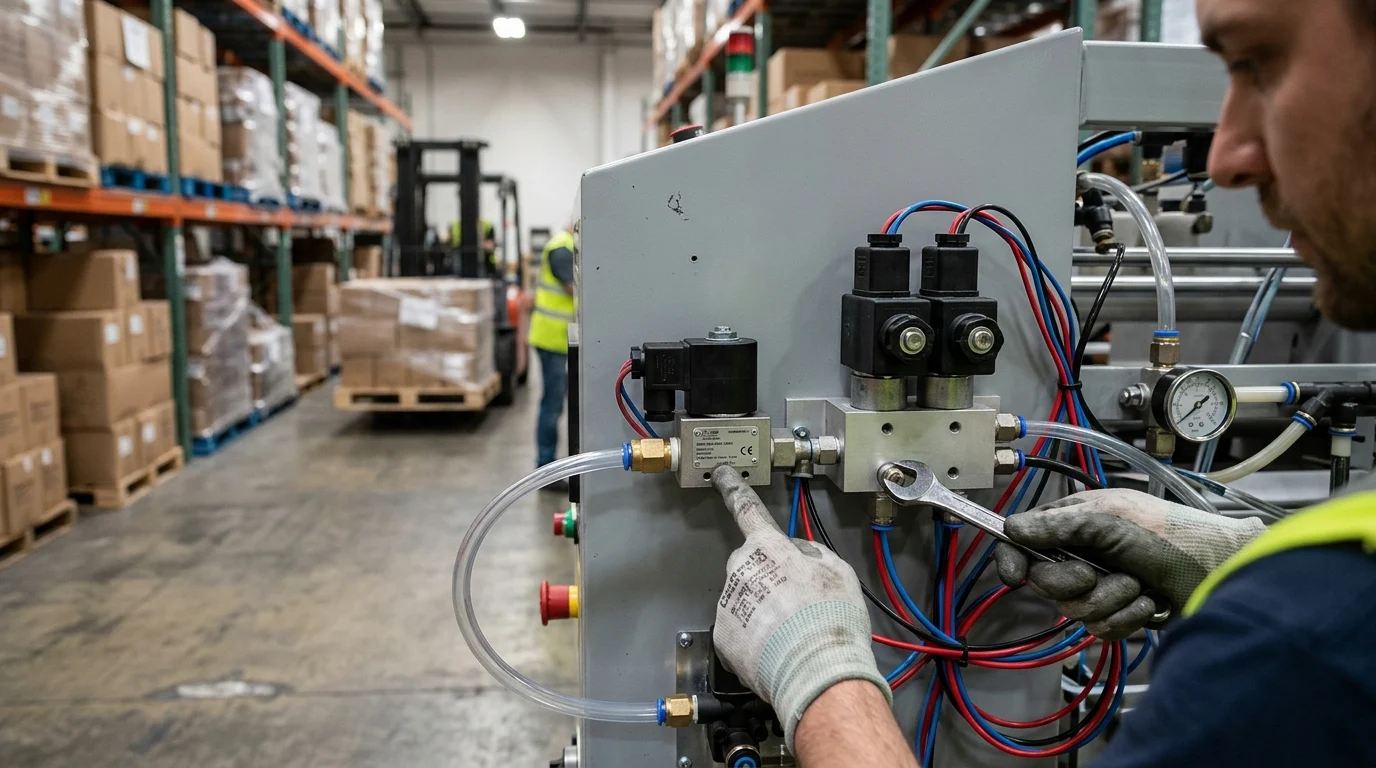
The operational differences between dual-winding pick-and-hold valves and legacy single-coil solenoid valves highlight a fundamental shift in pneumatic control engineering. Standard legacy single-coil valves rely on a brute-force approach, utilizing one winding to both actuate the valve and hold it in position against a mechanical return spring. It is important to note that modern single-coil valves equipped with pulse-width modulation (PWM) can achieve comparable holding-power savings. Therefore, the most dramatic efficiency gains from dual-winding pick-and-hold technology are realized when replacing legacy, non-PWM high-power designs.
This continuous high-power requirement in legacy valves leads to significant thermal dissipation. A standard valve energized for hours acts as a small space heater, radiating wasted electrical energy into the surrounding environment and accelerating the degradation of internal seals due to constant thermal stress.
Power Draw and Holding Energy Comparison
To quantify the efficiency gains, it is necessary to compare the electrical characteristics of both valve types under continuous operation. The following table illustrates the performance differences based on a representative example of a standard 24VDC pneumatic control valve.
| Performance Metric | Legacy High-Power Single-Coil Valve | Dual-Winding Pick-and-Hold Valve |
|---|---|---|
| Actuation Power (Inrush) | 15.0 Watts | 15.0 Watts |
| Continuous Holding Power | 15.0 Watts | 3.0 Watts |
| Average Coil Temperature | 75°C to 85°C | 25°C to 35°C |
| Annual Energy Cost (per valve)* | $15.76 | $3.15 |
| Energy Reduction | Reference | Up to 80% |
Assuming continuous operation 24/7 at $0.12 per kWh. The up to 80% energy-saving figure represents maximum values for holding-power reduction under continuous-duty conditions; actual savings will vary by valve size, operating pressure, voltage, and ambient temperature. Modern single-coil PWM valves can also achieve similar efficiencies.
Key Engineering Trade-Offs
While the energy savings are compelling, specifying dual-winding pick-and-hold valves involves certain engineering trade-offs. The primary barrier is the initial capital expenditure. These units typically cost 20% to 40% more upfront than their standard single-coil counterparts due to the complex dual-winding construction and integrated switching electronics.
Additionally, control logic and environmental factors must be considered. Older systems required a Programmable Logic Controller (PLC) to send two separate signals—one for actuation and one for holding. Modern reduced-power valves mitigate this by incorporating smart integrated circuits directly into the DIN connector, allowing them to accept a standard single PLC output while managing the coil transition internally. However, these integrated electronics introduce new considerations: they may have stricter ambient temperature limits, require specific AC or DC compatibility checks, and can complicate diagnostics if the internal switching mechanism fails.
How to Specify and Retrofit Double-Coil Valves
Integrating dual-coil switching technology into existing infrastructure requires precise execution to realize energy savings of up to 80% in compressed air systems. Facility engineers must evaluate both mechanical parameters and electrical control logic before initiating upgrades to ensure seamless integration and sustained performance.
Reliable Retrofit Steps
Replacing conventional continuously energized units with double-coil solenoid valves involves a systematic approach to prevent facility downtime and ensure the new latching mechanisms function correctly.
- Conduct a Pneumatic Audit: Map out current pneumatic circuits to identify continuously energized valves that draw the most baseline power. These are the primary candidates for replacement.
- Verify PLC Compatibility: Double-coil valves operate on momentary electrical pulses rather than continuous current. Ensure the facility’s Programmable Logic Controller (PLC) can be reprogrammed to send short latching and unlatching pulses (typically 20 to 50 milliseconds).
- Execute Mechanical Installation: Isolate and depressurize the target air lines. Remove legacy valves and install the new units, ensuring thread standards (such as NPT or BSPP) and manifold footprints match the existing setup.
- Perform Pulse Testing: Apply the required momentary voltage to test the magnetic latching function. Monitor downstream air pressure to confirm the valve successfully holds its open or closed position after the electrical signal is removed.
Decision Criteria for Valve Selection
Selecting the proper hardware is critical for maximizing the lifespan and efficiency of compressed air systems. Procurement and engineering teams should weigh several technical specifications:
- Operating Pressure Range: The valve must safely accommodate the facility’s maximum compressed air output. Industrial standard valves typically support operating pressures between 0.5 and 10 bar.
- Electrical Specifications: Match the coil voltage requirements (e.g., 12V DC, 24V DC, or 120V AC) to the existing control panels to avoid installing additional transformers.
- Flow Capacity (Cv Value): Calculate the necessary pneumatic flow rate to prevent unwanted pressure drops across the valve network, which can force air compressors to work harder and negate energy savings.
- Material Compatibility: Select valve bodies (e.g., brass, stainless steel, or anodized aluminum) and seals (like NBR or FKM) that resist moisture and synthetic compressor oils present in the air lines.
Key Takeaways
- Compressed air systems can consume 10% to 30% of a manufacturing facility’s electricity, making valve-level electrical savings worth evaluating.
- Dual-winding pick-and-hold coils use 15 to 20 watts for only 30 to 50 milliseconds before switching to a 1.5 to 3 watt holding coil.
- The advertised energy reduction of up to 80% applies to solenoid coil holding power, not total compressed air system energy consumption.
- Prioritize dual-coil switching technology in long-duty applications such as packaging, sorting, and pneumatic conveying where valves stay energized for extended periods.
- Avoid expecting major savings in rapid-cycling circuits above 1 Hz or applications energized for less than 10% of each cycle.
- Lower holding wattage reduces heat buildup, which can improve coil life and help meet temperature-class requirements in regulated industrial environments.
Frequently Asked Questions
What is dual-winding pick-and-hold technology in a solenoid valve?
It uses two windings in one coil assembly: a high-power pull-in winding to shift the valve, then a low-power holding winding to maintain position after switching.
Can double-coil solenoid valves reduce total compressed air energy use by 80%?
No. The up to 80% saving applies to the valve coil’s electrical holding power, not the entire compressed air system or compressor energy consumption.
Where do dual-coil solenoid valves deliver the best savings?
They are most effective in long-duty applications where valves remain energized for extended periods, such as packaging lines, sorting systems, and pneumatic conveying.
When are dual-winding solenoid valves less beneficial?
They offer limited benefit in rapid-cycling applications or where valves are energized for less than about 10% of the operating cycle.
How much power does the holding coil typically use?
After actuation, the holding coil commonly operates at about 1.5 to 3 watts, compared with roughly 15 to 20 watts during the brief pull-in phase.
Post time: Jul-06-2026