
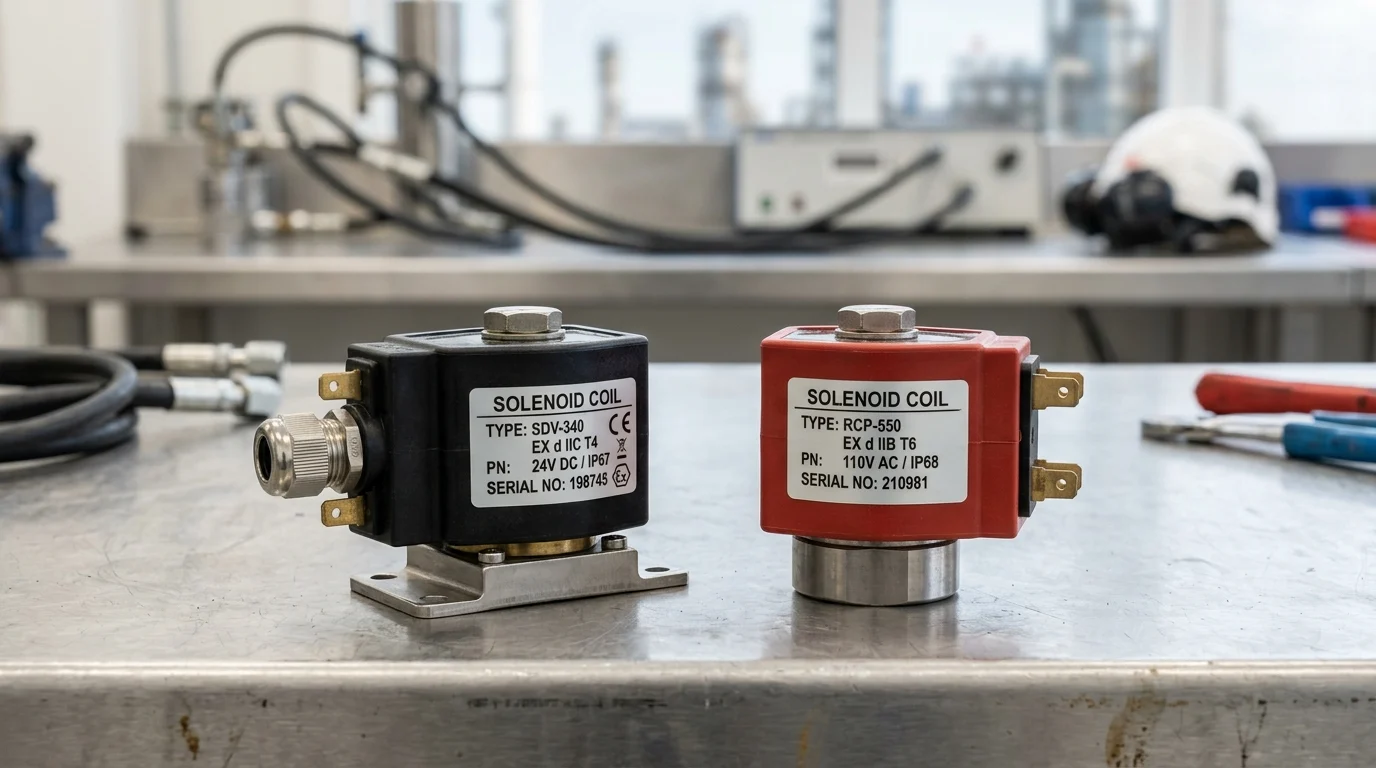
As offshore assets reach the end of production, the risk profile changes quickly: dormant wells, aging pipework, residual hydrocarbons, and temporary power systems all have to be controlled with precision. Solenoid coils may seem like small components, but they are central to emergency shutdown, blowdown, drainage, and hydraulic isolation functions during dismantling. With more than 470 North Sea installations expected to enter decommissioning over the next decade, choosing the right coil is no longer a routine procurement decision. It requires close attention to fail-safe behavior, SIL performance, voltage tolerance, duty cycle, ingress protection, and hazardous-area certification to keep shutdown procedures reliable when the margin for error is narrow.
Solenoid Coils in Offshore Platform Decommissioning
The decommissioning of offshore oil platforms represents a highly complex and inherently hazardous phase in the lifecycle of marine energy assets. As production ceases, operators are tasked with safely dismantling infrastructure, plugging wells, and isolating hazardous hydrocarbons. Executing these shutdown procedures requires precise control over residual fluids and gases. Solenoid coils serve as the critical electromechanical actuators driving this process. With industry reports indicating that over 470 offshore installations in the North Sea alone are scheduled for decommissioning over the next decade, the demand for rigorous safety protocols and reliable control components has never been higher.
Role of Solenoid Coils in Offshore Systems
In offshore control architectures, solenoid coils function as the primary interface between electronic control systems and mechanical fluid power. They actuate pneumatic or hydraulic directional control valves, which in turn operate larger process valves to isolate pipelines, vent trapped gases, and safely depressurize hydraulic power units. During the dismantling phase, existing infrastructure is often highly degraded. Solenoid coils ensure that emergency shutdown (ESD) systems and blowdown valves execute fail-safe maneuvers—typically utilizing spring-return mechanisms to force valves into a closed, secure position the moment electrical power is intentionally or accidentally severed.
Key Terms and Use Cases
Navigating the decommissioning landscape requires familiarity with specific regulatory and technical terminology. “Fail-safe” refers to the default resting state of a valve upon power loss, a mandatory requirement for offshore shutdown. “SIL” (Safety Integrity Level) quantifies the reliability of a safety instrumented system. For example, SIL 3 certified solenoid coils are frequently mandated for critical ESD valves, requiring a probability of failure on demand (PFD) of less than 0.001. Additionally, “Ex d” designates flameproof enclosures designed to contain internal explosions without igniting surrounding flammable atmospheres. Common use cases during platform removal include actuating drainage control systems, managing pulse valves for dust or particulate filtration during cutting operations, and controlling pilot assemblies for heavy-lifting pneumatic winches.
Technical Criteria for Solenoid Coil Selection
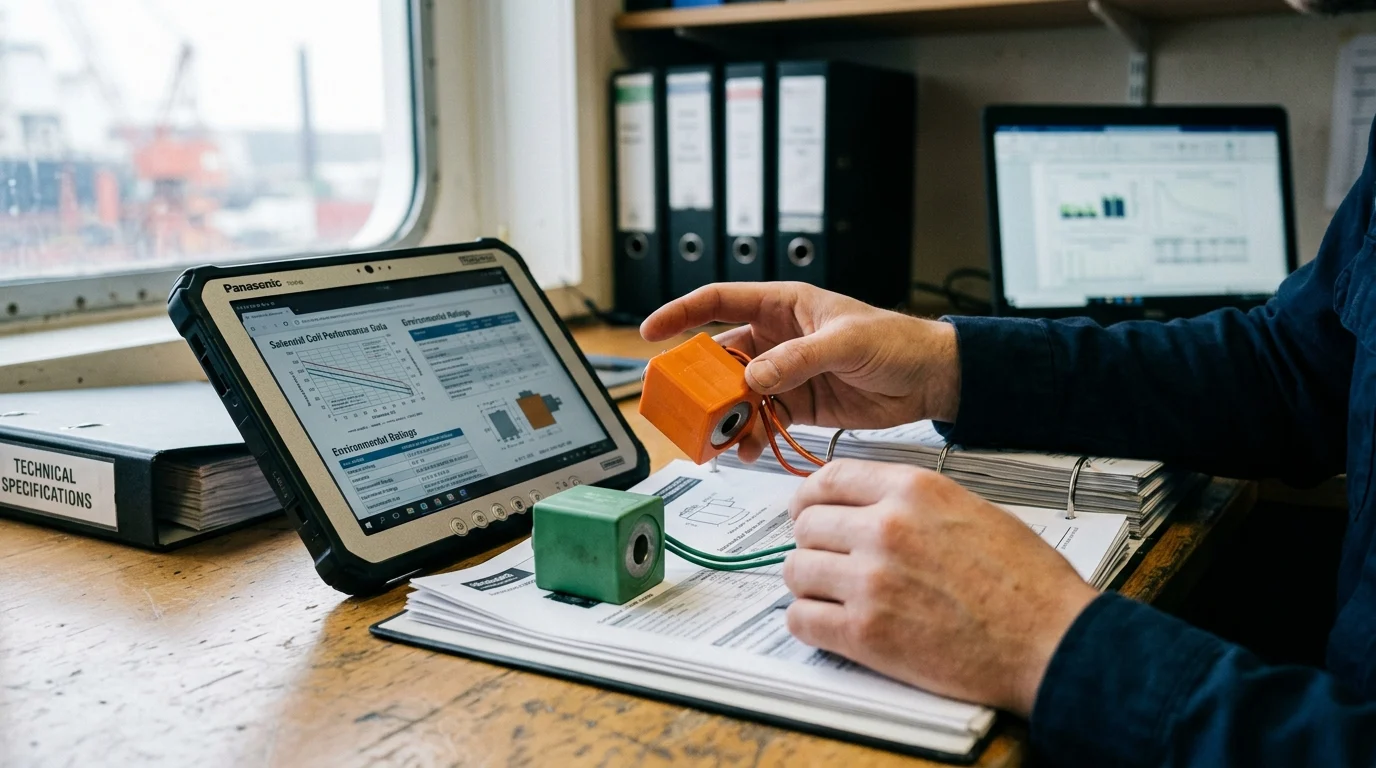
Selecting the appropriate solenoid coil for a decommissioning project demands strict adherence to electrical, mechanical, and environmental specifications. The marine environment subjects equipment to extreme corrosive salt spray, high-frequency vibration from dismantling machinery, and severe weather fluctuations. Consequently, standard industrial coils are wholly insufficient for offshore shutdown procedures, necessitating components engineered to stringent technical criteria.
Voltage, Duty Cycle, and Environmental Ratings
Electrical stability is paramount in offshore environments where long cable runs can cause significant voltage drops. Coils designed for 24V DC systems must typically accommodate a wide voltage tolerance, often requiring an operational range of +/- 10% to +/- 15% of the nominal voltage. Duty cycle is another critical metric; valves that remain energized to stay open during the months-long decommissioning process require a 100% ED (continuous duty) rating to prevent overheating.
Environmental resilience dictates the physical construction of the coil. Ingress protection ratings must meet or exceed IP66/IP67 and NEMA 4X standards, ensuring total protection against heavy seas and high-pressure washdowns. Operating temperatures in offshore environments can be punishing, requiring coils validated for ranges spanning from -40°C in Arctic installations to +80°C in equatorial zones. To combat corrosion, outer casings and junction boxes are typically manufactured from 316L stainless steel or specialized thermoset plastics.
Standard vs. Custom Solenoid Coils
Project engineers must frequently decide between standard off-the-shelf components and custom-engineered solenoid coils. Standard coils offer immediate availability, which is beneficial for sudden component failures. However, custom coils provide tailored power consumption, specialized dual-power modules, and specific pulse control characteristics required for legacy platform integration.
| Feature | Standard Marine Solenoid Coil | Custom-Engineered Solenoid Coil |
|---|---|---|
| Lead Time | 1 to 2 weeks | 6 to 12 weeks |
| Ingress Protection | IP65 / IP66 | Up to IP68 / NEMA 6P |
| Voltage Tolerance | +/- 10% standard | Custom wide-band (e.g., +/- 20%) |
| Cost Profile | Lower initial capital expenditure | Higher upfront cost, lower integration cost |
| Typical Use Case | General pneumatic utility lines | Critical ESD valves and legacy retrofits |
Sourcing and Decision-Making for Decommissioning Projects
Procurement strategies for platform decommissioning differ significantly from those used in new facility construction. The operational window for dismantling is shorter, yet the consequences of an actuator failure remain catastrophic. Sourcing decisions must weigh immediate supply chain availability against certified, long-term reliability. To mitigate risk, operators demand exceptional manufacturing quality, often requiring suppliers to prove a defect rate of less than 50 PPM (parts per million) across their production lines.
Site Survey and Supplier Evaluation
Before initiating procurement, engineering teams conduct comprehensive site surveys to assess the condition of existing valve bodies, wiring boxes, and positioners. This audit determines whether to replace entire valve assemblies or simply retrofit new solenoid coils and pilot components onto functional legacy valves. Evaluating potential suppliers requires scrutinizing their quality management systems and manufacturing capabilities.
Suppliers with deep expertise in specialized component R&D, such as FEINIU (Ningbo) Electronic Technology Co., Ltd., offer distinct advantages. A manufacturer that produces a comprehensive range of electromagnetic valves, coils, valve islands, and dual-power modules under a rigorous quality management system ensures that the retrofitted components will interface seamlessly with the platform’s aging infrastructure. Engaging suppliers who welcome technical audits and site visits further guarantees that the selected components meet the exacting standards of marine decommissioning.
Balancing Safety, Cost, and Reliability
Decommissioning budgets are inherently tight because the asset is no longer generating revenue. However, attempting to reduce costs by specifying lower-tier solenoid coils introduces unacceptable operational risks. A failure in a single shutdown valve can lead to hazardous chemical spills, uncontrolled gas releases, or severe delays in the dismantling schedule.
Decision-makers must evaluate the total cost of ownership and risk mitigation, as the daily operating cost of an offshore heavy lift vessel (HLV) and its accompanying flotilla can easily exceed $100,000 per day.
Key Takeaways
- Specify fail-safe solenoid-actuated valves for decommissioning tasks so shutdown, isolation, and depressurization functions move to a safe state if power is lost.
- Use SIL-rated coils for emergency shutdown and blowdown applications, with SIL 3 often required where the probability of failure on demand must be below 0.001.
- Select offshore-grade coils with IP66/IP67 and NEMA 4X protection to withstand salt spray, high-pressure washdowns, and severe marine exposure.
- Confirm 24V DC coils can tolerate expected voltage drops, typically within a ±10% to ±15% operating range, especially on long cable runs.
- Choose 100% ED continuous-duty coils for valves that may remain energized throughout months-long decommissioning operations.
- Avoid standard industrial coils in hazardous offshore areas and verify flameproof or explosion-protected designs such as Ex d where flammable atmospheres may exist.
Frequently Asked Questions
Why are solenoid coils critical during offshore platform decommissioning?
Solenoid coils convert electrical control signals into valve movement, enabling safe isolation, venting, depressurization, and emergency shutdown. During decommissioning, they help control residual hydrocarbons and hydraulic systems when equipment may be aged, corroded, or operating under reduced power reliability.
What does fail-safe mean for offshore shutdown valves?
Fail-safe means the valve moves to a predefined safe position if power is lost. In decommissioning, this is typically a closed or depressurized state using spring-return mechanisms, helping prevent uncontrolled fluid or gas release.
When should SIL-rated solenoid coils be specified?
SIL-rated coils should be specified for safety instrumented functions such as emergency shutdown valves or blowdown systems. For critical applications, SIL 3 components may be required, indicating a probability of failure on demand below 0.001.
What environmental ratings matter most offshore?
Coils should generally meet IP66/IP67 and NEMA 4X requirements to resist water ingress, salt spray, washdowns, and corrosion. Offshore decommissioning also demands resistance to vibration, temperature swings, and mechanical stress from dismantling work.
Why is continuous duty important for solenoid coils?
A 100% ED continuous-duty rating is essential when a coil must remain energized for long periods, such as keeping a valve open during extended shutdown activities. Without it, overheating can degrade insulation and cause failure.
Post time: Jun-30-2026