
Introduction
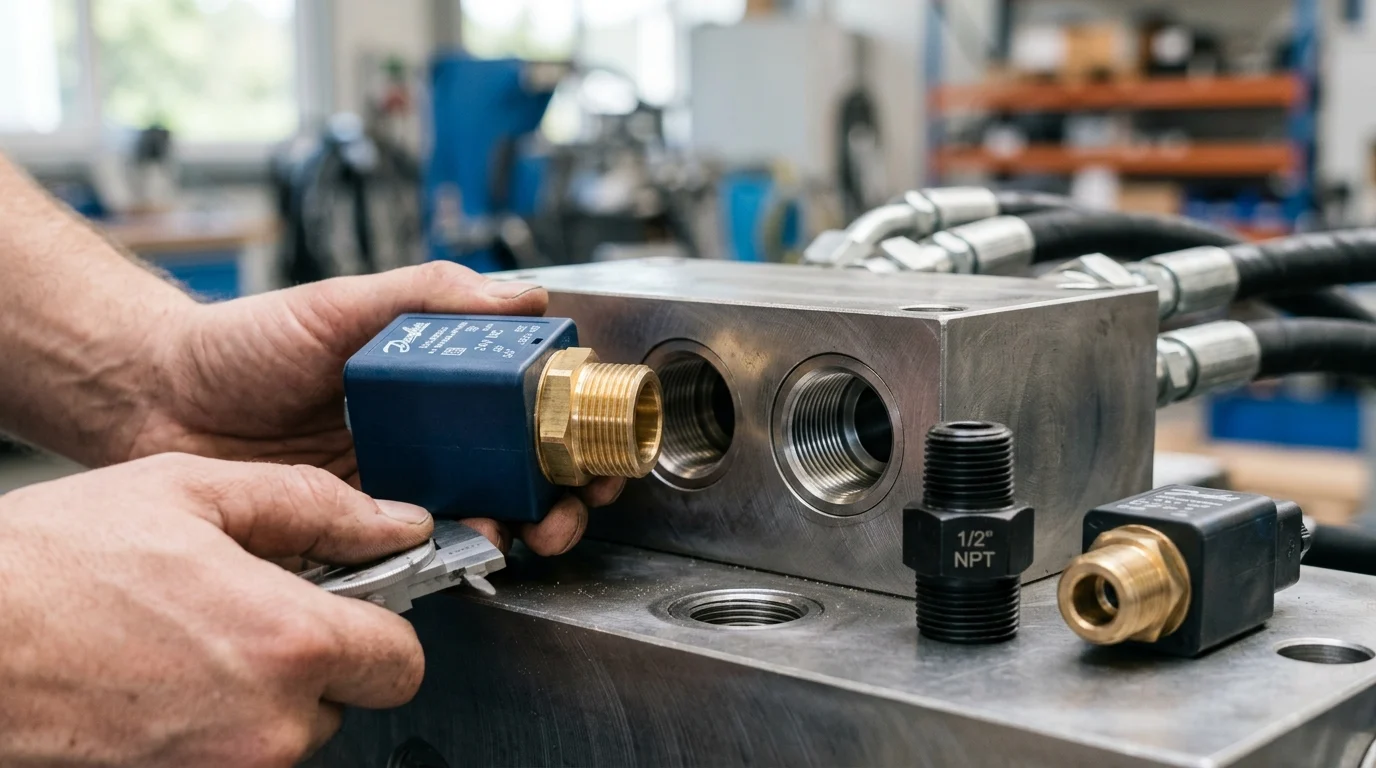
Thread selection for solenoid coil mounting is a small specification with outsized consequences in European hydraulic systems. When BSP and NPT components are mixed, differences in thread angle, taper, and sealing method can create poor fit, leakage paths, and avoidable stress under high pressure and vibration. This article explains how the two standards differ, why European installations typically prioritize BSP, and where compatibility mistakes most often occur during sourcing, maintenance, and assembly. By the end, readers will be better equipped to identify thread types, prevent mismatched connections, and make safer mounting decisions for reliable hydraulic performance.
Why Thread Compatibility Matters for Solenoid Valves
In European hydraulic systems, solenoid valves and their associated mounting components must withstand exceptionally demanding operational environments. These systems frequently handle dynamic fluid pressures exceeding 400 bar, making the mechanical integrity of every connection paramount to machine safety. At these elevated pressure thresholds, even a microscopic misalignment in a threaded joint can lead to catastrophic failure. A recurring challenge in globalized supply chains is the inadvertent mixing of British Standard Pipe (BSP) and National Pipe Tapered (NPT) threads when specifying solenoid coil mountings, valve islands, and fluid control bodies.
While standardizing on a single thread type seems straightforward, global procurement often introduces incompatible components into the assembly line. European engineering standards strictly favor BSP, but the influx of North American machinery components frequently brings NPT threads into the same facility. Understanding the critical differences between these two standards is not merely a matter of regulatory compliance; it is a fundamental requirement for ensuring system longevity, preventing environmental hazards from fluid leaks, and maintaining operational efficiency in high-vibration applications.
Key risks of mixing BSP and NPT
The primary risk of combining these incompatible thread standards is catastrophic fluid leakage and sudden pressure loss. Attempting to force an NPT male fitting into a BSP female port—or vice versa—typically causes the threads to bind and seize within the first two to three turns. This cross-threading permanently damages the internal brass or stainless steel valve body, leading to a minimum 15% reduction in structural sealing integrity.
Under the high-frequency vibration typical of hydraulic actuators and pulse valves, these compromised joints are highly susceptible to micro-leaks. In heavy engineering machinery, a single hydraulic fluid leak can cost upwards of €2,000 per incident when factoring in fluid replacement, environmental cleanup, and unplanned downtime. Furthermore, utilizing mismatched threads drastically lowers the burst pressure rating of the solenoid valve assembly, introducing severe safety hazards for operators working near the hydraulic circuits.
How to frame BSP vs. NPT in procurement and design
Procurement and design teams must establish strict verification protocols to prevent standard mixing at the sourcing stage. When specifying solenoid valves, drain valves, or pulse control instruments for European markets, designating BSP as the non-negotiable default standard streamlines integration and reduces supply chain friction. Failing to clarify thread types during the initial purchase order phase frequently results in a 20% to 30% increase in project lead times, as engineers are forced to source custom adapters or wait for replacement parts.
Relying on adapters is generally discouraged in high-pressure hydraulics. Each adapter adds an average of €15 to €30 per connection node and introduces an additional potential failure point into the fluid path. By framing thread compatibility as a critical quality assurance metric rather than an afterthought, procurement teams can align their specifications with manufacturers who utilize robust quality management systems. This proactive approach ensures that all pilot assemblies, junction boxes, and dual-power modules arrive ready for seamless integration.
BSP vs. NPT: Core Differences
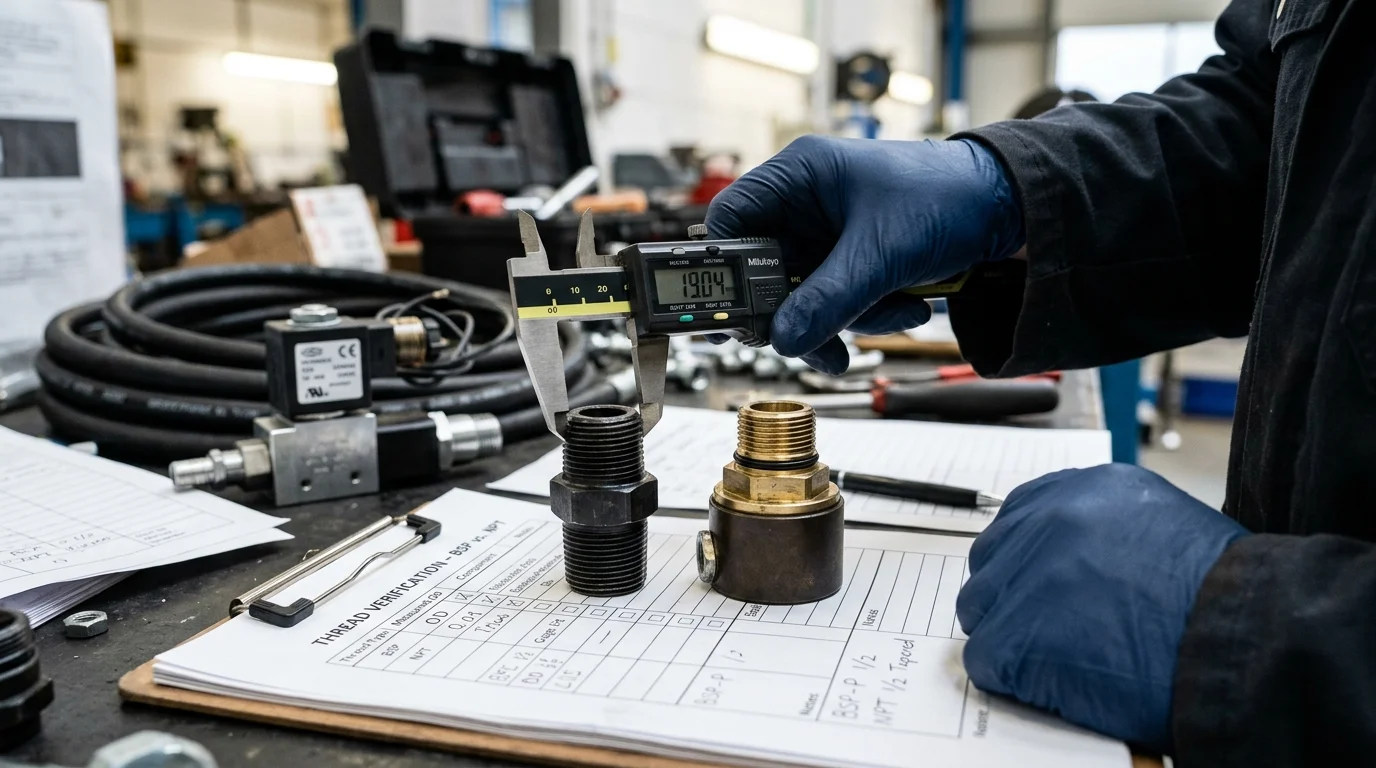
While BSP and NPT threads may appear visually identical to the naked eye—particularly in the smaller diameters commonly used for solenoid pilot valves—their underlying mechanical geometries are fundamentally incompatible. Understanding these specific geometric distinctions is essential for mechanical engineers and technicians responsible for integrating solenoid coils and valve blocks into complex European hydraulic circuits.
Thread geometry, sealing method, and regional standards
The most critical divergence between the two standards lies in the thread flank angle and the shape of the thread crests and roots. BSP threads utilize the Whitworth thread form, which features a 55-degree flank angle with distinctively rounded peaks and valleys. In stark contrast, NPT threads employ the Sellers thread form, characterized by a 60-degree flank angle with flattened peaks and valleys.
Sealing mechanisms also dictate how these threads are applied in industrial settings. BSP Parallel (BSPP) threads do not form a seal on the threads themselves; they require an external elastomeric O-ring or a bonded seal washer. BSP Tapered (BSPT) and NPT threads, however, achieve a seal through the mechanical interference and deformation of the threads as they are torqued together, typically requiring PTFE tape or liquid thread sealant to prevent fluid bypass.
| Feature | BSP (British Standard Pipe) | NPT (National Pipe Tapered) |
|---|---|---|
| Flank Angle | 55 Degrees | 60 Degrees |
| Thread Profile | Rounded peaks and valleys (Whitworth) | Flattened peaks and valleys (Sellers) |
| Primary Sealing | O-ring/washer (BSPP) or thread interference (BSPT) | Thread interference with sealant |
| Regional Standard | Europe, Asia, Australia (ISO 228 / ISO 7) | North America (ANSI/ASME B1.20.1) |
Comparison points for solenoid valve applications
For solenoid valve applications, these geometric differences manifest most prominently in the thread pitch, measured in Threads Per Inch (TPI). For instance, a standard 1/4-inch BSP fitting features 19 TPI, whereas a 1/4-inch NPT fitting features 18 TPI. Attempting to mate these two guarantees immediate thread stripping and metal galling.
Even when the pitch matches perfectly—such as in 1/2-inch and 3/4-inch sizes where both BSP and NPT standards measure exactly 14 TPI—the 5-degree difference in the flank angle prevents a proper, pressure-tight seal. In European hydraulic applications, compliance with ISO 228 for parallel threads and ISO 7 for tapered threads is standard practice. For solenoid coils requiring precise rotational alignment during installation, BSPP is highly preferred; the parallel threads allow the valve block to be positioned accurately before tightening a locking nut against the O-ring.
How to Verify the Correct Thread
Preventing installation failures requires a systematic, quantitative approach to thread identification before any component is specified in a CAD model or purchased. Relying on visual inspection or trial-and-error fitting is entirely unacceptable for high-stakes hydraulic applications where solenoid valves control critical system logic and high-pressure fluid flow.
Step-by-step checks before specification or purchase
Engineers and quality control inspectors should follow a strict step-by-step verification process.
Key Takeaways
- The most important conclusions and rationale for Ensuring Thread Compatibility: BSP vs. NPT for Solenoid Coil Mounting in European Hydraulic Systems
- Specs, compliance, and risk checks worth validating before you commit
- Practical next steps and caveats readers can apply immediately
Frequently Asked Questions
Why is BSP usually preferred over NPT in European hydraulic solenoid valve systems?
BSP aligns with common European standards, reducing fitment errors, leak risks, and sourcing delays when mounting solenoid coils and valve bodies.
Can I screw an NPT fitting into a BSP solenoid valve port?
No. They differ in thread angle and sealing method, so forcing them together can damage the port within a few turns and cause leaks.
How can I quickly tell whether a solenoid mounting thread is BSP or NPT?
Check the part drawing or supplier datasheet first. If unclear, verify thread angle, pitch, and whether the thread is parallel or tapered with a gauge.
Should adapters be used between BSP and NPT in high-pressure hydraulics?
Only if absolutely necessary. Adapters add cost, extra leak paths, and another failure point, especially in high-vibration or 400+ bar applications.
What should procurement teams specify when ordering solenoid valves for Europe?
State the exact thread standard, size, and seal type on the PO, such as BSPP with bonded seal or BSPT, to avoid mixed-standard deliveries.
Post time: Jun-04-2026