
Introduction
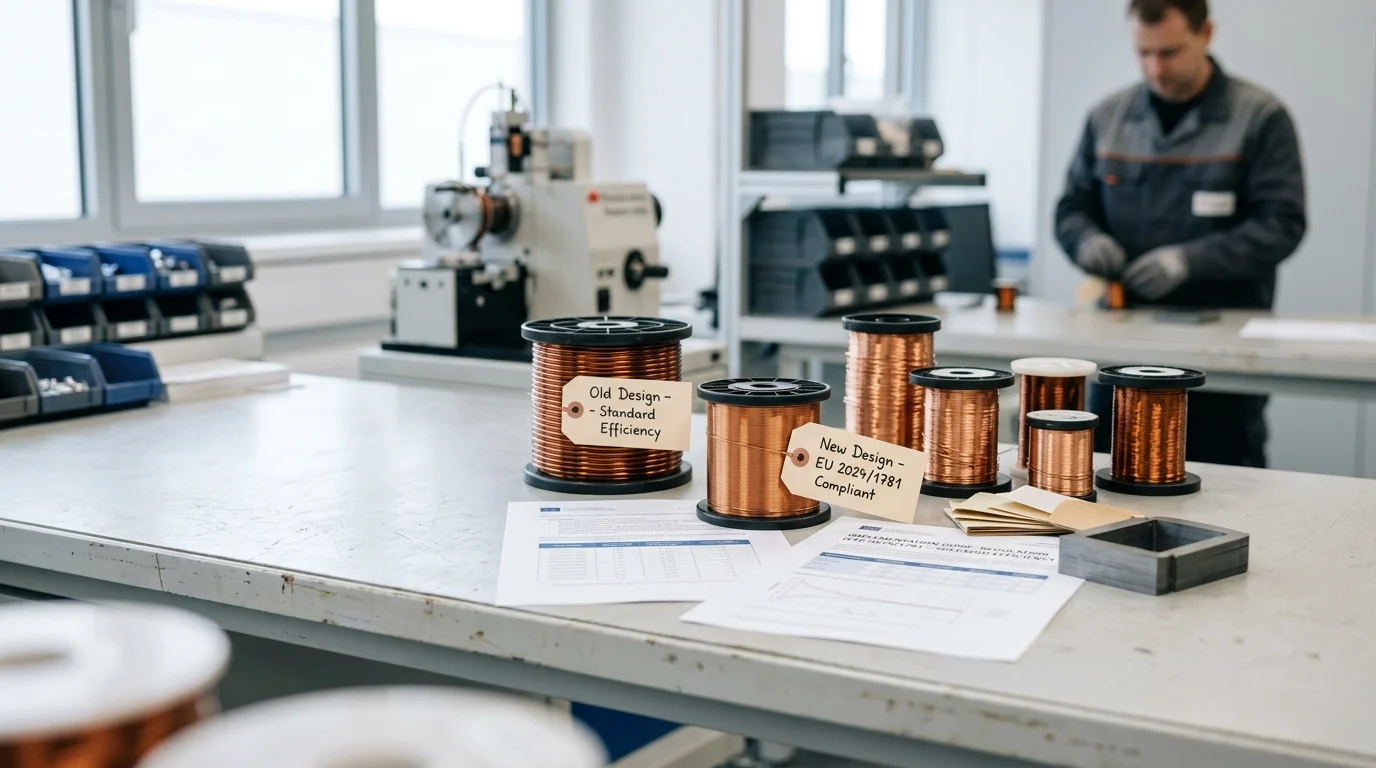
EU Regulation 2024/1781 is reshaping the rules for industrial components by extending eco-design requirements beyond energy use to the full product lifecycle. For solenoid coil manufacturers and sourcing teams, this means closer attention to power consumption, material selection, durability, repairability, and documentation. The changes are not only technical; they also affect supplier qualification, design priorities, compliance costs, and market access across the European Economic Area. This article outlines what the regulation changes in practice, which solenoid coil applications are most exposed, and how manufacturers and buyers can adjust product development and procurement strategies to stay compliant and competitive.
Overview of EU Eco-Design Regulation 2024/1781
The European Union’s implementation of the Eco-Design Regulation (EU) 2024/1781, also known as the Ecodesign for Sustainable Products Regulation (ESPR), marks a fundamental shift in how industrial components are manufactured and regulated. Replacing the legacy Directive 2009/125/EC, this updated framework expands beyond energy efficiency to mandate comprehensive lifecycle sustainability. For manufacturers and buyers of electromechanical components, particularly solenoid coils and valves, this regulation introduces stringent new baselines for durability, repairability, and environmental impact.
Unlike previous directives that primarily targeted consumer electronics and large household appliances, EU 2024/1781 casts a wider net over intermediate industrial products. Solenoid coils, which serve as the critical actuation mechanism in automotive systems, engineering machinery, and fluid control networks, are now subject to rigorous scrutiny regarding their material composition and operational efficiency.
Scope and affected product categories
The scope of EU 2024/1781 captures a vast array of electromechanical actuators. Solenoid coils utilized in transmission valves, drain valves, steam valves, and pulse valves fall under the regulatory umbrella, particularly when integrated into systems deployed within the European Economic Area. The regulation introduces specific performance thresholds, such as requiring coils that consume more than 10W of continuous power to demonstrate a minimum 15% reduction in active energy dissipation compared to previous industry averages.
Furthermore, the legislation targets the materials used in coil construction. Copper windings, magnetic steel cores, and the encapsulating resins must now meet strict chemical safety and recyclability standards. Products failing to comply with these updated parameters will face restricted access to the EU market, compelling original equipment manufacturers (OEMs) to audit their entire bill of materials.
Lifecycle and supplier compliance expectations
Compliance under the new regulation extends far beyond the factory floor, encompassing the entire product lifecycle. One of the most disruptive additions is the mandate for a Digital Product Passport (DPP). Suppliers must now provide accessible, verifiable data regarding a solenoid coil’s carbon footprint, material provenance, and end-of-life handling instructions. This requires a high degree of supply chain transparency, tracking raw materials from the mine to the final assembly line.
Suppliers are expected to engineer products that facilitate a minimum 85% material recovery rate at the end of their operational life. For solenoid manufacturers, this means phasing out highly cross-linked, non-recyclable potting compounds in favor of advanced thermoplastic encapsulants. Additionally, manufacturers must guarantee the availability of spare parts and replacement coils for a minimum of 7 to 10 years, ensuring that machinery is not prematurely discarded due to a single component failure.
Technical and compliance implications
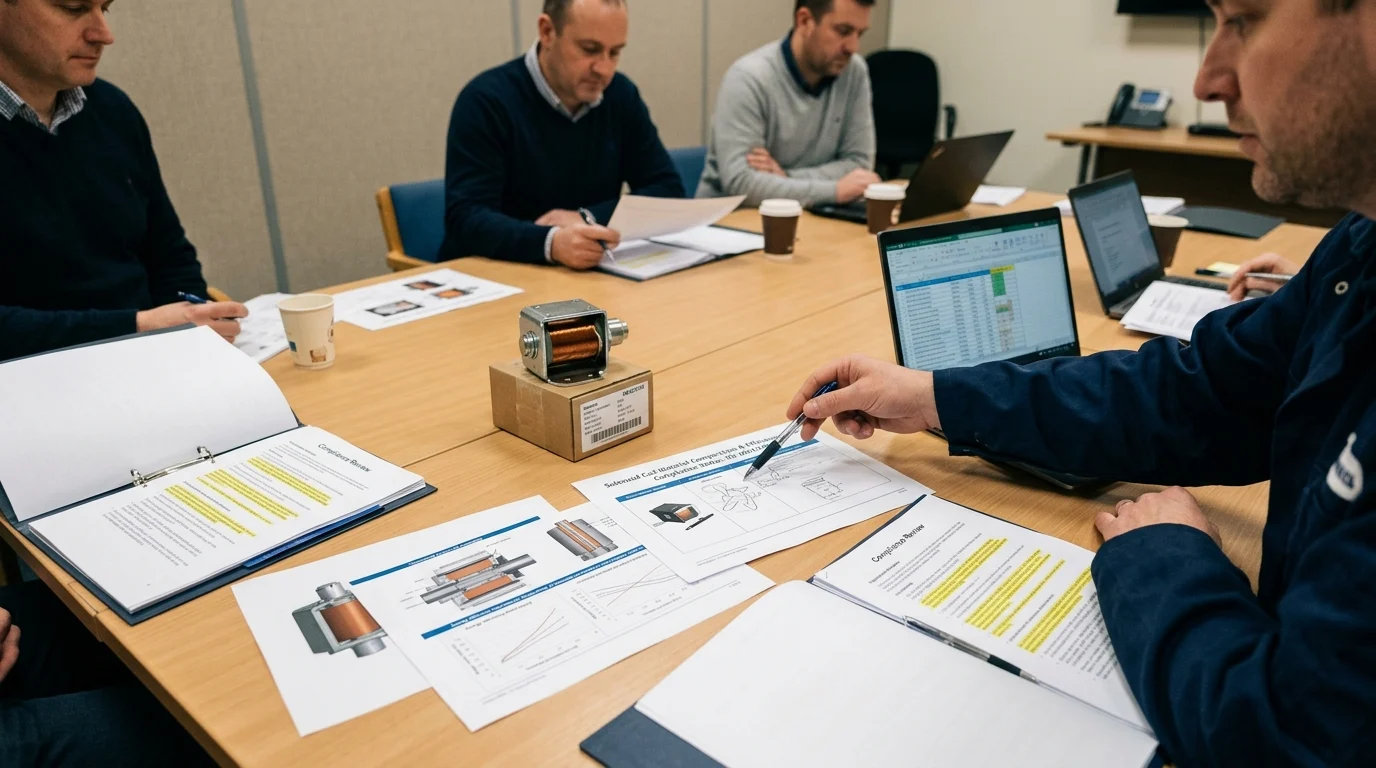
Transitioning to compliant solenoid coil designs under EU 2024/1781 requires significant engineering overhauls. The primary technical challenge lies in balancing electromagnetic force requirements with strict new energy consumption and recyclability mandates. Manufacturers must innovate at the metallurgical and chemical levels to meet these dual objectives without compromising the reliability of critical fluid control systems.
Key design variables to review
Engineers must re-evaluate several core design variables to align with the ESPR framework. Copper winding density, bobbin geometry, and core material selection are critical focal points. Utilizing low-loss silicon steel for the magnetic core can reduce eddy current losses by 15% to 20%, directly improving the energy efficiency of the actuation cycle. Furthermore, potting compounds and insulation materials must be selected not only for their dielectric strength and thermal conductivity but also for their end-of-life separability.
| Design Variable | Legacy Standard (Pre-2024) | EU 2024/1781 Eco-Design Target | Impact on Solenoid Coil |
|---|---|---|---|
| Core Material | Standard carbon steel | Low-loss silicon steel | Reduces eddy current losses by up to 20% |
| Potting Compound | Thermosetting epoxy (hard to recycle) | Halogen-free thermoplastic | Enables >85% material recovery rate |
| Power Consumption | Continuous high-draw | Dual-power / Pulse control | Lowers holding current by 60-80% |
| Traceability | Batch lot numbers | Digital Product Passport (DPP) | Requires full lifecycle data integration |
Advanced manufacturers, such as Feiniu (Ningbo) Electronic Technology Co., Ltd., have already begun integrating dual-power modules and pulse control instruments into their solenoid systems. These technologies allow a high initial actuation current followed by a dramatically reduced holding current, directly addressing the regulation’s stringent energy consumption thresholds.
Performance, cost, and compliance trade-offs
Achieving these eco-design targets introduces complex trade-offs between performance, upfront cost, and compliance. Utilizing premium-grade copper, advanced low-loss magnetic alloys, and eco-friendly resins typically increases the initial manufacturing cost of a solenoid coil by 12% to 18%. Additionally, redesigning bobbins and overmolding processes to accommodate thermoplastic encapsulants requires substantial capital investment in new tooling.
However, these upfront cost increases are often offset by lifecycle performance gains. Coils designed with superior thermal management and reduced energy draw exhibit lower operating temperatures, which extends the lifespan of the insulation and reduces the risk of premature failure. While buyers may face higher unit costs, the total cost of ownership (TCO) decreases due to lower energy consumption and reduced maintenance downtime over the equipment’s operational life.
Purchasing and sourcing response
The ripple effects of EU 2024/1781 extend directly into purchasing departments. Procurement teams can no longer source solenoid coils based solely on unit price and basic technical specifications. Ensuring uninterrupted access to the European market requires a fundamental restructuring of sourcing strategies, supplier relationships, and risk management protocols.
Supplier evaluation and audit criteria
Supplier evaluation criteria must be urgently updated to reflect the new regulatory reality. Purchasers should mandate comprehensive audits focusing on a supplier’s environmental management systems, typically requiring ISO 14001 certification as a baseline. Audits must also scrutinize the supplier’s ability to generate and maintain accurate Digital Product Passport (DPP) data, ensuring that carbon footprint calculations and material origin records are verifiable and tamper-proof.
Quality control metrics are equally critical under the new durability mandates.
Key Takeaways
- The most important conclusions and rationale for The Impact of New Eco-Design Regulation (EU 2024/1781) on Solenoid Coil Manufacturing and Sourcing
- Specs, compliance, and risk checks worth validating before you commit
- Practical next steps and caveats readers can apply immediately
Frequently Asked Questions
Which solenoid products are most likely affected by EU 2024/1781?
Coils used in transmission, drain, steam, and pulse valves sold into the EEA are likely affected, especially integrated electromechanical components.
What design changes should solenoid coil buyers ask suppliers about?
Ask about low-loss core materials, halogen-free thermoplastic encapsulation, reduced holding power designs, and recyclability-oriented construction.
Why is the Digital Product Passport important for solenoid sourcing?
It provides verifiable data on material origin, carbon footprint, and end-of-life handling, helping buyers document EU compliance.
How can manufacturers reduce solenoid coil energy use under the new rules?
Use dual-power or pulse-hold control, optimize winding density, and select low-loss silicon steel cores to cut active dissipation.
What supplier checks should OEMs add before purchasing compliant coils?
Verify DPP readiness, material declarations, recovery-rate evidence, chemical compliance, and spare-parts support for 7 to 10 years.
Post time: Jun-03-2026