
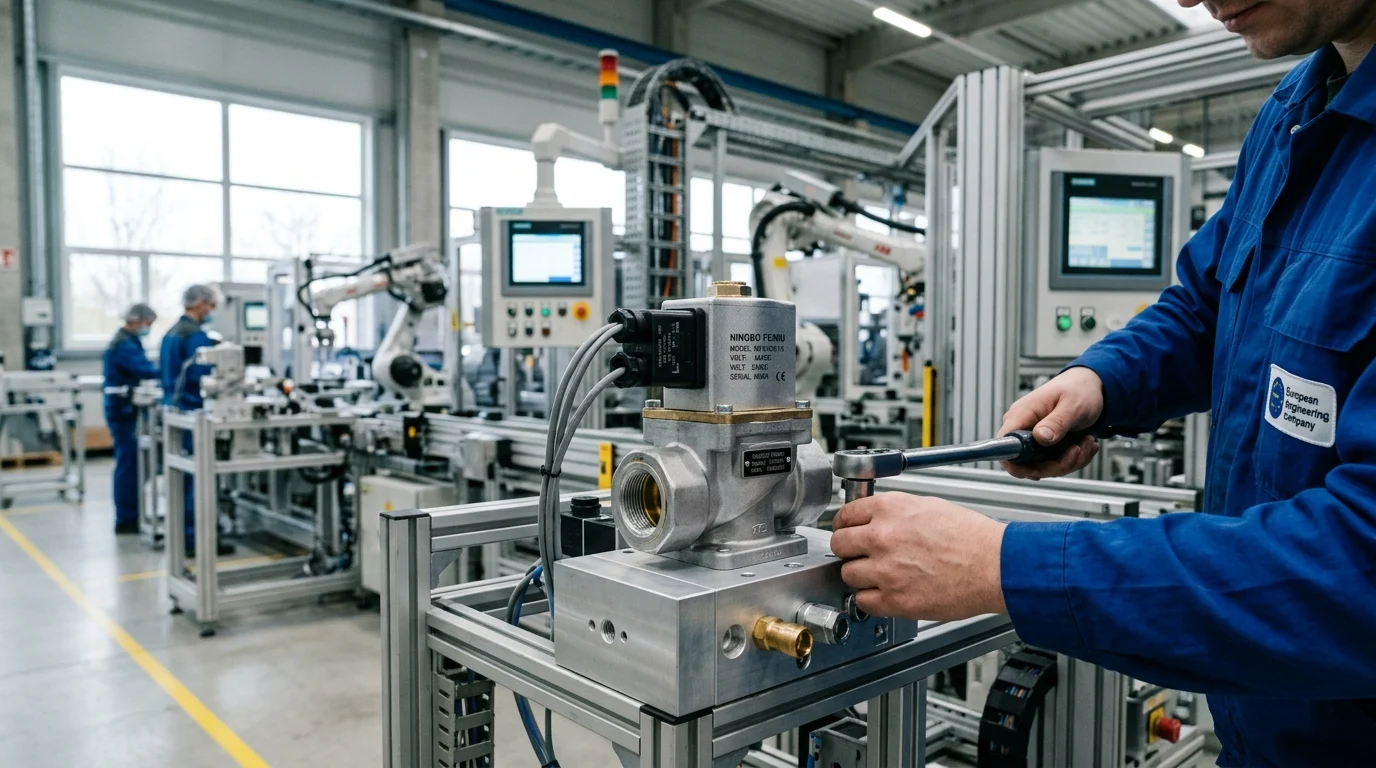
In modern automated plants, a solenoid valve is no longer a low-cost item buried in a pneumatic cabinet—it is a performance lever that affects uptime, air consumption, cycle speed, and machine integration. For US and EU manufacturers facing labor constraints, tighter throughput targets, and stricter equipment standards, supplier choice increasingly depends on engineering collaboration as much as unit price. This article examines how Ningbo Feiniu’s role is evolving from producing standard valve components to supporting application-specific automation needs, including custom manifolds, fast-response valve designs, IO-Link-ready architectures, and ruggedized specifications such as IP67 protection. It also highlights the technical benchmarks and sourcing considerations engineers should weigh before committing to a solenoid valve partner.
Why Does “From Component Supplier to Automation Partner: How Ningbo
The industrial automation sector demands fluid control mechanisms that exceed traditional operational parameters. For US and EU manufacturing lines, solenoid valves are no longer treated as isolated commodities but as critical nodes within complex pneumatic networks. As production facilities face stringent throughput requirements and labor constraints, the reliability of every pneumatic actuator becomes paramount to overall equipment effectiveness (OEE).
Ningbo Feiniu has strategically positioned its manufacturing capabilities to address this paradigm shift. While overseas sourcing inherently introduces considerations regarding lead times and cross-border communication, aligning engineering processes with western automation standards helps bridge the gap between basic component manufacturing and advanced system integration.
How should the opening frame Ningbo Feiniu’s shift from
The trajectory of Ningbo Feiniu illustrates a broader industry mandate: modern manufacturing facilities require more than off-the-shelf actuators. The shift from a component vendor to a strategic automation partner involves moving beyond standard brass or aluminum valve production to engineering comprehensive fluid control modules.
Through collaborative engineering support workflows—such as co-designing custom manifold assemblies for packaging OEMs—manufacturers can reduce final assembly times on US and EU lines by up to 30%, according to internal project data. This evolution requires optimizing internal valve geometries to achieve ultra-fast response times of 15 to 20 milliseconds, ensuring that pneumatic actuation perfectly aligns with stringent programmable logic controller (PLC) cycle times required in advanced robotics and high-speed packaging machinery.
What definition distinguishes a component supplier from an autom
A traditional component supplier operates on a transactional basis, delivering standard 3/2-way or 5/2-way directional valves based on static catalog specifications without regard for the end-user application. In contrast, an automation partner collaborates directly on the machinery’s specific pneumatic architecture, offering custom manifold assemblies, tailored exhaust management, and compatibility with modern industrial protocols like IO-Link.
This partnership model targets elevated performance baselines, such as achieving an operational lifespan of 50 million cycles (per internal endurance testing) and securing IP67 ingress protection ratings for harsh, washdown-heavy environments like food processing. By assuming responsibility for the sub-assembly’s holistic performance, the partner absorbs integration risks previously borne by the original equipment manufacturer (OEM), though buyers must still account for minimum order quantities (MOQs) associated with custom production runs.
Which Solenoid Valve Specifications and Comparison Points Determine Perf
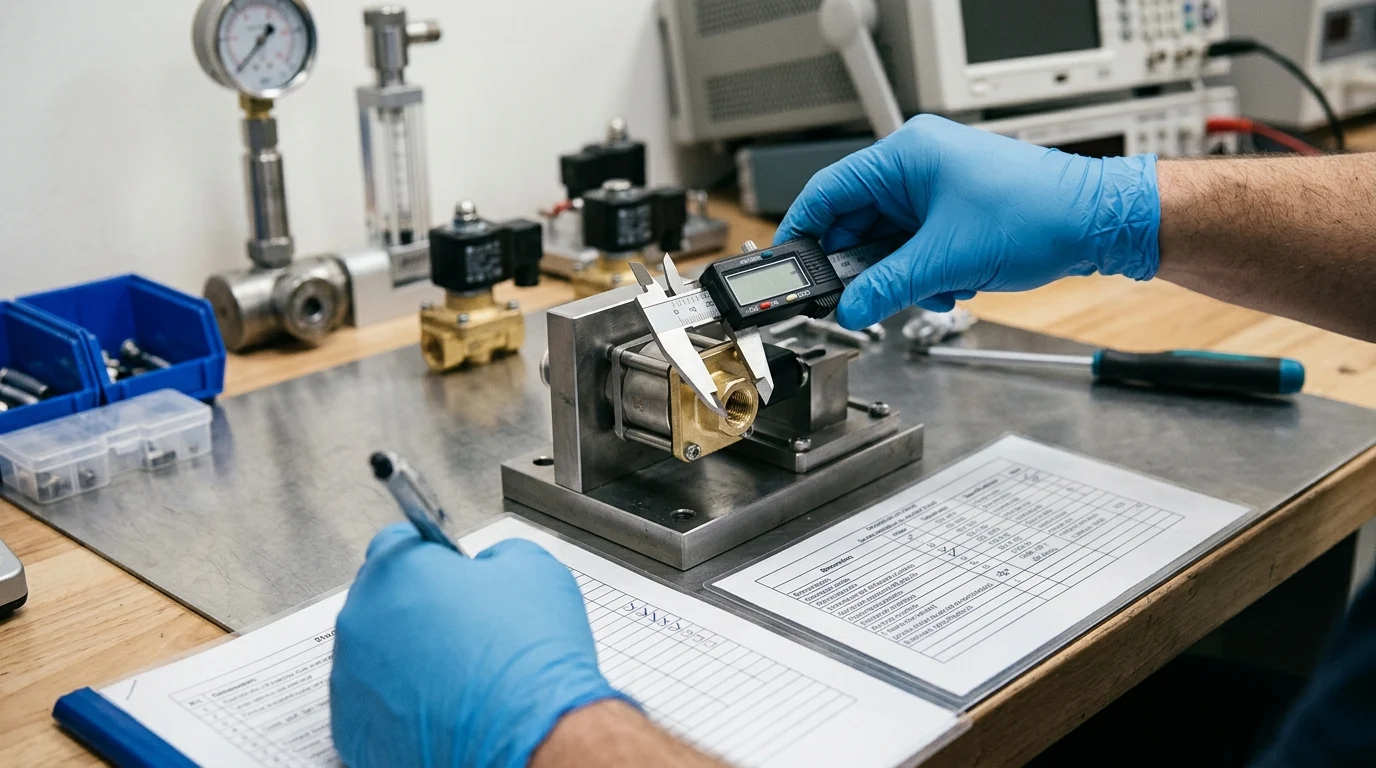
Selecting the correct solenoid valve architecture requires rigorous technical evaluation and an understanding of system-level fluid dynamics. Engineers designing automation equipment for western markets must balance pneumatic performance with energy efficiency, spatial constraints, and long-term durability.
Ningbo Feiniu addresses these stringent engineering requirements by providing detailed empirical data on valve dynamics. This transparency allows system integrators to precisely match fluid control components to their respective pneumatic cylinders and rotary actuators without over-specifying or under-powering the system.
How should engineers compare pressure range, flow capacity
Engineers must evaluate pressure ranges and flow capacities to prevent pneumatic starvation or excessive compressed air consumption, which remains one of the highest utility costs in modern manufacturing. Solenoid valves utilized in contemporary automated assembly lines typically operate within a precise pressure band of 0.15 to 0.8 MPa.
The flow capacity, quantified by the Flow Coefficient (Cv), must be carefully matched to the actuator’s bore and stroke requirements. For instance, a Cv rating between 0.89 and 1.4 is generally required for high-speed sorting and ejection applications. Furthermore, power consumption is a critical metric for control cabinets densely packed with I/O modules; specifying low-wattage DC coils, operating strictly between 2.5W and 4.8W, mitigates thermal buildup and significantly reduces the required amperage sizing for 24VDC industrial power supplies.
What comparison table can show standard catalog solenoid valves
To illustrate the technical delta between standard market offerings and engineered partnership solutions, the following table compares key performance and logistical specifications critical to machine builders designing for export markets (metrics for the integrated solution are based on the manufacturer’s internal test data).
| Specification Parameter | Standard Catalog Valve | Ningbo Feiniu Integrated Solution |
|---|---|---|
| Operating Pressure | 0.15 – 0.7 MPa | 0.15 – 0.8 MPa (Enhanced Seals) |
| Power Consumption | 4.8W – 5.5W | 2.5W – 3.0W (Low Energy Coil) |
| Cycle Lifespan | 20 Million Cycles | 50 Million Cycles |
| Ingress Protection | IP65 | IP67 (Washdown Ready) |
| Flow Coefficient (Cv) | 0.75 | 0.89 to 1.4 (Optimized Porting) |
| Defect Tolerance | < 500 PPM | < 50 PPM |
By analyzing these specific metrics, mechanical design teams can accurately quantify the long-term reliability and energy efficiency gains achieved by integrating optimized valve solutions into their automated machinery, directly impacting the end-user’s operational overhead.
How Should Procurement Teams Evaluate Ningbo Feiniu for Compliance
While engineering specifications dictate mechanical performance, procurement teams must rigorously vet international suppliers for regulatory compliance, financial stability, and supply chain resilience. Supplying highly regulated US and EU markets mandates strict adherence to established electrical, environmental, and material safety directives.
Evaluating a supplier like Ningbo Feiniu involves auditing their comprehensive quality management systems to ensure that every solenoid coil and manifold assembly meets the legal and operational standards required by western industrial regulatory bodies, while also assessing their capacity to navigate international shipping logistics and time-zone communication barriers.
What practical sourcing steps should verify documentation
Procurement professionals must initiate practical sourcing steps by verifying primary documentation, starting with an active and externally audited ISO 9001:2015 certification. For the European Union market, CE marking and RoHS compliance are non-negotiable legal requirements, necessitating comprehensive Material Test Reports (MTRs) to confirm the absolute absence of restricted heavy metals in brass, aluminum, or polymer housings.
For United States deployments, UL certification on electrical coils—typically requiring Class F or Class H insulation, rated for continuous operation at 155°C or 180°C respectively—must be rigorously validated.
Key Takeaways
- Treat solenoid valves as system-critical pneumatic nodes, not commodity parts, when designing high-speed US and EU manufacturing equipment.
- Use custom manifold assemblies to simplify machine integration and potentially reduce final assembly time by up to 30%, based on cited internal project data.
- Match valve response times of 15 to 20 milliseconds to PLC cycle requirements in robotics, packaging, and other high-speed automation applications.
- Evaluate durability targets such as 50 million cycles and IP67 protection when specifying valves for demanding or washdown-heavy environments.
- Compare pressure range and flow capacity carefully to avoid pneumatic starvation, oversizing, and unnecessary compressed-air energy costs.
- Account for lead times, communication workflows, and MOQs when sourcing custom solenoid valve assemblies from overseas manufacturers.
Frequently Asked Questions
How does Ningbo Feiniu move beyond being a component supplier?
Ningbo Feiniu supports custom manifold assemblies, application-specific pneumatic layouts, exhaust management, and integration planning instead of only selling standard 3/2-way or 5/2-way solenoid valves from a catalog.
Why are solenoid valves critical to US and EU manufacturing lines?
Solenoid valves control pneumatic actuators that directly affect throughput, repeatability, and overall equipment effectiveness. In high-speed automation, valve reliability and response time can determine whether machines meet PLC cycle requirements.
What performance targets are highlighted for advanced automation applications?
The article highlights ultra-fast response times of 15 to 20 milliseconds, internal endurance targets of up to 50 million cycles, and IP67 protection for harsh or washdown-heavy environments.
How can custom manifold assemblies help OEMs?
Custom manifolds can simplify pneumatic architecture, reduce installation complexity, and lower final assembly time. The article cites internal project data showing assembly-time reductions of up to 30% for packaging OEMs.
What should engineers compare when selecting solenoid valves?
Engineers should compare pressure range, flow capacity, response time, valve configuration, power consumption, ingress protection, protocol compatibility, and suitability for the actuator and operating environment.
Post time: Aug-27-2026