
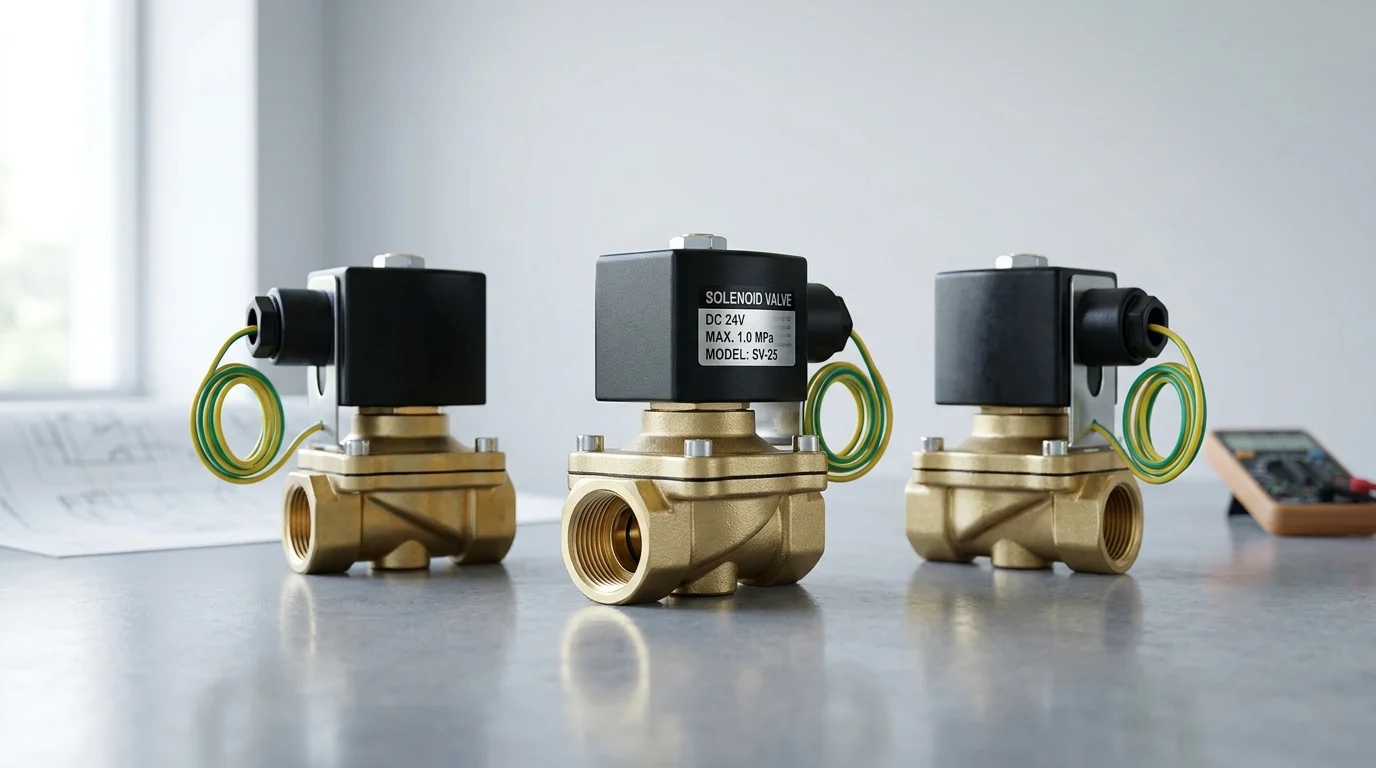
China remains a compelling source for solenoid valves, but the landed cost is no longer determined by unit price alone. A shipment that looks profitable on a quote sheet can become expensive if the HTS code is wrong, a Section 301 duty applies, CE documentation is incomplete, or material declarations fail EU scrutiny. For buyers serving US and European markets, the challenge is to preserve China’s manufacturing cost advantage while controlling customs risk, compliance exposure, and quality consistency. This guide explains the tariff, classification, forced-labor, CE, RoHS, and REACH issues that matter most—and how to address them before they disrupt your budget or delivery schedule.
Tariffs and Compliance Basics for Solenoid Valve Buyers
Sourcing solenoid valves from China offers substantial upfront cost advantages, but these savings can quickly evaporate at the border without a proactive compliance strategy. Both the United States and the European Union enforce strict regulatory and tariff-based guardrails. Buyers must align their sourcing strategies with these localized frameworks long before issuing a purchase order to prevent costly delays (often 14–30 days in customs holds), legal liabilities, and budget overruns.
Key US Tariff and HS Code Considerations
For United States importers, the primary financial hurdle involves navigating Section 301 tariffs. Solenoid valves can classify under several Harmonized System (HS) subheadings depending on their material, function, and end-use. While HS code 8481.80.10 is frequently cited as an illustrative example, 8481.80.90 serves as a residual category for “other valves.” Buyers should seek binding rulings from Customs and Border Protection (CBP) for novel designs to ensure accuracy, as presenting a default code creates compliance liability. Buyers sourcing for both markets must also note that HS classification is jurisdiction-specific; while the US uses HTS, the EU uses Combined Nomenclature (CN) and TARIC codes.
Under US trade policies, Chinese-manufactured components are frequently subject to an additional 25% ad valorem duty on top of the standard most-favored-nation (MFN) rate (which typically ranges from 2.0% to 5.5% for valves). Because Section 301 rates and product exclusions shift across administrative reviews, this figure requires real-time verification. To protect budgets, buyers should implement concrete cost-mitigation tactics rather than merely cataloging costs to avoid. Strategies include tariff engineering (modifying designs or materials to qualify for lower-duty classifications), duty-drawback programs for components re-exported in finished goods, or utilizing bonded warehousing to defer tariff payments.
Additionally, U.S. forced-labor due diligence is now a critical entry barrier. Importers must strictly comply with the Uyghur Forced Labor Prevention Act (UFLPA). Rebuttable-presumption compliance requires rigorous supply chain mapping to prove that no raw materials or components were mined or manufactured using forced labor. Omitting this due diligence materially weakens supply chain security and risks immediate shipment seizure.
Core EU Compliance Requirements
European Union importers face strict environmental, health, and safety directives. Applicable solenoid valves entering the EU must carry a legitimate CE mark. The electrical coil requires proven compliance with the Low Voltage Directive (LVD) for devices operating between 50V–1000V AC or 75V–1500V DC. However, because most industrial solenoid valves operate at 24 V DC, they often fall outside the LVD scope. In these common cases, the Electromagnetic Compatibility (EMC) Directive or the General Product Safety Regulation (GPSR) becomes the primary CE-relevant framework to ensure the product is safe and does not emit hazardous interference.
Mechanically, valves must adhere to the Restriction of Hazardous Substances (RoHS) directive, limiting heavy metals like lead (0.1%) and cadmium (0.01%). Additionally, buyers must account for the REACH Regulation; seals, coatings, and lubricants often contain Substances of Very High Concern (SVHCs) that require strict disclosure if present above the 0.1% weight by weight (w/w) threshold. Most solenoid valves under EMC and RoHS allow for manufacturer self-declaration of CE conformity. However, for high-pressure applications, valves must comply with the Pressure Equipment Directive (PED) 2014/68/EU. While Category I equipment may allow self-certification, higher PED categories legally require a third-party notified body, shifting compliance from a fixed internal cost to a variable external expense.
Risk Reduction in China Sourcing
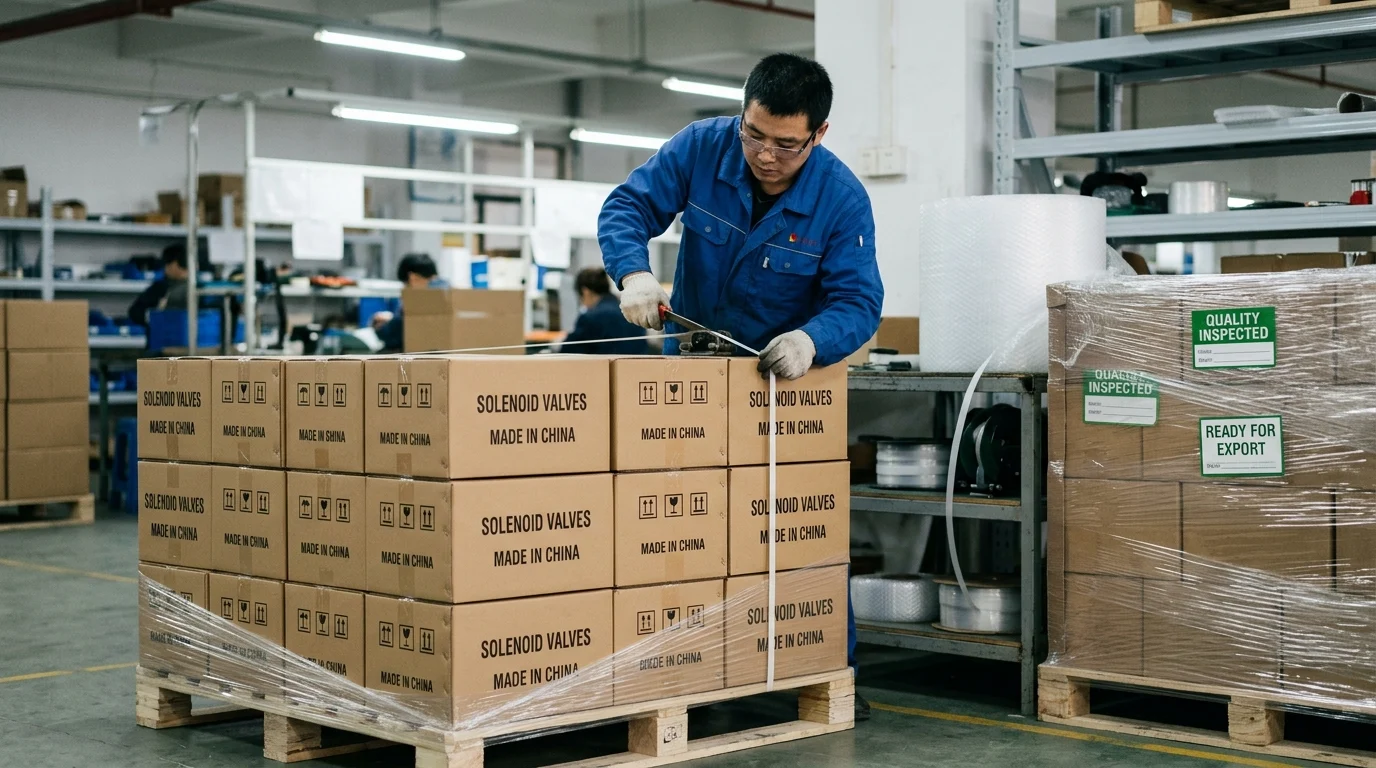
A common pitfall when importing is “quality fade,” where a supplier gradually substitutes inferior raw materials or skips critical machining steps after the initial order. Defending against this requires proactive quality assurance to maintain defect rates below typical industry targets of 500 Parts Per Million (PPM). Procurement teams must embed strict quality control checkpoints, rigorous technical audits, and uncompromising pre-shipment testing throughout the production lifecycle.
Supplier Audits and Quality Control
Effective supplier audits must penetrate deeper than verifying basic ISO 9001 certificates. Buyers should mandate comprehensive on-site or third-party audits focusing on raw material traceability and incoming quality control (IQC). For critical components like 316L stainless steel valve bodies and FKM or EPDM seals, auditors must verify that the factory purchases from reputable mills and regularly tests incoming batches for chemical composition.
A robust technical audit should evaluate the factory’s internal defect rate using quantitative Acceptable Quality Limit (AQL) targets tied to application criticality. Practical benchmarks include AQL 1.0 for critical sealing surfaces and AQL 2.5 for general assembly. Evaluating CNC machining capabilities is equally vital; internal plungers and guide tubes require strict, application-specific tolerances (often ±0.01 mm to ±0.02 mm) to ensure consistent magnetic flux and reliable actuation. Documented Corrective and Preventive Action (CAPA) protocols provide confidence that the supplier can systematically resolve precision deviations.
Sampling, Testing, and Documentation
The sampling and validation phase must include destructive and non-destructive testing to verify performance claims. Standard protocols should require documented lifecycle testing that meets industry-standard cycle-life minimums (typically 1 million to 3 million cycles) for the specific valve type, ensuring continuous operation without mechanical failure or coil burnout. Hydrostatic pressure testing is mandatory, typically subjecting valve bodies to 1.5 times their maximum rated operating pressure (e.g., 15 bar for a 10-bar rated valve) to check for micro-leaks or structural weaknesses.
Buyers must also demand verifiable documentation for every production batch before authorizing shipment. This includes independent laboratory certificates confirming Ingress Protection (IP) ratings (e.g., IP65 or IP67) for electrical enclosures exposed to dust and water. Cross-referencing authentic testing documents with the shipped goods prevents costly compliance failures and equipment breakdowns upon installation.
Landed Cost and Supplier Selection
Focusing solely on the initial quoted factory price obscures the true financial impact of global logistics, tariffs, and intermediary markups. To achieve genuine cost efficiency, buyers must evaluate suppliers based on total cost impact and operational reliability. This requires distinguishing between direct manufacturers and trading companies. Buyers should verify the factory’s business license scope, request VAT invoices showing the actual production entity, and confirm in-house CNC and coil-winding capabilities via verified audit platforms, on-site technical assessments, or supplier-reference checks.
Key Takeaways
- Verify the exact US HTS classification before ordering, because solenoid valves may fall under different subheadings and misclassification can create tariff liability.
- Budget for a possible 25% Section 301 duty on Chinese-made valves in addition to the standard MFN duty, which commonly ranges from 2.0% to 5.5%.
- Use cost-control tools such as tariff engineering, duty drawback, and bonded warehousing instead of relying only on supplier price negotiations.
- For EU imports, confirm the correct CE compliance route because many 24 V DC solenoid valves may fall outside the Low Voltage Directive but still require EMC, GPSR, RoHS, and REACH review.
- Check RoHS and REACH documentation carefully, especially for seals, coatings, and lubricants that may contain restricted substances above the 0.1% threshold.
- Build UFLPA due diligence into supplier onboarding by mapping the supply chain and collecting origin evidence before goods reach US customs.
Frequently Asked Questions
What tariffs apply when importing solenoid valves from China into the US?
Many Chinese-made solenoid valves face the normal MFN duty, often around 2.0% to 5.5%, plus a potential 25% Section 301 tariff. Rates can change, so importers should verify the current HTS classification and tariff status before ordering.
Which HS code should buyers use for solenoid valves?
There is no universal code for every solenoid valve. US buyers often review HTS categories such as 8481.80.10 or 8481.80.90, depending on design and use. For uncertain products, request a CBP binding ruling to reduce classification risk.
How can importers reduce tariff exposure without cutting product quality?
Options include tariff engineering, duty drawback for re-exported goods, bonded warehousing to defer duties, and accurate classification reviews. These strategies should be planned before production because design, materials, and documentation can affect duty treatment.
Do solenoid valves imported into the EU need CE marking?
Many do, but the applicable framework depends on the valve’s electrical and mechanical characteristics. A 24 V DC valve may fall outside the Low Voltage Directive, yet still need assessment under EMC rules, GPSR, RoHS, and REACH.
What RoHS and REACH limits matter for solenoid valves?
RoHS restricts hazardous substances such as lead to 0.1% and cadmium to 0.01%. REACH requires disclosure when Substances of Very High Concern in materials such as seals, coatings, or lubricants exceed 0.1% weight by weight.
Post time: Aug-26-2026