
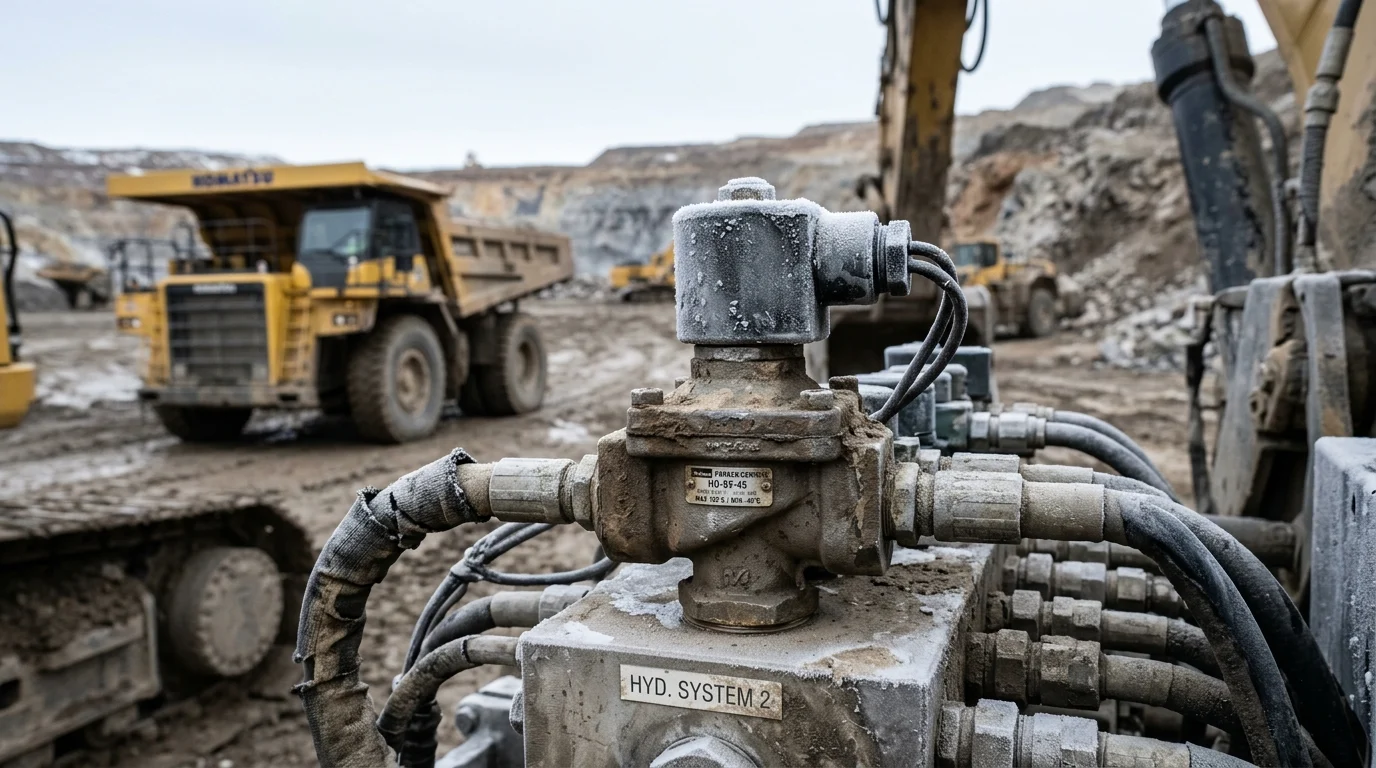
In mining pits, desert construction sites, and sub-zero haul roads, a small solenoid valve can determine whether a multi-ton machine responds instantly or loses critical control. These valves convert electrical commands into hydraulic or pneumatic movement, but temperature extremes change the physics behind that response. Cold can thicken fluid, drain voltage, and freeze moisture inside the actuator; heat can weaken coil output, accelerate oil oxidation, and distort precision clearances. This article examines how those thermal stresses affect valve speed, magnetic force, sealing, and reliability in heavy equipment—and what engineers, maintenance teams, and operators should watch to prevent costly downtime.
Temperature Effects on Solenoid Valve Performance
Solenoid valves serve as the critical control interface for hydraulic and pneumatic circuits in heavy machinery, including excavators, wheel loaders, and autonomous drill rigs. Operating in environments that range from Arctic tundra to equatorial deserts, these electro-mechanical devices face severe and constant thermal stress.
Temperature fluctuations fundamentally alter fluid dynamics, electrical resistance, and mechanical tolerances. Because proportional and directional control valves rely on precise electromagnetic forces to shift internal spools, any deviation caused by temperature extremes can severely compromise the efficiency, accuracy, and safety of heavy-duty construction and mining equipment.
Extreme Cold Effects
Sub-zero environments primarily impact valve actuation speed and electrical power delivery. As ambient temperatures plummet, the kinematic viscosity of standard hydraulic fluids increases exponentially. Operating at -40°C can cause fluid viscosity to spike by over 300% compared to baseline operating temperatures, according to standard fluid dynamics models, inducing actuation delays exceeding 500 milliseconds. This latency disrupts the synchronization of automated grading and digging operations.
Furthermore, cold temperatures reduce the available cranking amps and voltage output from heavy machinery batteries. A standard 24V system may drop to 18V in extreme cold, which can prevent the solenoid from generating sufficient electromagnetic force to overcome the thickened fluid resistance. Additionally, condensation trapped within the armature tube can freeze, mechanically locking the valve spool and causing immediate system failure upon startup.
Extreme Heat Effects
Conversely, extreme heat degrades performance through thermal expansion and elevated electrical resistance. The copper winding inside a solenoid coil experiences an electrical resistance increase of approximately 0.393% for every 1°C rise in temperature. In heavy-duty applications where ambient temperatures reach 85°C and self-heating adds another 40°C, this compounded resistance can reduce the total magnetic pull force by 20% to 30%.
This loss of force frequently results in valve stalling or incomplete shifting. Additionally, high temperatures accelerate the degradation of hydraulic fluids, leading to oil oxidation and the formation of varnish. This sticky residue coats the internal spool and bore, drastically increasing stiction (static friction) and requiring even higher magnetic forces to actuate the valve precisely when the coil's output is at its weakest.
Key Components and Failure Risks
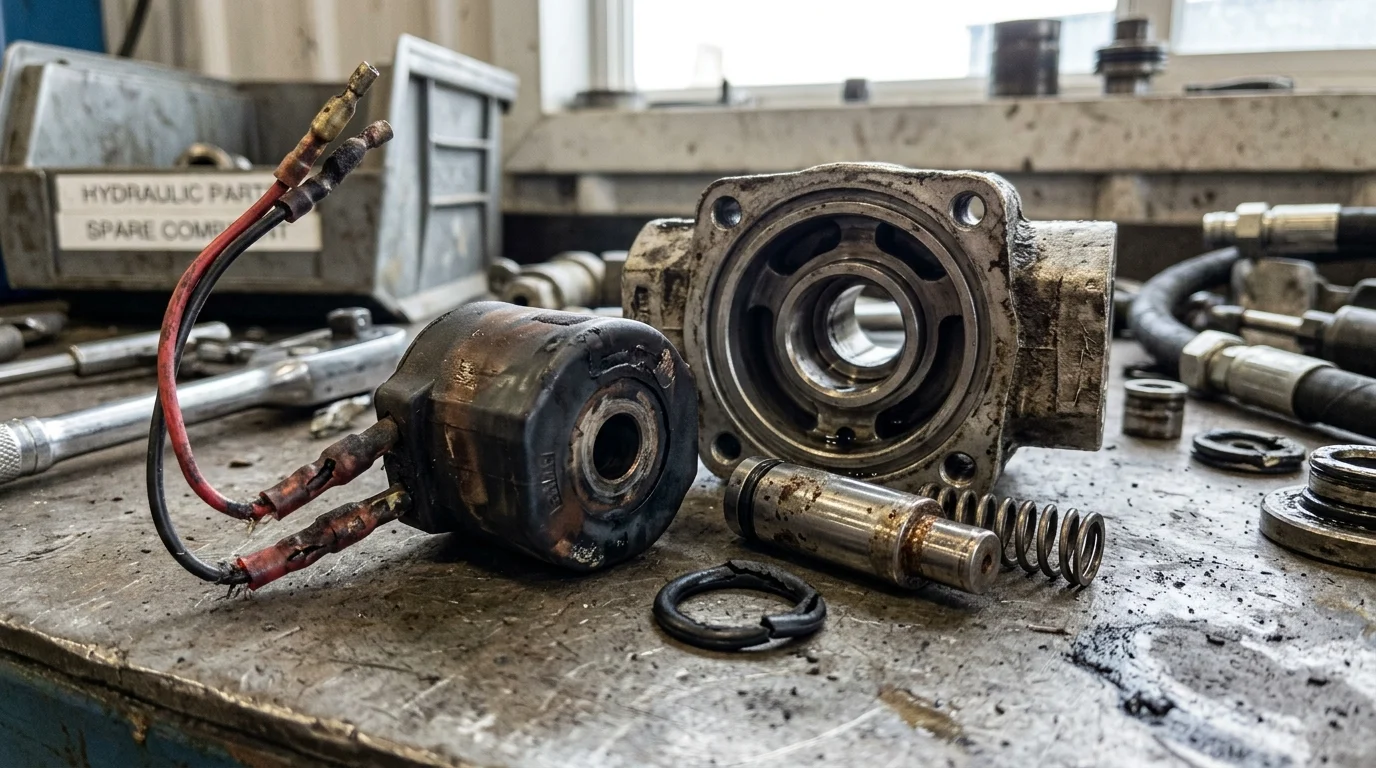
Moving beyond general environmental effects, a deeper analysis of internal components reveals specific failure risks. The structural integrity and operational reliability of a solenoid valve depend heavily on the thermal resilience of these internal parts. When exposed to extreme climates, the delicate balance between electromagnetic force generation and mechanical sealing is easily disrupted.
Moreover, the varying coefficients of thermal expansion among different materials—such as a carbon steel spool operating within an extruded aluminum valve body—can lead to a loss of operational clearance. This increases the risk of mechanical binding during high-heat cycles or excessive internal leakage when extreme cold causes components to contract.
Coils and Insulation
The electromagnetic coil and its surrounding insulation are the most vulnerable to high-temperature degradation. Industrial solenoid coils are categorized by NEMA insulation classes, dictating their maximum allowable operating temperatures. Standard Class F insulation is rated for 155°C, whereas heavy-duty mining applications often necessitate Class H insulation, which withstands up to 180°C.
Exceeding these thermal limits breaks down the enamel coating on the copper windings, leading to internal short circuits. Industry reliability models, such as those based on the Arrhenius equation, indicate that the Mean Time Between Failures (MTBF) for a solenoid coil drops by approximately 50% for every 10°C sustained above its maximum rated temperature limit. Thermal cycling also threatens the epoxy potting compounds used to seal coils. Rapid shifts from extreme heat to freezing cold can cause micro-cracking in the epoxy, compromising IP67/IP69K ingress protection ratings and allowing moisture to corrode internal wiring.
Seals, Fluids, and Lubricants
Elastomeric seals, O-rings, and system lubricants dictate the leak-tightness and smooth mechanical shifting of the valve armature. Temperature extremes cause elastomers to cross their glass transition temperature, leading to embrittlement, or to soften and extrude under high hydraulic pressure. Nitrile (NBR), a standard seal material, typically hardens and risks micro-cracking at temperatures below -30°C, resulting in external fluid leaks.
Conversely, Fluorocarbon (FKM/Viton) provides excellent high-temperature stability but suffers from poor low-temperature flexibility. While suitable for high-heat engine compartments, it is unsuitable for cold-starts below -20°C without auxiliary heating, making it unviable for Arctic deployments. Additionally, chemical compatibility is critical; for instance, EPDM offers excellent cold-weather performance but swells and degrades rapidly when exposed to standard petroleum-based hydraulic oils, restricting its use to systems running phosphate ester fluids.
| Seal Material | Minimum Temp (°C) | Maximum Temp (°C) | Best Application Profile |
|---|---|---|---|
| NBR (Nitrile) | -30°C | +100°C | General construction, moderate climates |
| FKM (Viton) | -20°C | +200°C | High-heat engine compartments, asphalt paving |
| EPDM | -50°C | +150°C | Arctic mining (compatible with phosphate ester only) |
| HNBR | -40°C | +150°C | Heavy-duty mobile hydraulics, extreme weather |
Selection and Validation Guidelines
Mitigating the risks associated with thermal extremes requires a proactive approach to valve specification and rigorous lifecycle testing. Unplanned downtime in heavy mining operations can cost upwards of $100,000 per hour based on industry-standard estimates. Engineers must align the solenoid's metallurgical and electrical properties with the anticipated environmental profile of the machinery to ensure continuous and reliable operation.
Temperature Ratings and Materials
Material selection must account for both ambient environments and internal fluid temperatures. For extreme cold applications, specifying 316L stainless steel valve bodies ensures that the metal retains its ductility and resists impact fracturing down to -50°C, whereas standard carbon steel may become brittle and fail under pressure spikes.
To manage heat generation, engineers increasingly specify Pulse Width Modulation (PWM) controllers or latching solenoids. A PWM setup provides an initial high-current pulse to actuate the valve (typically for 50 to 100 milliseconds), then drops the holding current to a fraction of the initial draw.
Key Takeaways
- At -40°C, hydraulic fluid viscosity can increase by more than 300%, so operators should allow warm-up time before demanding fast valve response.
- Cold-weather voltage drop can reduce a 24V system to about 18V, making battery condition and electrical connections critical for reliable solenoid actuation.
- Copper coil resistance rises by approximately 0.393% for every 1°C increase, reducing magnetic pull force in high-temperature duty cycles.
- When ambient heat reaches 85°C and coil self-heating adds another 40°C, solenoid pull force may fall by 20% to 30%, increasing the risk of incomplete shifting.
- High heat accelerates hydraulic oil oxidation and varnish formation, so fluid condition monitoring is essential to prevent spool stiction.
- Selecting valves with appropriate materials, seals, coil insulation ratings, and fluid compatibility helps maintain clearance, sealing, and actuation accuracy across extreme climates.
Frequently Asked Questions
Why do solenoid valves slow down in extreme cold?
Cold thickens hydraulic fluid, increasing viscosity and resistance inside the valve. At -40°C, viscosity can rise by more than 300%, causing actuation delays that may exceed 500 milliseconds.
Can low temperature prevent a solenoid valve from opening?
Yes. Extreme cold can reduce a 24V electrical system to around 18V, limiting magnetic force. If fluid is thick or moisture freezes in the armature tube, the valve may fail to shift.
How does high heat affect solenoid coil performance?
Heat increases copper winding resistance by about 0.393% per 1°C. In hot environments, this can reduce magnetic pull force by 20% to 30%, raising the risk of incomplete shifting or stalling.
What role does hydraulic fluid play in temperature-related valve failure?
In cold conditions, fluid becomes too viscous for fast response. In high heat, fluid oxidizes faster and can form varnish, which increases spool friction and makes precise actuation harder.
Why are mining and construction machines especially vulnerable?
Equipment such as excavators, loaders, and drill rigs often works in deserts, Arctic sites, and high-load duty cycles, exposing solenoid valves to both ambient extremes and internal heat from continuous operation.
Post time: Sep-27-2026