
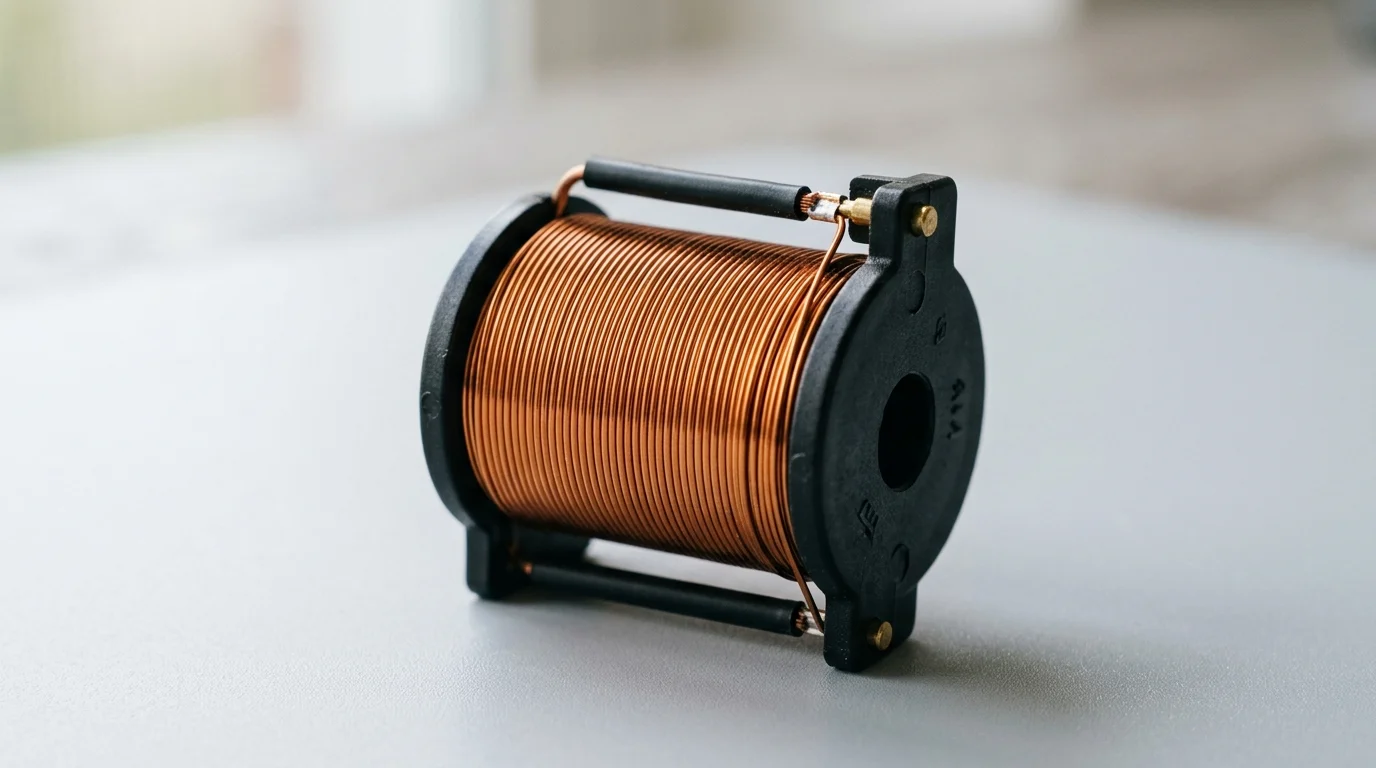
Why Solenoid Coil Inventory Strategy Matters for Just-in-Time Manufactur
For European factories operating on Just-in-Time (JIT) manufacturing principles, the supply chain for electromechanical components must be completely frictionless. Solenoid coils act as the critical actuation mechanism in pneumatic valves, hydraulic systems, and industrial automation equipment. When a line halts due to a missing component, the resulting downtime can cost facilities anywhere from €5,000 to €20,000 per hour depending on the production scale.
A proactive solenoid coil inventory strategy prevents these catastrophic stockouts while minimizing tied-up working capital. By aligning procurement schedules with production forecasts, B2B buyers can optimize storage space, reduce obsolescence risks, and maintain the continuous flow required by lean manufacturing environments.
How to Define Solenoid Coil Demand Profiles
Establishing an accurate demand profile is the foundational step in JIT procurement. Procurement teams must analyze historical consumption data alongside forward-looking production schedules to determine daily and weekly run rates. A baseline demand profile separates consistent volume requirements from seasonal or project-based spikes, allowing buyers to set appropriate safety stock levels.
Lead times heavily influence these profiles. Standard off-the-shelf 24V DC solenoid coils typically carry lead times of 2 to 4 weeks, whereas custom-wound coils with specialized connectors may require 8 to 12 weeks. Factoring in these lead times ensures that replenishment orders are triggered automatically before factory-floor bins run empty, maintaining the delicate balance of JIT operations.
Which Specifications Drive Stocking Risk
Not all solenoid coils carry the same inventory risk. Specifications such as voltage ratings, insulation classes, and ingress protection dictate how easily a component can be sourced or substituted. Standard 24V DC and 230V AC coils with Class F (155°C) insulation are highly commoditized and carry low stocking risk. Conversely, high-temperature Class H (180°C) coils or those requiring IP67-rated encapsulated housings for harsh washdown environments face tighter supply constraints.
Custom windings present the highest obsolescence risk. If a product line is discontinued or redesigned, highly specific coils cannot be easily repurposed or liquidated. Procurement managers must carefully balance the order volumes of custom specifications, often limiting stock to a strict 30-day supply, while allowing slightly higher safety margins for universal components.
How to Stock, Source, and Replenish Solenoid Coil Inventory

Executing a successful JIT strategy requires selecting the right replenishment framework and aligning it with capable manufacturing partners. The goal is to shift the burden of inventory holding upstream where possible, without jeopardizing the physical availability of the solenoid coils on the European assembly line.
Which Stocking Model Works Best
European facilities typically utilize one of three primary stocking models to manage solenoid coil flow. The traditional Kanban system relies on physical or digital signals to pull inventory from a local warehouse only when production consumes the existing stock. Alternatively, Vendor Managed Inventory (VMI) pushes the monitoring responsibility to the supplier, who tracks factory usage and replenishes bins automatically.
| Stocking Model | Control Level | Typical MOQ Requirement | Ideal Factory Use Case |
|---|---|---|---|
| Kanban (Pull) | High (Internal) | 1,000 – 2,500 units | High-mix, steady-volume production lines |
| VMI | Low (Supplier) | 5,000+ units (Annual) | High-volume, predictable continuous manufacturing |
| Consignment | Shared | Negotiated blanket order | High-value custom coils with volatile demand |
Consignment inventory, where the supplier owns the stock sitting on the buyer’s floor until it is consumed, offers the ultimate cash flow advantage. However, this model requires a high degree of trust and robust ERP integration between the factory and the component manufacturer.
How to Compare Suppliers and MOQ
Comparing suppliers involves evaluating the total landed cost against Minimum Order Quantities (MOQ). Sourcing directly from Asian manufacturers often yields the lowest per-unit cost but comes with high MOQs—frequently 5,000 to 10,000 units—and transit times of 6 to 8 weeks via ocean freight. This bulk requirement directly conflicts with JIT principles unless the buyer utilizes a third-party logistics (3PL) hub in Europe to drip-feed the factory.
Conversely, localized European suppliers or distributors might offer MOQs as low as 500 units with 48-hour delivery, but this flexibility typically incurs a 15% to 25% price premium. To bridge this gap, strategic buyers negotiate annual blanket orders with overseas manufacturers. By committing to 50,000 units annually, buyers can secure factory-direct pricing while scheduling monthly shipments of 4,000 units, perfectly aligning Asian production economies with European JIT delivery schedules.
How to Manage Solenoid Coil Compliance and Logistics

Beyond simply having parts on hand, JIT systems require those parts to be immediately usable. Any bottleneck caused by non-compliance, missing documentation, or transit damage effectively acts as a stockout, halting production lines just as severely as a missing shipment.
Which Compliance, Traceability, and Packaging Requirements Matte
r
Solenoid coils imported into the European Economic Area must strictly adhere to CE marking, RoHS, and REACH directives. For specialized industrial applications, VDE certification or ATEX compliance (for Zone 1 or Zone 21 explosive environments) is mandatory. Without proper documentation and batch traceability down to the copper wire and epoxy potting compound, entire shipments can be quarantined at customs or rejected by quality control.
Packaging is equally critical for JIT logistics. Solenoid coils are susceptible to mechanical shock and copper oxidation. Procurement specifications must mandate vacuum-sealed thermoformed trays rather than bulk-dump packaging. Tray packaging prevents terminal pin bending, protects the encapsulation, and allows for immediate robotic pick-and-place assembly on the factory floor. A stringent supplier quality agreement should target a defect rate of under 500 Parts Per Million (PPM) to prevent line disruptions.
What Decision Framework Optimizes Inventory
Optimizing solenoid coil inventory requires a comprehensive Total Cost of Ownership (TCO) framework. Procurement leaders must calculate not only the unit price and freight but also the annual inventory holding costs, which typically range from 18% to 22% of the inventory’s value in European warehouses. This calculation must be weighed against the statistical probability and financial impact of a stockout.
A robust decision framework categorizes coils by criticality and
Key Takeaways
- Wholesale sourcing and supply-chain implications for Solenoid Coil
- Specifications, compliance, and commercial terms buyers should validate
- Actionable recommendations for distributors and procurement teams
Frequently Asked Questions
What safety stock is reasonable for standard solenoid coils in JIT factories?
For common 24V DC or 230V AC coils, keep about 2–4 weeks of usage, adjusted to supplier lead time and line criticality.
Which solenoid coil types should be stocked more cautiously?
Custom-wound, Class H, and IP67 coils need tighter control because lead times are longer and substitution is harder; many buyers cap them at roughly 30 days.
Is Kanban or VMI better for solenoid coil replenishment?
Use Kanban for high-mix lines needing internal control. Choose VMI for stable, high-volume demand where the supplier can monitor usage and refill automatically.
How do European buyers balance MOQ with JIT delivery needs?
Compare total landed cost, not just unit price. Local suppliers offer faster, smaller deliveries; overseas sources often need a 3PL hub to support JIT.
When does consignment inventory make sense for solenoid coils?
It suits high-value custom coils with volatile demand. The supplier owns stock until use, improving cash flow, but it needs clear usage tracking and ERP coordination.
Post time: Apr-21-2026