
Introduction
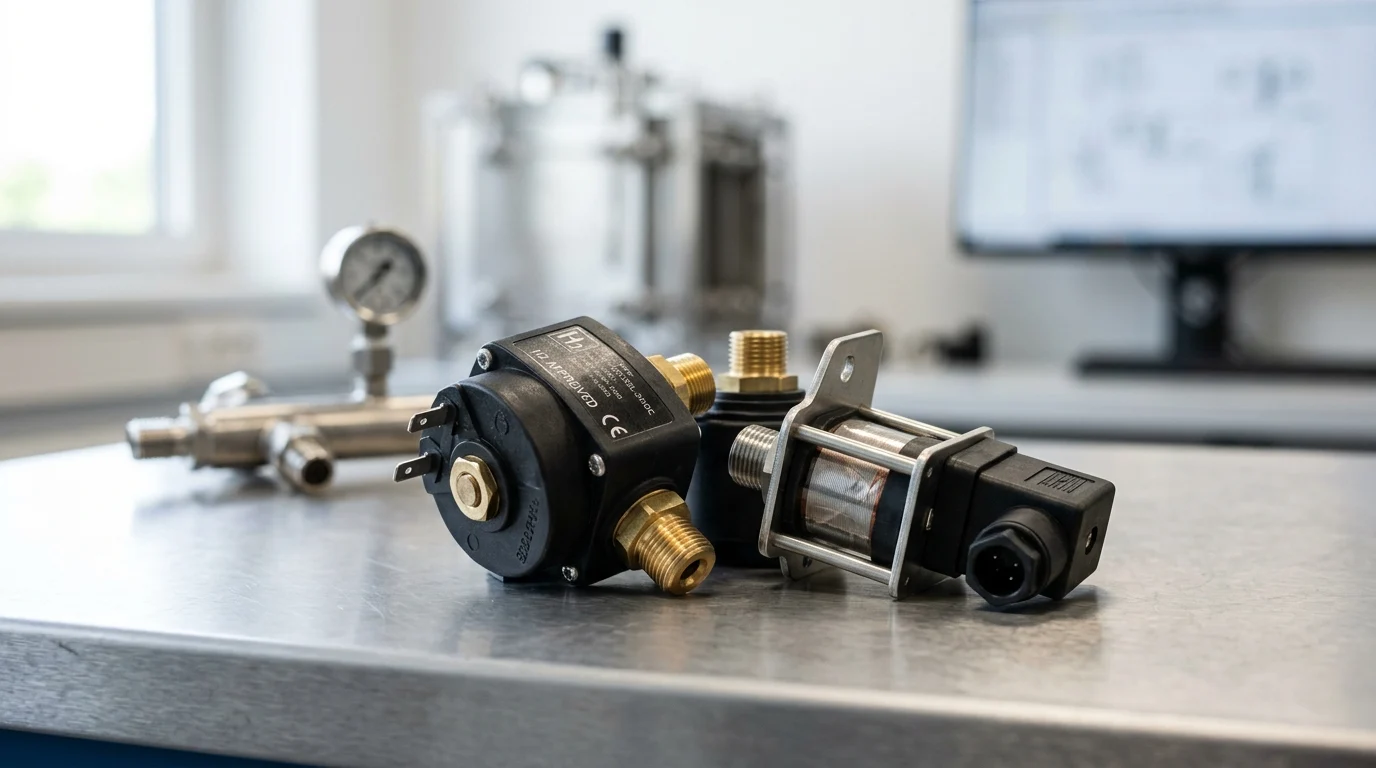
Europe’s hydrogen buildout depends not only on electrolyzers and fuel cells themselves, but also on small control components that determine whether these systems run safely, efficiently, and continuously. Among the most critical are solenoid coils, which actuate valves for hydrogen, oxygen, water, and safety isolation under demanding pressure, purity, and duty-cycle conditions. This article explains how coil selection affects valve response, thermal stability, material compatibility, and long-term reliability in hydrogen applications. It also outlines the practical criteria engineers and buyers should evaluate when specifying coils for electrolyzer skids and fuel cell systems across Europe’s evolving green energy infrastructure.
Hydrogen Applications: Selecting Solenoid Coils for Electrolyzers
Solenoid coils serve as the electromechanical heart of fluid control systems within hydrogen electrolyzers and fuel cell stacks. As Europe accelerates its transition toward green energy, the demand for precision-engineered pneumatic and hydraulic control components has intensified. These coils actuate the valves responsible for regulating process gases, managing water purification feeds, and executing critical safety shut-offs in highly volatile environments.
Electrolyzers, which split water into hydrogen and oxygen, and fuel cells, which reverse the process to generate electricity, both rely on precise fluid and gas management. Solenoid coils provide the necessary magnetic flux to drive armature movement within these valves, directly impacting system efficiency and safety. The transition from fossil fuels to hydrogen economies relies heavily on the reliability of these micro-components, as a single coil failure can trigger system-wide shutdowns.
Scope and application boundaries
The application boundaries for solenoid coils in hydrogen systems span extreme pressure and purity spectrums. In proton exchange membrane (PEM) and alkaline electrolyzers, coils actuate valves handling highly purified deionized water and corrosive oxygen byproducts. On the pure hydrogen side, systems must manage pressures ranging from 30 bar in standard production environments up to 700 bar in mobility dispensing and high-density storage applications.
Consequently, the coils must provide sufficient electromagnetic force to overcome high pressure differentials while operating in environments requiring strict helium leak test rates of less than 10^-4 mbar L/s to prevent fugitive emissions. Furthermore, the materials surrounding the coil must resist hydrogen embrittlement, ensuring that the electromechanical integrity remains intact over years of continuous service.
Europe’s green hydrogen scale-up context
The European Union’s REPowerEU initiative targets the domestic production of 10 million tonnes of renewable hydrogen by 2030. This massive scale-up fundamentally shifts the procurement landscape from custom, low-volume engineering to industrialized, high-volume supply chains. Electrolyzer plants are evolving into gigawatt-scale facilities, demanding solenoid coils capable of enduring 50,000 to 100,000 continuous switching cycles without performance degradation.
The European context also mandates strict adherence to localized safety and environmental directives. Components must be designed not just for isolated performance, but for seamless integration into standardized, highly regulated modular skids. This industrialization requires supply chains to deliver consistent, certified components at scale, moving away from bespoke prototypes toward reliable mass production.
Key Technical Criteria for Selecting Solenoid Coils
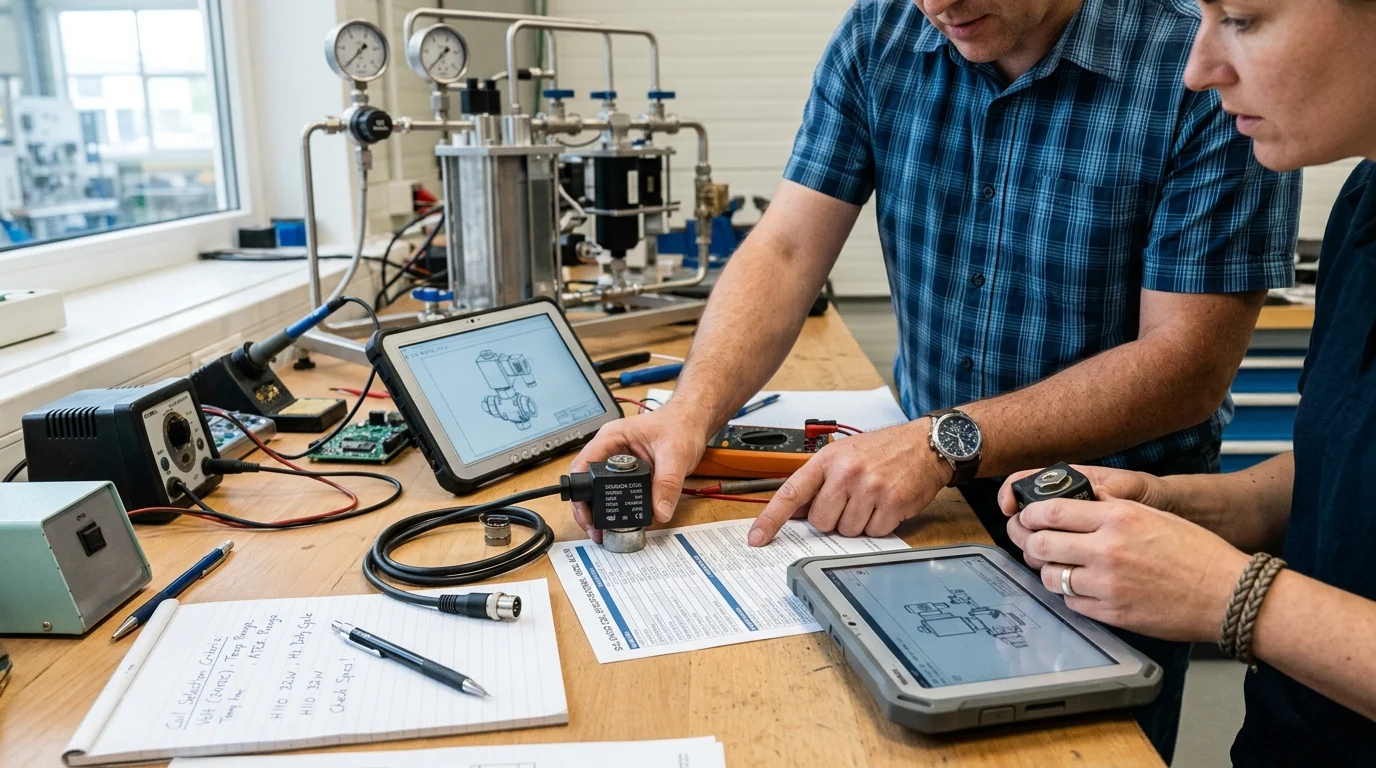
Selecting the appropriate solenoid coil requires balancing electromagnetic output against the severe environmental constraints inherent to hydrogen processing. Engineers must evaluate parameters that dictate both the immediate responsiveness of the valve and its long-term survivability in volatile atmospheres.
Voltage, duty cycle, insulation, and thermal limits
Hydrogen systems frequently require valves to remain open or closed for extended durations, necessitating continuous duty coils rated for 100% ED (Energized Duty). Operating voltages typically span 12V or 24V DC for mobile fuel cell applications, while stationary megawatt-scale electrolyzers rely on 110V or 230V AC configurations. Due to continuous energization, internal resistive heating is a primary failure mode that engineers must mitigate.
Coils must utilize advanced insulation systems, typically Class H (rated for up to 180°C) or Class N (rated for up to 200°C), to prevent thermal breakdown of the copper windings. Furthermore, ambient temperatures inside compact electrolyzer enclosures can exceed 60°C. This drastically reduces the thermal headroom for the coil, demanding superior heat dissipation characteristics and high-grade encapsulation resins to maintain structural integrity.
Core trade-offs and comparison factors
System designers face inherent trade-offs between power consumption, actuation speed, and pressure handling. High-wattage coils generate stronger magnetic fields to overcome the immense seating forces of high-pressure hydrogen valves, but they draw excessive parasitic power and generate significant heat. Conversely, low-wattage coils (e.g., < 5W) improve system efficiency but often require pilot-operated valve architectures to function under high differential pressures. To optimize this, modern systems frequently employ Pulse Width Modulation (PWM) to deliver a high initial inrush current for actuation, followed by a low holding current to minimize thermal output.
Selecting between these coil types also impacts the overall footprint of the modular skids. Compact, high-efficiency coils allow for denser manifold configurations, a critical advantage when designing containerized electrolyzer solutions for space-constrained European industrial sites. The table below illustrates the stark contrast between standard industrial coils and those engineered specifically for hydrogen applications:
| Parameter | Standard Industrial Coils | Hydrogen-Grade Solenoid Coils |
|---|---|---|
| Pressure Handling (Valve) | Up to 40 bar | Up to 700+ bar (often pilot-assisted) |
| Insulation Class | Class F (155°C) | Class H (180°C) or Class N (200°C) |
| Ingress Protection | IP65 | IP67 or IP69K |
| Explosion Protection | Not inherently required | Mandatory ATEX (Ex d, Ex m, Ex ia) |
Compliance, Sourcing, and Selection Framework
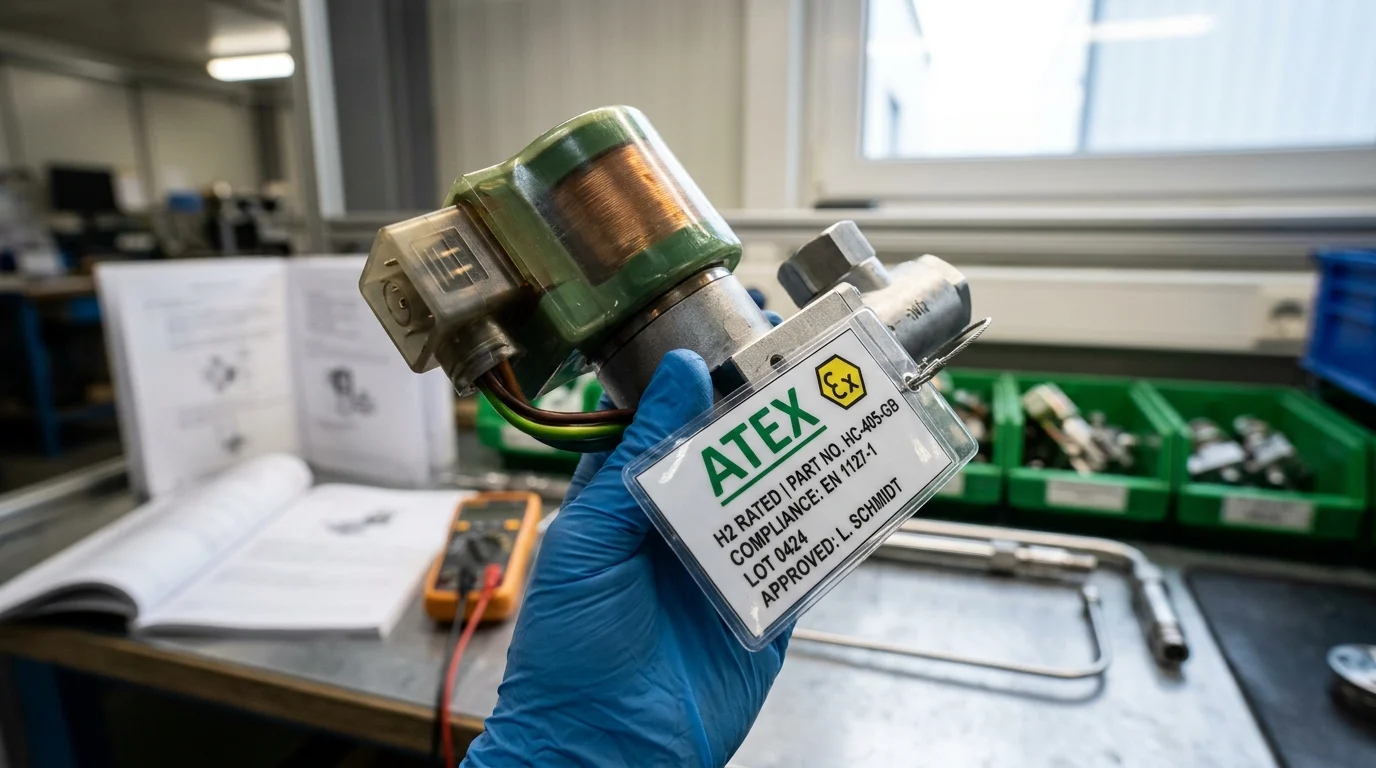
Navigating the procurement of solenoid coils for the European hydrogen market requires a rigorous framework that prioritizes regulatory compliance, supplier reliability, and exacting quality control. The highly flammable nature of hydrogen gas leaves absolutely no margin for component failure or electrical arcing.
Supplier qualification and compliance checks
Suppliers must operate under stringent quality management systems, such as ISO 9001 or IATF 16949, to ensure absolute batch-to-batch consistency. For European deployments, solenoid coils must carry ATEX certification for use in Zone 1 or Zone 2 explosive atmospheres, typically utilizing encapsulated (Ex m) or flameproof (Ex d) designs to prevent spark propagation. Furthermore, integration with pressurized gas systems necessitates compliance with the Pressure Equipment Directive (PED) 2014/68/EU.
Beyond initial certifications, ongoing compliance requires full material traceability. Every batch of copper wire, epoxy resin, and magnetic steel must be tracked to guarantee that the final assembled coil performs predictably under extreme thermal and electrical stress. Engaging established manufacturers with proven R&D capabilities is critical for long-term reliability. Enterprises like Feiniu (Ningbo) Electronic Technology Co., Ltd. demonstrate the required manufacturing maturity, producing specialized solenoid valves, coils, valve islands, and control modules backed by comprehensive quality management frameworks.
Step-by-step decision framework
A standardized step-by-step decision framework mitigates risk during the specification and procurement
Key Takeaways
- The most important conclusions and rationale for Hydrogen Applications: Selecting Solenoid Coils for Electrolyzers and Fuel Cell Systems in Europe‘s Green Energy Transition
- Specs, compliance, and risk checks worth validating before you commit
- Practical next steps and caveats readers can apply immediately
Frequently Asked Questions
Why are solenoid coils critical in hydrogen electrolyzers and fuel cell systems?
They actuate valves that control hydrogen, oxygen, and deionized water flow. Reliable coils help maintain efficiency, prevent unplanned shutdowns, and support fast safety shut-off in volatile hydrogen environments.
What voltage and duty cycle are typical for hydrogen solenoid coils?
Mobile fuel cell systems often use 12V or 24V DC, while stationary electrolyzers commonly use 110V or 230V AC. For long valve energization, choose coils rated for 100% ED continuous duty.
Which insulation class is suitable for high-temperature hydrogen applications?
Class H insulation is common for up to 180°C, while Class N supports up to 200°C. In compact enclosures above 60°C ambient, higher-class insulation improves thermal reliability.
How can engineers reduce coil heat and power use in hydrogen valve systems?
Use PWM control: apply a higher inrush current to actuate the valve, then switch to a lower holding current. This cuts heat generation and reduces parasitic power draw.
What Europe-specific requirements matter when selecting coils for hydrogen systems?
Prioritize components that support helium leak performance below 10^-4 mbar L/s, fit regulated modular skids, and offer consistent certified supply for EU-scale hydrogen projects under strict safety standards.
Post time: May-08-2026