
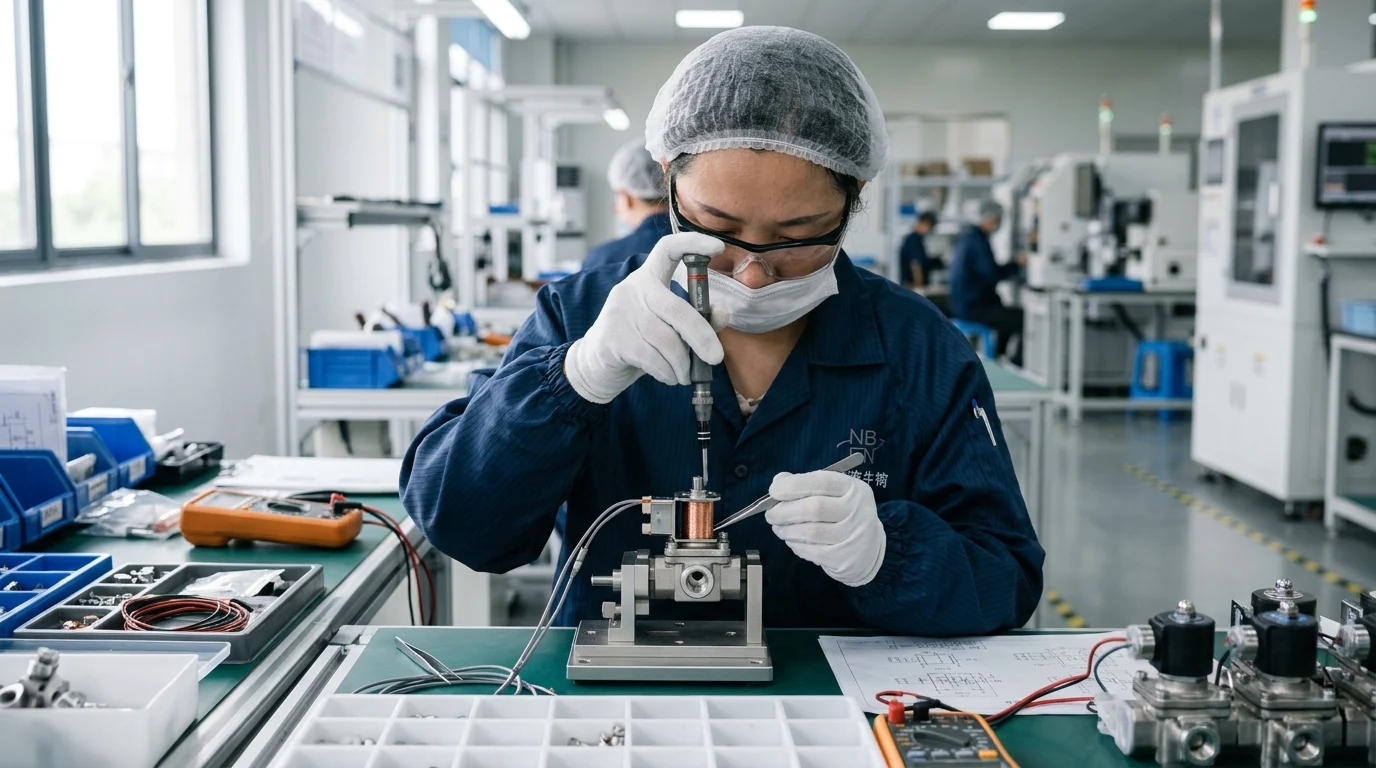
Precision in industrial fluid control is not achieved by inspection alone—it depends on how every valve body, armature, coil, and seal is engineered, machined, assembled, and tested. For global OEMs sourcing solenoid valves at scale, the difference between a dependable supplier and a risky one often comes down to process control, production capacity, and application validation. This article examines how Ningbo Feiniu approaches high-volume solenoid valve manufacturing through automated machining, coil encapsulation, ISO 9001:2015 quality systems, and export-ready logistics. It also highlights practical procurement considerations, including pressure ratings, ingress protection, lead times, minimum order quantities, and the need to verify certifications for demanding operating environments.
Manufacturing Capabilities at Ningbo Feiniu
Ningbo Feiniu is a manufacturer in the global fluid control sector, specializing in the high-volume production of industrial solenoid valves. Operating from an integrated manufacturing hub, the facility leverages automation to meet the rigorous demands of global original equipment manufacturers (OEMs). The company maintains an expansive portfolio encompassing direct-acting, pilot-operated, and proportional solenoid valves, supporting an annual production capacity exceeding 2.5 million units. This scale allows the manufacturer to support consistent output for large-volume orders.
Transitioning from standard off-the-shelf components to application-specific fluid control systems requires a manufacturing partner with specialized metallurgical and electromechanical capabilities. Ningbo Feiniu addresses this by strictly adhering to ISO 9001:2015 quality management standards, aiming to ensure every valve assembly meets the exact lifecycle and pressure specifications required for heavy-duty pneumatic, hydraulic, and process automation applications. However, buyers should independently verify performance limits under extreme temperature variations or highly corrosive environments, as standard catalog items may require custom engineering for edge-case applications.
Precision Solenoid Valve Production
Focusing specifically on electromechanical assembly and final testing, the core of Ningbo Feiniu's production capability relies on multi-axis CNC machining centers and automated copper wire winding stations. By utilizing 5-axis CNC equipment paired with in-process gauging and Statistical Process Control (SPC), the facility systematically achieves tight concentricity in valve bodies and armatures through real-time error compensation. This precise alignment minimizes magnetic flux leakage and supports rapid actuation times, achieving manufacturer-reported response speeds of under 20 milliseconds under standard fluid loads.
The manufacturer tests valves engineered for high-pressure industrial environments to withstand operating pressures up to 400 bar, depending on the specific orifice size and electromagnetic coil rating. Furthermore, the facility integrates automated vacuum epoxy potting processes for solenoid coils to provide a minimum IP65 to IP67 ingress protection rating. This encapsulation safeguards the sensitive electrical components against industrial fluids, humidity, and particulate contamination, though specific hazardous location certifications (such as ATEX) require separate verification.
Commercial and Strategic Advantages
Located near the Ningbo-Zhoushan Port, a major maritime cargo hub, Ningbo Feiniu benefits from established export logistics. This geographic positioning helps reduce inland transportation costs and supports standard production lead times of 3 to 4 weeks for catalog components, potentially optimizing the buyer's total landed cost depending on prevailing freight rates, customs regimes, and specific order profiles. Buyers must account for lead-time variability for custom-tooled projects, which require additional engineering and validation phases.
From a commercial standpoint, the manufacturer balances large-scale capacity with market accessibility by setting a Minimum Order Quantity (MOQ) starting at 500 units for standard valve configurations. Custom OEM projects requiring proprietary tooling typically necessitate a 2,000-unit commitment. This tiered volume approach provides mid-sized industrial integrators access to factory-direct sourcing, ensuring stable inventory replenishment for critical assemblies. While these logistical and commercial factors are critical for procurement, they operate in tandem with the facility's technical workflows to deliver the final product.
Precision Control Across Materials and Processes
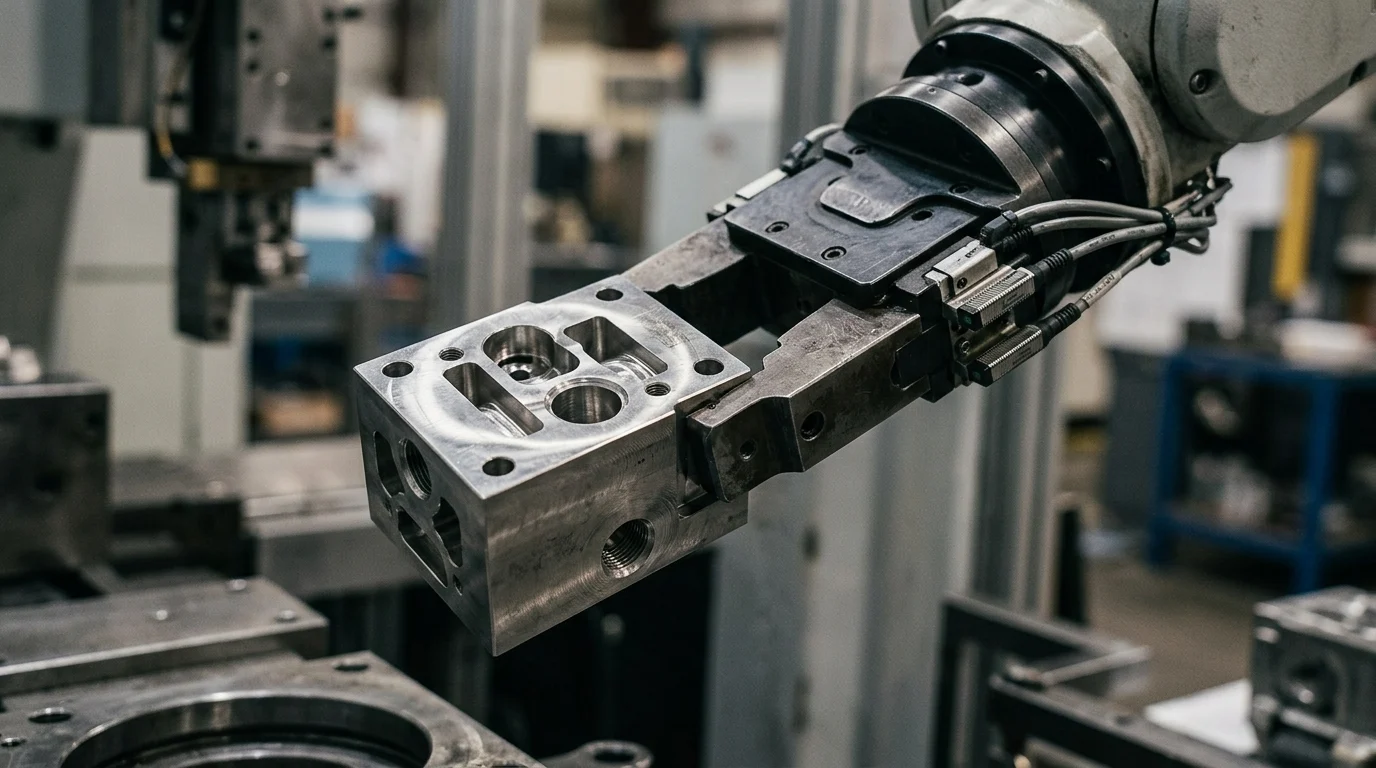
While the previous sections highlighted electromechanical assembly and commercial logistics, achieving high-performance outcomes relies fundamentally on raw-material processing and metallurgical control. Ningbo Feiniu implements a stringent incoming quality control (IQC) protocol to guarantee raw material integrity, requiring EN 10204 3.1 material certificates for all incoming metals. Because these 3.1 certificates typically cover the manufacturer's initial heat lot qualification, buyers with critical traceability requirements should request EN 10204 3.2 (third-party inspected) certificates. The facility utilizes optical emission spectrometry to independently verify the chemical composition of forging brass, 316L stainless steel, and 6061-T6 aluminum alloys before clearing them for the production floor.
Equally critical is the selection and handling of elastomeric seals. Depending on the fluid media—ranging from standard compressed air to aggressive chemical solvents—the facility specifies FKM, EPDM, or PTFE sealing components. The physical interaction between the machined metal seat and the elastomer ultimately dictates the valve's lifecycle, necessitating microscopic surface finish control and rigorous defect-prevention workflows.
Key Production Steps
The production workflow begins with precision hot forging to enhance the mechanical strength and grain structure of the valve body, followed by high-speed CNC turning and milling. To eliminate microscopic metallic burrs that could compromise internal seal integrity, the facility subjects machined components to thermal energy machining (thermal deburring) followed by automated multi-stage ultrasonic cleaning.
The facility conducts final assembly operations within Class 10,000 cleanroom environments to prevent particulate contamination, a critical requirement for valves destined for medical devices or analytical instrumentation. Through this tightly controlled sequential process, Ningbo Feiniu sustains a manufacturer-reported end-of-line defect rate of less than 0.1%, verified through 100% pneumatic leak testing on automated diagnostic rigs.
Tolerance Control Comparison
To illustrate the tight tolerances required for high-cycle industrial applications, the following table contrasts the ISO 2768-f (fine) industry standard for machining tolerances with the precision tier reported by Ningbo Feiniu for its high-performance fluid control series.
| Parameter | ISO 2768-f (Fine) Standard* | Ningbo Feiniu Precision Tier |
|---|---|---|
| Spindle Concentricity | ±0.05 mm | ±0.01 mm |
| Surface Roughness (Ra) | 1.6 μm | 0.4 μm |
| Internal Orifice Diameter | ±0.02 mm | ±0.005 mm |
| Helium Leakage Rate | < 10⁻³ mbar L/s | < 10⁻⁶ mbar L/s** |
*Baseline estimates derived from ISO 2768-f machining standards.
**As reported by the manufacturer.
By maintaining internal surface roughness values at or below 0.4 μm, the manufacturer significantly reduces the dynamic friction coefficient against the moving magnetic armature. This level of precision directly translates to a lower required actuation wattage, minimizes heat generation in the coil, and, according to manufacturer testing, consistently extends the operational lifespan of the valve beyond 10 million cycles.
How Global Buyers Should Evaluate Ningbo Feiniu
For global procurement teams, onboarding a new solenoid valve supplier involves mitigating complex risks associated with intellectual property, supply chain continuity, and international regulatory compliance. Evaluating Ningbo Feiniu requires a structured approach that looks beyond initial unit cost to assess verified audit benchmarks, documented OEM track records, and the Total Cost of Ownership (TCO).
Key Takeaways
- Use Ningbo Feiniu’s 2.5-million-unit annual capacity as a benchmark when evaluating suppliers for high-volume OEM solenoid valve programs.
- Verify whether standard catalog valves meet your pressure, temperature, fluid, and environmental requirements before committing to production orders.
- Prioritize suppliers using 5-axis CNC machining, in-process gauging, and SPC when tight valve body and armature alignment is critical.
- Confirm coil protection ratings such as IP65 to IP67 and request separate documentation for hazardous-location certifications when required.
- Plan for 3 to 4 weeks on standard catalog components, but allow additional time for custom tooling, engineering validation, and OEM-specific testing.
- Match procurement volume to the correct order tier, with standard configurations starting near 500 units and custom OEM projects typically requiring larger commitments.
Frequently Asked Questions
What types of solenoid valves does Ningbo Feiniu manufacture?
Ningbo Feiniu produces direct-acting, pilot-operated, and proportional solenoid valves for pneumatic, hydraulic, and process automation applications.
What is Ningbo Feiniu’s reported annual production capacity?
The facility supports annual output exceeding 2.5 million units, making it suitable for high-volume OEM and industrial procurement programs.
How does Ningbo Feiniu support precision in valve production?
The company uses 5-axis CNC machining, in-process gauging, Statistical Process Control, and automated coil winding to improve alignment, repeatability, and actuation performance.
What quality standard does Ningbo Feiniu follow?
Ningbo Feiniu operates under ISO 9001:2015 quality management standards, supporting consistent manufacturing controls and documented production processes.
What response speed can its solenoid valves achieve?
Under standard fluid loads, manufacturer-reported response speeds can be under 20 milliseconds, depending on valve design and operating conditions.
Post time: Sep-01-2026