
Introduction
Selecting a solenoid coil for a European pressure system involves more than voltage, duty cycle, and enclosure rating. Under PED 2014/68/EU, the coil must be considered in the context of the complete valve assembly and the pressure equipment category it supports, because compliance depends on how the system is designed, assessed, and placed on the market. This article explains where PED applies, how pressure and fluid classification influence specification decisions, and what engineers and buyers should verify when matching coils to solenoid valves. The goal is to help you avoid compliance gaps while making technically sound, safety-focused product choices.
Why PED 2014/68/EU Matters for Solenoid Valves
The Pressure Equipment Directive (PED) 2014/68/EU is a mandatory regulatory framework dictating the design, manufacture, and conformity assessment of pressure equipment across the European Economic Area (EEA). For engineers, system integrators, and procurement teams specifying solenoid valves and their associated electromagnetic coils, understanding the nuances of this directive is non-negotiable. Failure to comply can result in immediate equipment recalls, severe legal liabilities, and catastrophic safety hazards in industrial fluid control systems. The directive ensures that products safely contain pressure without risk of rupture.
PED scope and key definitions
The directive applies universally to the design, manufacture, and conformity assessment of pressure equipment and assemblies with a maximum allowable pressure (PS) greater than 0.5 bar (50 kPa). When specifying a solenoid valve, the entire assembly—comprising the valve body, armature tube, and the electromagnetic coil—must be evaluated within the context of the broader fluid system. The PED categorizes equipment based on the inherent hazard level, which is determined by the fluid state (gas or liquid), the fluid group (hazardous or non-hazardous), and the nominal size (DN) or volume (V) of the component.
A critical distinction in the PED framework is the classification of operating fluids. Group 1 fluids are defined as dangerous—including explosive, highly flammable, toxic, or oxidizing substances. Group 2 encompasses all other non-hazardous fluids, such as water, steam, and inert pneumatic gases. This classification directly influences the rigor of the conformity assessment required for the solenoid valve assembly. Misclassifying a fluid can lead to severe under-specification of the pressure boundary.
Pressure boundary and component classification
While the solenoid coil itself is primarily an electrical actuator governed by the Low Voltage Directive (LVD) and Electromagnetic Compatibility (EMC) Directive, its operational environment is the pressure boundary defined by the solenoid valve’s armature tube and body. Under PED 2014/68/EU, the pressure-retaining housing is the primary subject of assessment. However, the coil’s thermal performance and mechanical fitment directly impact the integrity of this pressure boundary. If a coil overheats due to an incorrect duty cycle, it can compromise the internal elastomeric seals or the structural integrity of the valve body, potentially leading to a pressure leak or rupture.
Pressure equipment is classified into four distinct risk categories (Category I to IV) alongside a baseline ‘Sound Engineering Practice’ (SEP) tier for low-risk devices. Components falling under SEP do not bear the CE mark for PED, though they may still carry it for LVD or EMC compliance. Conversely, valves classified in Category I through IV require explicit PED CE marking and, for higher risk categories, the mandatory involvement of a third-party Notified Body to verify the design and manufacturing processes.
How PED Affects Technical Selection
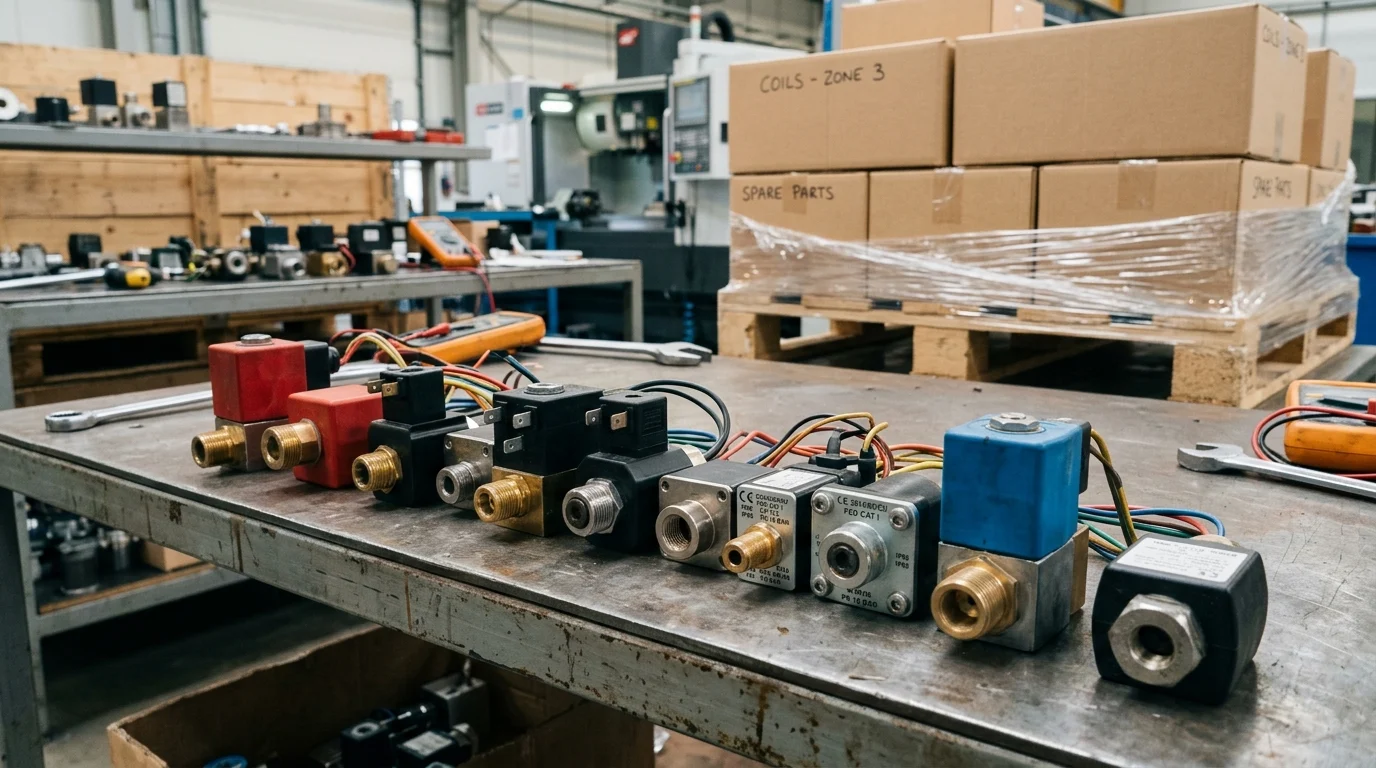
Translating PED classifications into actionable technical specifications requires a systematic approach to solenoid valve and coil selection. Engineers must carefully align the electromagnetic characteristics of the actuating coil with the mechanical pressure limits dictated by the European directive to ensure both performance and compliance.
Key specifications to compare
When evaluating solenoid assemblies for PED compliance, the maximum allowable pressure (PS) and the maximum/minimum allowable temperatures (TS) are the primary driving metrics. The coil must provide sufficient magnetic force to open or close the valve against the system’s maximum differential pressure without exceeding its thermal limits. Below is a comparative breakdown of how fluid types and pressure-volume metrics dictate PED categories for piping and industrial valves.
| Fluid Classification | State | Nominal Size (DN) Threshold | PED Category Examples |
|---|---|---|---|
| Group 1 (Hazardous) | Gases | DN > 25 and PS > 0.5 bar | Category I to III |
| Group 1 (Hazardous) | Liquids | DN > 25 and PS > 10 bar | Category I to II |
| Group 2 (Non-Hazardous) | Gases | DN > 32 and PS > 0.5 bar | Category I to III |
| Group 2 (Non-Hazardous) | Liquids | DN > 200 and PS > 10 bar | Category I (or SEP) |
This matrix illustrates that gases, due to their compressibility and higher stored potential energy, trigger stricter PED categories at much smaller nominal sizes than non-compressible liquids. Consequently, a solenoid valve handling Group 1 gas will require far more rigorous design validation.
Selection criteria by application
Application-specific variables heavily influence the final selection of the solenoid coil. For high-pressure gas systems operating at elevated pressures like 200 bar, the valve body requires substantial wall thickness. This increased material thickness demands a high-power coil—often exceeding 20 watts of power consumption—to generate the necessary magnetic flux across a larger air gap. In these demanding scenarios, the coil’s insulation class, typically Class F (rated for 155°C) or Class H (rated for 180°C), must be explicitly specified to handle continuous internal heat generation without degrading the valve’s pressure boundary seals.
Furthermore, applications utilizing Group 1 explosive fluids often require the coil to comply with ATEX directives in parallel with the valve body’s PED requirements. The intersection of these directives means that the coil encapsulation must prevent electrical ignition while the valve body maintains absolute pressure containment. This dual-compliance requirement necessitates specialized potting materials, reinforced electrical connectors, and rigorous dimensional tolerances.
Practical PED Compliance Decision Path
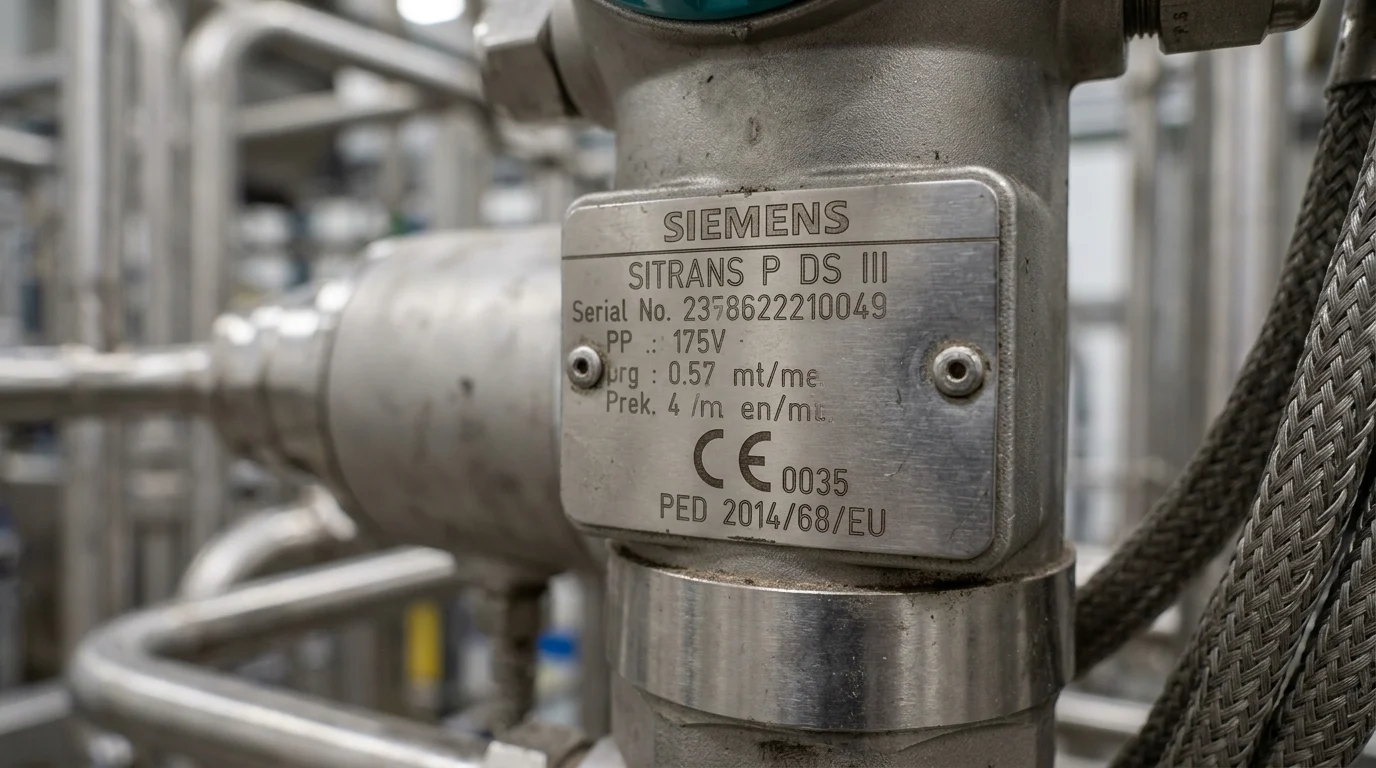
Navigating the procurement and engineering phases of PED 2014/68/EU compliance requires a structured and documented decision path. Buyers, system integrators, and original equipment manufacturers (OEMs) must establish robust verification protocols to ensure that every solenoid component integrated into a European pressure system meets these rigorous legal standards.
How buyers and OEMs verify compliance
Compliance verification begins with the Declaration of Conformity (DoC). OEMs must ensure that the solenoid valve manufacturer provides a comprehensive DoC explicitly stating compliance with PED 2014/68/EU, detailing the specific conformity assessment module applied. These modules range from Module A (internal production control) suitable for Category I equipment, to Module H (full quality assurance) for Category III and IV equipment, which mandates continuous auditing by an independent Notified Body.
Key Takeaways
- The most important conclusions and rationale for Pressure Equipment Directive (PED) 2014/68/EU: How It Affects Solenoid Coil Selection for European Pressure Systems
- Specs, compliance, and risk checks worth validating before you commit
- Practical next steps and caveats readers can apply immediately
Frequently Asked Questions
Does PED 2014/68/EU apply to the solenoid coil itself?
Usually PED targets the pressure-retaining valve body and tube, not the coil. The coil still matters because heat, fit, and duty cycle can affect seals and safe pressure containment.
When does a solenoid valve assembly fall under PED?
PED applies when the assembly has a maximum allowable pressure above 0.5 bar. Classification then depends on fluid group, gas or liquid state, and valve size or volume.
Can a coil be CE marked without PED compliance?
Yes. A coil may carry CE for LVD or EMC, while the valve assembly may need separate PED assessment. Always verify which directive each CE claim covers.
Why do gases usually trigger stricter PED categories than liquids?
Gases store more compressible energy, so the risk is higher if containment fails. That is why smaller gas valves can enter higher PED categories sooner than comparable liquid valves.
What should engineers check first when selecting a coil for a PED-related valve?
Start with the valve’s PS and temperature limits, then confirm the coil can deliver required force at the maximum differential pressure without overheating in its actual duty cycle.
Post time: May-22-2026