
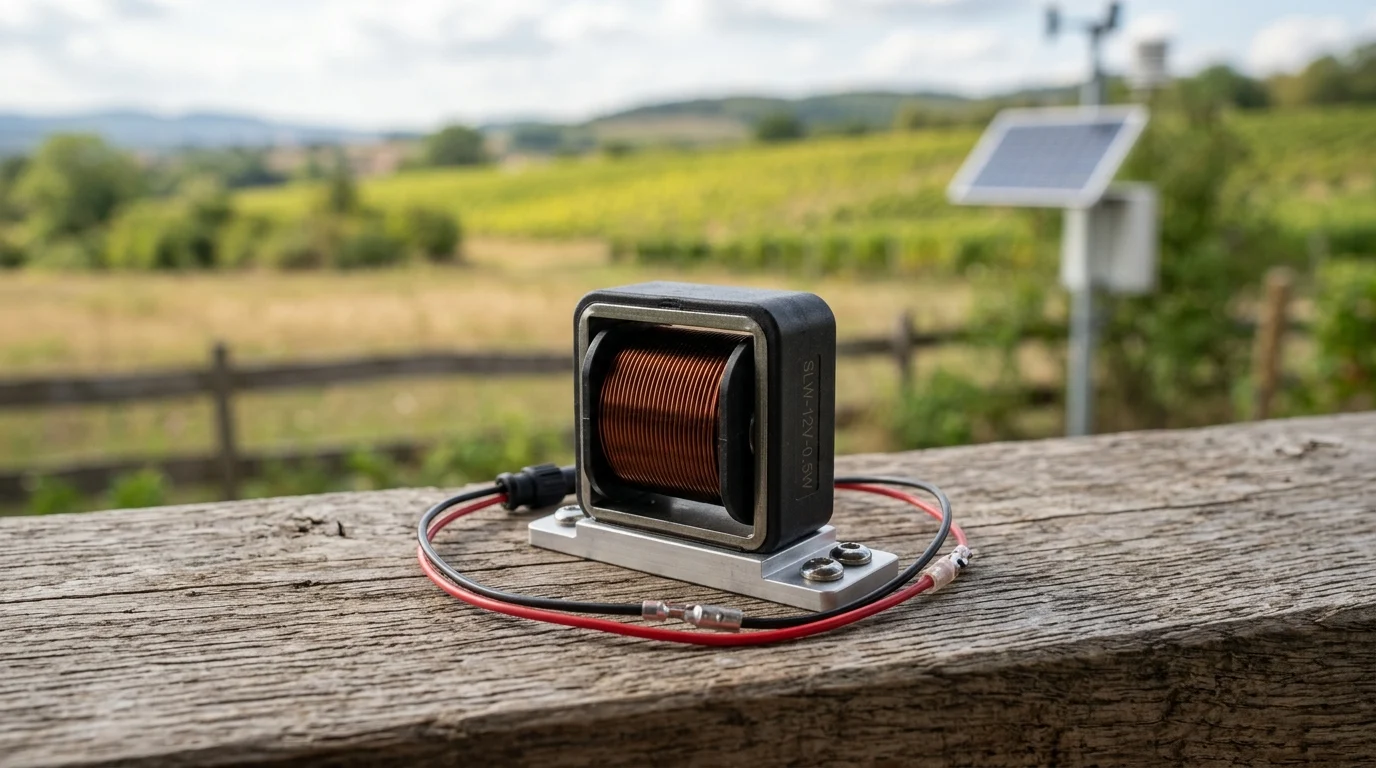
Remote farms, irrigation networks, and environmental monitoring stations across Europe are under pressure to deliver reliable flow control without dependable grid power. In these systems, a solenoid coil that draws 10W to 20W can quietly dominate the energy budget, forcing larger panels, heavier batteries, and more frequent maintenance. Super-low-watt coil designs change that equation by cutting holding power to sub-3.5W levels, and in some cases near 1W, while preserving practical actuation performance. This article explains why coil wattage matters, how the energy savings translate into solar and battery sizing decisions, and what engineers should evaluate before specifying components for remote agricultural and monitoring installations.
Why Super-Low-Watt Solenoid Coils Matter
Managing fluid and gas flow in off-grid environments presents significant power management challenges. Traditional direct-acting solenoid valves demand continuous energy to remain open, often drawing between 10W and 20W just to overcome internal spring tension. In remote fields or isolated monitoring stations, this continuous draw rapidly depletes standard battery reserves, especially during overcast winter months.
Highly efficient, low-wattage solenoid coils resolve this bottleneck by optimizing the electromagnetic circuit and minimizing thermal losses. This allows remote, solar-powered systems to function autonomously year-round with significantly lighter infrastructure, without compromising the essential valve actuation force required for reliable fluid control.
Wattage Definitions and Use Cases
In industrial fluid control, a “low-watt” designation typically applies to solenoid coils engineered to operate continuously at or below 3.5W. Advanced electronic-switching or magnetic-latching models push this efficiency further, achieving continuous holding powers as low as 0.5W to 1.5W. Standard coils, by contrast, require significantly higher wattages, converting excess energy into unwanted heat.
These efficient coils are increasingly deployed across European agricultural and environmental sectors to meet stringent EU environmental monitoring standards, such as the Water Framework Directive. Operators can maintain critical infrastructure—like automated drip irrigation networks in arid Mediterranean regions or groundwater sampling stations in Nordic climates—without requiring frequent battery replacements or violating strict off-grid power budgets.
Benefits for Remote Solar Installations
The primary advantage of integrating sub-3.5W coils is the cascading reduction in required power generation and storage infrastructure. A standard 15W coil operating for four hours a day consumes 60Wh. To survive a typical winter requirement of three to five days of autonomy without sunlight, the system necessitates a substantial solar array and a high-capacity battery.
By switching to a 1.5W coil, the daily energy requirement for the same duration drops to just 6Wh. In a purely hypothetical scenario with explicit assumptions, this 90% reduction in energy demand might allow engineers to downsize a bulky 50W solar panel to a compact 10W module, and shrink a heavy 50Ah lead-acid battery to a manageable 7Ah LiFePO4 unit. However, solar panel and battery sizing is not purely linear with coil load; system designers must also account for charge controller self-consumption and seasonal insolation. While this aggressive downsizing can yield capital expenditure (CAPEX) savings, actual cost reductions depend heavily on site-specific infrastructure and load profiles. It also reduces installation labor and minimizes the physical footprint, lowering the risk of vandalism or wind damage in highly exposed locations.
How to Compare Coil Specifications
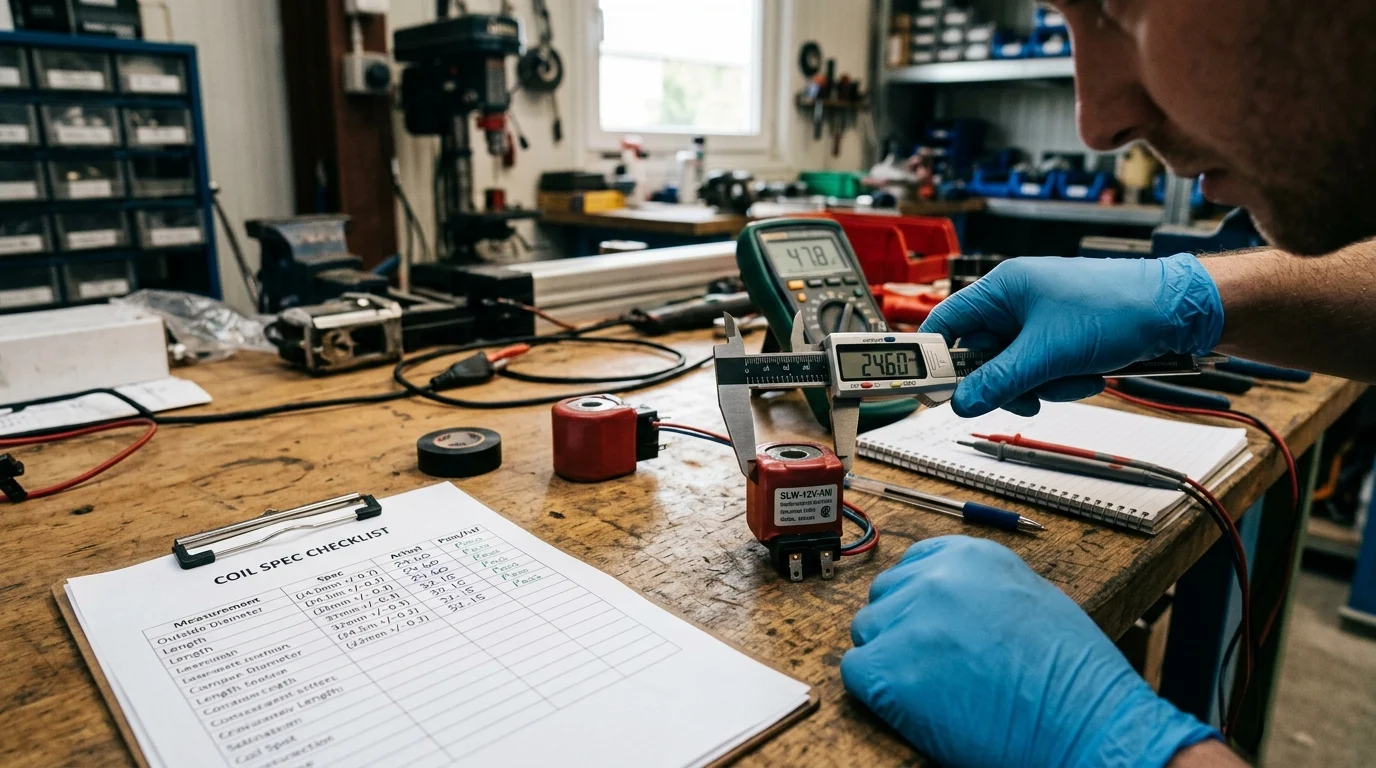
Selecting the correct solenoid coil for a solar-powered installation requires looking beyond basic voltage ratings and thread sizes. Engineers must carefully analyze the dynamic power profile of the coil to ensure compatibility with limited-output photovoltaic charge controllers, DC-DC converters, and coil drivers.
Comparing specifications involves balancing electrical efficiency against mechanical performance. Because reducing the wattage inherently alters the electromagnetic force available to actuate the valve armature, system designers must weigh power savings against potential operational limitations.
Pull-In Power, Holding Power, and Duty Cycle
The two most critical electrical metrics for off-grid deployment are pull-in power (the initial energy surge required to lift the plunger) and holding power (the continuous energy needed to keep the valve open against spring pressure). While standard AC coils exhibit a high pull-in spike, basic DC coils typically have equal pull-in and holding power. Duty cycle, expressed as ED (Einschaltdauer, German for “switch-on time” or “operating time”), dictates how long the coil can remain safely energized. Remote solar applications almost exclusively require 100% ED ratings, meaning the coil is rated for continuous energization, rather than implying the rating itself prevents overheating during prolonged irrigation cycles.
The following representative table illustrates typical power profiles across different coil architectures suitable for 12V DC and 24V DC remote systems. Furthermore, PWM (hit-and-hold) and magnetic-latching coils require extra control electronics and logic, which introduces trade-offs in wiring complexity and overall system reliability compared to simple drop-in replacements.
| Coil Technology | Pull-In Power (W) | Holding Power (W) | Typical Max Pressure (Bar) | Power-Loss Behavior |
|---|---|---|---|---|
| Standard DC Coil | 12.0 – 18.0 | 12.0 – 18.0 | 10 – 15 | De-energizes to normal (NC/NO) position |
| Super-Low-Watt DC | 1.5 – 3.5 | 1.5 – 3.5 | 4 – 8 | De-energizes to normal (NC/NO) position |
| PWM / Hit-and-Hold | 12.0 (50ms) | 1.0 – 2.0 | 10 – 15 | De-energizes to normal (NC/NO) position |
| Magnetic Latching | 3.0 (50ms) | 0.0 | 10 – 12 | Stays in last position |
*Note: Values are representative ranges. Actual specifications vary widely by manufacturer, valve size, pressure, and seal material. Default behavior depends on whether the valve is configured as normally closed (NC) or normally open (NO).
Trade-Offs in Continuous-Duty Operation
While highly efficient coils excel in energy conservation, they introduce necessary mechanical compromises that must be evaluated. Because the magnetic flux generated is directly proportional to the electrical wattage, a 2W coil produces significantly less lifting force than a traditional 15W counterpart. This reduction primarily impacts the valve’s Maximum Operating Pressure Differential (MOPD).
A valve body capable of handling 12 bar of pressure with a standard high-watt coil might only achieve a 5 bar MOPD when retrofitted with a low-watt alternative. If the system pressure exceeds this reduced threshold, the coil will fail to open the valve. Furthermore, the lower magnetic force can increase the valve’s mechanical response time from typical 20-30 millisecond ranges to 50 milliseconds or more. While this slight delay is completely negligible in agricultural irrigation, it must be accounted for in precision dosing or high-speed fluid sampling applications.
Deployment and Selection Guidance
Implementing Super-Low-Watt Solenoid Coils for Solar-Powered Remote Installations Across European Agriculture and Environmental Monitoring requires precise component matching to ensure uninterrupted operation during low-light winter months. System integrators must balance energy budgets, environmental durability, and regional regulatory standards to achieve sustainable autonomy.
Sizing the Solar Panel, Battery, and Driver
When designing remote irrigation or monitoring stations, power availability dictates component selection. Because super-low-watt coils operate efficiently—often drawing under 1.5 watts—they significantly reduce the required footprint for solar infrastructure. However, European climates experience drastic seasonal variations in solar irradiance, necessitating careful capacity planning.
- Solar Panels: Size panels based on the lowest average winter insolation for the specific European region. For example, Northern Europe frequently averages less than 1 kWh/m²/day in December, requiring oversized panels relative to the summer load.
- Battery Storage: Select deep-cycle AGM or Lithium iron phosphate (LiFePO4) batteries capable of sustaining the system for at least 7 to 10 autonomous days without solar input.
- Driver Configuration: Utilize Pulse Width Modulation (PWM) drivers or latching coil designs. A latching mechanism requires only a brief millisecond electrical pulse to change state, effectively eliminating continuous power draw.
| Component | Recommended Specification for Low-Watt Coils | Key Benefit |
|---|---|---|
| Solar Panel | 10W – 20W Monocrystalline | Sufficient for latching and low-watt systems in low-light environments. |
| Battery | 12V 7Ah – 12Ah AGM / LiFePO4 | Provides necessary reserve capacity for extended overcast periods. |
| Driver | PWM Controller / Latching Circuit | Prevents coil overheating and minimizes standby energy loss. |
Reliability, Compliance, and Final Selection
Remote deployments demand high reliability due to the prohibitive costs of maintenance visits. For agricultural and environmental applications, coils must feature ingress protection ratings of at least IP67 or IP68, safeguarding against heavy rain, agricultural runoff, and temporary submersion.
Furthermore, equipment must adhere to stringent European regulatory frameworks. Final selections must comply with CE marking requirements, the RoHS Directive for restricting hazardous substances, and the WEEE Directive for electronic waste management. Specifying coils with corrosion-resistant stainless-steel armatures and UV-stabilized thermoplastic enclosures ensures long-term operational stability in harsh, unprotected outdoor environments.
Key Takeaways
- Specify solenoid coils at or below 3.5W for remote solar installations where continuous power draw must be tightly controlled.
- Replacing a 15W coil with a 1.5W model can reduce a four-hour daily valve load from 60Wh to 6Wh.
- Size batteries for three to five days of winter autonomy, but include charge controller losses, seasonal insolation, and all non-coil loads.
- Consider magnetic-latching or electronically switched coils when holding power must be reduced to roughly 0.5W to 1.5W.
- Use lower-power coils to reduce solar array size, battery weight, installation labor, and exposure risks such as vandalism or wind damage.
Frequently Asked Questions
What qualifies as a low-watt solenoid coil?
In fluid control applications, low-watt coils typically operate continuously at or below 3.5W. More advanced latching or electronically switched designs can reduce holding power to around 0.5W to 1.5W.
Why are low-watt coils useful for solar-powered field systems?
They reduce daily energy demand, allowing smaller solar panels and batteries while maintaining valve control. This is especially important for remote agricultural and environmental sites with limited winter sunlight.
How much energy can a low-watt coil save?
A 15W coil running four hours uses 60Wh per day, while a 1.5W coil uses only 6Wh for the same duty cycle. That represents a potential 90% reduction in coil energy consumption.
Can switching coils always reduce solar panel and battery size?
Not always. Coil load is important, but designers must also account for charge controller losses, other site loads, battery chemistry, autonomy days, and seasonal solar availability.
Where are these coils commonly used in Europe?
They are used in automated drip irrigation, livestock water control, groundwater sampling, environmental monitoring stations, and remote fluid or gas control systems across agricultural and ecological sites.
Post time: Jul-10-2026