
Introduction
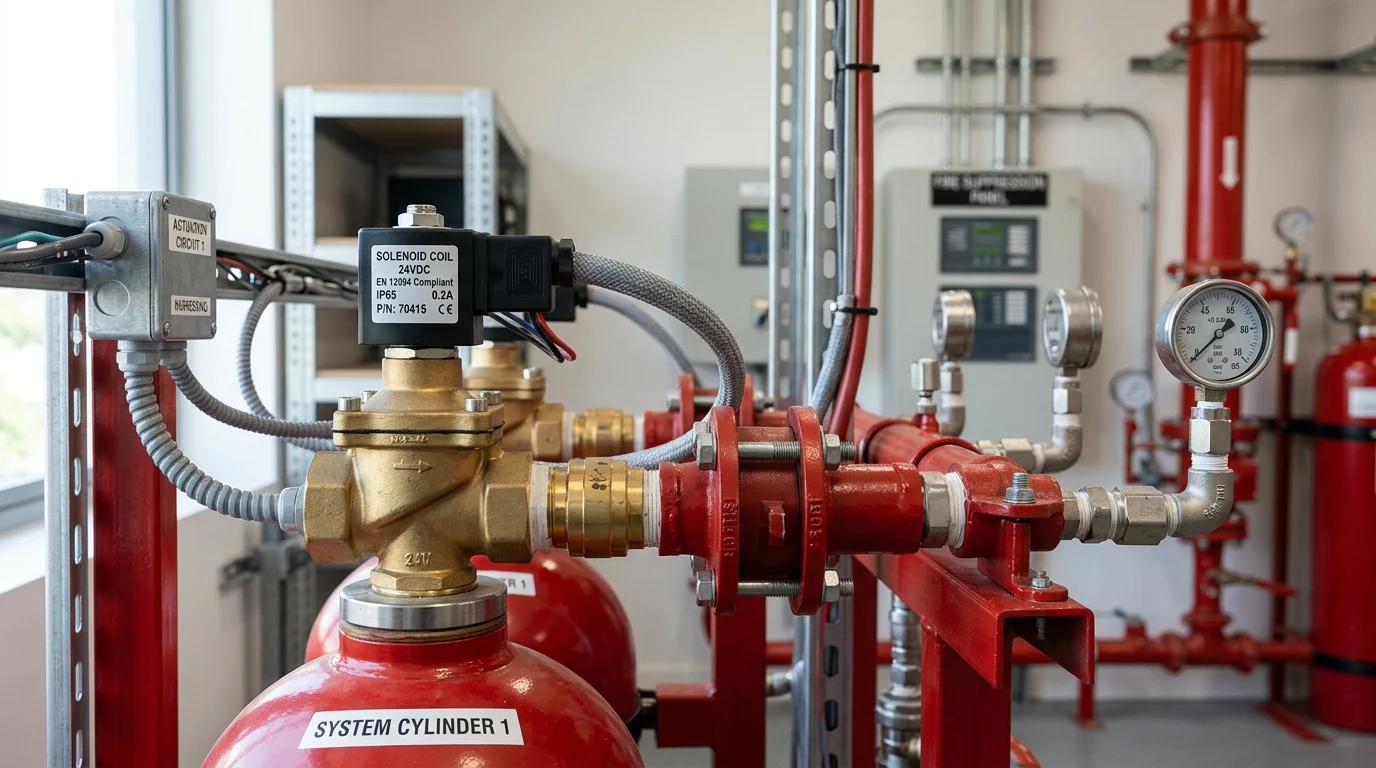
In fire suppression systems, a solenoid coil is the small but decisive component that turns a control signal into the physical release of an extinguishing agent. Because that action may occur only once, after years on standby, its performance is judged not just by functionality but by proven reliability under strict safety requirements such as EN 12094. This article explains how solenoid coils operate within gas, water mist, and foam systems, what compliance demands mean in practice, and which design, testing, and durability factors determine whether a coil can be trusted in a real emergency.
Why Solenoid Coils Matter in Fire Suppression Systems
In commercial and industrial fire suppression systems, the solenoid coil serves as the critical bridge between electronic detection networks and mechanical extinguishing agents. Whether deployed in clean agent gas systems, high-pressure water mist configurations, or foam deluges, these electromechanical components must execute their function with absolute certainty. Regulatory frameworks, particularly EN 12094 which dictates the standards for gas extinguishing system components, mandate stringent operational parameters to ensure life safety and property protection.
Meeting these rigorous requirements demands precision engineering. A solenoid coil in this context is not merely a standard industrial actuator; it is a specialized safety device engineered to withstand severe environmental stress while maintaining readiness over years of dormant standby. The failure of a single coil can compromise an entire suppression zone, making the understanding of their mechanics and compliance standards essential for fire protection engineers.
Signal Conversion and Safe Actuation
The primary function of a solenoid coil in a fire suppression circuit is signal conversion. When a fire control panel detects an anomaly, it sends a localized electrical current—typically standard 24V DC—to the coil. The resulting electromagnetic field draws the internal plunger, piercing the burst disc or opening the pilot valve to release the pressurized extinguishing agent into the distribution piping.
Actuation must be instantaneous and capable of overcoming significant mechanical resistance. Coils designed for high-pressure gas cylinders often require a minimum pull force exceeding 50 Newtons to actuate valves against internal pressures that can range from 25 to 300 bar, depending on the specific extinguishing agent utilized. The precision of the copper winding, the magnetic permeability of the core, and the efficiency of the flux path directly dictate this critical force-to-size ratio.
Reliability, Response Time, and Fail-Safe Performance
In life-safety applications, reliability equates to guaranteed fail-safe performance. EN 12094-4 specifically addresses the requirements for electrical delay devices and automated actuation mechanisms, stipulating that response times must remain consistently under 50 milliseconds from signal reception to mechanical movement.
To maintain this response time over a multi-year lifespan, the coils must be immune to magnetic degradation and mechanical binding. Fail-safe designs often incorporate redundant winding techniques or dual-power modules to ensure actuation even under partial voltage drop conditions. Furthermore, continuous supervision circuits run a micro-current (typically 2 to 5 mA) through the coil to verify circuit integrity without triggering actuation. This constant electrical monitoring demands highly precise impedance tolerances to prevent false discharges while ensuring the system is always armed.
How to Select the Right Solenoid Coil
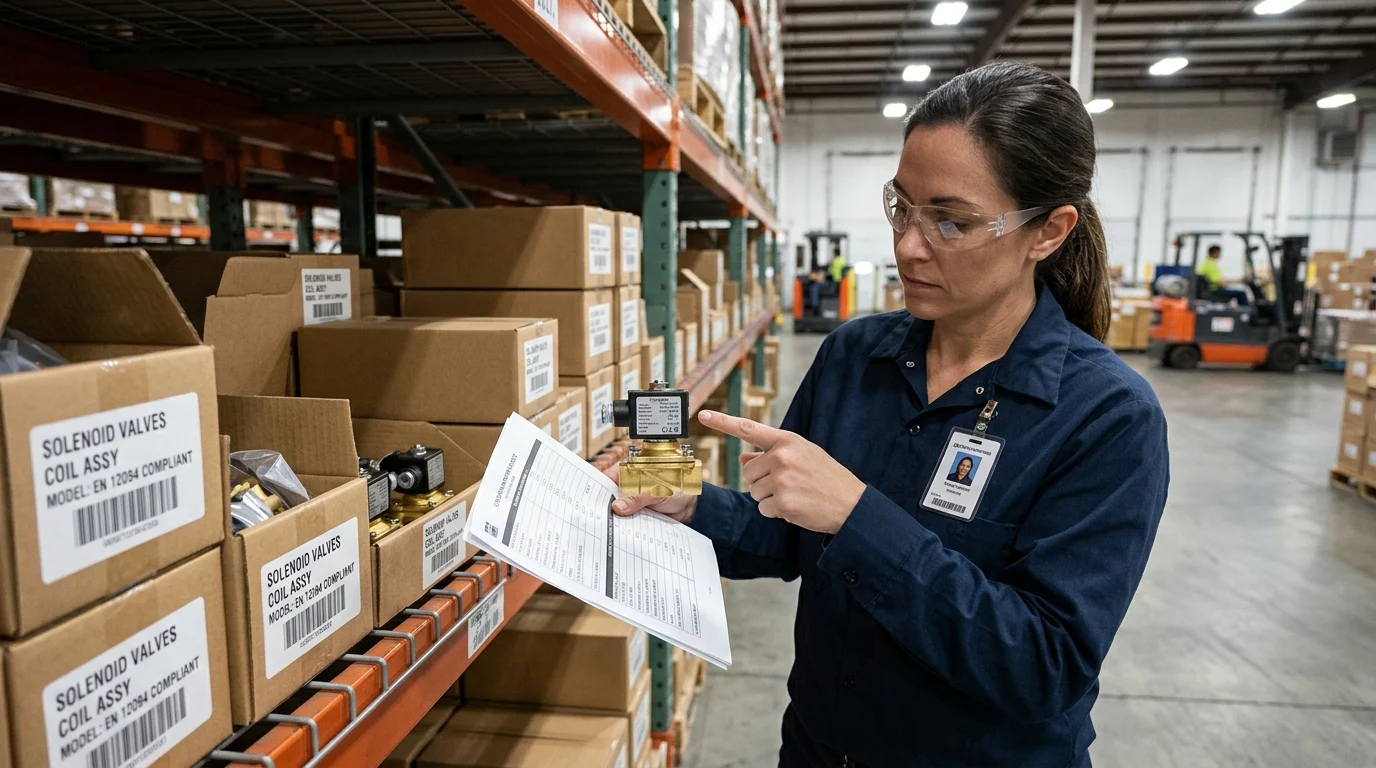
Specifying the correct solenoid coil requires aligning the electrical characteristics of the fire control system with the physical demands of the installation environment. Engineers must evaluate thermal tolerance, ingress protection, and the manufacturing pedigree of the supplier to guarantee long-term operational viability and regulatory compliance.
Performance, Materials, and Environmental Ratings
Environmental degradation is a primary threat to coil longevity. Fire suppression components are frequently installed in harsh industrial sectors, requiring robust encapsulation. Standard commercial applications demand an IP65 rating, but marine, mining, or heavy industrial environments necessitate IP67 or IP68 ratings to prevent moisture and particulate ingress from compromising the dielectric strength of the windings.
Thermal performance is equally critical. During actuation or continuous electrical supervision, coils generate heat. Insulation classes determine the maximum allowable operating temperature of the internal copper windings and potting compounds. For fire safety, Class F or Class H insulation is standard.
| Insulation Class | Max Operating Temperature | Typical Application in Fire Systems |
|---|---|---|
| Class B | 130°C (266°F) | Light-duty, climate-controlled environments |
| Class F | 155°C (311°F) | Standard commercial gas suppression |
| Class H | 180°C (356°F) | High-ambient industrial, engine compartments |
Additionally, installations in petrochemical plants or grain storage facilities require ATEX-certified explosion-proof coils. These units feature specialized thermoset potting compounds and heavy-duty enclosures capable of containing internal sparks, ensuring the coil itself does not become an ignition source in a volatile atmosphere.
Supplier Quality, Traceability, and Product Range
The integrity of a fire suppression system relies heavily on the quality management systems of its component manufacturers. Sourcing from established manufacturers ensures access to comprehensive product ranges, which simplifies integration and guarantees component compatibility across complex valve assemblies.
Manufacturers such as Flying Bull (Ningbo) Electronic Technology Co., Ltd. emphasize rigorous R&D and strict quality control frameworks essential for life-safety components. Their expertise spans a wide product range, including specialized solenoid valves, robust electromagnetic coils, pilot assemblies, and advanced double-power modules. A robust supplier provides full traceability for every unit, utilizing laser-etched batch numbers tied to raw material certificates and end-of-line test data. For strict EN 12094 compliance, suppliers must demonstrate an exceptional manufacturing consistency, targeting a defect rate of less than 10 Parts Per Million (PPM), ensuring that every coil integrated into a critical valve assembly will perform flawlessly when deployed.
How to Evaluate Sourcing, Testing, and Lifecycle Support
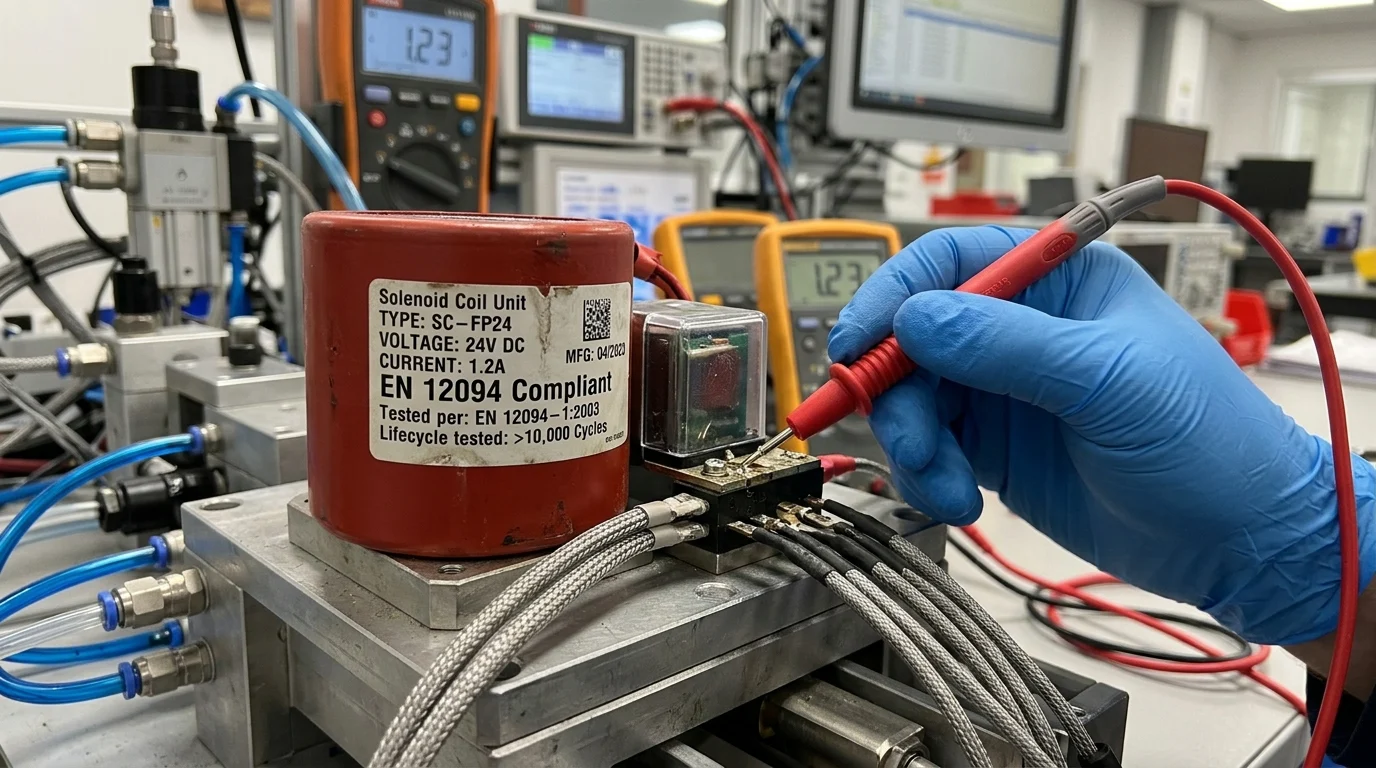
Procuring solenoid coils for fire suppression systems extends beyond evaluating technical specifications; it requires a comprehensive assessment of the supplier’s validation protocols, logistical capabilities, and lifecycle support. A strategic sourcing approach mitigates supply chain risks and ensures seamless integration into the final valve assemblies.
Validation, Inspection, and Integration
Before a coil design is approved for production, it must undergo exhaustive validation testing to satisfy EN 12094 and UL/FM standards. This includes dielectric withstand testing, where the coil must typically endure 1,000V AC plus twice its rated voltage for one minute without insulation breakdown, alongside extreme thermal shock cycling.
Integration inspection requires endurance testing under simulated physical loads.
Key Takeaways
- The most important conclusions and rationale for The Role of Solenoid Coils in Fire Suppression Systems: Meeting EN 12094 and Reliability Standards
- Specs, compliance, and risk checks worth validating before you commit
- Practical next steps and caveats readers can apply immediately
Frequently Asked Questions
What does a solenoid coil do in a fire suppression system?
It converts the fire panel’s electrical signal into mechanical motion that opens a valve or bursts a disc, releasing the extinguishing agent quickly.
Why is EN 12094 important for solenoid coils?
EN 12094 sets safety and performance requirements for gas extinguishing components, helping ensure the coil actuates reliably in an emergency.
How fast must a fire suppression solenoid coil respond?
For life-safety use, response should be very fast, with EN 12094-4 cited at under 50 milliseconds from signal to movement.
Which environmental ratings should I choose for harsh installations?
Use at least IP65 for standard sites; choose IP67 or IP68 for wet, dusty, or industrial environments where ingress protection is critical.
Which insulation class is best for fire suppression coils?
Class F is common for standard commercial systems, while Class H is better for high-ambient or heavy industrial conditions.
Post time: May-11-2026