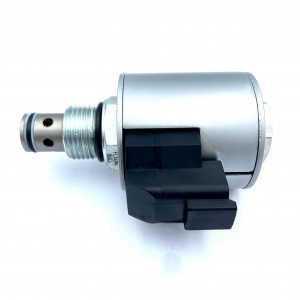
Hydraulic Cartridge Relief Valve – RPEE-LAN & RPGC-LAN Pilot-Operated, RDDA-LAN Direct-Acting, Threaded Cartridge, T-10A Cavity


Hydraulic Cartridge Relief Valves — RPEE-LAN, RPGC-LAN, RDDA-LAN
RPEE-LAN — Fast-Acting Pilot-Operated Relief
The RPEE-LAN is a fast-acting, pilot-operated, balanced piston relief cartridge designed to protect hydraulic components from pressure transients by limiting pressure rise. This normally closed valve opens rapidly when inlet port 1 pressure reaches its setting, directing flow to tank port 2. Key characteristics include low pressure rise versus flow and very fast response—typically around 2 ms. Maximum operating pressure is 5000 psi (350 bar), with a flow capacity of 25 gpm (95 L/min). The main stage orifice is protected by a 150-micron stainless steel screen. Important limitation: due to spool leakage, this valve is not suitable for load-holding applications. It accepts maximum pressure at port 2 and is suitable for cross-port relief circuits (consider spool leakage). Back pressure at tank port 2 is directly additive to the valve setting at a 1:1 ratio.
RPGC-LAN — Pilot-Operated Balanced Piston Relief
The RPGC-LAN is also a pilot-operated, balanced piston relief valve. It belongs to the same Sun Hydraulics cartridge family as the RPEE-LAN and RPEC-LAN series. Detailed public specifications for the RPGC-LAN variant specifically are limited, but its classification as a pilot-operated relief cartridge places it in the same functional category as the RPEE-LAN. Consult the specific datasheet for pressure range and control options.
RDDA-LAN — Direct-Acting Relief (Not Pilot-Operated)
Important correction: The RDDA-LAN is a direct-acting pressure-limiting valve, not a pilot-operated valve. It is normally closed and opens when inlet pressure reaches the setting, throttling flow to tank to limit pressure rise. Unlike the pilot-operated models, the RDDA-LAN offers smooth regulation, low noise, essentially zero leakage, and strong resistance to oil contamination—making it suitable for load-holding applications. It uses the same T-10A cavity as the RP series. Adjustment note: the adjustment screw seal is exposed to system pressure, so the valve can only be adjusted when pressure is removed. EPDM seals are available for phosphate ester systems. Spring ranges are designated A through W, with corresponding maximum test pressures (e.g., A range: 2000 psi / 138 bar).
Shared Features (T-10A Cartridge Family)
All three models use the industry-common T-10A cavity and share the Sun floating style construction, which minimizes internal part binding caused by excessive installation torque or cavity machining variations. Valve hex size is 7/8 in. (22.2 mm); installation torque is 30–35 lbf ft (41–47 Nm).
Selection Guidance
| Model | Type | Load Holding | Response | Leakage |
|---|---|---|---|---|
| RPEE-LAN | Pilot-operated | Not recommended | ~2 ms | Spool leakage present |
| RPGC-LAN | Pilot-operated | Not recommended | Fast | Spool leakage present |
| RDDA-LAN | Direct-acting | Suitable | Moderate | Near zero |
Choose the RP series for fast response and cross-port relief duty. Choose the RDDA-LAN when load holding and minimal leakage are priorities.